


Andrewsarchus Wall Art
The Andrewsarchus, regarded as one of the largest terrestrial carnivorous mammals, commands our collection with its intimidating presence. This prehistoric predator with hybrid characteristics between wolf and bear fascinates through its colossal size and raw power. Our artworks capture the intensity of this giant carnivore that roamed Central Asia approximately 45 million years ago. These wall compositions bring a wild and primitive dimension to your space, evoking the Eocene period when these massive hunters dominated their ecosystem with unparalleled force.
 Andrewsarchus Mosaic Painting - Mane of a Thousand Colors - Andrewsarchus Edition273,90 €
 Andrewsarchus Fragmented Profile Painting - Emergence of the Soul - Andrewsarchus Edition273,90 €
 Andrewsarchus Winter Landscape Painting - Prehistoric Giant in the Snow - Andrewsarchus Edition273,90 €
 Andrewsarchus Running Painting - Wild Momentum - Andrewsarchus Edition273,90 €
 Ornamental Andrewsarchus Painting - Golden Ocean - Andrewsarchus Edition273,90 €
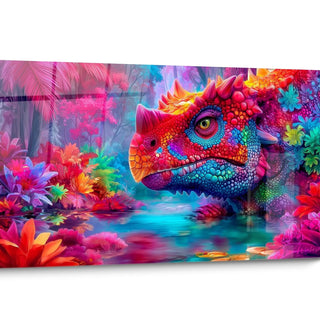
 Colorful Andrewsarchus Painting - Prehistoric Creature at the Water's Edge - Andrewsarchus Edition273,90 €
Explore further
In Andrewsarchus Wall Art


In the same family
Also explore the theme Primordial Lands
-
 View all150
artworks
View all150
artworks
-
 Argentavis9
artworks
Argentavis9
artworks
-
 Basilosaurus10
artworks
Basilosaurus10
artworks
-
 Dinosaur31
artworks
Dinosaur31
artworks
-
 Dunkleosteus5
artworks
Dunkleosteus5
artworks
-
 Prehistoric Frescoes8
artworks
Prehistoric Frescoes8
artworks
-
 Glyptodon8
artworks
Glyptodon8
artworks
-
 Indricotherium2
artworks
Indricotherium2
artworks
-
 Kaprosuchus12
artworks
Kaprosuchus12
artworks
-
 Woolly Mammoth22
artworks
Woolly Mammoth22
artworks
-
 Megaloceros
-
 Megalodon9
artworks
Megalodon9
artworks
-
 Quetzalcoatlus8
artworks
Quetzalcoatlus8
artworks
-
 Scutosaurus9
artworks
Scutosaurus9
artworks
-
 Saber-Toothed Tiger11
artworks
Saber-Toothed Tiger11
artworks


All about Andrewsarchus Wall Art
- Presentation Andrewsarchus Wall Art
- Andrewsarchus Wall Art: The Forgotten Super-Predator
- Exclusive Paleontological Decoration
- Andrewsarchus Wall Art: Scientific Heritage
Discover our exclusive collection of Andrewsarchus wall art, a mural representation of the most imposing terrestrial carnivorous mammal to ever walk our planet. This fascinating creature from the Upper Paleocene, unknown to the general public, offers a captivating alternative to traditional prehistoric representations. Perfect for paleontology enthusiasts, scientific art collectors, or lovers of original decoration, this large-format artwork transforms your space into a genuine natural history gallery. Immerse yourself in the mysterious world of prehistoric mammals and let yourself be transported 45 million years back in time, to the era when this fearsome predator reigned over the Asian steppes.
Andrewsarchus Wall Art: The Fascination of the Greatest Land Carnivore
The Andrewsarchus wall art captures the essence of a legendary predator that remains one of paleontology's greatest mysteries. With a skull measuring 83 centimeters in length, this colossal animal surpassed in size all known terrestrial carnivores, including bears and modern big cats. This large-format mural representation allows you to appreciate the exceptional morphology of this prehistoric beast, whose powerful jaw evokes both the raw force of giant hyenas and the agility of primitive canids.
Why does Andrewsarchus fascinate paleontology enthusiasts so much?
The extraordinary peculiarity of Andrewsarchus lies in its enigmatic status within evolutionary history. Discovered in 1923 during a Mongolian expedition by the American Museum of Natural History, this mammal is known only from a single fossilized skull. This exceptional rarity gives every artistic representation unique documentary value. Scientists estimate that the complete animal measured between 3.5 and 4 meters in length, with a body mass possibly reaching 1,000 kilograms, rivaling the greatest predators that ever existed.
A wall art piece representing this animal offers far more than simple mural decoration. It materializes the ongoing scientific debate concerning the creature's actual appearance. Some paleontologists describe it as a massive omnivorous scavenger, while others favor the hypothesis of an active hunter with formidable predatory capabilities. This scientific uncertainty considerably enriches the visual appeal of each representation, with each artist offering their own interpretation of the creature's supposed physical characteristics.
Which scientific reconstruction should you choose for your space?
Visual representations of Andrewsarchus vary significantly depending on the anatomical hypotheses adopted. The robust version, inspired by primitive ungulates, presents a massive body with short, powerful limbs, vaguely resembling a carnivorous hippopotamus. This interpretation is particularly suitable for spaces seeking an imposing and almost brutal prehistoric atmosphere. Conversely, the streamlined reconstruction, based on mesonychids, depicts an agile predator with long legs, evoking a giant prehistoric wolf capable of sustained running across Mongolian steppes.
Your choice will depend on the ambiance you're looking for in your interior. For a scientific study or library dedicated to natural sciences, choose a representation faithful to the latest paleontological reconstructions, incorporating the authentic documented cranial characteristics. Contemporary residential spaces will benefit more from a dramatic artistic interpretation, emphasizing the intimidating power of this super-predator in its natural environment.
The visual impact of a little-known predator in your decoration
Unlike the saturated representations of Tyrannosaurus rex or Velociraptor, an Andrewsarchus wall art piece offers remarkable originality in the paleontological decoration universe. This visual exclusivity immediately generates enriching conversations with your visitors, transforming your wall into genuine educational support. The generous dimensions recommended for this type of representation, generally exceeding 120 centimeters in width, allow you to faithfully render the colossal proportions of the animal.
The distinctive elements that characterize successful representation include:
- The jaw disproportionate to the body, equipped with sharp teeth and crushing molars
- Eyes positioned laterally, suggesting an opportunistic diet
- Developed cervical musculature, necessary to support such a massive skull
- The arid steppe environment characteristic of Central Asia in the Paleocene
How does Andrewsarchus compare to other prehistoric predators?
The post-dinosaur period, often neglected in popular culture, nonetheless harbors creatures equally spectacular. Andrewsarchus dominated terrestrial ecosystems approximately 20 million years after the extinction of non-avian dinosaurs. Compared to Entelodon, its contemporary nicknamed the "hell pig," Andrewsarchus exhibited even greater dimensions and more pronounced carnivorous specialization. Faced with packs of Hyaenodon, mid-sized social predators, this solitary colossus would have imposed itself through sheer brute force.
This historical contextualization considerably enriches the narrative value of your mural decoration. A large-scale wall art piece allows for the inclusion of comparative visual elements, positioning Andrewsarchus alongside human silhouettes or other prehistoric mammals. This spectacular perspective instantly reveals the animal's extraordinary proportions, reinforcing the dramatic impact of the representation in your living or professional space.
Optimal integration into a modern environment
The rough and primordial aesthetic of wall art representing Andrewsarchus harmonizes remarkably well with contemporary industrial interiors. The ochre and earthy tones characteristic of paleo-environmental reconstructions naturally complement raw materials such as polished concrete, patinated steel, or aged wood. For more refined spaces, a representation in grayscale or sepia tones imparts a museum-quality artistic dimension, evoking nineteenth-century scientific anatomical plates.
Healthcare professionals specializing in paleopathology, veterinary practices, and biomedical research centers will particularly appreciate this distinctive iconography. It immediately establishes an intellectual connection with educated clientele while affirming a memorable visual identity. The monumental dimensions available for this type of representation guarantee dominant visual presence, even in spaces with generous volumes typical of lofts or open-plan offices.
Creating a Space Dedicated to Little-Known Prehistoric Giants
Acquiring an Andrewsarchus wall art piece serves as the cornerstone of a decorative collection focused on prehistoric mammals, a remarkably underexploited theme in contemporary decoration. Unlike classical paleontological galleries saturated with dinosaur representations, an approach centered on mammals from the Paleocene and Eocene offers a fascinating evolutionary perspective. This pivotal period, extending from 66 to 34 million years before our era, witnessed the emergence of extraordinary creatures that colonized the ecological niches left vacant by massive extinction.
Which complementary paleontological collection should you develop?
To create a coherent visual narrative around your main artwork, consider incorporating representations of other mega-mammals contemporary to Andrewsarchus. Embolotherium, a prehistoric rhinoceros with spectacular cranial protuberances, shared the Mongolian steppe habitat of Andrewsarchus. Paraceratherium, the largest terrestrial mammal ever to exist, illustrates the gigantic scale reached by the herbivorous fauna of that era. These thematic associations transform your space into a veritable prehistoric ecosystem reconstruction.
The monumental dimensions of a quality Andrewsarchus artwork, generally between 150 and 200 centimeters in width, require a clear wall benefiting from optimal visibility. The ideal location sits opposite the main entrance to a room, allowing progressive revelation of the creature as the visitor enters the space. This theatrical arrangement amplifies the surprise effect and reinforces the emotional impact of visual discovery.
How can you highlight the educational aspect in a family home?
For households welcoming young paleontology enthusiasts, wall art representing Andrewsarchus offers exceptional educational opportunity. Unlike prehistoric creatures omnipresent in children's media, this animal remains largely unknown, naturally stimulating intellectual curiosity. Accompany the mural representation with accessible scientific information, presented on complementary supports such as explanatory labels or evolutionary timelines.
Educational elements to highlight include:
- The controversial taxonomic position of Andrewsarchus within Artiodactyla
- The anatomical extrapolation methods paleontologists use to reconstruct complete appearance from a single skull
- Biomechanical comparison of the jaw with that of modern predators
- The climatic and botanical environment of Mongolia in the Upper Paleocene
This approach transforms your decoration into permanent learning support, fostering intergenerational scientific discussions. Teenagers preparing school presentations on evolution or paleontology will have an inspiring visual reference, concretely anchoring sometimes abstract concepts in their daily environment.
Which chromatic environment should you prioritize?
The dominant tones of Andrewsarchus wall art generally reflect the semi-desert landscapes of prehistoric Central Asia. Warm ochres, sandy beiges, and earthy browns create a naturally harmonious palette with contemporary interiors favoring organic materials. For spaces with white or light gray walls, this warmth brings welcoming contrast without visual aggression, while maintaining museum-quality sophistication.
Collectors seeking a more dramatic atmosphere will opt for twilight or nocturnal representations, where shadows accentuate the predator's intimidating morphology. These darker versions particularly suit masculine spaces such as private offices, personal libraries, or formal reception rooms. Indirect lighting directed from ceiling or floor then amplifies the three-dimensional effect, creating quasi-sculptural presence on your wall.
What synergy with other scientific interests?
An Andrewsarchus wall art piece integrates naturally into decoration celebrating natural sciences in the broader sense. Modern taxidermy enthusiasts will appreciate the thematic continuity between current specimens and prehistoric representations. Authentic fossil collectors will find this iconography a monumental visual complement to their tangible pieces. Comparative anatomy enthusiasts will see a perfect illustration of evolutionary convergence principles and morphological adaptation.
For professional spaces linked to geosciences, this decoration immediately affirms sectorial expertise. Environmental study offices, evolutionary biology research laboratories, natural history museums, or Earth sciences training centers benefit from distinctive and memorable visual identity. Immediate recognition of Andrewsarchus by specialized clientele establishes valuable intellectual complicity, distinguishing your structure from generic environments.
How can you preserve scientific authenticity of the representation?
Facing the unbridled imagination characterizing some prehistoric creature reconstructions, prioritize documented representations based on recent paleontological publications. Research conducted since the initial 1923 discovery has refined our understanding of Andrewsarchus's probable anatomy, particularly regarding its locomotor posture and body mass. A scientifically credible representation avoids fantastical exaggerations while preserving the intrinsically spectacular character of the animal.
Indicators of rigorous reconstruction include correct proportionality between the skull and estimated body, anatomical coherence of limbs with known related species, and fidelity to the documented geological environment. These criteria ensure your decorative investment maintains relevance against future scientific advances, unlike purely fantastical representations quickly becoming obsolete. This rigor also confers lasting educational legitimacy to your decorative choice.
Andrewsarchus: Visual Witness to Post-Dinosaur Evolution
Acquiring an Andrewsarchus wall art piece transcends simple decoration to become an act of preserving visual paleontological heritage. This extraordinary animal symbolizes a crucial period in Earth's evolutionary history, marking the transition between the age of giant reptiles and that of mammalian dominance. Its mural representation materializes 45 million years of biological history, offering a fascinating window into a disappeared world of which only scattered fossilized fragments remain.
Why does fossil rarity increase cultural value?
Andrewsarchus belongs to this exceptional category of prehistoric creatures known only from fragmentary remains. This extreme rarity contrasts radically with celebrated dinosaurs documented by dozens of complete skeletons. Each artistic representation thus becomes an exercise in scientific extrapolation, combining anatomical rigor with creative interpretation. This duality confers unique intellectual dimension to your decoration, inviting reflection on paleontological knowledge limits.
Knowledgeable collectors immediately recognize this singularity. Unlike the standardized representations of Triceratops or Stegosaurus, reproduced infinitely in popular culture, an Andrewsarchus wall art piece testifies to thorough research and interest in little-known aspects of prehistory. This thematic exclusivity positions your space as that of an enlightened connoisseur, beyond conventional paleontological references accessible to the general public.
What connection can you establish between prehistoric past and contemporary concerns?
The study of Paleocene mega-mammals offers valuable perspectives on current ecosystem dynamics. Andrewsarchus evolved in a world recovering from a catastrophic mass extinction, progressively colonizing available ecological niches. This parallel with our era, confronted by major biodiversity crisis, confers unexpected contemporary resonance to this disappeared creature. A wall art piece representing this predator thus becomes a support for meditation on biological resilience and evolutionary adaptation.
Spaces dedicated to environmental conservation, ecological education centers, or wildlife protection organizations will find in this iconography a powerful illustration of the extinction and renewal cycles characterizing life's history. The imposing size recommended for this type of representation, generally exceeding 180 centimeters for professional installations, guarantees optimal visibility during conferences or public presentations.
How does this representation inspire young scientists?
For higher education institutions specializing in paleontology, geology, or evolutionary biology, a monumental Andrewsarchus wall art piece constitutes far more than a decorative element. It visually materializes the methodological challenges inherent to paleontological research: reconstructing a complete organism from partial remains, interpreting anatomical adaptations without direct behavioral observation, and taxonomically positioning a species with debated phylogenetic affinities.
Inspiring aspects for students include:
- The hypothetical-deductive approach applied to anatomical reconstructions
- The importance of fortuitous discoveries in scientific advancement
- International collaboration necessary for major paleontological expeditions
- The permanence of scientific questioning facing limited data
This methodological dimension transforms your investment into durable educational tool, stimulating scientific vocations and concretely illustrating academic research processes. University laboratories and research centers thus valorize their intellectual identity while creating a visually stimulating environment for their teams.
What place for Andrewsarchus in paleontological discovery history?
Andrewsarchus's discovery fits within the golden age of Asian paleontological expeditions, led primarily by the American Museum of Natural History during the 1920s. These missions revolutionized our understanding of Asian prehistory, uncovering entire faunas of mammals and dinosaurs then completely unknown. The unique Andrewsarchus skull, discovered in the Irdin Manha geological formations in Inner Mongolia, represents one of this heroic period's major treasures in scientific exploration.
Contextualizing your wall art within this historical epic considerably enriches its narrative value. Science history enthusiasts will appreciate visual references to the original expedition, whether representing the animal in its authentic environment or evoking the conditions of its discovery. This approach transforms your wall into visual chronicle of paleontological adventure, simultaneously celebrating the prehistoric creature and the researchers who revealed its existence.
FAQ: Frequently Asked Questions about Andrewsarchus Wall Art
Is Andrewsarchus wall art suitable for all interior types?
This representation is particularly adaptable to contemporary, industrial, or academic spaces. Interiors favoring naturalistic, scientific, or masculine aesthetics derive the greatest benefit. Its earthy color palette facilitates integration into most residential or professional environments.
What is the major difference between Andrewsarchus wall art and other prehistoric representations?
Andrewsarchus distinguishes itself as a post-dinosaur mammal, offering a different evolutionary perspective. Its relative obscurity guarantees rare decorative originality, while its documented colossal size justifies particularly visually impressive monumental mural representations.
Why choose this little-known predator rather than a famous carnivore?
Opting for Andrewsarchus wall art testifies to thorough paleontological knowledge, beyond saturated popular references. This thematic exclusivity valorizes your scientific culture while creating opportunities for enriching conversations. The absence of media overrepresentation preserves the visual freshness of this distinctive iconography.
How can you verify the scientific accuracy of an Andrewsarchus wall art representation?
Prioritize representations respecting documented cranial proportions, coherent with related mesonychid anatomy, and faithful to the Paleocene Mongolian steppe environment. Fantastical versions excessively exaggerating dimensions or ferocity deviate from the credible paleontological reconstructions established by the scientific community.
L'art qui suscite l'envie
Maison belge d'art mural grand format
14 jourspour changer d'avis*
Protection Walenskyincluse
Fabriquéen Italie
FormatXXL
Kit de fixationtoujours fourni
* Hors tableaux personnalisés et tailles personnalisées


