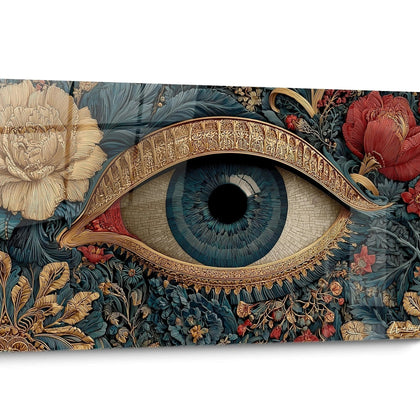
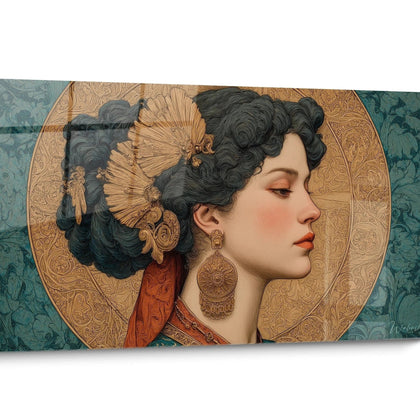
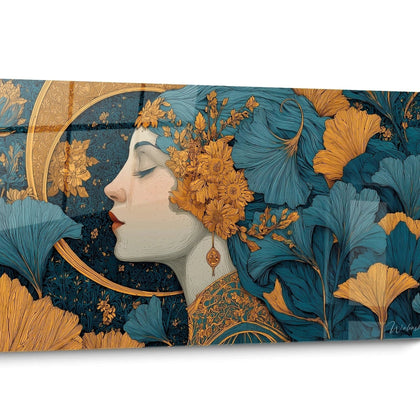
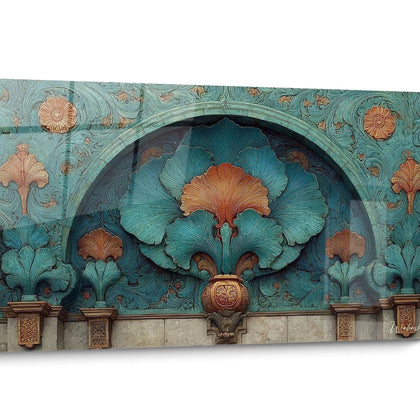
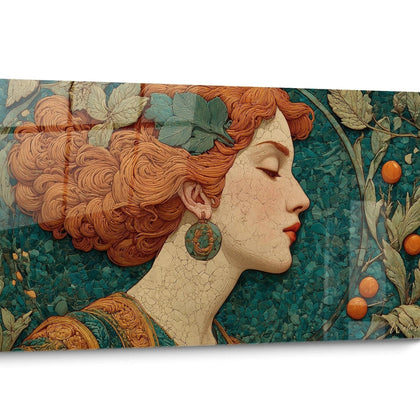
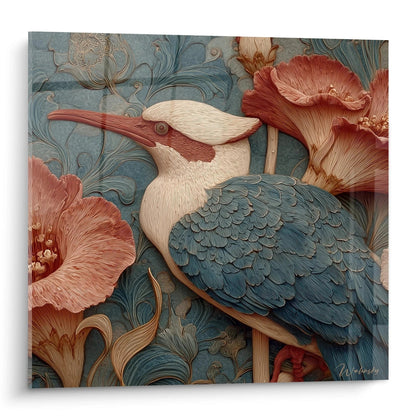
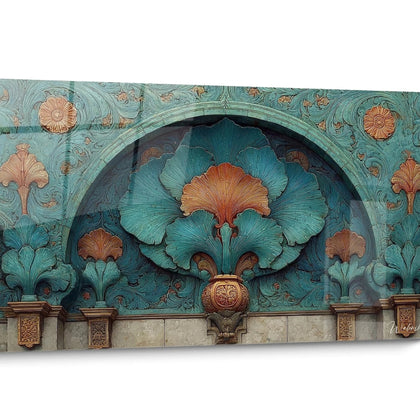
The Art Nouveau floral wall art embodies the very essence of this artistic movement that revolutionized decoration between 1890 and 1910. These monumental works capture stylized nature through sophisticated vegetable arabesques, sinuous curves and a refined color palette. Each Art Nouveau floral composition transposes organic forms into hypnotic decorative motifs, where petals, stems and foliage intertwine in a captivating visual choreography. These large-scale creations immediately transform the atmosphere of a space through their majestic presence and ornamental richness characteristic of 1900s aesthetics.
The Botanical Language in Art Nouveau Floral Art
The Art Nouveau floral wall art exploits a sophisticated botanical vocabulary where each plant species carries precise symbolic meaning. Stylized irises evoke wisdom and mysterious elegance, while poppies embody the dream and poetic escape dear to fin-de-siècle artists. Elongated lilies according to ornamental distortion principles represent transcended purity through aestheticism, creating majestic vertical compositions particularly suited to spaces with generous ceiling heights.
How do Art Nouveau floral motifs create a particular atmosphere?
The intertwining of serpentine stems and blooming corollas generates an organic visual dynamic that remarkably contrasts with contemporary architecture with clean lines. This aesthetic tension between structural modernity and vegetable sinuosity brings exceptional narrative depth. Monumental formats amplify this effect by creating imaginary botanical windows that visually extend habitable space toward unreal stylized gardens.
Chromotherapy of 1900s floral palettes
The characteristic hues of Art Nouveau floral wall art favor celadon greens, amethyst violets and pale golds that promote a refined contemplative atmosphere. To enrich your collection with other tones, explore our orange Art Nouveau compositions with warm copper accents, or discover the soothing shades of our Art Nouveau turquoise creations. These delicate hues create subtle chromatic harmony with natural plant essences present in contemporary interiors, establishing a dialogue between living decoration and stylized representation.
Seasonal cycles represented
Unlike classical botanical still lifes, Art Nouveau floral wall art transcends temporality by merging multiple stages of plant blooming simultaneously. Closed buds and fully opened flowers coexist in a decorative eternity that eliminates the notion of withering, thus offering idealized floral permanence particularly appreciated in main living spaces where aesthetic continuity matters.
Vegetable Architectures and Monumental Compositions
The large-format Art Nouveau floral wall art structures space according to organic architectural principles where vegetation becomes a visual constructive element. Interlaced stems form sophisticated decorative trellises, foliage organizes itself into rhythmic friezes, and inflorescences punctuate the composition like floral capitals. This approach transforms the botanical motif into a true vegetable colonnade that dialogues with structural elements of interior architecture.
Why privilege vertical formats in Art Nouveau floral composition?
Elongated dimensions naturally amplify stem elevation and the ascending growth characteristic of 1900s floral repertoire. These proportions create an vertical aspiration particularly effective in entrance halls, stairwells or rooms with mezzanines where height demands powerful visual anchoring. The eye naturally follows vegetable development from stylized ornamental roots to upper floral blooms, generating a complete visual journey.
Concealed symmetries and asymmetrical balances
Art Nouveau floral wall art composition subtly plays between classical ordering and organic freedom. An invisible central axis often structures the whole while vegetable elements deploy with apparent controlled spontaneity. This aesthetic duality allows harmonious integration in both traditional and contemporary interiors. To discover other stylistic variations, consult our complete Art Nouveau collection or explore the geometric motifs of our Art Nouveau architecture wall art that offer a complementary structural approach.
Vegetable frames and ornamental borders
Many Art Nouveau floral wall artworks incorporate their own decorative framing system where peripheral botanical motifs create a progressive transition between the work and its environment. These stylized vegetable borders eliminate the traditional abrupt separation, allowing more organic visual fusion with the supporting wall. This feature facilitates installation in spaces with textured or colored wall coverings without creating discordant aesthetic rupture.
Enhancing Spaces Through 1900s Floral Ornamentation
Integrating a monumental Art Nouveau floral wall art radically transforms a room's function by infusing it with a contemplative dimension and timeless sophistication. In a professional office, these stylized vegetable compositions bring serenity conducive to concentration without the distraction of photographic realism. Reception rooms particularly benefit from these works that serve as natural conversation points while asserting a cultivated and historically informed aesthetic positioning.
What furnishings harmonize with Art Nouveau floral motifs?
The curved lines of contemporary Scandinavian furniture remarkably echo the sinuous spirit of Art Nouveau floral wall art, creating unexpected formal coherence between distant epochs. Light essences such as whitewashed oak or natural ash particularly enhance vegetable hues of floral compositions without chromatic competition. Conversely, furnishings with strictly geometric lines benefit from the dynamic contrast offered by the organic undulation of 1900s botanical motifs.
Enhancing lighting for stylized vegetable compositions
The ornamental complexity of Art Nouveau floral wall art demands multidirectional lighting that progressively reveals the depth of vegetable interlaces according to hour and light intensity. Grazing lateral sources dramatically emphasize curves and counter-curves, while diffuse frontal lighting preserves overall composition readability. To complete your decoration with other chromatic variations, explore our gold Art Nouveau creations with captivating light reflections, or discover figurative expressions of our Art Nouveau portrait wall art and the savage energy of our Art Nouveau animal works.
Frequently asked questions about Art Nouveau floral wall art
Is Art Nouveau floral wall art suitable for contemporary minimalist spaces?
Absolutely, the highly stylized decorative nature of these compositions avoids anecdotal picturesqueness while bringing the visual richness that minimalist interiors often lack. The contrast between architectural simplification and ornamental complexity creates an aesthetic tension particularly valued in current sophisticated decorative approaches.
How to position a large Art Nouveau floral wall art in a space?
Favor main walls free from any furniture obstruction within at least two meters radius to allow sufficient visual distance. Locations facing circulation zones encourage repeated contemplations that progressively reveal the sophistication of ornamental details. Avoid immediate proximity to abundant natural vegetation that would create counterproductive thematic redundancy.
Do Art Nouveau floral wall artworks adapt to different decorative styles?
Their transitional nature between naturalism and ornamental abstraction enables remarkable versatility. They integrate as well in eclectic interiors embracing the mixing of epochs as in contemporary spaces seeking cultivated historical reference. Monumental dimension reinforces this adaptability by conferring sufficient affirmed presence to visually anchor spaces with varied decorative identities.


 Magnolia Emotion Carmine Wall Panel - Art Nouveau Edition213,90 €
 Iris Floral Splendor Painting - Art Nouveau edition233,90 €
 Orchid melody serpentine painting - Art Nouveau edition233,90 €
 Blue Flowers Aquatic Dance Wall Art - Art Nouveau Edition213,90 €
 Lotus Serenity Ornate Wall Art - Art Nouveau Edition233,90 €
 Iris Painting Verdant Luxury - Art Nouveau Edition233,90 €
 Renaissance Floral Flowers Painting - Art Nouveau Edition233,90 €
 Luminous Flower Caress Wall Art - Art Nouveau edition213,90 €
 Lotus Reverie Oriental Painting - Art Nouveau Edition213,90 €
 Golden Soul Flower Painting - Art Nouveau Edition213,90 €