


Diverse Children's Wall Art
Let your imagination run wild with our varied artworks for children ! A rich and varied collection that brings together enchanting universes, from amusing animals to imaginary worlds. Ideal for personalizing a child’s room with captivating illustrations, colorful and full of life. Each artwork invites escape and stimulates the creativity of the little ones.
 Children's Wall Art No. 26 - Kids Edition273,90 €
 Children's Wall Art No. 25 - Children's Edition273,90 €
 Children's Wall Art No.24 - Kids Edition273,90 €
 Children's Wall Art No.23 - Kids Edition273,90 €
 Children's Wall Art No. 22 - Children's Edition273,90 €
 Children's Wall Art No. 21 - Children's Edition273,90 €
 Children's Painting No. 20 - Children's Edition273,90 €
 Children's Wall Art No. 19 - Children's Edition273,90 €
 Children's Wall Art No.18 - Kids Edition273,90 €
 Children's Wall Art No.17 - Kids Edition273,90 €
 Children's Wall Art No. 16 - Children's Edition273,90 €
 Children's Wall Art No. 15 - Children's Edition273,90 €
 Children's Wall Art No.14 - Children's Edition273,90 €
 Children's Wall Art No.13 - Kids Edition273,90 €
 Children's Painting No.12 - Children's Edition273,90 €
 Children's Painting No.11 - Children's Edition273,90 €
 Kids Wall Art No. 10 - Kids Edition273,90 €
 Children's wall art No. 9 - Children's Edition273,90 €
 Children's Wall Art No.8 - Children's Edition273,90 €
 Children's Wall Art No. 7 - Children's Edition273,90 €
 Children's Painting No.6 - Children's Edition273,90 €
 Children's Painting No.5 - Children's Edition273,90 €
 Children's Wall Art N°4 - Children's Edition273,90 €
 Children's Wall Art N°3 - Children's Edition273,90 €
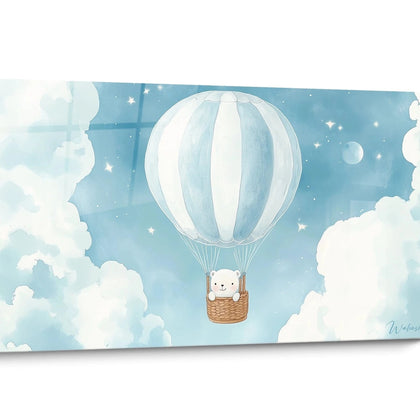
In the same family
Also explore the theme Children
-
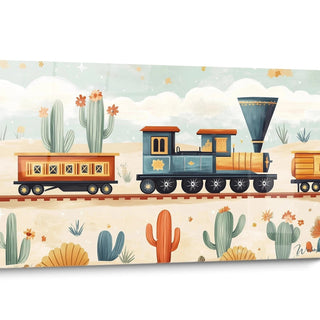 View all54
artworks
View all54
artworks
-
 Angels for Children3
artworks
Angels for Children3
artworks
-
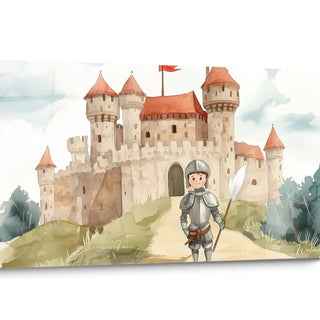 Knights for Children2
artworks
Knights for Children2
artworks
-
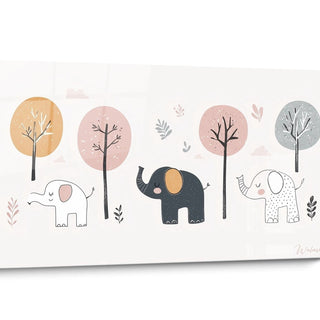 Children's Drawings2
artworks
Children's Drawings2
artworks
-
 Children's Dinosaurs3
artworks
Children's Dinosaurs3
artworks
-
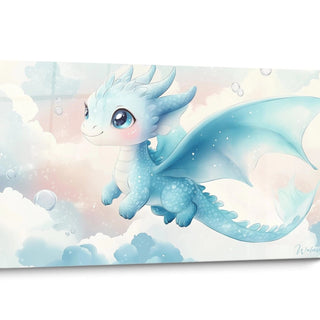 Dragons for children2
artworks
Dragons for children2
artworks
-
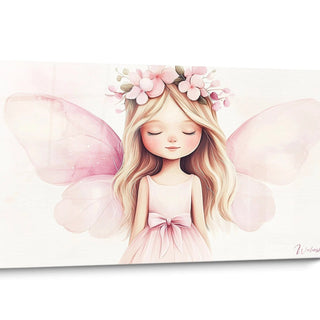 Magical for children3
artworks
Magical for children3
artworks
-
 Unicorns for Children3
artworks
Unicorns for Children3
artworks
-
 Pirates for Kids2
artworks
Pirates for Kids2
artworks
-
 Princesses for Children2
artworks
Princesses for Children2
artworks
-
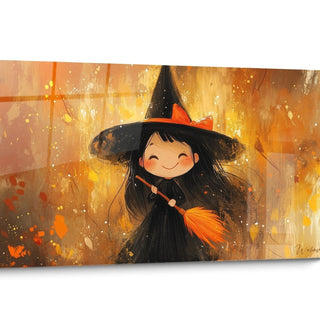 Witches for Kids2
artworks
Witches for Kids2
artworks
-
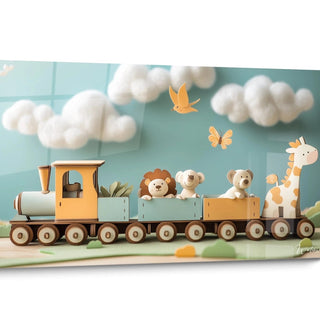 Trains for children2
artworks
Trains for children2
artworks
-
 Vampires for Kids2
artworks
Vampires for Kids2
artworks


All about Diverse Children's Wall Art
- Children's Wall Art Overview
- Children's Wall Art for Cognitive Stimulation
- Children's Wall Art and Visual Development
- Multi-Thematic Children's Wall Art
Discover our selection of children's wall art designed to enrich the visual and educational environment of your little ones. These wall pieces specially created for children's bedrooms combine aesthetics with pedagogical aspects, offering far more than simple decoration. Each children's wall art is designed to stimulate imagination, foster learning, and create a personal space that grows with your child.
Our children's wall art is available in different educational and fun themes, adapted to each age and area of interest. Young explorers, animal lovers, space enthusiasts, or budding artists - every child will find a piece that inspires them daily.
Unlike standard wall decorations, these pieces are specifically designed to meet children's developmental needs with detail-rich illustrations, stimulating colors, and themes that evolve with their growth.
Children's Wall Art: An Essential Tool for Cognitive Stimulation
The children's wall art represents much more than a simple decorative element - it's a genuine catalyst for the cognitive development of young children. In a child's visual environment, these pieces play a crucial role in stimulating multiple brain areas simultaneously.
How does children's wall art influence visual memory?
Neuroscience demonstrates that regular exposure to complex and diverse images significantly strengthens visual memory capacities. A children's wall art strategically placed within a child's daily visual field contributes to the development of neural connections associated with shape recognition, colors, and patterns.
Unlike toys that are put away after use, these pieces provide constant stimulation, even during activities not directly related to it. This passive yet continuous exposure allows complex visual concepts to be anchored in long-term memory.
Thematic Wall Art as Learning Supports
Wall art with educational themes - whether representing the alphabet, numbers, geography, or science - transforms walls into genuine pedagogical tools. Children naturally absorb this information through repeated visual immersion.
This passive learning method perfectly complements active education. Parents frequently report that their children spontaneously reference elements observed on their wall art during conversations or educational activities.
- Knowledge reinforcement through repeated exposure
- Creation of lasting visual associations
- Curiosity stimulation through details to discover progressively
- Support for parent-child conversation and exchange
What influence does children's wall art exert on concentration?
Specialized educators observe a correlation between the presence of complex visual supports in the daily environment and improved attentional capacities. Children's wall art rich in details naturally invites prolonged and careful observation.
This practice of detailed observation progressively strengthens concentration capacity, a fundamental skill for future learning. Wall art designed with different levels of visual reading allows children to continually discover new elements, thus maintaining their interest over extended periods.
The narrative illustrations present on these pieces also encourage the development of sequential thinking and understanding of causal relationships, skills essential for learning reading and mathematics.
The Impact of Wall Images on Language Development
Children's wall art constitutes excellent supports for narration and vocabulary acquisition. They quickly become anchors for story development and practice of descriptive language.
Parents frequently testify to the expansion of their children's vocabulary after installing thematic wall art in their personal space. The illustrated scenes become rich conversation supports, allowing new concepts and terms to be naturally introduced.
Children's Wall Art and Its Role in Visual Development
The children's wall art plays a determining role in the maturation of the visual system during critical phases of neurological development. Pediatric ophthalmologists recognize the importance of a stimulating visual environment to optimize the development of neural pathways related to vision.
Why prioritize high-contrast wall art for infants?
Visual development specialists recommend high-contrast images for children under 6 months, a period when their perception of nuances is still limited. Children's wall art integrating high-contrast geometric patterns (black and white or vivid primary colors) effectively stimulates developing nerve connections in the visual cortex.
For older children (6-18 months), the progressive introduction of wall art with more subtle contrasts and expanded color palettes perfectly accompanies the natural maturation of their visual system.
This calibrated visual progression contributes to optimal development of color discrimination, depth perception, and eye-hand coordination - fundamental skills that will later support school learning.
- Stimulation of visual neural connections
- Development of chromatic discrimination
- Improvement in perception of fine details
- Enhancement of complex visual analysis capacities
Chromatic Evolution of Wall Art According to Age
Color sensitivity evolves considerably during the first years. Children's wall art adapted to each developmental stage optimizes this natural progression.
Between ages 2 and 5, a period of intense development of the chromatic system, wall art integrating a wide range of secondary and tertiary colors enriches the child's visual repertoire, thus preparing their brain to discern the subtle nuances essential to reading and writing.
Neurologists specialized in brain development emphasize that this early exposure to varied visual stimuli promotes neural plasticity, creating an optimal neurological substrate for future complex learning.
Impact of Visual Compositions on Spatial Perception
Children's wall art presenting balanced spatial compositions contribute significantly to the development of spatial perception in young children.
Illustrations integrating different planes and perspectives naturally initiate children to spatial concepts (front/back, above/below, left/right) essential to navigating their environment and later to understanding spatial mathematics.
This early familiarity with two-dimensional representations of three-dimensional space also facilitates the future acquisition of graphic representation skills and understanding of diagrams and schematics used in science education.
Interactive Wall Art and Multiple Sensory Development
Children's wall art integrating tactile or interactive elements simultaneously stimulate multiple sensory pathways, thus optimizing multisensory integration in the developing brain.
Wall art combining visual and tactile stimulations simultaneously activates different brain areas, strengthening connections between these regions and promoting a holistic approach to learning particularly beneficial for children with different learning styles.
Multi-Thematic Children's Wall Art: Adaptation to Evolving Interests
Choosing multi-thematic children's wall art represents a particularly judicious strategy for accompanying the rapidly changing centers of interest characteristic of child development. Unlike single-theme pieces, these versatile visual creations offer a wealth of content that naturally evolves with the child.
How to select children's wall art that will grow with your child?
Developmental psychologists observe that children go through different phases of interest, each contributing specifically to their cognitive development. A children's wall art strategically designed incorporates multiple layered themes, allowing different readings depending on the child's age and current concerns.
Multi-layered illustrations, where secondary elements enrich the main theme, allow children to progressively discover new aspects, thus maintaining their fascination over several years, unlike single-theme decorations quickly abandoned.
This evolutionary characteristic ensures not only the longevity of your investment but also supports continuous development by regularly offering new visual and intellectual challenges adapted to the natural progression of cognitive capacities.
- Progressive discovery of secondary elements
- Visual interpretations adapted to each developmental stage
- Natural renewal of interest without replacement needed
- Visual support that evolves with your child's cognitive maturity
The Balance Between Educational and Imaginative Themes
The most effective children's wall art harmoniously combines explicit educational content and elements stimulating imagination. This duality meets complementary needs for acquiring structured knowledge and developing creative thinking.
Illustrations integrating factual elements (alphabets, numbers, maps) in imaginative contexts (fantasy universes, adventures, personified animal worlds) create powerful cognitive bridges between formal learning and creative exploration.
This hybrid approach fosters positive mental associations with academic content, demystifying formal learning by naturally integrating it into a playful and attractive context that remains visually stimulating even after acquiring basic knowledge.
Seasonal Wall Art and Temporal Awareness
Some innovative children's wall art incorporates references to natural cycles and seasons, contributing to the development of temporal awareness - a concept particularly abstract for young children.
These visual representations of seasonal transitions offer concrete reference points for grasping the passage of time, a fundamental yet difficult concept for children whose temporal perception differs significantly from that of adults.
Parents report that these pieces naturally become supports for discussions about temporal concepts (yesterday/today/tomorrow, months, seasons), facilitating the progressive acquisition of this essential cognitive dimension.
FAQ on Children's Wall Art
What is the ideal height for hanging children's wall art?
To maximize visual impact and interaction with children's wall art, prioritize installation at the child's eye level rather than standard adult heights. This position, generally between 90 and 120 cm from the floor depending on age, allows optimal observation and encourages direct interaction with the piece.
How to choose children's wall art that will stimulate cognitive development?
Select children's wall art presenting different levels of visual complexity, combining narrative elements and details to discover progressively. Illustrations subtly incorporating educational concepts (numbers, letters, shapes) in a playful context provide optimal cognitive stimulation while maintaining long-term visual appeal.
Can children's wall art help children with attention difficulties?
Yes, children's wall art specifically designed with clear visual structuring and strategic focal points can be excellent supports for developing concentration. Specialists recommend detailed yet organized illustrations, inviting methodical visual exploration that naturally strengthens attentional capacities.
L'art qui suscite l'envie
Maison belge d'art mural grand format
14 jourspour changer d'avis*
Protection Walenskyincluse
Fabriquéen Italie
FormatXXL
Kit de fixationtoujours fourni
* Hors tableaux personnalisés et tailles personnalisées


