


Magical wall art for children
Immerse yourself in a world of magic with our enchanting paintings for children ! Elves, fairies and enchanted creatures populate these wonderful illustrations, perfect for awakening the imagination. An enchanting painting transforms your child's room into a dreamlike world, where anything is possible. Give them a soft and inspiring decoration that invites dreams and extraordinary adventures.
 Fairy Wall Art No. 3 - Children's Edition273,90 €
 Magical Fairy Painting No. 2 - Kids Edition273,90 €
 Magical Fairy Painting No. 1 - Kids Edition273,90 €
In the same family
Also explore the theme Children
-
 View all54
artworks
View all54
artworks
-
 Angels for Children3
artworks
Angels for Children3
artworks
-
 Knights for Children2
artworks
Knights for Children2
artworks
-
 Children's Drawings2
artworks
Children's Drawings2
artworks
-
 Children's Dinosaurs3
artworks
Children's Dinosaurs3
artworks
-
 Kids Miscellaneous26
artworks
Kids Miscellaneous26
artworks
-
 Dragons for children2
artworks
Dragons for children2
artworks
-
 Unicorns for Children3
artworks
Unicorns for Children3
artworks
-
 Pirates for Kids2
artworks
Pirates for Kids2
artworks
-
 Princesses for Children2
artworks
Princesses for Children2
artworks
-
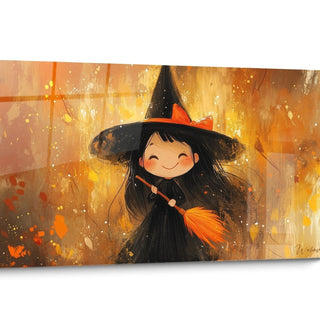 Witches for Kids2
artworks
Witches for Kids2
artworks
-
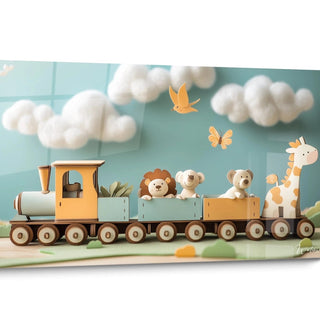 Trains for children2
artworks
Trains for children2
artworks
-
 Vampires for Kids2
artworks
Vampires for Kids2
artworks


All about Magical wall art for children
- Description Whimsical Painting for children
- Whimsical painting for children and imaginative development
- Whimsical painting for children and lighting
- Whimsical painting for children and thematic decoration
Dive into the enchanting world of whimsical paintings for children, these magical works that instantly transform the atmosphere of a child's room. More than just wall decor, a whimsical painting invites escape and nourishes the imagination of the youngest with its depictions of wonderful worlds.
The whimsical paintings for children's room) are distinguished by their bright colors, enchanted scenes and fantastic characters that capture attention and stimulate creativity. Unlike classic illustrations, these immersive visual creations tell a story and become a true portal to magical universes.
Whether it's enchanted forests populated by sparkling fairies, floating castles among the clouds, or benevolent mythical creatures, these whimsical paintings for children bring an essential dreamy dimension to the development of imagination. They are a valuable investment to enrich the visual and emotional environment of your child.
In the next tabs, discover how these extraordinary works can transform your child's room, stimulate their cognitive development and create a setting conducive to dreams and personal fulfillment. Explore the fascinating universe of whimsical paintings and let yourself be guided to select the one that will perfectly enchant your little one's living space.
How a Whimsical Painting for Children Stimulates Imagination and Narrative Abilities
The whimsical painting for children fundamentally distinguishes itself from other wall decorations by its unique ability to become a true catalyst for stories. Unlike classic illustrations that remain static, these enchanted works seem to come to life in the minds of children, allowing them to develop complex and evolving narratives over time.
What specific cognitive benefits does a whimsical painting for children offer?
Developmental psychologists agree on the importance of rich visual stimuli in the formation of young children's cognitive abilities. A whimsical painting, with its carefully arranged fantastic elements, simultaneously activates several brain areas related to visual recognition, narrative analysis and emotions. This multidimensional stimulation promotes the creation of more numerous and complex neural connections than traditional decor would.
Whimsical scenes, by their very nature, present elements that defy everyday reality - mythical creatures, fanciful proportions, reinvented physical laws - forcing the child to mentally construct a coherent world despite these "anomalies". This process significantly strengthens their cognitive flexibility and ability to conceptualize abstract ideas.
The parent-child dialogue facilitated by the wall fairytale universe
One of the remarkable characteristics of the whimsical painting is its ability to become a privileged communication support between parents and children. Faced with these enchanted representations, conversations naturally enrich:
- Collaborative creation of stories inspired by the visual elements
- Exploration of complex emotional concepts through fairytale characters
- Development of imaginative and descriptive vocabulary
- Strengthening of the emotional bond through the sharing of a common universe
Observations by many parents reveal that children exposed daily to a whimsical painting develop a richer vocabulary in descriptive and emotional terms, compared to those growing up in more conventional visual environments.
The Evolution of a Child's Relationship with Their Enchanted Wall Art Over Time
The interaction between a child and their enchanted wall art follows a fascinating trajectory throughout their development. Between 2 and 4 years old, the initial appeal is primarily visual and emotional - bright colors and character expressions capture their attention. From 4 to 7 years old, the narrative aspect takes over: the child begins to elaborate complex stories around the elements depicted.
From 7-8 years old, a reflective dimension is added: the child begins to interpret the symbolism present in the work, questioning the messages conveyed by certain scenes. This evolution proves the remarkable longevity of a well-chosen enchanted wall art piece, which continues to stimulate the child intellectually long after other decorations have lost their appeal.
Unlike toys that often end up neglected, a quality enchanted wall art piece retains its developmental relevance for several years, naturally adapting to the evolving cognitive needs of the child. This characteristic makes it a particularly worthwhile investment to accompany the different phases of childhood.
Visual Techniques Specific to Enchanted Wall Art That Capture a Child's Attention
Creators of enchanted wall art master several artistic techniques specifically adapted to the visual perception of children:
- Use of color contrasts optimized for developing vision
- Integration of discreet details that gradually reveal themselves, encouraging attentive observation
- Composition in multiple interconnected narrative planes
- Games of impossible perspectives that stimulate mental gymnastics
These unique visual characteristics explain why a true enchanted wall art piece exerts a lasting fascination, unlike conventional illustrations that can quickly tire a curious child's eye. The hypnotic effect documented by some parents ("My child can spend 20 minutes contemplating their wall art") is a testament to this exceptional visual richness.
By integrating an enchanted wall art piece into your child's room, you are offering them much more than just decoration - you are opening access to a powerful tool for cognitive and creative development that will accompany them through all the important phases of their mental and emotional growth.
The Unique Luminescent Impact of Children's Enchanted Wall Art on the Nighttime Ambiance
One of the most extraordinary and little-known characteristics of children's enchanted wall art lies in its particular relationship with ambient light. Unlike conventional wall decorations, these works possess specific reflective properties that transform the atmosphere of the room over time and seasons.
How Do Enchanted Wall Art Pieces Interact with Changing Natural Light?
The magic of a true enchanted wall art piece is fully revealed in its ability to "live" differently depending on the lighting conditions. This phenomenon, rare in the world of children's decorations, comes from sophisticated pictorial techniques:
- Pigments with differential light reactivity that reveal certain details only under certain angles
- Layering of reflective layers creating variable depth effects depending on the time
- Discreetly phosphorescent elements that come to life in the dim light
- Micro-textures capturing and diffusing light in a non-uniform way
Thus, your child constantly discovers new details in their enchanted wall art depending on whether the room is bathed in morning sunlight, illuminated by the golden light of sunset, or plunged into the nighttime dimness. This daily visual metamorphosis maintains the fascination for the work, even after months of exposure.
The Soothing Effect on Bedtime Transitions and Bedtime Rituals
Pediatric sleep specialists are increasingly interested in the influence of the visual environment on the quality of children's sleep. Several studies suggest that the visual elements present in the room play a crucial role in the transition between wakefulness and sleep.
The enchanting painting, with its delicate hues and dreamlike scenes, creates an ideal visual transition between the waking world and the realm of dreams. Unlike overly stimulating decor or screens, it offers a soothing focal point that facilitates a gradual slowing of brain activity, preparing for sleep.
Many parents report a significant improvement in bedtime routines after installing a well-chosen enchanting painting:
- Reduced time needed to fall asleep
- Decreased resistance at bedtime
- Noticeable decrease in anxious nighttime awakenings
- Positive association between the dream world and the represented universe
The perfect balance of light between stimulation and soothing
The design of a quality enchanting painting relies on a subtle balance, the result of in-depth research in pediatric environmental psychology. The artwork must be stimulating enough to capture a child's imagination, while respecting specific chromotherapeutic principles to avoid any overstimulation detrimental to rest.
This functional duality fundamentally distinguishes the enchanting painting from other children's wall decorations, often designed without consideration for their psychophysiological impact. The specific palette used - a dominance of celestial blues, soft violets, and emerald greens - activates brain areas related to imagination while maintaining a calming influence on the nervous system.
The strategic placement of the painting in relation to natural and artificial light sources in the child's room can maximize these beneficial effects. The ideal location will allow the painting to capture daylight, while remaining visible without glare from the child's bed.
The evolving perception of the light elements of the enchanting painting
A particularly fascinating phenomenon observed with high-quality enchanting paintings concerns the evolution of a child's perception of the light elements as they grow. Young children (2-4 years old) are primarily attracted to marked contrasts and the brightest elements - sparkling fairies, stars, magical glows.
Between 5 and 8 years old, their attention gradually shifts to the subtle interactions between light and shadow - reflections on water, lunar halos, fairy transparencies. From 8-9 years old, they begin to appreciate symbolic games of light - light representing knowledge, hope, or courage in the face of darkness.
This evolving perception transforms the enchanting painting into a sophisticated visual education tool that accompanies the development of a child's aesthetic sensitivity far beyond what conventional decorations offer.
In conclusion, an enchanting painting for children is more than just a decorative element - it is a true instrument for harmonizing the lighting of a child's space, positively influencing both moments of creative awakening and phases of transition to sleep.
The transformative dimension of the enchanting painting for children in spatial design
Unlike traditional wall decorations, the enchanting painting for children has a unique architectural characteristic: its ability to completely redefine the spatial perception of a bedroom. It is not simply about embellishing a wall, but about creating a true dimensional extension that fundamentally changes the experience of the inhabited space.
Can an enchanting painting be used to correct architectural imbalances in a child's room?
Interior architects specializing in children's spaces now recognize the remarkable potential of enchanting paintings as perspective correction tools. In rooms with unfavorable proportions (low ceiling, narrow space, lack of light), an enchanting painting strategically sized and positioned can literally "reprogram" spatial perception:
- Vertical enchanting compositions with celestial elements create an illusion of elevation in rooms with low ceilings
- Horizontal enchanting panoramas with perspective depth visually partition narrow spaces
- Bright scenes with multiple focal points redistribute the visual balance in asymmetrical rooms
- Vista compositions compensate for the lack of a window or outdoor view
This transformative ability radically distinguishes the fairytale painting from purely ornamental decorations. It becomes a true architectural tool that dialogues with the existing space to transcend its physical limitations.
The unique "dimensional passage" effect of large-scale fairytale paintings
Neuroscientists studying spatial perception in children have documented a fascinating phenomenon they call the "portal effect" or "dimensional passage." When a fairytale painting of sufficient dimensions (ideally over 80 x 60 cm) is installed at an appropriate height, the child experiences a sensation of spatial opening that far exceeds the simple decorative effect.
This phenomenon is explained by the conjunction of specific perceptual factors: the depth composition of fairytale scenes, the use of sophisticated atmospheric perspectives, and the presence of visual elements that literally "invite" the gaze to pass through the pictorial surface.
To maximize this transformative effect, experts recommend positioning the large-scale fairytale painting on the wall that the child faces most often - generally opposite the bed or adjacent to the play area. This configuration optimizes perceptual immersion and the integration of the fairytale world into the child's daily experience.
The synergy between fairytale painting and existing architectural elements
The successful integration of a fairytale painting into a child's room is not limited to hanging a work on a blank wall. Specialized interior designers recommend establishing a visual dialogue between the work and the existing architectural characteristics:
- Aligning the force lines of the painting with the dominant architectural lines
- Echoing the chromatic elements between key fairytale elements and the room's color accents
- Extending the theme subtly from the painting to the surrounding space
- Using lighting to create a transition zone between the real and the imaginary
This holistic approach transforms the entire room into a coherent visual ecosystem where the fairytale painting plays the role of a "narrative heart" radiating to the other elements of the space. The child then benefits from a much deeper and more lasting fairytale immersion than that offered by isolated decorations.
The seasonal evolution of the relationship between fairytale painting and surrounding space
A particularly remarkable characteristic of high-quality fairytale paintings is their ability to maintain a dynamic relationship with the environment over the seasons. Unlike static decorations, a well-designed fairytale painting "dialogues" differently with the space according to seasonal variations in light, mood, and activities.
In winter, when children spend more time indoors, the fairytale painting becomes an imaginatively explored anchor point, offering a visual escape during gray days. In spring and summer, it establishes conceptual bridges with outdoor experiences, the child drawing parallels between natural elements discovered outside and their fairytale representation.
This seasonal evolvability confers on the fairytale painting an exceptional emotional longevity compared to themed decorations that may seem disconnected from the natural rhythm of the year.
FAQ about fairytale paintings for children
What is the ideal age to install a fairytale painting in a child's room?
Fairytale paintings for children can be installed from the age of 2, when the child begins to develop a complex visual appreciation. Their positive influence on cognitive development is particularly marked between 3 and 10 years old, a period during which imagination and storytelling are intensively built.
How should a fairytale painting for children be properly maintained?
High-quality fairytale paintings require little maintenance. Gentle dusting with a soft-bristled duster is usually sufficient. Avoid prolonged exposure to direct sunlight to preserve the vibrancy of the colors. In case of a stain, consult the manufacturer for specific advice according to the materials used.
Can a fairytale painting be easily moved without losing its effect on the space?
Most fairytale paintings for children are designed to be repositionable. However, their transformative effect on the space may vary depending on the location. After moving, allow a few days of adaptation for the work to "dialogue" with its new environment and regain its full immersive power.
Do fairytale paintings exist that evolve with the child's age?
Some high-end fairytale paintings are designed with multiple levels of reading that gradually reveal themselves as the child grows. Look for creations that explicitly mention an "evolving design" or "details to discover over time" to maximize the developmental longevity of your investment.
Further reading
Our articles on this topic
- Do mermaid and fantasy creature paintings overstimulate the nighttime imagination?
- Halloween gift: the perfect witch painting for a child
- Christmas animal painting for a child's bedroom: creating a magical December ritual
- Career painting for a child's bedroom: how to nurture their dreams for the future
- Ant painting for a nature-curious child's room: the complete guide
- Fennec painting: creating a soothing bedtime ritual for your child
L'art qui suscite l'envie
Maison belge d'art mural grand format
14 jourspour changer d'avis*
Protection Walenskyincluse
Fabriquéen Italie
FormatXXL
Kit de fixationtoujours fourni
* Hors tableaux personnalisés et tailles personnalisées


