


Asia Cherry Blossom Wall Art
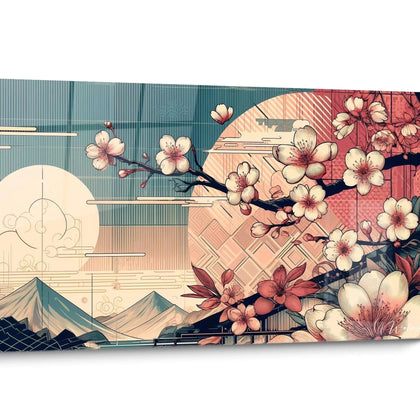
The Painting Asia Cherry celebrates the iconic beauty of Japanese cherry blossoms. This collection captures the essence of traditional Asian art with poetic and delicate compositions inspired by Japan. Each work evokes the serenity of the Japanese landscapes where the pink cherry blossoms symbolize renewal and the ephemeral. Perfect for creating a zen and soothing atmosphere, this artistic universe transforms your interior into an oriental haven of peace, combining Japanese refinement and spirituality.
 Canvas Flower Painting - Asia Edition273,90 €
 Flower Meadow Painting - Japan Edition273,90 €
 Blood Flower Wall Art - Japan Edition273,90 €
 Tree of Destiny Painting - Japan Edition273,90 €
 Serene Flourishing Canvas - Sakura Asia Edition273,90 €
 Return to the Village Painting - Chinese Painting Asia Edition273,90 €
 Under Japan's Sky - Japanese Asia Edition Wall Art273,90 €
 Passage Under the Sakura Wall Art - Japanese Asia Edition273,90 €
 Elegant Floral Wall Art - Japanese Asia Edition273,90 €
 Wall Art Under the Charm of Flowers - Chinese Asia Edition273,90 €
 Spring Elegance Painting - Chinese Asia Edition273,90 €
 Asian wall art No. 1 - Asia Edition273,90 €
 Blooming Sakura Wall Art - Asia Edition273,90 €
 Silk Dream Wall Art - Asia Edition273,90 €
 Petals Poetry Wall Art - Asia Edition273,90 €
 Flower Garden Wall Art - Asia Edition273,90 €
 Flowers in Moonlight Wall Art - Asia Edition273,90 €
 Perfect Balance Artwork - Asia Edition273,90 €
 Blossoming Artwork - Asia Edition273,90 €
 Spring Softness Wall Art - Asia Edition273,90 €
 Mist and Cherry Blossoms Wall Art - Asia Edition273,90 €
 Captivating Gaze Wall Art - Edition Asia273,90 €
 Eternal Bloom Canvas - Asia Edition273,90 €
All about Asia Cherry Blossom Wall Art
- Presentation Painting Asia Cherry
- Japanese Cherry and Symbolism
- Asian Visual Composition
- Ambiance and Integration
The Asia cherry painting embodies the very essence of Japanese aesthetics through the representation of sakura, an ephemeral symbol of beauty and renewal. This large-format wall art captures the soul of Japanese gardens in spring, a period when cherry blossoms transform landscapes into incomparable living paintings. Designed for enthusiasts of Asian culture and lovers of Zen decoration, this monumental visual brings a contemplative dimension to any interior space. Delicate branches laden with pink or white flowers create a soothing atmosphere that invites meditation and inner travel. For a complete collection exploring the Japanese universe, our Asia paintings offer different artistic interpretations of the Japanese cherry blossom and other emblematic motifs of Japan. Each sakura representation tells a different story, oscillating between tradition and modernity, between photographic realism and artistic stylization.
The Japanese Cherry Blossom: Bearer of Ancestral Meanings
Why does the sakura occupy a central place in Japanese art?
The Asia cherry painting transcends the simple botanical representation to become a vector of Japanese philosophy. The concept of mono no aware, this sensitivity to the ephemeral, finds its ultimate expression in the fleeting flowering of the cherry blossom, which lasts only a few days. This notion deeply rooted in Japanese spirituality transforms each sakura representation into a visual meditation on the impermanence of life. Japanese artists have developed over the centuries a specific iconography of the cherry blossom, where the arrangement of branches, the density of flowers and the presence or absence of foliage carry precise meanings.
Chromatic variations and flowering periods
The palette of the Asia cherry painting varies according to the varieties represented and the moments captured. Somei yoshino offer their flowers in an immaculate white tinted with pale pink, while yaezakura display double petals of deep pink. These nuances directly influence the atmosphere conveyed by the wall art: light tones bring brightness and lightness, perfect for visually enlarging a space, while deep pinks create dramatic focal points. The background of the composition also plays a crucial role: a blue sky evokes sunny spring days, a graphic black background reinforces contrast and modernizes the traditional approach.
Association with Japanese natural elements
An authentic Asia cherry painting often integrates contextual elements that enrich the visual narrative. The presence of Mount Fuji in the background establishes a symbolic geography dear to the Japanese imagination. Stone lanterns, arched bridges in red vermilion wood, or tiered pagodas multiply the cultural anchor points. Migratory birds such as cranes or nightingales add a dynamic dimension and reinforce the seasonality of the scene. These multi-layered compositions create a narrative depth that transforms the wall into a window open onto the imperial gardens of Kyoto or the banks of the Sumida River in Tokyo.
Graphic Aesthetics and Asian Visual Techniques
How to recognize an authentically Japanese composition?
The Asia cherry painting generally follows the compositional principles of traditional Japanese art, notably the sought-after asymmetry and the negative space called "ma". Unlike Western compositions centered, the cherry branches often traverse the format diagonally, creating a balanced dynamism with large areas of emptiness. This visual breathing corresponds to the Zen philosophy of less is more, where each present element has a precise reason to be. Horizontal panoramic formats recall traditional byōbu screens, while vertical kakemono formats evoke scrolls hung in tokonoma alcoves.
Games of depth and Japanese perspectives
The approach to depth in a Asia cherry painting differs radically from Western linear perspective. Japanese artists prefer an atmospheric perspective where successive planes are distinguished by variations in saturation and sharpness rather than converging vanishing lines. The branches in the foreground display meticulous details of the bark and stamens, while distant cherry trees blend into a light mist that softens the contours. This technique creates an impression of contemplative depth inviting the eye to travel through the different strata of the image. Large-scale formats amplify this immersive effect.
Modern artistic treatments of the traditional motif
Contemporary variations of the Asia cherry painting reinterpret the classic motif with varied approaches. Minimalist versions isolate a single sakura branch against a solid background, reducing the iconography to its graphic essence. Digital interpretations add paper washi texture or gold leaf effects, recalling the techniques of Edo-era master painters. Some creations fuse high-resolution photography and vector graphic elements, creating visual hybrids between realism and stylization. These renewed approaches allow the Japanese cherry to be integrated into modern interiors without stylistic disruption.
Integration of the Japanese Cherry into Contemporary Spaces
Which spaces benefit most from an Asia cherry painting?
The Asia cherry painting radically transforms the atmosphere of spaces dedicated to relaxation and rejuvenation. In a master bedroom, it establishes an atmosphere conducive to mental rest, particularly effective facing the bed where it becomes the last visual contemplated before sleep. Yoga or meditation spaces gain authenticity with this iconography charged with Zen spirituality. Professional waiting rooms, particularly in alternative therapies, acupuncture, or shiatsu clinics, reinforce their thematic consistency with such a visual. Spacious bathrooms adopting a spa aesthetic also benefit from this evocation of Japanese hot springs surrounded by sakura.
Decorative associations and ambient complements
An Asia cherry painting creates a focal point around which to orchestrate a coherent decoration. Bamboo natural elements, shoji screens, zabuton floor cushions, and genuine bonsais reinforce the authenticity of the Japanese universe. Raw materials such as raw linen, ceramic stoneware, and dark wenge or ebony woods dialogue harmoniously with the delicate shades of cherry. Indirect lighting through akari paper lanterns diffuses a soft light that enhances the pink nuances without creating aggressive reflections on the surface. Japanese incense scents such as hinoki or sandalwood complement the overall sensory experience.
Monumental formats and spatial impact
The generous dimensions of a painting Asia cherry in a large format create a visual window that symbolically abolishes the limits of the wall. A format of 150 to 200 cm in width generates an immersive effect comparable to that of a mural, particularly spectacular in spaces with high ceilings. This monumentality is perfectly suited to industrial lofts seeking to soften architectural harshness with a touch of poetic nature. Triptych formats allow for modular installation that adapts to complex wall configurations including doors or windows. The imposing scale transforms the Japanese cherry tree into a true spatial protagonist that influences the circulation and volumetric perception of the room.
What is the durability of an Asia cherry painting over time?
Current printing technologies guarantee excellent chromatic resistance of Asia cherry paintings, preserving the brilliance of the delicate pinks and the depth of the shadows for many years. UV-resistant inks prevent fading even in bright rooms, while surface treatments protect against ambient humidity. Positioning avoiding direct sunlight significantly prolongs the preservation of subtle nuances. Maintenance is limited to occasional dusting with a dry microfiber cloth, without chemicals that could alter the finishes.
How to choose between different representations of a Japanese cherry tree?
The choice of an Asia cherry painting depends on the decorative intention and the emotion sought. Representations of the day, bathed in natural light, are suitable for active living spaces and bring vitality and optimism. Crepuscular or nocturnal scenes, with their mauve and indigo tones, create a more introspective atmosphere suitable for bedrooms. Compositions focusing on floral details privilege the botanical aspect and delicacy, while panoramic views including landscape and architecture tell a more narrative and culturally rooted story.
Can a cherry painting be combined with other Asian motifs?
Combining an Asia cherry painting with other Japanese iconography enriches the decorative narrative. Motifs of stylized waves in the Hokusai style create a dialogue between earth and sea, between vegetation and mineral. Representations of cranes, symbols of longevity, reinforce positive spiritual meanings. Japanese calligraphy of haiku poems evoking spring and flowering amplifies the literary dimension. This thematic stratification transforms a wall into a true coherent cultural gallery, provided that the visual balance is respected by varying formats and leaving breathing spaces.
What advantages does a large format offer for this specific motif?
The Japanese cherry tree greatly benefits from being represented in a large format because its beauty lies in the multitude of small flowers that compose a harmonious ensemble. A generous dimension allows you to appreciate both the overall vision of the architectural branches and the individual details of each five-petal flower simultaneously. This double reading, macroscopic and microscopic, reproduces the real experience of contemplating sakura in Japanese parks. Imposing formats also better capture the ambient light that makes the pink and white tones vibrate according to the hours of the day, creating a work that constantly renews itself.
L'art qui suscite l'envie
Maison belge d'art mural grand format
14 jourspour changer d'avis*
Protection Walenskyincluse
Fabriquéen Italie
FormatXXL
Kit de fixationtoujours fourni
* Hors tableaux personnalisés et tailles personnalisées


