


Turquoise Art Nouveau Wall Art
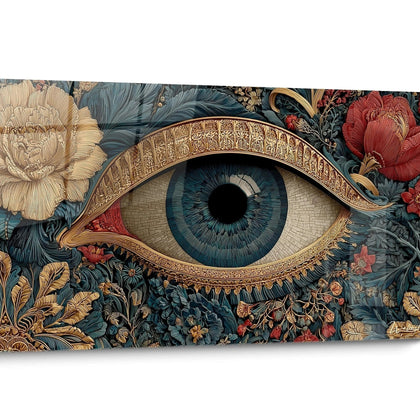
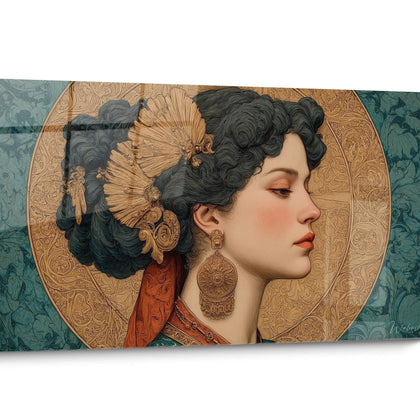
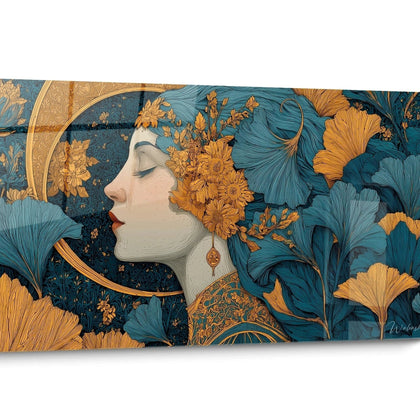
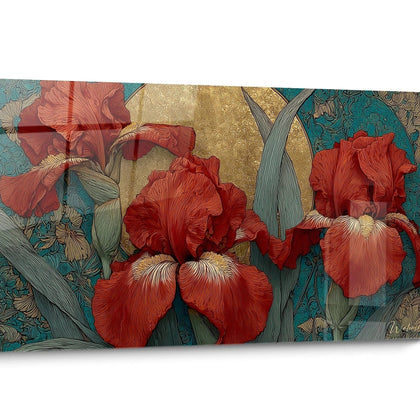
Our Art Nouveau Painting Turquoise collection celebrates the timeless elegance of this iconic artistic movement. Each Decorative Painting turquoise Art Nouveau captures the organic curves, stylized floral motifs, and feminine grace characteristic of this golden age. Vibrant turquoise hues bring a touch of sophistication and serenity to your decor. Perfect for lovers of Art Nouveau Style Wall Art, this collection transforms your spaces into veritable artistic galleries imbued with poetry and refinement.
 Magnolia Emotion Carmine Wall Panel - Art Nouveau Edition228,90 €
 Iris Floral Splendor Painting - Art Nouveau edition273,90 €
 Orchid melody serpentine painting - Art Nouveau edition273,90 €
 Aquatic Palace Architecture Painting - Art Nouveau Edition273,90 €
 Woman Profile Contemplative Wall Art - Art Nouveau Edition273,90 €
 Red-Haired Golden Woman Painting - Art Nouveau Edition228,90 €
 Renaissance Floral Flowers Painting - Art Nouveau Edition273,90 €
 Woman Wall Art Copper Meanders - Art nouveau edition228,90 €
 Woman with Captivating Golden Swirls Wall Art - Art Nouveau Edition228,90 €
Explore further
In Turquoise Art Nouveau Wall Art

All about Turquoise Art Nouveau Wall Art
- Painting Presentation Art New Turquoise
- Turquoise Art Nouveau Déco
- Turquoise Shades & Motifs
- Integration into Modern Spaces
The turquoise Art Nouveau painting embodies the masterful alliance between the organic elegance of the Art Nouveau movement and the evocative power of a captivating color. This precious hue, oscillating between marine depths and gemstone brilliance, transforms the vegetal curves, sinuous arabesques, and floral compositions characteristic of this artistic period into true contemporary wall jewels. Discover how this exceptional chromatic fusion redefines the aesthetic of refined interiors.
The Chromatic Impact of Turquoise in Art Nouveau Aesthetics
The turquoise Art Nouveau painting exploits a chromatic dimension rarely explored in the classic iconography of this movement. Unlike traditional golden or amber palettes, turquoise infuses a fresh aquatic quality that remarkably dialogues with the fluid lines and organic forms characteristic of the style. This hue simultaneously evokes oceanic depths, precious minerals, and oriental ceramics that profoundly influenced artists of the time.
Why does turquoise sublimate Art Nouveau compositions?
This color possesses an intrinsic luminosity that accentuates the three-dimensionality of sinuous motifs. In large-scale works, each shade of turquoise – from electric cyan to celadon blue-green – reveals different ornamental details depending on the angle of observation. Floral Art Nouveau compositions particularly benefit from this palette, transforming stylized irises, symbolic water lilies, and ornamental wisteria into hypnotic chromatic cascades.
The alliance of turquoise and precious metals in wall creations
The imposing format of turquoise Art Nouveau paintings allows for the integration of metallic accents that dialogue with the main hue. Touches of oxidized copper, patinated bronze, or aged silver create captivating thermal contrasts. This combination recalls the cloisonné and enameling techniques favored by glass masters like Tiffany, where turquoise structured luminous compositions. For those who appreciate warmer metallic harmonies, golden Art Nouveau paintings offer a fascinating complementary alternative.
Aquatic symbolism and natural references
Turquoise conveys symbolic references deeply rooted in the Art Nouveau imagination. This color evokes Monet’s water lilies, Mucha’s majestic peacocks, iridescent dragonflies, and scale motifs that adorned Lalique’s jewelry. In large wall compositions, these elements acquire a monumental presence, transforming the space into a sanctuary dedicated to stylized nature. Creations integrating animal motifs Art Nouveau particularly benefit from this aquatic palette to represent peacocks, swans, and fantastic creatures.
Tonal Variations and Ornamental Turquoise Compositions
Large-scale turquoise Art Nouveau paintings exploit a sophisticated tonal range that transcends simple monochromatic application. From icy turquoise almost white to deep saturated blue-green, each variation creates a distinct atmosphere. These nuances interact with typical motifs – vegetal volutes, geometric interweaves, undulating hair – to produce layered visual effects impossible to perceive in reduced formats.
How do turquoise gradients structure the visual space?
In monumental compositions, gradual transitions between light turquoise and saturated versions create an atmospheric depth comparable to sfumato techniques. Backgrounds can evolve from bright cerulean to emerald tones, guiding the eye through ornamental layers. This technique proves particularly effective in stylized landscape representations, fantastical gardens, and allegorical scenes where color structures the visual narrative as much as the forms themselves.
Architectural motifs and organic geometry in turquoise
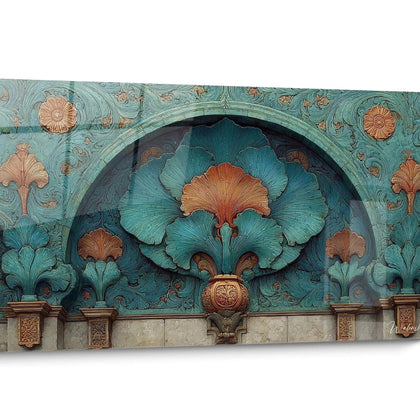
Some turquoise Art Nouveau compositions favor architectural elements characteristic of the movement: parabolic arches, vegetative colonnades, stylized stained glass, and lattice structures. Turquoise lends these elements an airy lightness while preserving their structural presence. Imposing formats allow appreciation of the complexity of interweavings, broken symmetries, and ornamental rhythms that define the visual identity of this style. Lovers of built elements will also appreciate the paintings Art Nouveau architecture that explore these spatial dimensions.
Female portraits and allegories in the turquoise palette
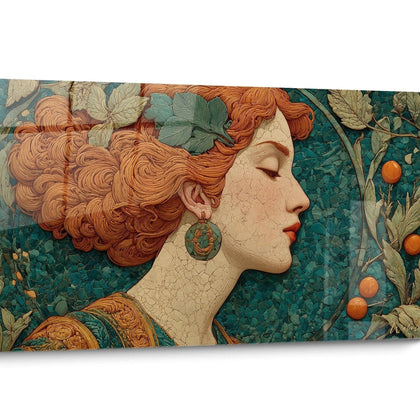
Representations of female figures – muses, allegories of the seasons, floral personifications – acquire a dreamlike dimension when bathed in turquoise atmospheres. This color enhances delicate complexions, transforms hair into liquid cascades, and lends draperies an aquatic fluidity. Jewelry, floral crowns, and ornaments that characterize these compositions reflect glints of precious stones, reinforcing the preciousness of the whole. To discover other interpretations of the human figure in this stylistic universe, explore our collection of paintings Art Nouveau portrait.
Integrating the Art Nouveau Turquoise Painting into Contemporary Interiors
Inserting a Art Nouveau turquoise painting of large dimension into a modern space requires a strategic approach that honors both the historical heritage of the work and contemporary aesthetic requirements. This exceptional color functions as a chromatic bridge between different decorative eras, creating unexpected visual dialogues between minimalist furniture, vintage elements, and design accessories.
What color environments enhance Art Nouveau turquoise?
Turquoise deploys its full potential when it dialogues with sophisticated neutral palettes. Pearl gray, sand beige, or off-white walls create luminous settings that amplify chromatic saturation without creating visual competition. For bolder interiors, accents of terracotta, burnt coral, or saffron yellow establish dynamic thermal contrasts. Compositions naturally integrating these warm tones, such as Art Nouveau orange paintings, can create fascinating complementary wall ensembles.
Strategic positioning and spatial enhancement
Monumental formats require locations that respect their imposing scale. Free walls of reception areas, focal points of private libraries, or architectural niches constitute privileged locations. Turquoise has the particularity of appearing differently according to the temperature of light: cold and recessive under neutral LED lighting, warm and vibrant under incandescent lamps. This versatility allows for orchestrating variable atmospheres throughout the day.
Decorative associations and stylistic extensions
To create decorative consistency without falling into thematic redundancy, pair your wall art with elements that engage with its organic dimension rather than its historical style. Scandinavian furniture with soft curves, blown glass lighting, and natural textiles like linen or raw silk extend the fluid spirit of Art Nouveau. Brushed brass accessories, artisanal ceramics, and aged wood reinforce the handcrafted dimension without creating a museum-like effect. Our entire Art Nouveau wall art collection offers possibilities for harmonious wall pairings for collectors wishing to develop a consistent thematic gallery.
FAQ: Art Nouveau Turquoise Painting
Is an Art Nouveau turquoise painting suitable for contemporary professional spaces?
Absolutely. In executive offices, consulting firms, or high-end coworking spaces, this piece brings cultural sophistication while infusing a touch of creativity. Turquoise promotes concentration and serenity, qualities valuable in demanding professional environments.
How to preserve the chromatic intensity of an Art Nouveau turquoise painting over time?
Avoid prolonged direct exposure to UV rays, which gradually degrade the cyan pigments. Opt for indirect lighting with a color temperature between 2700K and 3000K. Monumental formats benefit from seasonal rotation of a few degrees to balance light exposure across the entire surface.
Can an Art Nouveau turquoise painting be paired with other artistic movements?
This versatility is precisely its strength. Art Nouveau turquoise dialogues remarkably with the geometric abstraction of the 1960s, Scandinavian minimalism, or even certain expressions of contemporary street art. The key lies in balancing chromatic saturations and respecting visual scales to avoid decorative cacophony.
Further reading
Our articles on this topic
- How to integrate a turquoise Art Nouveau painting into a bohemian decor
- Art nouveau orange painting in a modern living room: how to choose it well
- Art nouveau painting of a woman with long hair: the centerpiece of your bedroom
- Art nouveau or art deco: how to choose the right style for your wall decoration?
- Panoramic Art Nouveau painting: elevate a hallway or entrance
- Art Deco Peacock Painting: The Magic of Gold and Green Tones
L'art qui suscite l'envie
Maison belge d'art mural grand format
14 jourspour changer d'avis*
Protection Walenskyincluse
Fabriquéen Italie
FormatXXL
Kit de fixationtoujours fourni
* Hors tableaux personnalisés et tailles personnalisées


