


Art Nouveau Architecture Wall Art
The Art Nouveau Painting Architecture celebrates the masterful union between nature and structure that defines this iconic movement of 1890-1910. Each artwork captures the organic curves and floral ornaments characteristic of Parisian, Brussels and Viennese facades. The sinuous lines and decorative ironwork illustrate the genius of Guimard, Horta and Gaudí. This collection transforms your interior into an architectural art gallery, evoking the golden age of European aesthetic innovation.
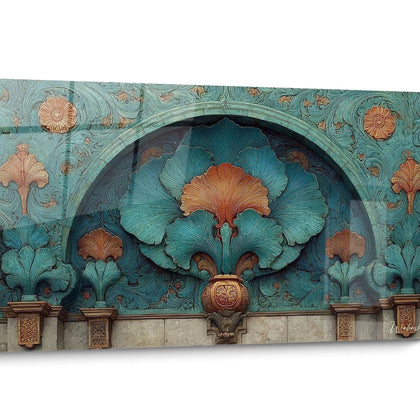
 Aquatic Palace Architecture Painting - Art Nouveau Edition273,90 €
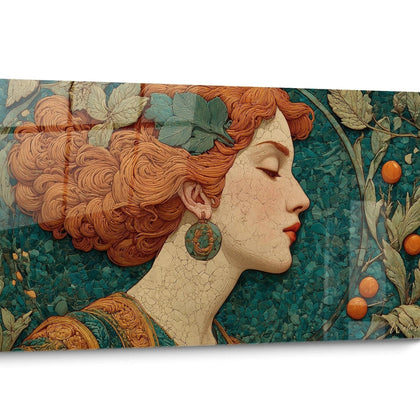
 Winged Face Goddess Architectural Painting - Art Nouveau Edition273,90 €
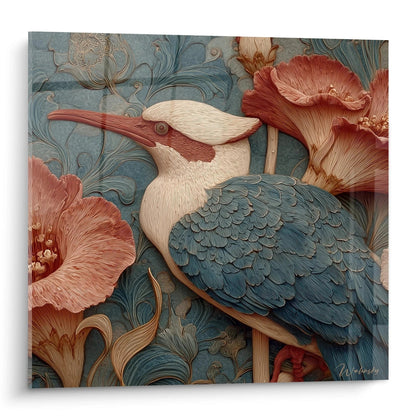
 Enchanted Palace Architecture Painting - Art Nouveau Edition228,90 €
Explore further
In Art Nouveau Architecture Wall Art
All about Art Nouveau Architecture Wall Art
- Art Nouveau Architecture Wall Art Presentation
- Monumental Art Nouveau Architecture
- Masters and Iconic Buildings
- Architectural Wall Decoration
The Art Nouveau architecture wall art celebrates the structural and ornamental innovation that revolutionized European urban design between 1890 and 1914. These wall representations capture the organic fluidity of facades, the complexity of monumental ironwork, and the harmonious integration of vegetation within stone. Discover how these monumental compositions transform your spaces into contemporary architectural galleries, evoking the creative boldness of Guimard, Horta and Gaudí while embracing a modern decorative approach.
Art Nouveau Architecture in Contemporary Wall Decoration
The Art Nouveau architecture wall art reproduces the structural characteristics that defined this aesthetic revolution: sinuous lines reminiscent of plant stems, bold compositional asymmetry, and wrought iron integration as a major decorative element. These large-format wall representations capture emblematic architectural details such as curved bay windows, organically-designed balcony railings and polychrome stained glass structuring luminous space. Discover also our collection of Art Nouveau orange wall art.
Which architectural facades are represented in these wall compositions?
The compositions favor Parisian buildings by Guimard such as the Maison Coilliot, Brussels townhouses by Victor Horta with their monumental staircases visible from the street, or the mineral undulations of Barcelona's Casa Batlló. These structures distinguish themselves through their organic verticality which naturally guides the eye upward, creating an ascending dynamic particularly suited to high-ceilinged spaces in rehabilitated industrial lofts or generous entrance halls.
The sculptural dimension of Art Nouveau architectural elements
Unlike Art Nouveau floral representations, architectural wall art emphasizes the three-dimensionality of projecting bay windows, the thickness of ornamental friezes and the depth of corbels. This perceptible volume transforms the bearing wall into an architectural setting, creating a dialogue between the flatness of the wall support and the spatial projection suggested by the structural advances represented. The cast shadows of balconies, the reflections in curved stained glass and the plunging perspectives on monumental entrances generate visual complexity absent from purely decorative compositions.
Monumental ironwork and vertical rhythms
Parisian subway entrance grilles, staircase railings with vegetative metal interlacing and glass roof supports constitute recurring motifs. These iron elements, reproduced in their original monumental scale, bring a powerful graphic structure that visually compensates for large bare wall surfaces of contemporary minimalist architectures. The rhythmic repetition of curved bars, their varying thickness and the complexity of their ornamental knots offer modular visual density depending on viewing distance, progressively revealing details as the observer approaches.
Compatibility with heritage character spaces
In Haussmann-style apartments, these wall compositions resonate with existing moldings while introducing Art Nouveau stylistic rupture. For rehabilitated industrial buildings, they reinject historical ornamental dimension counterbalancing the brutality of exposed metal structures. Neo-bourgeois environments particularly benefit from these elitist architectural references evoking, without literal reproduction, the prestigious neighborhoods of Belle Époque European capitals.
Emblematic Buildings and Art Nouveau Architectural Compositions
How to identify buildings represented in an Art Nouveau architectural wall art?
Typological indicators allow recognizing the national school: Parisian facades favor relative symmetry with central bay window, while Belgian Art Nouveau adopts radical asymmetric compositions with glazed lateral staircases. Barcelona architecture distinguishes itself through its polychrome ceramic coverings structurally integrated, absent from French realizations. These geographic particularities transform each Art Nouveau architecture wall art into an identifiable cultural reference, evoking Prague for ornamental sgraffiti or Nancy for stained glass with regional botanical themes.
The representation of monumental entrances and decorative portals
Compositions centered on building entrances capture the spatial transition between public and private domains, a central theme of bourgeois Art Nouveau architecture. Carriage gates with sculpted doors, iron and glass marquees protecting thresholds, and floor mosaics guiding toward the interior constitute narrative elements absent from Art Nouveau portraits. This focus on architectural passages creates a visual invitation particularly relevant for residential entrance halls or professional reception spaces.
Details such as civic numbers integrated into ironwork, period intercoms transformed into ornaments and biomorphic door handles add a historical functional dimension anchoring these representations in daily reality, unlike purely fantastical compositions. This documentary authenticity particularly appeals to architecture collectors and heritage urban planning professionals.
Urban perspectives and integration into the architectural fabric
Some compositions adopt a documentary perspective showing the Art Nouveau building in its urban context: contrast with adjacent eclectic buildings, dialogue with Haussmann alignment, vertical emergence in medieval fabric. These contextual framings transform the wall art into a fragment of historical urbanism, particularly sought after for architecture firms, urban planning offices or municipal cultural spaces. The representation of paving stones, period candelabra and adjacent commercial storefronts enriches documentary value.
Architectural chromaticity and constructive materiality
The palettes faithfully reproduce original materials: flamed sandstone facades, oxidized green cast iron balconies, amber cathedral glass transoms. Golden tones evoke gold leaf applications on certain prestigious ironwork, while turquoise hues recall cloisonné enamels adorning Bigot architectural ceramics. This material chromatic fidelity distinguishes these wall compositions from freer more decorative interpretations, offering quasi-documentary reproduction of historical constructive surfaces.
Decorative Integration of Art Nouveau Architectural Wall Art
The Art Nouveau architecture wall art functions as a monumental substitute in interiors lacking authentic heritage elements. Their generous scale visually compensates for the absence of period moldings, ceiling roses or fireplaces, reinjecting missing ornamental complexity. In contemporary renovations that have neutralized original architectural details, these representations symbolically restore lost decorative richness while maintaining the wall sobriety required by current aesthetic codes.
Which spaces particularly benefit from these architectural representations?
Personal libraries and reading spaces find in these compositions intellectual correspondence with architectural erudition. Executive offices use these elitist references as markers of cultural refinement. Residential building entrance halls see in them an architectural mise-en-abyme creating continuity between the built envelope and its wall representation. Interior decoration showrooms or real estate agencies specializing in heritage exploit their evocative value to qualify their commercial spaces.
Association with Art Nouveau furniture and decorative objects
These wall compositions naturally dialogue with Majorelle furniture featuring landscape marquetry, Gallé lighting fixtures with vegetative mountings and Daum vases with metal applications. Unlike animal compositions privileging naturalistic associations, architectural representations call for structured complements: wrought iron consoles, mirrors with organic geometric frames, screens with glazed panels. This affinity with constructed decorative arts favors coherent arrangements in period interiors or contemporary stylistic evocations.
Valorization of architectural photography and documentary collections
Owners of vintage photography collections on urban architecture find in these large-format compositions a unifying thematic anchor. Association with framed architectural plans, facade lithographs or historical urbanism publications creates erudite wall compositions particularly suited to contemporary cabinets of curiosities. This documentary stratification transforms the wall into a coherent visual archive.
Perceptual evolution according to natural lighting conditions
The represented architectural reliefs react differently to daily natural lighting variations. Projecting ironwork appears to cast variable shadows, stained glass reveals chromatic translucencies in direct exposures, and facade materials change tone depending on light incidence. This perceptual variability, absent from purely graphic Art Nouveau compositions, maintains renewed visual interest and justifies repeated observation, characteristic of authentic architectural works whose appearance fluctuates with the hours.
Frequently asked questions about Art Nouveau architecture wall art
Does Art Nouveau architecture wall art suit contemporary minimalist interiors?
Absolutely. The ornamental complexity of these architectural representations provides the necessary decorative counterpoint to spare spaces, creating a cultural focal point without compromising ambient sobriety. Their documentary character inscribes them in an intellectual approach compatible with cultivated minimalism.
What is the difference between an Art Nouveau architectural wall composition and a building photograph?
The architectural wall art offers a selective aesthetic interpretation eliminating contemporary urban disturbances (vehicles, modern signage, wiring), reconstructing the idealized period appearance. Proportions may be enhanced, ornamental details amplified and chromatic palettes harmonized to privilege decorative impact over photographic documentary rigor.
Do these wall compositions require specific lighting to reveal architectural details?
Lateral directed lighting, similar to that used in museography for bas-reliefs, accentuates the perception of depth in represented protruding elements. Adjustable spotlights allow modulating intensity according to moments, creating variable ambiances that renew appreciation of ornamental subtleties engraved in the composition.


