


George Braque Inspired Paintings
The paintings inspired by George Braque explore the visual deconstruction, characteristic of Cubism. Fragmented geometric shapes and subtle contrasts invite a new perception of space and volume. Ideal for lovers of modern art, these paintings bring a cutting-edge and artistic touch to any interior.
 Painting Inspired by Still Life with Guitar by Georges Braque No. 1 – Tribute to Celebrated Artist273,90 €
 Painting Inspired by Man with a Guitar by Georges Braque N°1 – Homage to Celebrated Artist273,90 €
 Painting Inspired by Georges Braque's The Viaduct at L'Estaque No.1 – Tribute to a Celebrated Artist273,90 €
 Painting Inspired by Georges Braque's The Gueridon No.1 – Tribute to a Celebrated Artist273,90 €
 Painting Inspired by The Fruit Dish and Glass by Georges Braque No. 1 – Tribute to a Celebrated Artist273,90 €
In the same family
Also explore the theme Famous Artists ( inspirations )
-
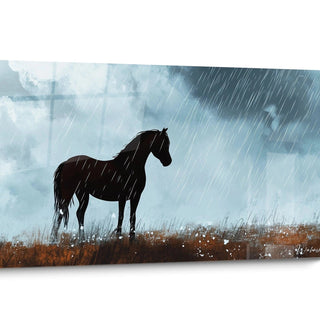 View all265
artworks
View all265
artworks
-
 Alfred Sisley10
artworks
Alfred Sisley10
artworks
-
 Amedeo Modigliani12
artworks
Amedeo Modigliani12
artworks
-
 Camille Pissarro7
artworks
Camille Pissarro7
artworks
-
 Caspar David Friedrich11
artworks
Caspar David Friedrich11
artworks
-
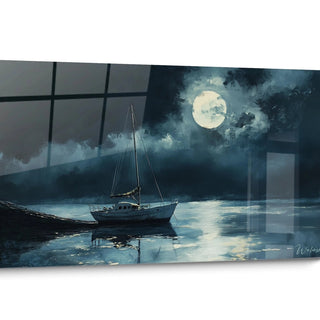 Claude Joseph Vernet3
artworks
Claude Joseph Vernet3
artworks
-
 Claude Monet10
artworks
Claude Monet10
artworks
-
 Edgar Degas8
artworks
Edgar Degas8
artworks
-
 Edvard Munch11
artworks
Edvard Munch11
artworks
-
 Edward Hopper8
artworks
Edward Hopper8
artworks
-
 Frida Kahlo6
artworks
Frida Kahlo6
artworks
-
 Giuseppe Arcimboldo9
artworks
Giuseppe Arcimboldo9
artworks
-
 Goya8
artworks
Goya8
artworks
-
 Gustav Klimt8
artworks
Gustav Klimt8
artworks
-
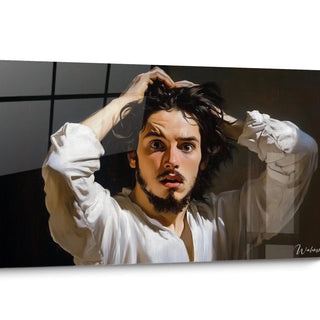 Gustave Courbet8
artworks
Gustave Courbet8
artworks
-
 Henri Matisse4
artworks
Henri Matisse4
artworks
-
 Hieronymus Bosch2
artworks
Hieronymus Bosch2
artworks
-
 Jean Baptiste Camille Corot9
artworks
Jean Baptiste Camille Corot9
artworks
-
 Jean François Millet7
artworks
Jean François Millet7
artworks
-
 Jean-Auguste-Dominique Ingres10
artworks
Jean-Auguste-Dominique Ingres10
artworks
-
 JMW Turner6
artworks
JMW Turner6
artworks
-
 Johannes Vermeer10
artworks
Johannes Vermeer10
artworks
-
 Leonardo da Vinci5
artworks
Leonardo da Vinci5
artworks
-
 Michelangelo6
artworks
Michelangelo6
artworks
-
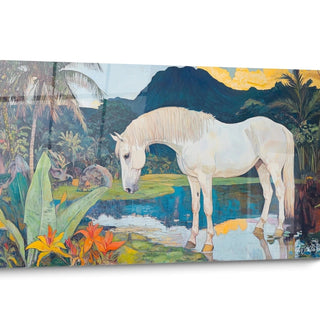 Paul Gauguin6
artworks
Paul Gauguin6
artworks
-
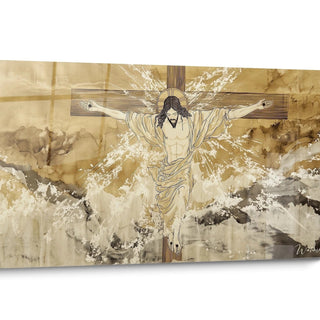 Peter Paul Rubens6
artworks
Peter Paul Rubens6
artworks
-
 Pierre-Auguste Renoir6
artworks
Pierre-Auguste Renoir6
artworks
-
 Piet Mondrian11
artworks
Piet Mondrian11
artworks
-
 Pieter Bruegel the Elder6
artworks
Pieter Bruegel the Elder6
artworks
-
 Rembrandt van Rijn4
artworks
Rembrandt van Rijn4
artworks
-
 Sandro Botticelli9
artworks
Sandro Botticelli9
artworks
-
 Sonia Delaunay6
artworks
Sonia Delaunay6
artworks
-
 Théodore Géricault7
artworks
Théodore Géricault7
artworks
-
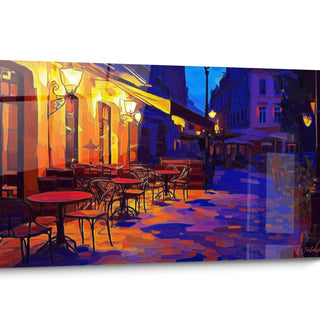 Vincent Van Gogh11
artworks
Vincent Van Gogh11
artworks
-
 Wassily Kandinsky10
artworks
Wassily Kandinsky10
artworks


All about George Braque Inspired Paintings
- Georges Braque Painting Presentation
- Georges Braque Painting Cubist Influence
- Georges Braque Painting Artistic Investment
- Georges Braque Painting Museum Decoration
Georges Braque (1882-1963) is a major twentieth-century artist and pioneer of cubism alongside Pablo Picasso. His paintings represent an invaluable artistic heritage and constitute masterpieces in any art collection. Recognized for revolutionizing perspective and audacious geometric compositions, Braque transformed the history of modern art.
Braque's works are distinguished by their revolutionary approach to pictorial space, decomposing objects into simple geometric forms seen from multiple angles simultaneously. This unique technique redefined the very notion of visual representation in Western art.
Owning a Georges Braque painting represents far more than acquiring a decorative piece; it means integrating a fragment of art history that radically transforms a living space's atmosphere. The presence of such a work establishes permanent dialogue between domestic space and one of the last century's most influential artistic movements.
Collectors and art enthusiasts instantly recognize Braque's distinctive visual signature, characterized by his sober yet powerful color palettes and rigorously structured compositions that invite prolonged contemplation and constant reinterpretation.
The Revolutionary Influence of Georges Braque Paintings in Contemporary Space
Integrating a Georges Braque painting into contemporary interiors creates striking dialogue between cubist heritage and modern architecture. Unlike traditional figurative works, Braque's geometric compositions generate unique spatial dynamics that visually restructure the environment where they're displayed.
How do Braque's multiple perspectives transform a room's spatial perception?
Georges Braque's paintings, with their characteristic form fragmentation and multiple perspectives, create visual effects that seem to extend the wall surface beyond its physical limits. This cubist decomposition produces sophisticated optical illusion where angles and planes intersect, offering rooms additional dimension that conventional works cannot match.
A Braque work's spatial impact transcends its two-dimensional surface. His meticulously balanced compositions establish visual tension points that energize surrounding space, creating what interior decorators call "conceptual anchors" — elements subtly defining an entire room's perceptual organization.
Chromatic interaction with contemporary lighting
Braque's palette, often composed of earths, ochres, and modulated grays, presents remarkable characteristics under modern LED lighting. The neutral yet complex tones he favored reveal unexpected nuances according to lighting color temperatures, offering evolving visual experience throughout the day.
Experienced collectors recommend displaying a Georges Braque painting under variable-intensity lighting, allowing modulation of texture perception and reliefs characteristic of his work. This interaction between artwork and light creates dynamic visual experience impossible to reproduce with digital reproductions.
• Faceted compositions reflect light non-uniformly
• Chromatic transition zones respond differently according to lighting angle
• Pictorial textures create micro-shadows enriching perceptual depth
Unexpected acoustic resonance of cubist works
Rarely discussed is the subtle acoustic impact of a Georges Braque painting in contemporary space. Large geometric surfaces and angular compositions in his works unconsciously influence our spatial sound perception, creating what acousticians call "auditory spatial markers".
Braque work owners frequently report improved musical listening experience in rooms where they're displayed. This spatial synesthesia explains how our brains integrate geometric visual information to calibrate acoustic environment perception.
Evolution of perception in daily life
Living daily with a Georges Braque painting creates fascinating "perpetual discovery" phenomenon. Unlike figurative works that may become visually predictable over time, Braque's cubist compositions constantly reveal new formal relationships according to viewing angle and lighting conditions.
This unique characteristic makes Braque paintings intellectually stimulating presences in domestic space. Perceptual psychology studies demonstrate that regular exposure to complex geometric compositions significantly stimulates cognitive functions related to form recognition and spatial integration.
Braque's form deconstruction constantly invites observers to mentally reconstruct depicted objects, creating active rather than passive visual experience and establishing dynamic relationship between artwork and owner.
Acquiring a Georges Braque Painting: Elite Artistic Investment Strategy
Integrating a Georges Braque painting into a collection represents far more than simple decorative acquisition; it constitutes strategic positioning in the high-end art market. These cubism pioneer works demonstrate distinct appreciation trajectory compared to other major modern artists.
Exceptional resilience facing market fluctuations
Econometric analyses of auction sales over three decades reveal that Georges Braque paintings demonstrate remarkable stability during economic volatility periods. Unlike other modern artists' works whose valuations may experience significant corrections, Braque's creations maintain consistent appreciation trajectory with reduced volatility.
This distinctive characteristic explains through Braque's unique historical position: cubism co-founder yet often eclipsed by Picasso media coverage, his works benefit from comparative rarity in secondary markets while maintaining indisputable historical importance. Financial experts now classify Braque paintings among "tangible safe-haven values" recommended for diversifying very-high-net-worth investment portfolios.
What factors determine a Georges Braque painting's appreciation trajectory?
A Georges Braque painting's valuation follows specific parameters distinguishing it from other art market segments. While creative period naturally influences evaluation, certain less obvious criteria play determining roles:
• Compositional complexity: works presenting particularly elaborate spatial constructions systematically command 15-25% premiums during transactions
• Documented exhibition history: each major exhibition in artwork history can increase value by 7-12%
• Thematic singularity: subjects rarely addressed by the artist benefit from significant multiplier coefficient
Acute collectors meticulously examine exhibition history and academic monography presence, two factors directly influencing potential work liquidity on exclusive secondary markets.
Preventive conservation's paradoxical impact on value
A fascinating particularity of Georges Braque paintings concerns relationship between conservation state and potential valuation. Unlike other market segments where conservation perfection maximizes value, Braque works showing subtle natural aging signs — notably fine craquelure networks on certain thick texture zones — benefit from additional appreciation.
This phenomenon explains through fundamental tactile and material dimension in analytical cubist approach. Natural micro-alterations reveal complex material composition used by the artist, particularly in "collaged papers" period, testifying to artwork technical authenticity.
Conservation experts recommend for Braque paintings specific protocol combining rigorous hygrometric stability (45-50% relative humidity) and controlled light exposure cycles to preserve pigmentary integrity without compromising natural material evolution.
Museum loan strategy as appreciation leverage
Sophisticated Georges Braque painting owners develop calculated institutional loan strategies simultaneously increasing acquisition value and historical significance. A painting participating in major monographic exhibitions at premier institutions acquires "museum pedigree" transcending simple market value.
This strategic approach typically involves triennial cycle comprising:
1. Loan to major institution for thematic exhibition
2. Private domestic exhibition period
3. Participation in specialized academic event
Each institutional exhibition generates additional scientific documentation and technical analyses enriching the work's file, creating virtuous cycle of both academic and financial appreciation. Most astute collectors collaborate with specialized art advisors to orchestrate these institutional trajectories across 7-10-year cycles.
Domestic Museography of Georges Braque Painting: Recreating Elite Curatorial Experience
Integrating a Georges Braque painting into residential space requires sophisticated museographic approach, transcending conventional decorative considerations. Astute collectors now apply professional curatorial principles maximizing these major works' perceptual and conceptual impact in domestic environments.
Spatial hierarchy centered on cubist artwork
Unlike traditional decorative approaches integrating art as interior complement, Georges Braque paintings require conceptual inversion: architectural space becomes framework serving artwork experience. This museographic methodology applied to private space implies creating what conservators call "priority perceptual field".
Sophisticated collectors structure circulation through reception spaces managing progressive artwork discovery points. This spatial choreography draws directly from techniques developed by major modern art museums:
• Establishing first perception axis at optimal distance (4.7-5.2 meters)
• Creating calculated approach route enabling successive compositional detail discovery
• Arranging lateral observation point revealing texture and material interplay
This dynamic spatial organization enables sequential observation experience similar to that offered in most prestigious cultural institutions.
How does perceptual isolation transform cubist painting experience?
Private modern art collection conservators recommend applying "perceptual isolation" principle for Georges Braque paintings. This advanced museographic technique consists of creating visual neutrality zone around the work, eliminating perceptual interference diluting complex geometric construction impact.
In practice, this translates to:
1. Establishing "visual silence" zone of at least 120 cm around the work, free from any decorative elements
2. Chromatic neutralization of adjacent surfaces, ideally in precisely calibrated achromatic tones
3. Eliminating competing patterns within peripheral visual field
This isolation strategy fundamentally transforms a Georges Braque painting's perceptual impact, enabling complete immersion in its cubist spatial reconfiguration without conceptual dilution.
Evolving light programming
A Georges Braque painting represents particular lighting challenge for domestic spaces. Its complex formal construction and subtle chromatic modulations require sophisticated light programming adapting to natural ambient luminosity variations.
Conservation specialists recommend installing variable color temperature systems (between 3200K and 4100K) with precise dimming capabilities. This installation reveals different artwork dimensions according to time of day or season:
• Warmer light (3200-3400K) to accentuate characteristic earthy tones of analytical and synthetic periods
• More neutral lighting (3800-4100K) to highlight formal constructions and spatial relationships
• Reduced intensity (30-45 lux) during absence periods minimizing cumulative exposure while maintaining visual presence
This dynamic programming transforms a Georges Braque painting into evolving visual presence, progressively revealing different compositional complexity facets.
Discreet contextual accompaniment
Cubist works collectors increasingly develop what conservators call "discreet contextual accompaniment" — sophisticated method enriching artwork intellectual experience without compromising immediate visual impact.
This domestic curatorial approach comprises:
1. Creating accessible digital file through discreet QR code, containing academic analyses and historical context
2. Integrating carefully selected objects in conceptual resonance with the work (musical instruments, abstract geometric objects)
3. Targeted bibliographic selection, presented as integral part of environment
This subtle contextualization transforms simple contemplation into complete cultural experience, similar to that offered by most innovative museum institutions.
FAQs about Georges Braque Paintings
What is a Georges Braque painting's impact on a room's acoustics?
Large geometric surfaces of a Georges Braque painting create spatial markers influencing our auditory perception. Owners report improved musical listening experience in spaces where these works are displayed, through how our brains integrate geometric visual information to calibrate acoustic perception.
How to optimally conserve a Georges Braque painting?
Optimal Georges Braque painting conservation requires hygrometric stability between 45-50% relative humidity and controlled light exposure cycles not exceeding 150-180 lux during active observation periods. UV filtration system is essential, and professional conservation examination is recommended every 24-30 months.
What characteristics differentiate a Georges Braque painting from other cubist works?
A Georges Braque painting distinguishes itself through particularly rigorous and balanced spatial construction, often utilizing more restricted and harmonious palette than Picasso's. Braque also favored more methodical and meticulous approach in form decomposition, resulting in exceptionally coherent internal compositions that subtly transform surrounding spatial perception.
Further reading
Our articles on this topic
- The Influence of the Bauhaus Movement on the Creation of Geometric Abstract Paintings
- Biography of Georges Braque: The Discreet Co-founder of Cubism and Sculptor of Form
- Why is a Cubism Painting Perfect for a Modern Geometric Living Room?
- What are the best Cubism paintings for an eclectic contemporary entrance?
L'art qui suscite l'envie
Maison belge d'art mural grand format
14 jourspour changer d'avis*
Protection Walenskyincluse
Fabriquéen Italie
FormatXXL
Kit de fixationtoujours fourni
* Hors tableaux personnalisés et tailles personnalisées


