


Caspar David Friedrich Inspired Paintings
The paintings inspired by Caspar David Friedrich exude a profound mystic , capturing the grandeur and the silence of nature. These works evoke contemplation and the sublime, with captivating landscapes bathed in ethereal lights. Perfect for those seeking a decoration imbued with depth and romantic poetry.
 Painting Inspired by Wanderer Above the Sea of Fog by Caspar David Friedrich No.3 – Tribute to Famous Artist273,90 €
 Painting Inspired by Moonrise Over the Sea by Caspar David Friedrich No.2 – Celebrated Artist Tribute273,90 €
 Painting Inspired by Moonrise Over the Sea by Caspar David Friedrich No.1 – Tribute to Famous Artist273,90 €
 Painting Inspired by The Wanderer Above the Sea of Fog by Caspar David Friedrich No. 2 – Tribute to a Renowned Artist273,90 €
 Painting Inspired by Wanderer Above the Sea of Fog by Caspar David Friedrich No.1 – Tribute to a Famous Artist273,90 €
 Painting Inspired by The Dreamer by Caspar David Friedrich No.2 – Tribute to Celebrated Artist273,90 €
 Painting Inspired by Caspar David Friedrich's The Dreamer No. 1 – Homage to Celebrated Artist273,90 €
 Painting Inspired by The Sea of Ice by Caspar David Friedrich No.2 – Tribute to a Famous Artist273,90 €
 Painting Inspired by The Sea of Ice by Caspar David Friedrich No.1 – Tribute to a Famous Artist273,90 €
 Painting Inspired by The Abbey in the Forest by Caspar David Friedrich No.2 – Homage to Celebrated Artist273,90 €
 Painting Inspired by The Abbey in the Forest by Caspar David Friedrich No. 1 – Tribute to a Celebrated Artist273,90 €
In the same family
Also explore the theme Famous Artists ( inspirations )
-
 View all265
artworks
View all265
artworks
-
 Alfred Sisley10
artworks
Alfred Sisley10
artworks
-
 Amedeo Modigliani12
artworks
Amedeo Modigliani12
artworks
-
 Camille Pissarro7
artworks
Camille Pissarro7
artworks
-
 Claude Joseph Vernet3
artworks
Claude Joseph Vernet3
artworks
-
 Claude Monet10
artworks
Claude Monet10
artworks
-
 Edgar Degas8
artworks
Edgar Degas8
artworks
-
 Edvard Munch11
artworks
Edvard Munch11
artworks
-
 Edward Hopper8
artworks
Edward Hopper8
artworks
-
 Frida Kahlo6
artworks
Frida Kahlo6
artworks
-
 George Braque5
artworks
George Braque5
artworks
-
 Giuseppe Arcimboldo9
artworks
Giuseppe Arcimboldo9
artworks
-
 Goya8
artworks
Goya8
artworks
-
 Gustav Klimt8
artworks
Gustav Klimt8
artworks
-
 Gustave Courbet8
artworks
Gustave Courbet8
artworks
-
 Henri Matisse4
artworks
Henri Matisse4
artworks
-
 Hieronymus Bosch2
artworks
Hieronymus Bosch2
artworks
-
 Jean Baptiste Camille Corot9
artworks
Jean Baptiste Camille Corot9
artworks
-
 Jean François Millet7
artworks
Jean François Millet7
artworks
-
 Jean-Auguste-Dominique Ingres10
artworks
Jean-Auguste-Dominique Ingres10
artworks
-
 JMW Turner6
artworks
JMW Turner6
artworks
-
 Johannes Vermeer10
artworks
Johannes Vermeer10
artworks
-
 Leonardo da Vinci5
artworks
Leonardo da Vinci5
artworks
-
 Michelangelo6
artworks
Michelangelo6
artworks
-
 Paul Gauguin6
artworks
Paul Gauguin6
artworks
-
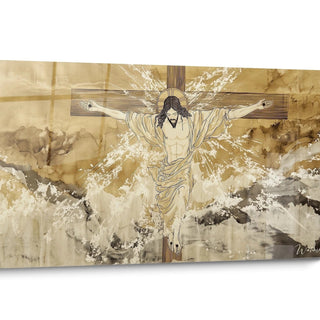 Peter Paul Rubens6
artworks
Peter Paul Rubens6
artworks
-
 Pierre-Auguste Renoir6
artworks
Pierre-Auguste Renoir6
artworks
-
 Piet Mondrian11
artworks
Piet Mondrian11
artworks
-
 Pieter Bruegel the Elder6
artworks
Pieter Bruegel the Elder6
artworks
-
 Rembrandt van Rijn4
artworks
Rembrandt van Rijn4
artworks
-
 Sandro Botticelli9
artworks
Sandro Botticelli9
artworks
-
 Sonia Delaunay6
artworks
Sonia Delaunay6
artworks
-
 Théodore Géricault7
artworks
Théodore Géricault7
artworks
-
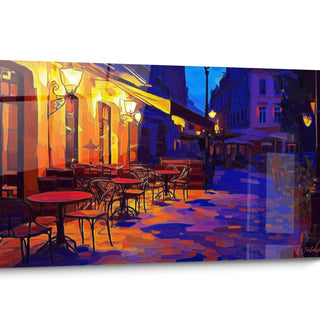 Vincent Van Gogh11
artworks
Vincent Van Gogh11
artworks
-
 Wassily Kandinsky10
artworks
Wassily Kandinsky10
artworks


All about Caspar David Friedrich Inspired Paintings
- Caspar David Friedrich Painting Presentation
- Caspar David Friedrich Painting and German Romanticism
- Caspar David Friedrich Painting and Mystical Symbolism
- Caspar David Friedrich Painting and Nordic Light
Caspar David Friedrich's paintings represent masterpieces of 19th-century German Romanticism, capturing mystical landscapes that evoke a profound connection with nature. As a master of romantic landscape painting, Friedrich created works characterized by meditative atmospheres, distant horizons, and symbolic light that transcends simple naturalistic representation. His famous paintings such as "The Wanderer Above the Sea of Fog" or "The Sea of Ice" explore the relationship between mankind and the immensity of nature, creating a visual experience that resonates deeply with contemporary sensibilities seeking to reconnect with natural grandeur.
The Mystical Universe of Caspar David Friedrich Paintings: Immersion in German Romanticism
Caspar David Friedrich's paintings constitute a unique visual heritage that transcends simple decorative art to become a profound contemplative experience. The German artist, born in 1774 and deceased in 1840, revolutionized landscape painting by infusing it with an unprecedented spiritual dimension that continues to fascinate collectors and enthusiasts of German Romanticism.
Why do Friedrich's paintings radically transform an exhibition space?
Unlike conventional decorative works, a Caspar David Friedrich painting fundamentally alters the spatial perception of a room. His unique compositional technique, with figures often seen from behind contemplating immensity (called "Rückenfigur"), creates a visual depth that seems to extend the physical space of the room. This exclusive characteristic transforms the exhibition wall into a portal toward infinite mystical landscapes.
In a private art gallery or contemporary living space, Friedrich's works are not mere decorative elements but meditative windows toward another world. Friedrich's specific chromatic palette, with its twilight blues and morning mists, generates a unique luminous atmosphere that modifies even the perception of the room's ambient lighting.
The metaphysical influence of Friedrich's works on the exhibition environment
Collectors of Friedrich paintings report a singular phenomenon: the presence of a work by this romantic master creates what experts call an "induced contemplative space." This phenomenon is characterized by a modification of the room's general atmosphere, naturally promoting reflection and silent contemplation.
The large formats of Friedrich's works, particularly suited to modern exhibition spaces with high walls, impose a vertical visual dynamic that guides the gaze upward, accentuating the impression of spiritual elevation characteristic of his work. This distinctive verticality contrasts with the dominant horizontality of contemporary interiors, creating a refreshing visual break.
The specific conservation challenges of Friedrich paintings in residential environments
Owners of Friedrich paintings must consider the particular preservation needs that these works demand. The 19th-century German romantic pigments exhibit specific sensitivity to modern hygrometric variations, requiring stricter humidity control than works from other periods.
Experts recommend an optimal viewing distance of 2.5 to 3 meters for large-format Friedrich paintings, a factor to be integrated into the spatial planning of the exhibition room. This unique spatial requirement directly influences furniture arrangement and circulation through the space.
The measurable psychological impact of Friedrich paintings in contemporary spaces
Recent studies on the physiological impact of art reveal that daily exposure to Friedrich's metaphysical landscapes produces a significant effect on observers' cortisol levels and heart rate variability. The recurring patterns of contemplative solitude and natural immensity characteristic of his works activate brain regions associated with introspection and mindfulness.
Restorers specializing in German romantic works emphasize that Friedrich paintings require seasonal repositioning to adapt to natural light variations. This "seasonal migration" of works constitutes a unique ritual that strengthens the bond between the collector and the work, creating a dynamic relationship unique to Friedrich's paintings.
The acoustics modified by the presence of a Friedrich painting
A poorly documented but collector-reported phenomenon concerns the influence of large Friedrich paintings on a room's acoustics. Large-format works, with their characteristic textured surfaces, subtly modify sound reverberation, creating what acousticians call an "contemplative absorption effect" that improves listening quality in the room.
Collectors frequently report that their guests spontaneously adopt a more measured and thoughtful tone of voice in the presence of Friedrich's works, testifying to the profound atmospheric influence these paintings exert on social behavior in the exhibition space.
The unique temporal dimension of Friedrich paintings, with their twilight or dawn atmospheres, creates a "suspended moment" that contrasts with the accelerated pace of contemporary life, offering a precious temporal counterpoint in modern interiors focused on efficiency and productivity.
The Mystical Symbolism in Caspar David Friedrich Paintings: A Transformative Experience
Caspar David Friedrich's paintings transcend simple visual representation to become metaphysical portals between the tangible world and spiritual experience. Their unique symbolic dimension radically transforms the exhibition environment, making these works exceptional mediators between domestic space and the depths of the romantic soul.
How do Friedrich's paintings induce a unique contemplative experience?
Friedrich's works distinguish themselves by their capacity to create what art historians call "contemplative fields" - zones of visual influence that alter spatial perception well beyond the physical limits of the frame. In a contemporary interior, a Friedrich painting generates a meditative focal point that unconsciously restructures the movements and postures of those inhabiting the space.
Chromatic studies show that the specific hues used by Friedrich - particularly his Nordic blues and earthy browns - activate neurological associations linked to introspection and mental calm. This exclusive palette acts as an environmental emotional regulator, transforming the general atmosphere of the exhibition room.
The distinctive "romantic sfumato" technique developed by Friedrich, characterized by blurred atmospheric transitions, produces an optical effect that softens the observer's peripheral perception. This unique visual phenomenon encourages contemplative immersion by diminishing environmental visual distractions.
The unique dialogue between contemporary architecture and romantic symbolism
Modern minimalist interiors paradoxically constitute the ideal setting for Friedrich paintings, creating what interior designers call a "resolved aesthetic tension" between contemporary rigor and romantic emotional depth. This juxtaposition creates an exceptionally balanced visual dynamic.
Owners of Friedrich paintings frequently testify to a "gaze migration" phenomenon where the eye is naturally drawn to the work at specific times of day, particularly at dawn and dusk - precisely the transitional moments Friedrich privileged in his compositions.
The optimal cardinal orientation for displaying Friedrich paintings is the subject of precise recommendations: works depicting sunrises benefit from placement on a west-facing wall, creating a temporal counterpoint with natural light, while twilight scenes find their optimal expression on an east-facing wall.
The unsuspected sonic dimension of Friedrich paintings
Neurologists specializing in synesthesia have documented a fascinating phenomenon: Friedrich's landscapes, particularly his maritime scenes such as "The Sea of Ice," frequently induce imaginary auditory experiences in sensitive observers. This "implicit soundscape" constitutes an additional unique dimension to his works.
Studies on the environmental impact of art reveal that spaces adorned with Friedrich paintings display different circulation patterns - visitors instinctively adopt a slower, more meditative pace of movement, creating what space anthropologists call "induced deceleration."
The measurable influence of Friedrich paintings on temporal perception
Research in environmental psychology demonstrates that regular exposure to Friedrich paintings modifies the subjective perception of time. Regular observers report an expansion of "perceived duration" during contemplation, creating precious temporal islands in the accelerated rhythm of contemporary life.
The symbolism of distant horizons, omnipresent in Friedrich's work, activates brain regions associated with future projection and long-term planning. This distinctive cognitive stimulation makes Friedrich paintings unique catalysts for strategic and visionary reflection in high-end professional environments.
The specific interaction between Friedrich paintings and modern artificial lighting systems deserves particular attention. Experts recommend color temperatures between 2700K and 3000K with a CRI exceeding 95 to preserve the integrity of the chromatic and symbolic experience intended by the artist.
The singular community of Friedrich painting owners
An interesting sociological phenomenon has been observed among Friedrich collectors: the emergence of an informal "contemplative community" bringing together owners of his works. These collectors report remarkably similar residential experiences despite the diversity of their interiors and geographic locations.
Friedrich paintings, with their profound spiritual dimension, often transform the exhibition room into what space anthropologists describe as a "place of domestic power" - an emotional anchor point that subtly influences relational and personal dynamics within the home.
The Nordic Light in Caspar David Friedrich Paintings: A Visual Revolution
Caspar David Friedrich paintings distinguish themselves through their revolutionary treatment of light, particularly this distinctive Nordic light quality that transforms the exhibition environment by creating an inimitable contemplative atmosphere. This unique mastery of light makes these works exceptional atmosphere modifiers in contemporary interiors.
How does Friedrich's specific luminosity modify the spatial experience?
Friedrich's distinctive technique, which specialists call "atmospheric luminescence," is characterized by subtle transitions between shadows and light that create a unique atmospheric depth effect. In a modern interior, this particular light quality acts as a "perceptual spatial expander," giving the impression that the room extends beyond its physical limits.
Friedrich paintings exhibit a remarkable characteristic: their visual appearance transforms significantly depending on the time of day, particularly during natural light transitions at dawn and dusk. This phenomenon, which conservators call "circadian light resonance," creates a visually dynamic work that evolves in harmony with natural rhythms.
Museum lighting experts have identified what they call "the Friedrich effect" - the unique ability of his works to capture and redistribute ambient light in a manner that seems to subtly illuminate the surrounding space, particularly noticeable in dimmed light conditions.
The singular interaction between Friedrich paintings and contemporary architecture
The large glass surfaces of contemporary architectures create a particularly rich dialogue with Friedrich paintings. The alternation between direct natural light and its representation in his works generates what interior architects call a "luminous conversation" that significantly enriches the spatial experience.
The optimal orientation of a Friedrich painting relative to natural light sources is the subject of precise considerations: placement perpendicular rather than parallel to main windows maximizes the atmospheric depth effect and subtle perception variations throughout the day.
Owners of contemporary residences with high ceilings observe an interesting phenomenon: Friedrich paintings, particularly his large formats, create a "perceptual bridge" between human scale and architectural elevation, harmonizing the relationship between the observer's body and ambitious spatial proportions.
The phenomenon of visual adaptation specific to Friedrich paintings
Ophthalmologists specializing in artistic perception have documented a unique phenomenon they call "romantic retinal adaptation": after several minutes of contemplating a Friedrich painting, the viewer's sensitivity to subtle luminosity variations increases significantly, temporarily improving perception of chromatic nuances in the immediate environment.
This specific visual adaptation transforms the overall experience of the exhibition space, creating what neurologists call "perceptual resonance" between the work and its environment. Regular observers report increased sensitivity to natural atmospheric variations after contemplative sessions with Friedrich's works.
The temporal dimension of the luminous experience in Friedrich paintings
Friedrich's characteristic representation of transitional moments - dawn, dusk, seasonal transitions - creates what art philosophers call an "extended present," a dilated temporal experience that contrasts with the acceleration characteristic of contemporary life, offering a precious counterpoint in modern interiors.
Experienced collectors recommend periodically repositioning Friedrich paintings to adapt to seasonal luminosity variations, creating a "contemplative calendar" that strengthens the connection between the work, the exhibition space, and natural cycles - a practice particularly relevant for his emblematic winter landscapes.
The interaction between Friedrich paintings and contemporary intelligent lighting systems offers fascinating possibilities: some collectors program subtle variations in temperature and light intensity to accompany the atmospheric transitions represented in the work, creating an immersive multi-sensory experience.
FAQ on Caspar David Friedrich Paintings
What is the current value of a Caspar David Friedrich painting on the art market?
Original Caspar David Friedrich paintings achieve considerable sums at international auction sales, often several million euros. High-quality reproductions, faithful to the original dimensions and techniques, constitute an accessible alternative for collectors passionate about his romantic work.
How to identify the ideal location for a Caspar David Friedrich painting in a contemporary home?
The ideal location combines three essential factors: sufficient viewing distance (minimum 2.5 meters), measured interaction with natural light avoiding direct exposure, and an environment conducive to silent contemplation. Transitional spaces such as stair landings often offer a particularly favorable context for the meditative experience these works inspire.
Do Caspar David Friedrich paintings require particular conservation conditions?
High-quality reproductions of Friedrich paintings benefit from a stable environment with relative humidity between 45-55% and constant temperature around 20°C. Protection against direct UV rays is essential to preserve the integrity of the subtle colors characteristic of his work, particularly his atmospheric blues and delicate mists.
Further reading
Our articles on this topic
- How Caspar David Friedrich’s Landscapes Revolutionized Romantic Art?
- How did Romantic painters create their turbulent skies?
- The Romantic Sublime: When Turner and Friedrich’s Landscapes Taught Terror and Ecstasy - How the Philosophical Aesthetics of the 18th Century Transformed Landscape into Extreme Emotional Experience
L'art qui suscite l'envie
Maison belge d'art mural grand format
14 jourspour changer d'avis*
Protection Walenskyincluse
Fabriquéen Italie
FormatXXL
Kit de fixationtoujours fourni
* Hors tableaux personnalisés et tailles personnalisées


