


Edvard Munch Inspired Wall Art
Wall art inspired by Claude Joseph Vernet captures the grandeur and majesty of seascapes. Dramatic lighting and dynamic scenes create an impression of life and movement in the compositions. An ideal choice for those who love classical art and the evocative power of nature.
 Painting Inspired by Vampire by Edvard Munch No.2 – Tribute to Famous Artist273,90 €
 Painting Inspired by Vampire by Edvard Munch No.1 – Tribute to Famous Artist273,90 €
 Painting Inspired by Evening on Karl Johan Street by Edvard Munch N°2 – Celebrated Artist Tribute273,90 €
 Painting Inspired by Evening on Karl Johan Street by Edvard Munch N°1 – Tribute to a Famous Artist273,90 €
 Painting Inspired by The Scream by Edvard Munch N°2 – Tribute to a Famous Artist273,90 €
 Painting Inspired by The Scream by Edvard Munch No. 1 – Tribute to Celebrated Artist273,90 €
 Painting Inspired by The Kiss by Edvard Munch No. 2 – Homage to Celebrated Artist273,90 €
 Painting Inspired by Edvard Munch's The Kiss No.1 – Tribute to Celebrated Artist273,90 €
 Painting Inspired by Edvard Munch's Madonna No.3 – Tribute to Celebrated Artist273,90 €
 Painting Inspired by The Madonna by Edvard Munch No.2 – Tribute to a Celebrated Artist273,90 €
 Painting Inspired by The Madonna by Edvard Munch No.1 – Tribute to a Celebrated Artist273,90 €
In the same family
Also explore the theme Famous Artists ( inspirations )
-
 View all265
artworks
View all265
artworks
-
 Alfred Sisley10
artworks
Alfred Sisley10
artworks
-
 Amedeo Modigliani12
artworks
Amedeo Modigliani12
artworks
-
 Camille Pissarro7
artworks
Camille Pissarro7
artworks
-
 Caspar David Friedrich11
artworks
Caspar David Friedrich11
artworks
-
 Claude Joseph Vernet3
artworks
Claude Joseph Vernet3
artworks
-
 Claude Monet10
artworks
Claude Monet10
artworks
-
 Edgar Degas8
artworks
Edgar Degas8
artworks
-
 Edward Hopper8
artworks
Edward Hopper8
artworks
-
 Frida Kahlo6
artworks
Frida Kahlo6
artworks
-
 George Braque5
artworks
George Braque5
artworks
-
 Giuseppe Arcimboldo9
artworks
Giuseppe Arcimboldo9
artworks
-
 Goya8
artworks
Goya8
artworks
-
 Gustav Klimt8
artworks
Gustav Klimt8
artworks
-
 Gustave Courbet8
artworks
Gustave Courbet8
artworks
-
 Henri Matisse4
artworks
Henri Matisse4
artworks
-
 Hieronymus Bosch2
artworks
Hieronymus Bosch2
artworks
-
 Jean Baptiste Camille Corot9
artworks
Jean Baptiste Camille Corot9
artworks
-
 Jean François Millet7
artworks
Jean François Millet7
artworks
-
 Jean-Auguste-Dominique Ingres10
artworks
Jean-Auguste-Dominique Ingres10
artworks
-
 JMW Turner6
artworks
JMW Turner6
artworks
-
 Johannes Vermeer10
artworks
Johannes Vermeer10
artworks
-
 Leonardo da Vinci5
artworks
Leonardo da Vinci5
artworks
-
 Michelangelo6
artworks
Michelangelo6
artworks
-
 Paul Gauguin6
artworks
Paul Gauguin6
artworks
-
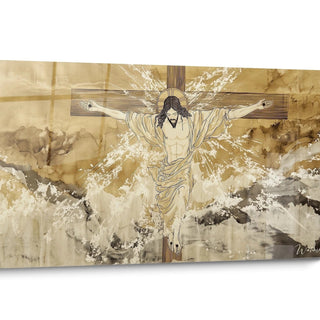 Peter Paul Rubens6
artworks
Peter Paul Rubens6
artworks
-
 Pierre-Auguste Renoir6
artworks
Pierre-Auguste Renoir6
artworks
-
 Piet Mondrian11
artworks
Piet Mondrian11
artworks
-
 Pieter Bruegel the Elder6
artworks
Pieter Bruegel the Elder6
artworks
-
 Rembrandt van Rijn4
artworks
Rembrandt van Rijn4
artworks
-
 Sandro Botticelli9
artworks
Sandro Botticelli9
artworks
-
 Sonia Delaunay6
artworks
Sonia Delaunay6
artworks
-
 Théodore Géricault7
artworks
Théodore Géricault7
artworks
-
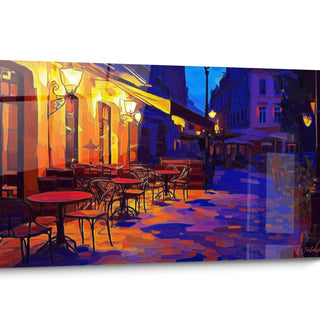 Vincent Van Gogh11
artworks
Vincent Van Gogh11
artworks
-
 Wassily Kandinsky10
artworks
Wassily Kandinsky10
artworks


All about Edvard Munch Inspired Wall Art
- Presentation of Edvard Munch's paintings
- Edvard Munch's paintings and human emotions
- The expressionist influence of Edvard Munch's paintings
- Symbolism and modernity in Edvard Munch's paintings
Discover the deeply moving universe of Edvard Munch's paintings, the Norwegian artist who revolutionized expressionist art through iconic works like "The Scream". His paintings capture existential anguish, inner turmoil and psychological tensions with an intensity rarely matched in art history. Each Munch painting is a dive into the depths of the human soul, expressed through vibrant colors and distorted forms that transcend realism to reach pure emotional truth. Whether you're a seasoned collector or an expressionist art enthusiast, our famous paintings will captivate your space and become the focal point of your interior.
Exploring emotional depths through Edvard Munch's paintings
Edvard Munch's paintings represent far more than simple artworks – they are emotional portals that transport the observer into the darkest and most authentic corners of human experience. Unlike the impressionist works of his era that celebrated light and idyllic landscapes, Munch chose to explore inner darkness and the psychological torments that haunt humanity.
How do Munch's paintings transform a room's atmosphere?
Introducing an Edvard Munch painting into a residential space immediately creates a distinctive and profound atmosphere. These works act as emotional amplifiers that radically transform how a room is perceived. Far from being mere decorative elements, these pictorial representations become catalysts for reflection and introspection for all who contemplate them.
The characteristic colors employed by Munch – blood reds, sickly yellows, deep blues and emerald greens – create a unique color palette that influences the emotional balance of the surrounding space. These hues, far from being chosen for conventional harmony, were selected precisely for their ability to evoke visceral reactions.
In a contemporary living room, a reproduction of "The Dance of Life" can transform a minimalist space into a philosophical sanctuary where visitors find themselves unconsciously engaged in contemplating life's cycles. The juxtaposition of Munch's dancing figures, representing different life phases, creates a fascinating counterpoint with modern architecture.
The unique psychological resonance of Edvard Munch's paintings
Munch's works possess an extraordinary quality that psychologists and art historians have termed "amplified emotional resonance" – a rare ability to evoke universal emotions while allowing deeply personal interpretation. This duality makes Munch's paintings emotional as well as aesthetic investments.
Recent research on the psychological impact of art in living spaces revealed that subjects regularly exposed to expressionist works like Munch's develop greater emotional intelligence and increased capacity to recognize and process their own complex emotions. The sinuous lines and tormented expressions of Munch's figures serve as mirrors to our own fluctuating emotional states.
Collectors confirm that living daily with a Munch painting facilitates a particular form of emotional introspection impossible to achieve with other artistic styles. The palpable tension in "Anxiety" or the isolation felt in "Melancholy" offer visual validation of our own experiences of alienation in the modern hyperconnected world.
The transformative effects of Munch's paintings on spatial perception
A fascinating phenomenon observed by interior decorators working with Munch reproductions is their ability to modify a room's spatial perception. Unlike purely decorative paintings that blend into their environment, Munch's works seem to distort and reconfigure the space around them.
The undulating landscapes and deformed perspectives so characteristic of Munch, as in "Moonlight" or "Starry Night", create an illusion of spatial expansion, making even modest rooms appear larger and more complex. The emotional depth of these works literally adds an extra dimension to physical space.
Owners of large homes with high ceilings report that Munch's vertically oriented paintings, such as "The Scream" or "The Vampire", magnificently accentuate architectural height while anchoring the space in an emotional gravity that balances physical vastness. This duality of expansion and anchoring is unique to this Norwegian master's works.
Why do Edvard Munch's paintings inspire such profound conversations?
Hosts who choose to display Munch paintings in their reception spaces quickly discover their extraordinary power to catalyze meaningful conversations. Unlike conventional artworks that elicit polite but superficial comments, Munch's creations invariably provoke substantial exchanges on existential themes.
Interior design consultants specializing in environments fostering intellectual exchange frequently recommend Munch's paintings for spaces dedicated to philosophical discussions or creative meetings. The emotional complexity of "Jealousy" or "Separation" creates fertile ground for collective exploration of complex relational dynamics.
The deliberate ambiguity in Munch's depicted scenes allows each observer to project their own experience, thereby creating an empathetic bridge between different people sharing the space. This quality makes Munch's paintings instruments of profound social connection, far exceeding their primary aesthetic function.
Edvard Munch's paintings are not merely artistic acquisitions – they represent investments in a space's emotional depth and in the quality of human experiences unfolding within it. In an increasingly superficial and ephemeral world, these works offer an anchor of emotional authenticity whose value far transcends purely decorative considerations.
The revolutionary influence of Edvard Munch's paintings in expressionist art
Edvard Munch's paintings occupy a singular position in art history, serving as a crucial bridge between 19th-century symbolism and the German expressionism that would revolutionize modern art. This fundamental transition, embodied in the raw emotional power of Munch's works, continues to exert a determining influence on our contemporary perception of authentic artistic expression.
The unique emotional palette of Munch's paintings
Edvard Munch's paintings distinguish themselves through their revolutionary use of color as a vehicle for pure emotional expression. Unlike his contemporaries who used color to faithfully represent reality or create aesthetic harmonies, Munch developed an entirely new chromatic language, intrinsically linked to the psychological states he sought to communicate.
The blood red that traverses "The Scream" is not simply a color – it is the visual incarnation of existential anguish itself. The sickly yellows that bathe "Anxiety" do not represent physical light but the subjective experience of a tormented mind. This approach radically transformed our understanding of what a painting can accomplish, transcending mere representation to achieve direct transmission of complex emotional experiences.
Conservators specializing in Nordic art note that displaying a Munch painting in a modern exhibition space immediately modifies perception of surrounding works. This "emotional contagion" is a phenomenon observable only with certain masters, of which Munch is perhaps the most powerful example. In a private interior, this effect creates a distinctive aura impossible to reproduce with other works.
How did Munch's works redefine our relationship with wall art?
Before Munch, wall paintings were primarily appreciated for their formal beauty, historical or religious narrative, or technical faithfulness to reality. Edvard Munch's paintings fundamentally restructured this relationship, establishing a new paradigm where the work becomes a psychological mirror that reflects and amplifies the observer's emotions.
Owners of Munch reproductions frequently testify to an evolving relationship with these works – the same painting can evoke radically different reactions depending on the observer's mindset. Munch's "The Madonna" can appear serene and contemplative some days, then disturbing and mysterious on others. This perceptual malleability constitutes a unique characteristic of this Norwegian master's paintings.
Art therapists consider Munch's paintings particularly effective for facilitating emotional expression in patients struggling with verbal articulation of their feelings. The undiluted intensity of works like "The Day After" or "Puberty" offer a visual vocabulary enabling the articulation of otherwise unspeakable experiences, thereby creating an invaluable therapeutic bridge.
The lasting influence of Munch's innovative pictorial techniques
Beyond their emotional impact, Edvard Munch's paintings introduced technical innovations that transformed modern pictorial language. His expressive brushstrokes, where paint materiality itself becomes emotionally significant, opened new avenues for authentic artistic expression.
The undulating lines so characteristic of Munch's landscapes are not mere stylizations but the direct visual expression of subjective perception of the world. This approach liberated generations of artists from the constraints of literal representation, creating a precedent for emotional expression's primacy over optical faithfulness.
Conservation experts note that Munch's paintings possess unique tactile quality – even in high-quality reproductions, one perceives the deliberate textural variations the artist incorporated to reinforce emotional impact. This haptic dimension enriches sensory experience and deepens the connection between work and observer in ways impossible to achieve with more conventional representations.
The contemporary resurgence of Munch's aesthetic
Contemporary space creators observe a remarkable resurgence of interest in Munch's expressionist aesthetic, particularly in modern urban environments characterized by minimalism and chromatic neutrality. Munch's paintings provide a powerful emotional counterpoint to these spaces, introducing psychological depth into otherwise aseptic architectures.
Architects specializing in creative spaces report that strategic introduction of Munch reproductions in work environments significantly stimulates divergent thinking and innovation. The dynamic tension present in "Girls on the Bridge" or the melancholic contemplation of "Evening on Karl Johan Street" creates an atmosphere conducive to breaking with conventional thought patterns.
Recent studies on work environment psychological impact reveal that spaces adorned with expressionist paintings like Munch's foster more authentic communication and better recognition of emotional states among colleagues. This subtle but significant social function underscores the continued relevance of Munch's work in our complex and often emotionally dissociated era.
Edvard Munch's paintings represent far more than a simple decorative choice – they constitute a decision to live with art that engages, questions and transforms. In a world saturated with ephemeral and superficial images, these works offer emotional and intellectual engagement depth whose value continues to grow with time and repeated contemplation.
Symbolism and modernity in Edvard Munch's paintings: a timeless dialogue
Edvard Munch's paintings represent a fascinating bridge between fin-de-siècle symbolism and the existential preoccupations that define our modernity. By integrating these works into contemporary spaces, we establish a dialogue transcending time, linking the primordial anxieties of the human condition to the specific psychological challenges of our digital and fragmented era.
The unique contemporary resonances of Munch's symbols
Edvard Munch's paintings, with their distinctive symbolic language, acquire renewed relevance in modern interiors. The bridge motif, recurrent in works like "Girls on the Bridge" or "Anxiety", represented for Munch a metaphor for passage and existential transition. In our contemporary living spaces characterized by fluidity and hybridity, these representations become extraordinarily relevant philosophical anchors.
Environmental psychologists note that regular exposure to the powerful visual symbols present in Munch's paintings – such as the famous swirling sky in "The Scream" – activates brain areas associated with deep emotional processing. This neurological stimulation significantly enriches daily habitat experience, transforming ordinary spaces into psychologically nourishing environments.
Interior designers specializing in therapeutic environments strategically incorporate reproductions of Munch's "Sun" or "Starry Night" in healing spaces, exploiting these works' unique ability to simultaneously evoke melancholy and hope – a duality particularly comforting for people experiencing periods of transition or recovery.
Why do Munch's paintings resonate so deeply with modern Nordic aesthetics?
Interior architects observe a remarkable synergy between Edvard Munch's paintings and contemporary Nordic aesthetics. The seemingly contradictory color palettes – volcanic terrain and glacial skies – perfectly reflect the duality of modern Scandinavian design, with its characteristic juxtaposition of organic warmth and minimalist rigor.
In contemporary interiors favoring natural materials like light wood and raw stone, Munch's reproductions of Norwegian landscapes like "Moonlight" or "Summer Night" create a fascinating conceptual continuity between interior space and the natural elements it reinterprets. This subtle harmonization reinforces the overall psychological impact of the inhabited environment.
Collectors testify that integrating a Munch painting into a neo-Nordic interior creates a visual temporal axis that anchors contemporary elements in deep aesthetic tradition. This temporal stratification considerably enriches the space's narrative dimension, transforming a simple decorative arrangement into a sophisticated cultural commentary on the evolution of Nordic sensibility.
The unique interaction between contemporary lighting and Munch's paintings
Architectural lighting experts have identified a fascinating phenomenon unique to Edvard Munch's paintings: their exceptional ability to transform emotional expression based on lighting conditions. This chameleon-like quality, particularly evident in works like "Melancholy" or "The Vampire", offers a constantly renewed visual experience throughout hours and seasons.
Contemporary LED lighting, with its precise spectral modulation capabilities, enables exploration of this changing dimension of Munch's paintings in ways previously impossible. Intelligent lighting systems programmed to follow natural circadian cycles create dynamic dialogue with these works, progressively revealing different emotional layers throughout the day.
In residential spaces with large bay windows, Munch's reproductions of "The Storm" or "Moonlight on the Beach" react dramatically to natural light variations, creating a visual choreography that amplifies awareness of time's passage. This temporal dimension considerably enriches the lived experience of inhabited space.
Munch's paintings as counterpoints to digital overload
In our screen-saturated and ephemeral information-filled environments, Edvard Munch's paintings offer a crucial meditative counterpoint. Their permanent physical presence, with textured surfaces and undeniable materiality, creates perceptual anchoring that effectively counterbalances the volatility of our daily digital experiences.
Neurologists studying environment impact on cognition have observed that regular contemplation of emotionally complex works like Munch's stimulates deep reflective thinking modes increasingly rare in our culture of constant distraction. This cognitive stimulation significantly enriches daily life quality in thus-arranged spaces.
Property owners report that integrating a Munch painting into a space dominated by digital technologies creates a "visual sanctuary" facilitating periodic disconnection and reconnection with more contemplative perception modes. This regulatory function becomes particularly valuable in urban environments characterized by excessive sensory stimulation.
FAQ on Edvard Munch's paintings
What is the psychological significance behind Edvard Munch's paintings?
Edvard Munch's paintings primarily explore themes of existential anxiety, despair, alienation and tensions in human relationships. The artist drew from his own traumas – notably the early loss of his mother and sister – to create works that visually externalize these complex psychological states. His distinctive technique, characterized by undulating forms and expressive colors, aims to directly transmit these emotions to the viewer, creating a visceral rather than intellectual experience.
How to harmoniously integrate an Edvard Munch painting into a contemporary interior?
Integrating an Edvard Munch painting into a contemporary interior works remarkably well through the contrast it creates. To maximize its impact, place it in a space allowing prolonged contemplation – ideally facing a comfortable seat or in a frequently used hallway. Prefer a minimalist environment with neutral colors allowing the work's emotional intensity to fully express itself. Lighting plays a crucial role: opt for soft directional lighting that highlights textures and color variations without creating bothersome reflections.
Why do Edvard Munch's paintings continue to fascinate contemporary audiences?
Edvard Munch's paintings exert lasting fascination on contemporary audiences because of their ability to capture universal psychological truths transcending their historical context. In modern society marked by digital isolation, generalized anxiety and social fragmentation, Munch's visual representations of these emotional states resonate with renewed relevance. Furthermore, his revolutionary approach to direct visual expression of emotions anticipated many modern art and psychology developments, making his work a fascinating bridge between different eras and disciplines.
Further reading
Our articles on this topic
- Seascape painting inspired by Vernet: a refined gift idea to give
- How to Pair a Vernet-Inspired Seascape with a Classic Living Room
- Munch Painting: Which Artwork to Choose to Elevate Your Interior
- Large port and sea painting in the style of Vernet, panoramic: sizing and hanging it right
- Munch Beyond The Scream: Expressionism in Modern Decor
- Why Did Boudin’s Seascapes Influence Monet?
L'art qui suscite l'envie
Maison belge d'art mural grand format
14 jourspour changer d'avis*
Protection Walenskyincluse
Fabriquéen Italie
FormatXXL
Kit de fixationtoujours fourni
* Hors tableaux personnalisés et tailles personnalisées


