


Abstract Architecture Artwork
There's something in the Abstract Architecture Painting collection that's reminiscent of both the city and painting in equal measure: facades captured so closely that only rectangles of color remain, rooftops seen from above, towers rising out of the frame. Neither sidewalk, nor passerby, nor recognizable monument. Only the rhythm of the windows, the boldness of the blocks of color , and these pairs of hues, red and yellow, turquoise and magenta, that the real city never dares to bring together.
 Urban Silhouette Anthracite and Gold Artwork - Night Watch - Abstract Architecture Edition242,90 €
 Painting Orange and Blue Couple on Reflecting Canal - Waterside Promenade - Abstract Architecture Edition228,90 €
 Painting Red and Yellow Building with Mosaic Panels - Chromatic Vertical Checkerboard - Abstract Architecture Edition273,90 €
 Painting Gray and Red Building with Waving Sail - Colored Glass Panels - Abstract Architecture Edition273,90 €
 Rooftops Yellow and Pink with Verdant Bushes - Aerial Urban View - Abstract Architecture Edition273,90 €
 Striped Triangular Facade Painting Blue and White - Dizzying Perspective - Abstract Architecture Edition273,90 €
 Red and Orange Building with Draped Sails - Curved Glazed Balcony - Abstract Architecture Edition273,90 €
 Monumental Arches Painting in Violet and Peach Tones - Sky Under Vault - Abstract Architecture Edition273,90 €
 Triangular Roof Yellow and Mauve Cloudy - Angled Glass View - Abstract Architecture Edition273,90 €
 Painting of Twin Towers White and Gray Intertwined Towards the Sky - Striped Paved Ground - Abstract Architecture Edition273,90 €
 Pink Skyscraper Painting with Glass Facades - Urban Dawn - Abstract Architecture Edition273,90 €
 Angular Building Turquoise and Magenta with Smoky Clouds - Sharp Edge Colorful - Abstract Architecture Edition273,90 €
 Red and Blue Skyscraper Painting with Multicolored Windows - Pointed Incandescent Facade - Abstract Architecture Edition273,90 €
 Pink and Blue Skyscraper Painting with Quilted Glazings - Striking Vertical Angle - Abstract Architecture Edition273,90 €
 Painting Yellow and Magenta Buildings with Lively Passersby - Vibrant City Splashes - Abstract Architecture Edition273,90 €
 Urban Silhouettes in Tawny and Turquoise Shades - City Walk - Abstract Architecture Edition273,90 €
 Golden Eclipse Painting with Slate Blue Reflections - Celestial Breath - Abstract Architecture Edition273,90 €
 Blue Boat and Orange Skyscraper Painting - Return to Port - Abstract Architecture Edition273,90 €
 Urban Silhouette Yellow and Navy Blue Artwork - Solitary Urban Walk - Abstract Architecture Edition273,90 €
 Blue and Gold Skyline Painting with Frosted Arrows - Tall Nocturnal Towers - Abstract Architecture Edition273,90 €
 Modern Building Painting with Pink and Gold Facades - Twilight Glows - Abstract Architecture Edition242,90 €
 Glass Panel White and Pink with Curved Steps - Wing Roof - Abstract Architecture Edition242,90 €
 Red and Ivory Flow on Building - Sharp Breath - Abstract Architecture Edition242,90 €
 Black Arches with Red Splashes - Echo of Passage - Abstract Architecture Edition242,90 €
In the same family
Also explore the theme Abstract
-
 View all4182
artworks
View all4182
artworks
-
 Abstract123
artworks
Abstract123
artworks
-
 Colorful Abstract153
artworks
Colorful Abstract153
artworks
-
 Blue marble abstract7
artworks
Blue marble abstract7
artworks
-
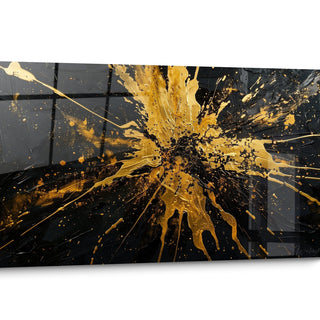 Black and Gold Abstract10
artworks
Black and Gold Abstract10
artworks
-
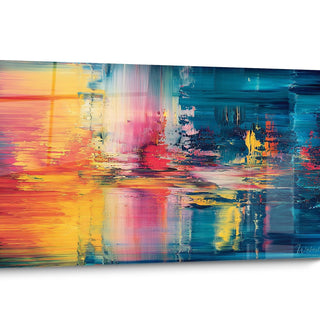 Abstract Scraped Style9
artworks
Abstract Scraped Style9
artworks
-
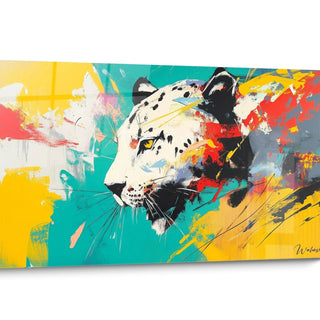 Abstract Artistic319
artworks
Abstract Artistic319
artworks
-
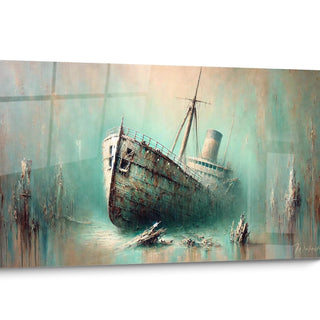 Abstract Boat228
artworks
Abstract Boat228
artworks
-
 Abstract Seaside39
artworks
Abstract Seaside39
artworks
-
 Abstract Body73
artworks
Abstract Body73
artworks
-
 Abstract Dancer305
artworks
Abstract Dancer305
artworks
-
 Abstract Figurative23
artworks
Abstract Figurative23
artworks
-
 Abstract Flower90
artworks
Abstract Flower90
artworks
-
 Geometric392
artworks
Geometric392
artworks
-
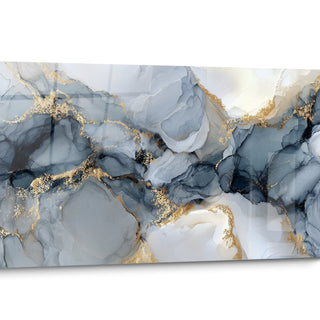 Abstract Marble169
artworks
Abstract Marble169
artworks
-
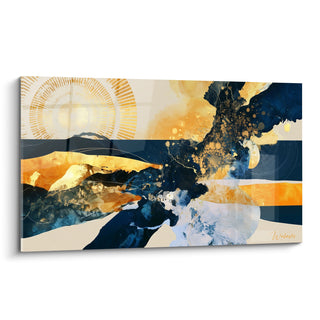 Modern Abstract106
artworks
Modern Abstract106
artworks
-
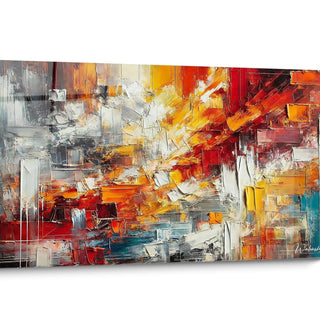 Contemporary Multicolour36
artworks
Contemporary Multicolour36
artworks
-
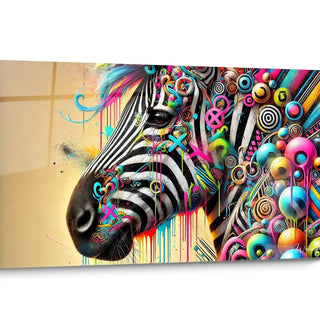 Multicolor Abstract224
artworks
Multicolor Abstract224
artworks
-
 Abstract Still Life9
artworks
Abstract Still Life9
artworks
-
 Painting (style)638
artworks
Painting (style)638
artworks
-
 Abstract Pop Art5
artworks
Abstract Pop Art5
artworks
-
 Sensual Abstract16
artworks
Sensual Abstract16
artworks
-
 Abstract Spirals141
artworks
Abstract Spirals141
artworks
-
 Textured Abstract39
artworks
Textured Abstract39
artworks
-
 Abstract Face508
artworks
Abstract Face508
artworks


All about Abstract Architecture Artwork
- Description Painting Architecture abstract
- The city without its sidewalk
- Concrete in color
- Checkerboards, stripes and mosaics
The Painting Architecture abstract collection brings together canvases where the city has been taken so close that nothing remains but a surface: a facade that occupies the entire frame, windows aligned like tiles, a roof seen from above, an edge rising towards the sky. No street, no passerby, no recognizable monument. These paintings show buildings reduced to their geometry and brought to bold colors: checkerboard red and yellow, pink on the roofs, turquoise against magenta, white and gray for the most silent of them.
Their unity lies in three choices that are found from one canvas to another. Framing first: it cuts the ground, removes the scale and deprives the eye of any human reference. Then color, pushed far beyond what an ordinary coating carries, to bring together shades that the real city almost never brings together. Finally, repetition: panels, balconies, paving stripes and glazing frames come back like musical measures. You think you are looking at a building, you are reading a composition.
Hung, these facades behave less like urban views than like blocks of color built. They bring verticality where furniture spreads low lines, and they install a clear color without going through floral patterns or landscapes. In an entrance, a hallway, a stairwell or a workspace, they stand alone on the wall, because their geometry is read as well at ten feet as at thirty feet.
This collection is for those who look up when walking, who photograph building angles without really knowing why, who like the order of frames and the clarity of solid colors. It also speaks to those who want strong color without representation: here, the subject is very real, buildings, balconies, roofs, but it is allowed to be looked at as a geometric abstraction. One foot in the city, the other in painting.
Without sidewalk or passerby: the framing of Abstract Architecture paintings
Where have the ground and passersby of Abstract Architecture paintings gone?
The first reflex in front of Abstract Architecture paintings is to look for an entrance, a sidewalk, a silhouette that would give the measure: none of this is shown. The frame begins above the ground floor and stops before the sky, or it tilts vertically to keep only roofs. The facade occupies the entire surface, edge to edge, without margin or clearance. This cut is not an oversight: it is what transforms a building into a painted surface, and it explains why these canvases are first read as assemblies of colored rectangles.
Now look where the frame cuts. It slices a window in two, sections a balcony in the middle of its railing, interrupts a row of panels without warning, lets a strip of roof run out of the panel. These amputations recur on almost all canvases and function as an admission: no one here claims to show an entire building, only a piece taken from it. What is seen continues beyond the edges, to the left, to the right, upwards, and the eye guesses it without being able to verify it. Hence this impression of holding a flat wall sample, like a fabric unfolded on a table.
The low-angle view, or how a building becomes a checkerboard
Many Abstract Architecture paintings are taken from below, the gaze fixed at the foot of the building and pointed upwards. The effect is mechanical: the floors pile up as they compress, the windows shrink row after row, the verticals meet somewhere out of the frame. A grid, however, becomes an uneven fan that accelerates towards the top. It is exactly what produces the impression of a vertical checkerboard, and it is also what gives these canvases their upward movement, while no character and no vehicle move.
Two other perspectives complete the series: a bird's-eye view, which crushes the rooftops into a pattern of colored rectangles, and a frontal view, which flattens everything and eliminates depth. Three ways to achieve the same thing: to strip the building of its quality as a habitable volume. Gathered on a single wall, these varied shots avoid monotony, because the eye moves from a vertical ascent to a fall to the ground without ever finding the comfortable position of a pedestrian standing at the corner of the street.
What remains of a city devoid of scale?
It is impossible, in front of an Abstract Architecture Painting, to say whether the building has four levels or forty. No parked car, no door, no occupied balcony, no tree at human height: the few plants that appear at the edge of the rooftops could just as well be shrubs as miniature forests. Scale disappears with the landmarks, and with it the possibility of locating the scene. This lack of clues explains why these canvases never function as travel memories: they refer to no specific place, and therefore to no specific date.
For a wall, the consequence is very concrete. An identifiable urban view imposes a narrative: we have been there, we dream of going there, we must explain it to our guests. An anonymous facade imposes nothing and simply organizes color and line. It therefore ages differently, without depending on a tourist fashion or a panorama that has become banal from being reproduced. This is the discreet comfort of these compositions: one can look at them a thousand times without ever having to say anything about them.
Red against yellow, turquoise against magenta: the color of Abstract Architecture paintings
Why doesn't magenta ever spill onto the neighboring red?
The palette of Abstract Architecture paintings belies the idea of a gray city: bright red against yellow, orange running along the balconies, turquoise next to magenta, pink on the rooftops. Look at how these shades are distributed and you will understand the process: they do not color a detail, they take an entire floor, then the next, changing each time. On several canvases, each bay receives its color and the building ends up resembling a color chart standing upright. No blending, no smudging, no trace of rain: the shade stops abruptly at the joint, where the neighboring case begins.
Now follow these colors closely: they follow the construction rather than contradicting it. The red stops exactly at the nose of the floor, the yellow fills the rebate between two windows, the orange is confined to the guardrails without ever biting into the wall. The shade obeys the drawing of the building, case by case, and it is this discipline that prevents the whole from turning into a mess despite the violence of the juxtapositions. Erase the colors, and a perfectly readable facade plan would remain; restore them, and that plan becomes a composition that is worth looking at in its own right.
Abstract Architecture paintings that renounce color
Part of the Abstract Architecture paintings abandons saturated colors for white, pearl gray and soft shadow: light towers intertwined, striped paving, non-reflective colored glazing. On these canvases, all the work goes to the light. Lacking red or turquoise to separate the planes, it is the shadows that cut out: a gray band under each projection, a darker recess at the bottom of a recess, an almost white line on the sharp edge. The drawing replaces the color and suddenly becomes much more visible, as if we had scraped off the plaster to reveal the structure underneath.
On a wall, these two families respond to each other instead of contradicting each other. The light compositions allow a whole to breathe and support abundant light without ever becoming harsh; the colored compositions take the floor and are satisfied with weak lighting. Alternating the two is like punctuating a sentence: a silence after an exclamation. This is what allows this collection to nourish both a very inhabited room and a deliberately sparse space, without the whole ending up repeating itself from panel to panel.
What a whole red facade does to a north-facing room
The large blocks of color in the Abstract Architecture Paintings act like pigment blocks rather than views: the red of a facade does not degrade into shadows, it holds from edge to edge of the panel. In a north-facing room, where the light remains cool all day, this warm mass warms the whole room much more effectively than a colored object placed on a piece of furniture. The color is architectural, that is to say installed in large quantity and in one go, exactly as on the building it represents.
The color combinations used in these paintings are not neutral either. Turquoise and magenta, red and yellow, pink and fire foliage green: these are couples that reinforce each other and create a vibration on the retina. Placed facing a window, they become almost electric; placed on a dark wall, they gain depth and calm down. It is therefore better to leave them a free wall rather than to slip them between two shelves, where this vibration would be lost.
The grid, the stripe and the mosaic: the grammar of Abstract Architecture Paintings
Why do the same squares reappear from one Abstract Architecture Painting to another?
An Abstract Architecture Painting almost always rests on a repeating unit: a panel, a window, a bay, a paving stone. Count them on a canvas and you will see that the variation never concerns the shape, always the shade. The module remains identical from the bottom to the top of the panel; only the case that we decide to fill in red, yellow or pearl gray changes. It takes only to move these fillings for a regular wall to become a grid, a checkerboard, a gradient or a rain of dots. It is this single gesture, repeated differently, that connects canvases very far apart in color.
This repetition has a rare virtue in an interior: it occupies the surface without ever overloading it. A regular grid offers the eye a clear path, up or sideways, and lets it scan the canvas without bumping into an anecdotal detail. One looks at a cadence rather than a scene. It is also for this reason that these compositions support the large dimension: the more the grid extends, the more it becomes captivating, where a narrative image would have been exhausted after three distracted glances.
How many blues are there in a single facade panel?
The surfaces of Abstract Architecture Paintings are almost never smooth: they are divided into small, tight squares, pastilles, narrow bands that immediately evoke a ceramic covering. Approach and the detail becomes precise: each tessera carries its own nuance, a little lighter or more muted than its neighbor, so that a panel that seemed uniform reveals itself to be made up of dozens of different blues. The joints remain visible, thin and regular, and grid the color with a network of pale lines that catches the eye where a smooth block would hold nothing.
This tiny division installs a double reading regime. From afar, the mosaic blends into a unified colored mass and the facade becomes a frank block, readable from one end of the room to the other. Up close, the cut reappears and the surface begins to shimmer like embroidery. The same painting therefore offers two images depending on the distance at which one stands, which makes it a durable companion where one circulates: the hallway shows its mass, the armchair reveals its square.
Every grid calls for its accident: the curve, the edge, the veil
Look long at an Abstract Architecture Painting and you will always find the accident that contradicts the grid: a glazed balcony that curves, an edge that breaks the alignment diagonally, a veil stretched that ripples in front of the windows, a plume of steam that blurs an angle. These deviations are counted, one or two per canvas, and almost never placed in the center of the panel. The curve settles in a third of the surface, offset, as if placed there to prevent symmetry from closing. Look for it on each canvas: it is at this precise location that the composition tips over.
Without these breaks, a composition entirely gridded would end up looking like wallpaper. With them, the eye has a point of attachment and returns. It is this dosage between discipline and deviation that distinguishes these paintings from a simple repeated pattern, and that allows them to hold a wall over time. A single curve in the middle of three hundred squares is enough: it gives the grid its center, and the room a precise place to rest the eyes.
FAQ on abstract architecture paintings
Do these red and turquoise buildings really exist somewhere?
None of these buildings are identifiable: no sign, no monument, no famous skyline in the background. The framing enters the facade and abandons everything that would allow a city to be named. The bias is voluntary, and this is what separates this collection from a tourist view: no one will ask you if you have been there. These facades belong to a possible city, made of colors and patterns, which each reconstitutes as they wish.
What sets them apart from a photograph of a skyscraper or an urban panorama?
A panorama keeps the entire silhouette of the buildings, the sky, often the water or the street: it tells a place. Here, the frame has entered the facade and shows only a fragment of it, enlarged to become pure geometry. The colors, then, are pushed far beyond the usual bluish gray of city views. The result is not a landscape but an assembly of rectangles, curves and patterns, much closer to constructed painting than to a report.
Who will these geometric and colorful facades appeal to the most?
To those who look up when walking, who stop in front of a building corner, who photograph a colored gable without really knowing why. Also to those who want an affirmed color without going through the flower, the animal or the landscape: these canvases offer clear blocks held by a structure. They finally touch those who like images that are read in two times, the pattern from afar, the tile up close, and requiring no explanation.


