


Turquoise Buddha Zen Wall Art
Our Painting Zen Buddha Turquoise collection celebrates spirituality and serenity through works imbued with Eastern wisdom. These artistic creations combine Buddhist iconography and soothing turquoise nuances to create an exceptional meditative atmosphere. Each work invites contemplation and transforms your space into a haven of peace. Perfect for lovers of zen decoration and spiritual décor, this collection brings harmony and balance to your interior while sublimating your walls with a refined artistic touch.
 Divine Tranquility Wall Art - Buddha Zen Edition273,90 €
 Indigo Wisdom Wall Art - Zen Edition273,90 €
 Deep Peace Wall Art - Zen Edition273,90 €
 Calm Turquoise Wall Art - Zen Edition273,90 €
Explore further
In Turquoise Buddha Zen Wall Art
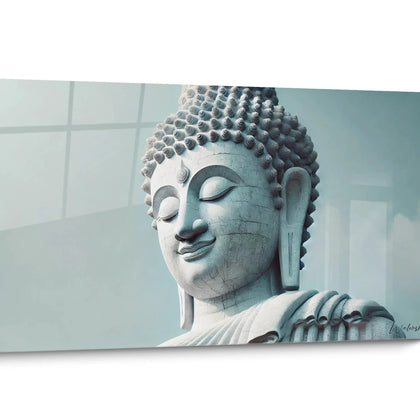
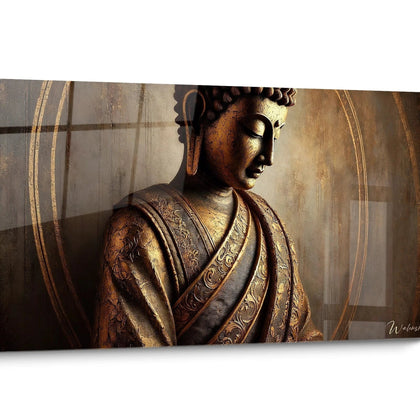
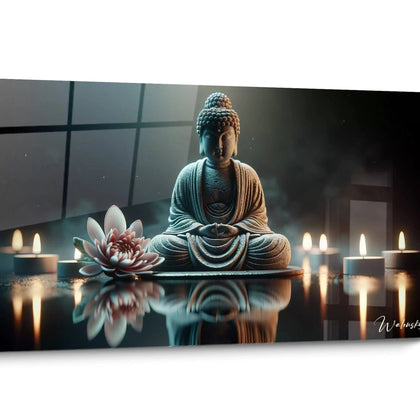
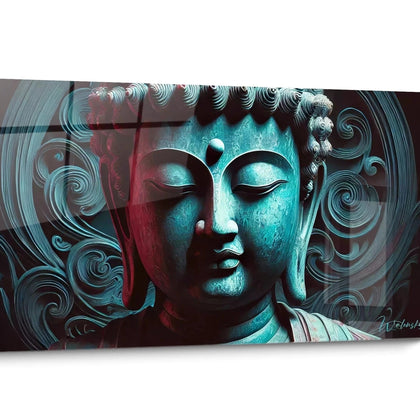
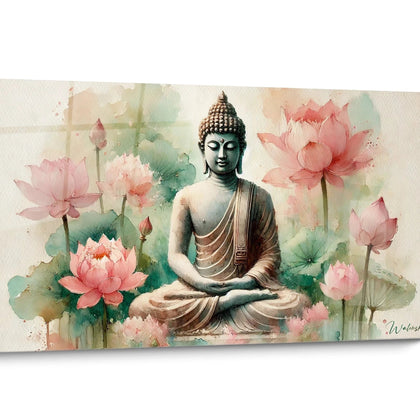
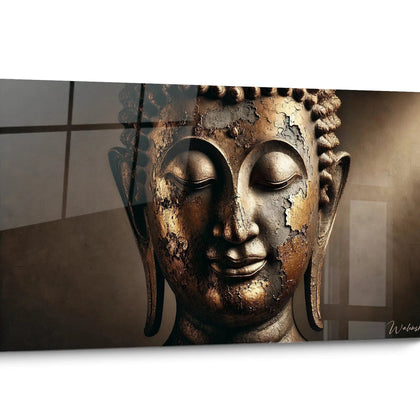
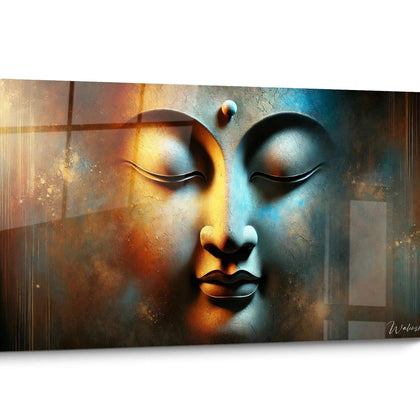
All about Turquoise Buddha Zen Wall Art
- Painting Presentation Zen Buddha Turquoise
- Spiritual Turquoise Decor
- Symbolism and Energy
- Integration Tips
The zen buddha turquoise painting embodies an exceptional fusion between meditative serenity and the chromatic power of turquoise, this sacred hue that traverses civilizations as a symbol of spiritual protection and inner elevation. This type of wall creation is particularly suited to those seeking to transform their meditation space, therapy room, or living room into a true sanctuary of peace, where the turquoise color acts as an energetic catalyst amplifying the contemplative intention of the Buddha represented. Unlike traditional representations in golden or earthy tones, this turquoise version brings a unique vibrational dimension, connecting the observer to the energies of the throat chakra and favoring authentic expression while maintaining the spiritual grounding inherent in Buddhist iconography.
The Chromotherapeutic Impact of Turquoise in Buddhist Representation
The zen buddha turquoise painting radically distinguishes itself from other wall compositions by its alliance between meditative iconography and vibrational chromotherapy. Turquoise, this nuance located between celestial blue and aquatic green, possesses documented psycho-energetic properties that amplify the calming effect naturally associated with representations of the Buddha. In a large-scale space, this color creates a magnetic focal point that immediately captures the gaze while generating a sensation of spatial expansion, particularly sought after in spaces dedicated to yoga, holistic therapy, or waiting rooms for practitioners of gentle medicine.
Why does turquoise intensify the meditative experience?
The science of color reveals that turquoise simultaneously stimulates mental clarity and physical relaxation, a rare balance that few hues manage to generate. When associated with the image of the meditating Buddha, this zen buddha turquoise painting creates what practitioners call a "chromatic visual anchor": the gaze naturally rests on the artwork, the color slows brain waves, and the Buddha's posture reinforces the contemplative intention. For therapists equipping their practice, this synergy transforms a simple decorative element into a true passive therapeutic tool.
The energetic harmony between spiritual form and healing color
Tibetan traditions recognize certain shades of turquoise as bearers of protective and purifying virtues. A large-scale zen buddha turquoise painting thus becomes much more than a decoration: it functions as an energetic guardian of the space, particularly effective in urban environments where ambient stress requires powerful visual counterweights. Feng shui practitioners specifically recommend this color combination for areas dedicated to authentic communication and introspection, creating spaces where personal truth can emerge without judgment.
Contextual adaptation to contemporary spaces
In modern interiors with clean lines, the zen buddha turquoise painting resolves a frequent problem: how to integrate a spiritual dimension without falling into a stereotypical ethnic aesthetic. The modernity of turquoise, a color omnipresent in Scandinavian and Mediterranean contemporary design, allows for a smooth transition between Eastern spirituality and Western minimalism. Your zen buddha painting then becomes the cultural bridge that unifies these seemingly contradictory universes, offering philosophical depth without compromising overall aesthetic coherence.
The Multilayered Symbolism of Turquoise in Buddhist Iconography
The choice of a Buddhist turquoise zen painting is never trivial for those who understand the symbolic layers of this association. In Himalayan traditions, turquoise is the stone of healers and spiritual teachers, believed to absorb the negative energies of its wearer. Transposed into a Buddhist wall representation, this symbolic property multiplies: the work becomes a receptacle of ambient tensions, subtly purifying the emotional atmosphere of the room. For therapeutic spaces receiving significant emotional charge, this symbolic function of energy transmutation fully justifies the investment in a large-scale piece.
How does this color dialogue with the mudras represented?
The mudras - these codified hand positions of the Buddha - acquire a particular resonance when rendered in turquoise. The Dhyana mudra (hands in a cup, deep meditation) associated with turquoise evokes the peaceful water of a mountain lake, amplifying the invitation to inner stillness. The Abhaya mudra (raised hand, absence of fear) in turquoise becomes a chromatic shield against ambient anxiety. This synergy between sacred gesture and therapeutic color makes the Buddhist turquoise zen painting a multifunctional visual tool for spaces dedicated to personal development.
The transcultural dimension of spiritual turquoise
Remarkable fact: turquoise has a sacred meaning in virtually all major spiritual traditions - from Native Americans to ancient Egyptians, from Persians to Tibetans. A Buddhist turquoise zen painting therefore speaks a universal language of protection and elevation that transcends cultural boundaries. For multicultural spaces such as wellness centers, yoga studios welcoming a diverse clientele, or coworking spaces focused on personal development, this symbolic universality facilitates an immediate connection with visitors from varied cultural backgrounds.
Perceptual evolution according to natural lighting
Turquoise has this fascinating chromatic peculiarity of radically transforming according to the quality of light that illuminates it. A Buddhist turquoise zen painting exposed to morning light reveals soothing watery nuances, while the golden light of the evening enhances its green undertones, evoking natural vitality. This daily metamorphosis transforms the work into a living companion whose presence evolves with the circadian rhythm, reinforcing the contemplative connection between the observer and the Buddhist representation.
Integration Strategies to Maximize Energetic Impact
Acquiring a Buddhist turquoise zen painting of large dimension requires strategic reflection on its positioning to optimize its psycho-energetic benefits. Contrary to popular belief, the optimal location does not necessarily follow classic decorative rules, but rather responds to the energy map of your space. Feng shui practitioners primarily recommend the North zone of your main room - sector governed by the Water element of which turquoise is the perfect chromatic expression - to amplify energies of career and personal spiritual journey.
What decorative elements amplify the effect of Buddhist turquoise?
The immediate environment of the turquoise Buddhist zen painting largely conditions its perceptual impact. Raw natural materials – black volcanic stone, bleached driftwood, oxidized metals – create a textural contrast that enhances the brightness of the turquoise while physically anchoring the spiritual energy of the representation. Absolutely avoid saturating the space with other turquoise elements: this color works best as a unique focal point, surrounded by earthy neutrals (grit, natural linen, polished concrete) that allow it to radiate fully.
The sonic dimension as a complementary vibrational element
Astute buyers of turquoise Buddhist zen paintings understand that the experience can be amplified by a coherent sonic dimension. Installing it near an indoor fountain creates a powerful multisensory synergy: the turquoise evokes water visually, while the aquatic murmur concretizes this association, generating an immersive environment conducive to deep meditation. Subtle alternative: koshi chimes tuned to the "Aqua" tone produce harmonics that literally resonate with the turquoise's vibrational frequency.
Integration into therapeutic care pathways
For wellness professionals, the turquoise Buddhist zen painting becomes a therapeutic tool in its own right when consciously integrated into the care protocol. Positioned within the patient's field of vision at the beginning of the session, it facilitates the transition to the receptive state necessary for energy therapies. Its constant presence in the space also creates a positive memory anchor: patients unconsciously associate the post-session feeling of well-being with this image, reinforcing the effectiveness of subsequent consultations through benevolent visual conditioning.
Is a turquoise Buddhist zen painting suitable for non-therapeutic professional spaces?
Absolutely. Law firms, architecture firms, and executive spaces greatly benefit from this calming presence. Turquoise promotes clear and soothing communication – an essential quality in conflict-ridden professions – while the Buddha embodies decisional wisdom, creating an environment conducive to constructive negotiations and informed decision-making.
Does the turquoise color of the painting require any particular chromatic maintenance?
Modern representations use stable pigments remarkably resistant to light degradation. However, to preserve the vibrancy of the turquoise over the long term, avoid direct exposure to intense UV rays during midday. Indirect LED lighting at a neutral temperature (4000K) maintains color fidelity while creating an atmosphere conducive to contemplation.
Can a turquoise Buddhist zen painting be combined with other spiritual representations?
Caution is advised: mixing spiritual iconography risks diluting the energetic impact of each. If you wish to create a multi-traditional space, physically separate the areas by dedicating distinct walls to each practice. The turquoise Buddhist zen painting has a strong enough presence to define the energy identity of an entire space without requiring additional symbolic reinforcement.
Further reading


