


Zen Buddha Portrait Wall Art
Our Zen Buddha Painting Portrait embodies the essence of spirituality and meditation. This collection celebrates Buddhist wisdom through contemplative portraits that invite serenity. Each decorative painting zen buddha captures the peaceful expression and timeless features of the Buddha, creating an atmosphere conducive to relaxation. Ideal for your living room, bedroom, or meditation space, this spiritual zen portrait transforms your interior into a sanctuary of tranquility and harmony.
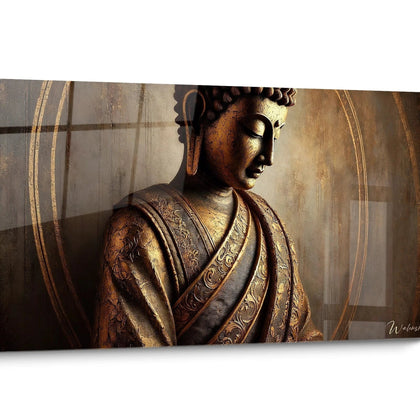
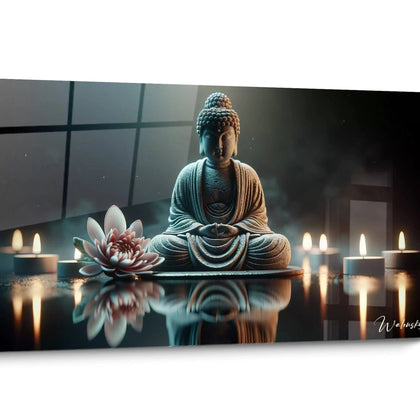
 Buddha Painting Interior Reflections - Buddha Edition273,90 €
 Buddha Undulating Dream Wall Art - Buddha Edition273,90 €
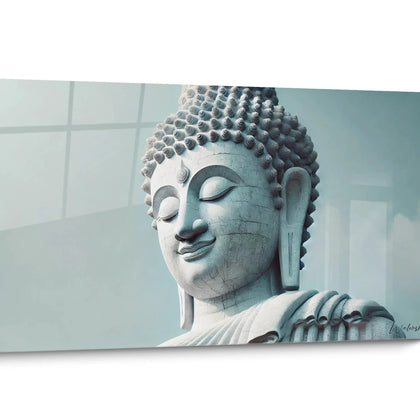
 Buddha Wall Art Porcelain Dreams - Buddha Edition228,90 €
 Buddha Painting Celestial Meditation - Buddha Edition228,90 €
 Inner Light Wall Art - Zen Buddha Edition273,90 €
 The Buddha's Dream Wall Art - Zen Buddha Edition273,90 €
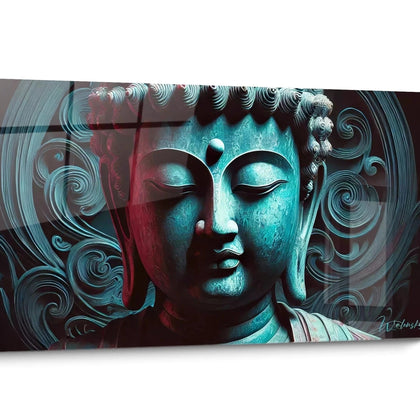
 Indigo Wisdom Wall Art - Zen Edition273,90 €
 Deep Peace Wall Art - Zen Edition273,90 €
Explore further
In Zen Buddha Portrait Wall Art
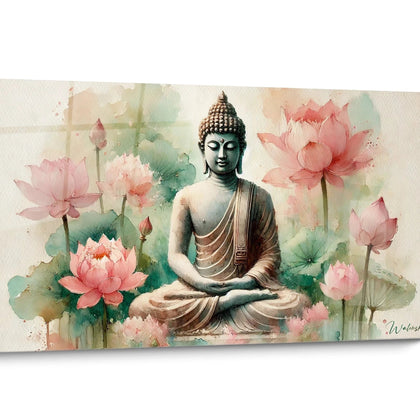
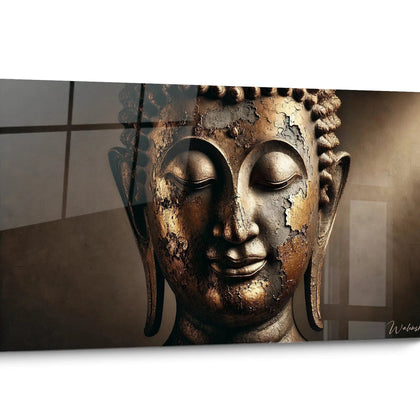
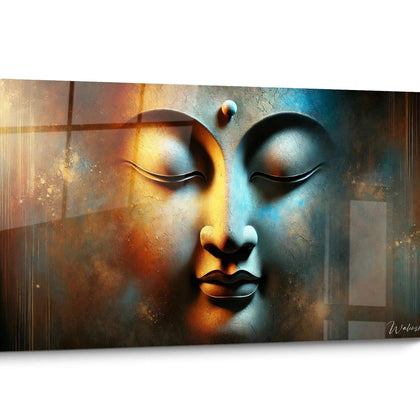
All about Zen Buddha Portrait Wall Art
- Presentation Canvas Zen Buddha Portrait
- Meditative Portrait and Serenity
- Buddha Facial Expression
- Spiritual Contemplation
A zen buddha portrait canvas captures the very essence of spiritual tranquility through the facial representation of the enlightened master. This artistic variation is distinguished by its intimate approach, focused exclusively on Buddha's face and torso, creating a direct visual connection with the viewer. Unlike complete or symbolic representations, the portrait format brings Buddhist wisdom closer by establishing a silent dialogue between the sacred figure and the one who meditates before it. The expressive details of the face - half-closed eyelids, a sketched smile, a serene forehead - become the main vectors of transmission of inner peace. This type of representation transcends simple decoration to become a daily meditative focal point, particularly suitable for personal spiritual practice spaces.
The Impact of the Buddha Portrait on Daily Meditative Practice
The zen buddha portrait radically transforms the domestic meditative experience by creating a visual anchor specifically designed for concentration. Enlarged facial features allow for careful observation of micro-expressions of serenity: the slight relaxation of facial muscles, the inward orientation of the gaze, the subtle position of the lips suggesting total acceptance. This visual proximity to the Buddhist expression generates a phenomenon of emotional resonance that distant or symbolic representations do not produce.
What facial expression to look for in a meditative Buddha portrait?
The spiritual authenticity of a zen buddha portrait rests essentially on fidelity to traditional iconography codes: semi-open eyes symbolizing the balance between inner and outer awareness, elongated earlobes testifying to the renunciation of material adornments, the urna between the eyebrows marking transcendent vision. Contemporary large-format versions magnify these details, creating an almost tangible presence. For a private meditation room, prioritize portraits with a neutral-positive facial expression rather than a beatific one, as this neutrality favors personal meditative projection without imposing a predefined emotional state.
The positioning of the portrait in the spiritual practice space
Integrating a zen buddha canvas in portrait format requires specific consideration of its installation height. Unlike horizontal compositions, the vertical portrait should be positioned so that Buddha's gaze is slightly above the eye level of the seated meditator - creating a dynamic of spiritual elevation without hierarchical domination. This configuration naturally generates a subtle straightening of the meditative posture. Large-scale models amplify this effect by enveloping the peripheral visual field, reducing surrounding distractions.
The facial elements conveying tranquility
Successful portrait representations articulate their composition around three major expressive zones: the clear forehead symbolizing mental clarity, the eyes translating relaxed vigilance, and the mouth expressing silent benevolence. Color variations around the face - often ochre, gold, or deep navy blue - serve to isolate the features in a contemplative setting. To maximize the meditative impact, select portraits where the background remains minimalist, avoiding decorative elements that would fragment attention focused on the central facial expression.
The Symbolism of Facial Features in Buddhist Portrait Iconography
A Zen Buddha portrait authentic, encoded within its facial proportions, reveals an age-old sacred geometry. Buddhist aesthetic canons precisely define the mathematical relationships between the width of the face, the height of the forehead, and the position of facial features - these ratios unconsciously creating a soothing visual harmony. Large-format representations allow these proportional subtleties to be perceived, imperceptible on reduced formats: the exact spacing between the eyebrows, the particular curve of the eyelids, the precise angle of inclination of the head translating introspection without withdrawal from the world.
Cultural variations of the zen Buddhist portrait
According to artistic traditions - Tibetan, Thai, Japanese, or Chinese - the zen Buddhist portrait presents distinct facial features reflecting cultural interpretations of enlightenment. Japanese versions often favor a refined stylization with minimal facial lines and a restricted color palette, while Tibetan interpretations enrich the face with symbolic golden details. For a contemporary Western meditation space, portraits inspired by Japanese zen aesthetics generally offer the best compatibility with modern minimalist interiors, their expressive sobriety adapting to clean environments.
How does the gaze of the portrait influence the meditative atmosphere?
The direction of the gaze constitutes the determining element in a portrait painting's ability to facilitate meditative immersion. Portraits where Buddha presents a slightly lowered gaze - a classic technique of vipassana meditation - naturally induce an introspective posture in the observer. Conversely, representations with a frontal gaze create a more direct interaction, suitable for guided visualization practices. Monumental formats exponentially amplify this effect: a large-scale portrait generates a presence that transforms the space into a personal sanctuary, the Buddha's gaze literally becoming omnipresent in the meditative field of vision.
Facial expression as a support for meditation on emotions
Advanced practitioners frequently use Buddhist portraits as objects of analytical meditation on emotional states. Prolonged observation of facial micro-expressions - particularly visible on large-format representations - becomes an exercise in recognizing the physiological markers of inner peace. This specific contemplative practice, called "awakened face meditation," involves identifying and then internally reproducing the observed muscle relaxations: jaw relaxation, gentle opening of the gaze, slight lifting of the corners of the lips. Imposing-sized paintings facilitate this meticulous observation by making details invisible on standard formats perceptible.
Spatial Integration of the Buddhist Portrait in Resource Environments
The installation of a zen Buddha portrait painting in a therapeutic or wellness space obeys specific ergonomic principles related to environmental psychology. The presence of a large, serene face neurologically activates the circuits of empathy and emotional regulation in observers, a phenomenon amplified when the portrait occupies a significant portion of the visual field. Holistic therapists report that clients exposed to these soothing facial representations show measurable slowed heart and respiratory rates, scientifically validating the physiological impact of Buddhist portraits.
Which spaces particularly benefit from a zen Buddha portrait?
Beyond obvious meditation rooms, portrait paintings find exceptional relevance in bedrooms where they accompany sleep-wake transitions. Positioned facing the bed, a large-scale Buddhist portrait becomes the last and first image perceived daily, framing circadian cycles with a soothing presence. Body therapy rooms - massage, acupuncture, osteopathy - also benefit from these facial representations, whose relaxed expression subconsciously suggests muscle relaxation to the patient. Dynamic yoga spaces paradoxically benefit from these portraits as well, which counterbalance physical intensity with a stable contemplative presence.
Complementarity with guided visualization practices
Meditation teachers frequently incorporate Buddhist portraits as visual aids for tonglen (exchange of self with others) and metta (loving-kindness) exercises. The physical presence of an expressive face facilitates the necessary emotional projection for these practices: visualizing the sending of compassion becomes concretely more accessible when a receptive face is materially present. Generous dimensions of contemporary models create an immersion that transcends simple visual assistance to become a true spiritual practice partner, a silent but tangible presence in the meditative process.
Perceptual evolution of the portrait with regular practice
Regular meditators report a fascinating phenomenon: their perception of the same portrait evolves over time with their spiritual progress. Facial expressions seem to reveal new emotional nuances - subtleties always present but imperceptible in the initial stages of practice. This perceptual transformation reflects the refinement of the practitioner's emotional intelligence rather than an objective change in the painting. A quality portrait, particularly in large format, has sufficient expressive depth to accompany several years of meditative development without exhausting its contemplative richness, fully justifying the investment in dimensioned and detailed works.
Frequently asked questions about Zen Buddha portrait paintings
Is a Zen Buddha portrait painting suitable for meditation beginners?
Absolutely, Buddhist portraits are even excellent starting points for novices as they offer a clearly defined visual focus. The presence of a human face facilitates attentional engagement compared to abstract symbols, making initial meditation sessions less arduous. Beginners report that focusing on the serene expression naturally helps them stabilize their initial mental agitation.
What orientation should be prioritized for a Zen Buddha portrait painting in a multifunctional room?
In a space also serving other activities, position the portrait so that it remains visible from your meditation practice area without visually dominating the entire room. A side wall perpendicular to the main axis of circulation works ideally, allowing the portrait to be present without imposing its sacredness during non-meditative moments. This configuration preserves functional flexibility while maintaining a discreet spiritual anchor.
Do large-format Buddha Zen portraits require special lighting?
Unlike conventional artworks, meditative portraits benefit from indirect and subdued lighting rather than direct spotlights. Soft, diffused light preserves the contemplative atmosphere by avoiding distracting reflections and harsh contrasts. Opt for filtered natural light or warm light sources with variable intensity, allowing you to adjust the ambiance according to the time of day and the types of meditative practices undertaken.


