


Abstract Waves Painting
Here, the ocean freezes in its most powerful gesture: the curve just before the fall. The Abstract Waves Painting collection gathers canvases where turquoise, charcoal and gold blend in thick reliefs, as if sculpted by hand rather than painted. Each piece captures a crest, a hollow, a luminous foam, in a textured material that gives the water an almost tangible breath. An entire range designed for those seeking an inner swell, both soothing and spectacular.
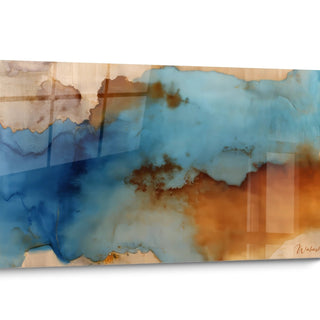
 Diagonal Streak Painting in Orange and Pastel Blue - Burning Breath - Abstract Waves Edition273,90 €
 Geometric Wave Painting in Charcoal and Gold - Frozen Breaker - Abstract Waves Edition273,90 €
 Slate Blue and White Wave Painting with Scattered Droplets - Delicate Inked Watercolor - Abstract Waves Edition273,90 €
 Dark Wave Painting with Golden Crest - Calmed Storm - Abstract Waves Edition273,90 €
 Turquoise Wave Painting with Golden Spray - Ocean Surge - Abstract Waves Edition273,90 €
 Green and Black Wave Painting with Golden Drops - Deep Liquid Tube - Abstract Waves Edition228,90 €
 Navy Blue and Foamy White Breaking Wave Painting - Oceanic Fury - Abstract Waves Edition228,90 €
 Golden and Turquoise Wave Painting in Sunlight - Marine Eruption - Abstract Waves Edition228,90 €
 Black and Blue-Ivory Splash Wave Painting - Suspended Breaker - Abstract Waves Edition228,90 €
 Navy Blue and Peach Wave Painting - Sea Breath - Abstract Waves Edition228,90 €
 Golden and Anthracite Breaking Wave Painting - Suspended Splash - Abstract Waves Edition228,90 €
 Blue and White Textured Swirl Wave Painting - Frozen Marine Breath - Abstract Waves Edition228,90 €
 Navy Blue Wave Painting with Cream Highlights - Oceanic Roll - Abstract Waves Edition228,90 €
 Red and anthracite Swirl painting splashed with gold - Suspended explosion - Abstract Waves Edition228,90 €
 Navy blue and gold breaking wave painting - Night swell - Abstract Waves Edition228,90 €
 Teal and gold wave painting at the deep hollow - Breath of the ocean - Abstract Waves Edition228,90 €
In the same family
Also explore the theme Abstract
-
 View all5130
artworks
-
 Abstract123
artworks
-
 Colorful Abstract170
artworks
-
 Blue marble abstract23
artworks
-
 Black and Gold Abstract20
artworks
-
 Abstract Scraped Style17
artworks
-
 Abstract Architecture517
artworks
-
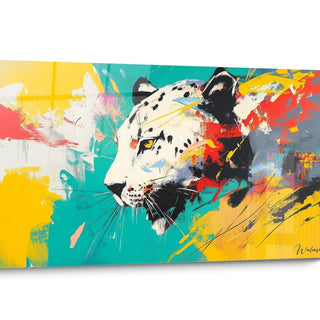 Abstract Artistic370
artworks
-
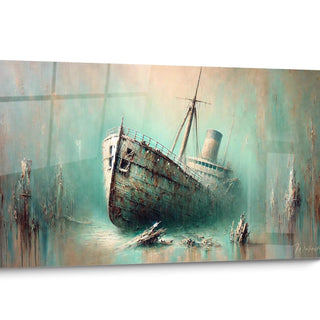 Abstract Boat228
artworks
-
 Abstract Seaside50
artworks
-
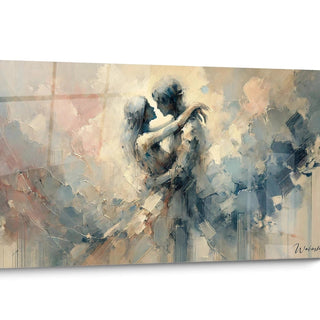 Abstract Body73
artworks
-
 Abstract drips65
artworks
-
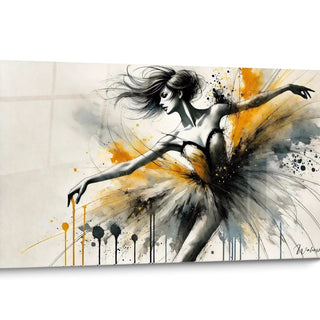 Abstract Dancer318
artworks
-
 Abstract splashes88
artworks
-
 Abstract shards63
artworks
-
 Abstract ink50
artworks
-
 Abstract fault lines26
artworks
-
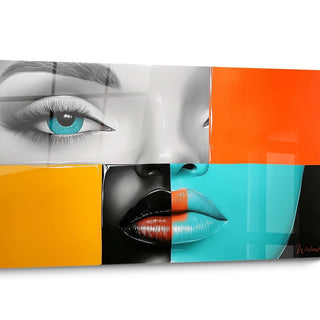 Abstract Figurative23
artworks
-
 Abstract Flower102
artworks
-
 Geometric409
artworks
-
 Abstract Marble178
artworks
-
 Abstract textures36
artworks
-
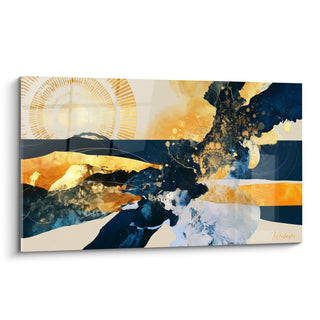 Modern Abstract201
artworks
-
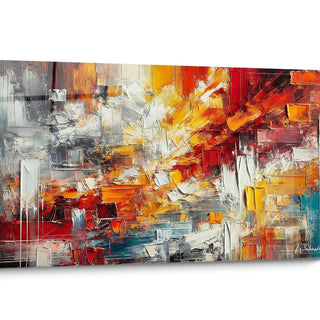 Contemporary Multicolour36
artworks
-
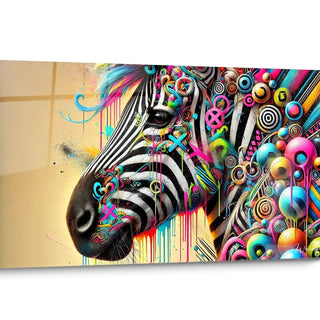 Multicolor Abstract238
artworks
-
 Abstract Still Life9
artworks
-
 Painting (style)719
artworks
-
 Abstract Pop Art5
artworks
-
 Abstract ribbon49
artworks
-
 Sensual Abstract16
artworks
-
 Abstract Spirals200
artworks
-
 Textured Abstract75
artworks
-
 Abstract Face518
artworks


All about Abstract Waves Painting
- Abstract Waves Painting presentation
- The matter of the gesture
- The current beneath the brushstroke
- A sea without a precise shore
The Abstract Waves Painting collection does not seek to reproduce the sea as one photographs it, but as one feels it in the moment it closes upon itself. These canvases capture the suspended instant of a breaking crest, with thick material giving relief to the foam and depth to the blue-green hollows. A common vocabulary runs through them: reliefs sculpted with the palette knife, golden flashes crossing the water like captive light, and palettes oscillating between deep teal and misty charcoal.
What unites these paintings is less a motif than a sensation: that of a natural force caught in its broadest gesture, neither threatening nor frozen, but alive. The textured reliefs give each piece an almost sculptural presence, changing appearance with the daylight and the angle of the gaze. These are works that occupy a wall without overwhelming it, bringing silent movement rather than mere decoration.
This collection speaks to those who love interiors where nature is invited without sentimentality, with an assertive and slightly wild presence. It also speaks to anyone with an intimate relationship to the open sea, sailing or the coastline, who finds in these canvases something of the sensory memory of the surf. In a living room, office or entrance, these paintings install a strong visual anchor, able to structure an entire room around their contained energy.
Why material matters as much as color in these canvases
Where does this pronounced relief on the surface come from?
On these canvases, the paint is never smooth: it forms crests, furrows and clusters that imitate the actual texture of moving water. This technique, inherited from palette-knife work rather than brushwork, gives physical volume to what in nature is merely fluid and elusive. In the Abstract Waves Painting collection, this relief turns each work into an almost tactile object, where light catches differently depending on the hour and viewing angle, much like the changing surface of a real sea.
Why does gold cross such dark waters?
The contrast between deep blue and golden flashes is not decorative chance: it replays how low-angled light, at sunrise or sunset, pierces the liquid mass and reveals its hidden relief. These golden filaments running through the folds of the water evoke a precise moment of the day, fleeting and rare, that the paint freezes forever. This is what makes each canvas of the Abstract Waves Painting collection less cold than a simple seascape: warmth coexists with depth.
Does this relief change how the piece is perceived?
A textured surface is not merely looked at head-on: it captures ambient light and redistributes it into shifting shadows throughout the day. Hung in a room crossed by sunlight, a canvas from this collection seems almost to breathe, its reliefs darkening or brightening with the hour. This is a quality few marine representations offer, and it explains why these works are often chosen to animate an otherwise silent wall.
What the painting technique reveals about the movement of water
Why do these waves seem frozen in mid-surge?
The composition of these canvases almost always chooses the precise moment when the wave curls upon itself, just before collapsing into foam. This choice is not incidental: it is the instant when the mechanical tension of the water is greatest, when the form becomes almost geometric before dissolving. By painting this turning point, the Abstract Waves Painting collection captures contained energy rather than chaos, giving each piece a form of calm despite the implied violence of the gesture.
Where does the almost splattered look of the paint come from?
Some areas of these canvases recall watercolor technique, with pigments that seem to dilute and spatters evoking the real sea spray of a rough ocean. This freedom of gesture, close to controlled accident, contrasts with the denser, sculpted work of the rest of the composition, creating a dialogue between rigor and spontaneity. This contrast of textures is one of the most recognizable visual signatures of the Abstract Waves Painting collection, and what prevents these works from appearing frozen or artificial.
Why does the background always remain in the background?
The background of these compositions is almost systematically treated in muted tones, grey, beige or charcoal, like a patinated fresco worn by time. This choice highlights the movement of the water in the foreground without ever competing with it, while suggesting a misty sky or an undefined atmosphere. This approach explains why these canvases easily find their place in interiors with neutral tones, where they become the sole point of visual tension in the room.
Who are these abstract visions of the sea really for?
Why do these waves not resemble any identifiable place?
Unlike a classic seascape that situates a coast, a lighthouse or a recognizable horizon, these works refuse any precise geography. The wave becomes a universal motif, detached from any map, which allows everyone to project their own memory of the sea, whether a Breton shoreline or a tropical beach. It is this absence of landmarks that makes the Abstract Waves Painting collection a choice that speaks as much to a sailor as to someone who has never seen the ocean.
Does this movement speak more to certain temperaments?
There is in these compositions a tension between the force of the gesture and the stillness of the canvas that particularly attracts people sensitive to contrasts, those who enjoy what moves without ever tipping into disorder. They are often profiles drawn to raw natural elements rather than floral motifs or still life, who seek in their interior a presence that breathes rather than a mere ornament. The Abstract Waves Painting collection answers this need for controlled energy.
How do these canvases differ from a traditional seascape?
A classic seascape tells a scene, with a boat, a coast, an identifiable season. Here, none of that: the wave is isolated, detached from any narrative context, almost like a portrait of matter itself. This refocusing on pure gesture rather than anecdote makes these works more timeless, able to outlast decorative fashions without ever appearing dated, unlike a beach scene anchored in a specific era or place.
FAQ on abstract wave paintings
Why do some of these waves seem almost golden rather than blue?
The golden light crossing several canvases of the collection evokes a precise hour, that of sunrise or sunset, when low rays penetrate the water deeply. This chromatic choice warms a palette otherwise dominated by cool blues and gives each piece an unexpected warmth that softens the power of the movement depicted.
Do these paintings suit someone with no particular connection to the sea?
Yes, because these works depict no specific place: they capture a universal gesture, that of water in motion, detached from any geographic anecdote. They appeal to those seeking a strong natural energy in their interior, whether or not they have a personal attachment to the coastline.
Why choose an abstract wave over a classic seascape?
A seascape tells the story of a place, whereas these compositions isolate the pure movement of water, with no boat or shoreline. This refocusing makes the works more timeless and universal, able to integrate lastingly without ever seeming tied to a particular era or setting.
Further reading
Our articles on this topic
- The Great Wave by Hokusai: What Makes It Iconic
- Wave ocean painting in acrylic glass: the immersive effect that captures movement
- Blue and Turquoise Abstract Spiral Painting: Capturing the Movement of the Sea
- Whale painting deep blue ocean background in acrylic print: the technical guide
- Rectangular seascape painting in acrylic glass: how to choose the right size
L'art qui suscite l'envie
Maison belge d'art mural grand format
14 jourspour changer d'avis*
Protection Walenskyincluse
Fabriquéen Italie
FormatXXL
Kit de fixationtoujours fourni
* Hors tableaux personnalisés et tailles personnalisées


