


Black and White Abstract Wall Art
Dive into the captivating world of our collection of black and white abstract wall art. Minimalist yet rich in emotion, each piece in this collection explores contrasts and forms in their purest expression. Whether you wish to create a sophisticated atmosphere in your living room or bring a touch of mystery to your workspace, our works are designed to catch the eye and spark reflection. Let yourself be transported by the depth of each composition, where abstraction blends with timeless aesthetics. Discover pieces that defy conventions and bring perfect balance between elegance and modernity.
 Fluid Abstract Painting - Organic Marbling - Black and White Abstract Edition242,90 €
 Fluid abstract painting - Monochrome symphony - Black and white abstract edition273,90 €
 Monochrome abstract painting - Celestial fusion - Black and white abstract edition228,90 €
 Abstract Black and White Painting - Organic Fusion - Black and White Abstract Edition273,90 €
 Urban Mists Canvas - Black and White Abstract Edition273,90 €
 Bubble Abstract Painting - Monochrome Fluid - Black and White Abstract Edition273,90 €
 Black Bubbles Painting - Organic Fusion - Black and White Abstract Edition228,90 €
 Organic Cells Painting - Molecular Fusion - Black and White Abstract Edition228,90 €
 Abstract Ink Painting - Ink Clouds - Black and White Abstract Edition273,90 €
 Fluid Ink Painting - Abstract Movement - Black and White Abstract Edition242,90 €
 Fluid Ink Painting - Organic Nuances - Black and White Abstract Edition228,90 €
 Fluid Abstract Forms Wall Art - Graphic Undulations - Black and White Abstract Edition273,90 €
 Fragments of Absolute Artwork - Abstract Black and White Edition273,90 €
 Abstract Smoke Wall Art - Elegant Swirls - Black and White Abstract Edition228,90 €
 Elegant Smoke Painting - Fluid Wisps - Black and White Abstract Edition273,90 €
 The Shadow of Elegance Wall Art - Black and White Abstract Edition273,90 €
 Wall Art The Column of the Unknown - Black and White Abstract Edition273,90 €
 The Force of Movement Artwork - Black and White Abstract Edition273,90 €
 Mystery Lines Canvas - Black and White Abstract Edition273,90 €
 Lines of Thought Artwork - Black and White Abstract Edition273,90 €
 Marble and Fluidity Painting - Black and White Abstract Edition273,90 €
 Walk in the Shadow Wall Art - Black and White Abstract Edition273,90 €
 Mechanical Chaos Artwork - Black and White Abstract Edition273,90 €
 Wave and Splash Canvas - Abstract Black and White Edition273,90 €
In the same family
Also explore the theme Black and white
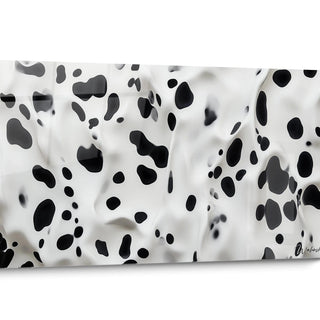


All about Black and White Abstract Wall Art
- Presentation Abstract black and white painting
- Abstract black and white painting - Visual impact and perspectives
- Abstract black and white painting - Enhancement techniques
- Abstract black and white painting - Symbolism and expressivity
The abstract black and white painting represents the very essence of minimalist artistic expression. Stripped of color yet rich in contrasts, it transforms any space into a contemporary gallery. These monochrome artworks play with light, shadows, and forms to create striking visual impact that transcends fleeting trends. Explore our collection to discover how these creations can transform your interior.
The visual impact of abstract black and white paintings in contemporary architecture
Monochrome abstract art possesses the rare ability to radically transform the spatial perception of a place. An abstract black and white painting does more than dress a wall—it completely redefines the architectural dynamics of the space that hosts it. This singular characteristic explains why interior architects favor these works in premium minimalist projects.
How does an abstract monochrome painting influence the perception of volumes?
Unlike colorful artworks that immediately capture attention, abstract black and white art acts as a spatial amplifier. Monochrome abstract compositions create visual depth that virtually expands the physical boundaries of a room. In urban apartments with limited dimensions, these paintings generate an impression of increased space through their contrast play that seems to extend the walls.
Large-format monochrome abstract artworks become true architectural extensions. Their strategic placement can visually correct structural imperfections in a space: a horizontal composition optically lowers a ceiling that is too high, while a work with vertical dominance elevates the perception of a room with low ceilings. This visual manipulation constitutes one of the major assets sought by professional decorators.
The effect of maximum contrast and its impact on light ambiance
The black-white duality present in these paintings creates a unique phenomenon of light reflection and absorption. White areas act as natural reflectors, amplifying ambient luminosity, while black segments absorb light, creating visual anchor points. This interaction with natural or artificial lighting makes these works living elements that evolve throughout the day.
In spaces with large bay windows, an abstract black and white painting becomes particularly dynamic. Variations in light intensity continuously transform the perception of the work. At dawn, contrasts soften in bluish light, while at noon they reach maximum power, creating captivating visual tension. In the evening, artificial lighting can dramatize certain areas of the composition depending on the angle of illumination.
• White segments maximize light reflection, increasing perceived brightness by up to 40%
• Black areas create focal points that visually structure the space
• Gray gradients act as spatial transitions between different functional zones
Multidimensional perspectives in monochrome abstract art
The absence of figurative representation in abstract black and white art allows freedom of interpretation impossible with other artistic styles. This pure abstraction transforms the work into a conceptual portal adaptable to each observer. A single painting can thus take on radically different meanings depending on who contemplates it, creating a personalized artistic experience.
Sophisticated monochrome abstract compositions often integrate depth effects that defy the two-dimensionality of the medium. These optical illusions, particularly striking in black and white, create impossible perspectives that seem to open passages toward other dimensions. This complex visual play actively stimulates the brain, transforming passive observation into engaging cognitive experience.
The unique contextual adaptability of monochrome abstract works
A remarkable characteristic of abstract black and white paintings lies in their universal integration capability. Unlike colorful artworks that impose chromatic constraints, these monochrome creations harmonize with all decorative styles without creating visual dissonance. This exceptional versatility explains their presence in environments as diverse as industrial lofts, Scandinavian interiors, or ultra-contemporary spaces.
Large-format abstract black and white artworks possess the rare faculty to migrate from one space to another while maintaining their aesthetic relevance. A painting initially acquired for a living room can later enhance an entrance or conference room without losing coherence. This contextual adaptability represents considerable economic advantage for collectors concerned with sustainable artistic investments.
The often-neglected tactile dimension of monochrome abstract works
Beyond visual impact, contemporary abstract black and white paintings frequently develop a fascinating tactile dimension. Modern mixed-media techniques incorporate three-dimensional textures that invite touch: subtle reliefs, stratified surfaces, or contrasts between matte and glossy areas. This haptic dimension adds an additional sensory layer to the aesthetic experience.
In minimalist spaces with smooth and uniform surfaces, these textures create a welcome tactile counterpoint. The interplay between environmental uniformity and textural complexity of the work generates sensory tension that energizes the entire space. This multi-sensory stimulation explains growing attraction to large-format textured abstract artworks in contemporary architectural environments.
Enhancement techniques for abstract black and white paintings
The presence of an abstract black and white painting instantly transforms the dynamics of an interior space. These monochrome works, far from being mere decorative elements, become visual anchor points that structure the architectural environment. Their optimal enhancement requires a specific approach that maximizes their impact while preserving overall room balance.
Directional lighting: sublime monochromatic contrasts
Unlike colorful artworks that require neutral lighting, abstract monochrome paintings particularly benefit from precise directional lighting. The use of adjustable-beam spotlights allows you to literally sculpt the work by accentuating its reliefs and contrasts. Lateral lighting at 45° reveals subtle textures often present in these abstract creations, invisible under classic frontal lighting.
Light intensity must be specifically calibrated for monochrome works. Excessive brightness flattens gray nuances and reduces perceived depth, while insufficient lighting makes details disappear into dark areas. Variable intensity lighting systems offer the flexibility needed to adjust illumination according to time of day and ambient conditions.
Asymmetric lighting techniques create striking dramatization of black and white abstract compositions. By positioning two light sources of different intensities—one primary and one secondary—you generate visual tension that magnifies the shadow and light play already present in the work. This approach transforms the painting into a living element that evolves with light variations.
Minimalist framing: highlighting pure abstract expression
The choice of frame for an abstract monochrome painting considerably influences its perception. Voluminous or ornate framing detracts from the work and contradicts the very essence of abstraction. Professionals favor ultra-minimalist framing solutions that visually extend the composition rather than contain it.
Floating frames create a levitation impression that amplifies the impact of large abstract works. This type of mounting, where the painting seems detached from the wall, generates cast shadows that become integral to the visual experience. This technique is particularly effective for high-contrast compositions, accentuating their architectural presence in the space.
• Favor thin-profile frames (less than 2 cm) in matte black for works with white dominance
• Opt for minimalist white frames for primarily dark compositions
• Consider complete absence of framing for works on rigid supports with finished edges
What spatial arrangement should be adopted to maximize the impact of an abstract monochrome painting?
The optimal placement of an abstract black and white painting is determined not only by architectural constraints but by its relationship with circulation flows in the space. Positioned facing the main entrance of a room, a large abstract work creates immediate impression and instantly defines the atmosphere. In a long hallway, it becomes a vanishing point that energizes perspective.
Hanging height plays a crucial role in the perception of large-format monochrome abstract works. Unlike museum conventions placing a work's center at eye level, abstract compositions often gain presence when positioned slightly lower. This approach creates an immersion impression and maximizes the impact of ascending visual structures frequently found in abstract art.
In spaces with high ceilings, installing a large-format abstract work in a dominant position radically transforms vertical dynamics. These paintings become visual attractors that channel the gaze upward, thereby enhancing often underexploited volumes in interior design. This technique is particularly effective in entrances and stairwells with generous proportions.
Monochrome balance: playing with surrounding materials
The harmonious integration of an abstract black and white painting requires reflection on surrounding materials. Reflective surfaces like glass, polished metal, or glossy finishes create interesting dialogue with monochrome works by multiplying their fragmented reflections. This interaction generates a visual extension that amplifies the work's presence beyond its physical limits.
Raw textures like exposed concrete, natural stone, or untreated wood offer striking tactile contrast with the graphic precision of black and white abstract compositions. This opposition between the geometric rigor of the work and the organic appearance of the wall support creates visual tension that magnifies both elements. Interior architects frequently exploit this dynamic in contemporary projects.
Optimal distancing: creating a contemplation space
Unlike figurative works that can be appreciated up close, large-format abstract paintings require sufficient distance to fully reveal their impact. The ideal observation distance depends directly on the artwork's dimensions: an empirical rule recommends minimum distance equivalent to 1.5 times the diagonal of the painting. This consideration directly influences furniture arrangement facing the work.
Creating a dedicated contemplation zone maximizes the experience of a large-format abstract monochrome work. This approach consists of intentionally clearing the space before the work, thus creating a void that naturally attracts the gaze and invites contemplation. This principle, inspired by museum techniques, transforms the work into a central element around which the entire spatial composition is organized.
Symbolism and expressivity of abstract black and white paintings
The abstract black and white painting occupies a singular place in contemporary art. Stripped of color distraction, it plunges directly into the very essence of visual expression. This chromatic reduction, far from being a limitation, becomes instead a powerful vector of emotional communication that transcends cultural and linguistic barriers.
The psychological power of monochrome contrast
The psychological impact of an abstract black and white painting far exceeds that of polychromatic works. Neuroscience has demonstrated that cerebral processing of binary contrasts mobilizes primitive neurological circuits linked to danger and opportunity detection. This direct stimulation of vigilance mechanisms explains the immediate and visceral reaction these works provoke, even in viewers uninitiated to contemporary art.
Monochrome abstract compositions with high contrast simultaneously activate analytical and emotional brain areas. This dual stimulation creates complete cognitive experience where intellect attempts to decipher abstract structures while emotion reacts instinctively to visual tensions. This mental activation duality explains the lasting fascination these paintings exert and their ability to never seem familiar despite prolonged exposure.
How does the black and white painting transform the emotional atmosphere of a space?
A large-format abstract monochrome work possesses the rare faculty to radically modify the emotional atmosphere of a place. Contrary to common assumptions, these works do not systematically create cold or austere ambiance. Their influence depends entirely on the internal dynamics of the composition: works with fluid lines and soft transitions generate a soothing sensation, while compositions with abrupt contrasts and angular geometries establish energizing tension.
In professional spaces like meeting rooms or executive offices, abstract black and white paintings are specifically chosen for their ability to create an atmosphere of mental clarity and concentration. The absence of color distraction favors cognitive focus, while the complexity of abstract structures stimulates lateral thinking and creativity. This influence on mental processes explains their frequent presence in innovation-dedicated environments.
• Compositions with white dominance create an impression of mental openness and expansion
• Predominantly black works induce sensation of introspection and conceptual depth
• Balanced black and white compositions favor cerebral hemisphere harmonization
Universality and timelessness of monochrome abstraction
Abstract black and white art possesses this exceptional characteristic of transcending epochs and cultures. While figurative or colored art often anchors in specific cultural references, monochrome abstract compositions communicate at a more fundamental level of human perception. This universality explains why these works retain their aesthetic and emotional relevance across decades.
Major collectors and museum institutions recognize the superior investment value of quality monochrome abstract works. Their ability to resist fluctuations in chromatic and stylistic trends makes them particularly sustainable acquisitions. Unlike works whose appeal rests on specific color palettes, black and white abstract paintings escape the aesthetic obsolescence cycle affecting many contemporary creations.
The paradoxical narrative dimension of monochrome abstraction
Contrary to appearances, abstract black and white paintings often possess powerful narrative dimension. The absence of explicit figuration does not mean absence of narrative, but rather invitation to personalized narration. Each observer unconsciously projects their own mental associations into abstract structures, transforming the work into support for personal meditation that evolves with their state of mind.
This projective capacity explains why the same monochrome abstract painting can elicit radically different interpretations depending on individuals. These interpretation differences, far from being problematic, constitute precisely the richness of these creations. A sufficiently complex painting in its abstract composition thus becomes an inexhaustible generator of visual narratives that renew with each observation.
The dialogue between presence and absence in monochrome abstract art
Contemporary abstract black and white paintings often explore the fundamental dialectic between presence and absence. White areas, traditionally perceived as empty spaces, become active luminous presences, while black segments, usually associated with materiality, evoke absences, voids, portals toward other dimensions. This conceptual inversion creates philosophical tension that surpasses simple aesthetic experience.
In contemporary interiors characterized by visual hyperstimulation and screen omnipresence, a large-format abstract monochrome work introduces a perceptual decompression space. The eye and mind, constantly solicited by colorful and fragmented information flows, find in these compositions an active rest territory where contemplation can deploy freely. This function as counterpoint to modern information saturation explains growing attraction to these works among screen-overexposed professionals.
FAQ about abstract black and white paintings
Can an abstract black and white painting fit into all interior styles?
Abstract black and white paintings possess the rare quality of stylistic universality. Their reduced palette allows them to harmonize as well with contemporary minimalist interiors as with more classical or eclectic spaces. In a traditional environment, they bring a touch of modernity without creating visual rupture, while in an ultra-contemporary context, they strengthen refined aesthetic coherence. This exceptional adaptability explains their popularity among interior architects facing projects of varied styles.
How should I determine the ideal format of an abstract black and white painting for my space?
Optimal sizing of an abstract black and white painting depends on three main factors: proportions of the reception space, possible observation distance, and desired effect. For maximum impact, favor large formats that occupy at least 60% of the supporting wall width. In spaces with generous dimensions, monumental formats create transformative visual immersion. For passage areas like hallways, choose elongated horizontal formats that accentuate perspective. The most frequent error consists of choosing a format too modest that diminishes the expressive impact inherent to monochrome abstraction.
Do abstract black and white paintings require special maintenance?
Monochrome abstract works present specific maintenance requirements related to their contrasted nature. Dust, barely visible on colored works, becomes particularly apparent on black and white surfaces. Regular dusting with an electrostatic duster or soft photography brush is recommended. Absolutely avoid liquid products, even on protected works, which could alter subtle gray nuances or create halos on white areas. For textured paintings, occasional use of low-pressure compressed air removes particles lodged in reliefs without altering the surface.
Further reading
Our articles on this topic
L'art qui suscite l'envie
Maison belge d'art mural grand format
14 jourspour changer d'avis*
Protection Walenskyincluse
Fabriquéen Italie
FormatXXL
Kit de fixationtoujours fourni
* Hors tableaux personnalisés et tailles personnalisées


