








Modern Black and White Striped Wall Art
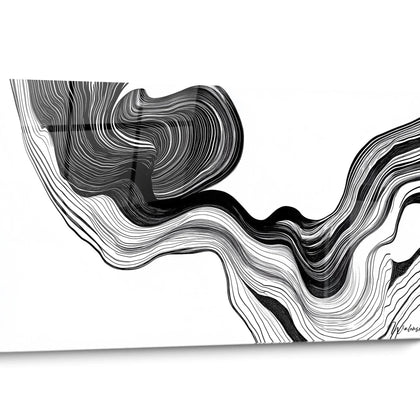
The Striped black and white painting Modern embodies the timeless elegance of graphic minimalism. This collection celebrates the visual power of chromatic contrast through bold linear compositions. Perfect for contemporary interiors, each monochrome striped wall decoration creates a striking visual impact while bringing sophistication and dynamism. Geometric patterns play with perspectives and rhythmize the space with refinement. Ideal for enhancing a living room, office or modern bedroom.
 Inner Light Artwork - Black and White Edition228,90 €
 Inner Wave Wall Art - Black and White Edition273,90 €
 Ink Trail Canvas - Black and White Edition273,90 €
 Natural Twist Canvas - Black and White Edition273,90 €
 Soft Twist Painting - Black and White Edition273,90 €
 Breath Black Painting - Black and White Edition273,90 €
 Conscious Ribbon Wall Art - Black and White Edition273,90 €
 Tribal Gaze Wall Art - Black and White Edition273,90 €
 Nocturnal Wave Wall Art - Black and White Edition273,90 €
 Slender Shadow Artwork - Black and White Edition273,90 €
 Binary Tide Painting - Black and White Edition273,90 €
 Human Harmony Painting - Black and White Edition273,90 €
 Human Fusion Wall Art - Black and White Edition273,90 €
 Graphic Fluidity Wall Art - Black and White Edition273,90 €
 Raw Interlaces Artwork - Black and White Edition273,90 €
 Imprint Painting - Black and White Edition273,90 €
 Intertwined Mist Canvas - Black and White Edition273,90 €
 Ascension Canvas - Black and White Edition273,90 €
 Abyss Vibrant Wall Art - Black and White Edition273,90 €
 Shadow Fabric Wall Art - Black and White Edition228,90 €
 Floating Tension Wall Art - Black and White Edition228,90 €
 Calm Flame Painting - Black and White Edition228,90 €
 Black Foam Painting - Black and White Edition228,90 €
 Aura of Shadow Artwork - Black and White Edition228,90 €
Explore further
In Modern Black and White Striped Wall Art


All about Modern Black and White Striped Wall Art
- Modern Black and White Striped Wall Art Presentation
- Visual Impact and Graphic Design
- Contemporary Interior Architecture
- Premium Minimalist Décor
The modern black and white striped wall art establishes itself as a masterpiece of contemporary design, capable of radically transforming the atmosphere of a space. This minimalist graphic creation exploits maximum chromatic contrast to generate immediate visual impact, particularly suited to the expansive wall surfaces of modern interiors. The refined geometric lines create a unique spatial dynamic that dialogues with surrounding architecture, redefining volumes and perspectives. This type of wall decoration particularly appeals to contemporary art enthusiasts seeking sophisticated aesthetics without artifice, where expressive power emerges from formal simplicity. The generous dimensions of these creations allow commanding large walls in lofts, open spaces, and entrance halls with elegance and confidence.
The Power of Chromatic Contrast in Modern Spaces
The modern black and white striped wall art leverages chromatic duality to create captivating visual tension in contemporary interiors. This binary approach, far from simplistic, generates remarkable perceptual complexity through optical effects produced by the rhythmic alternation of monochrome bands. Large formats amplify these visual phenomena, transforming the wall into a dynamic surface that modifies spatial perception according to viewing angle and ambient lighting.
How do stripes modify space perception?
Stripe orientation directly influences the architectural reading of a room. Vertical compositions generate visual elevation that accentuates ceiling height, ideal for horizontally-proportioned spaces. Conversely, horizontal configurations visually expand the space, perfect for counterbalancing narrow volumes. Diagonal patterns introduce directional dynamism that naturally guides the eye and creates upward or downward movement based on their inclination.
The psychological impact of monochrome graphics
Black-white duality generates a particular cognitive response, evoking both order and tension, stability and movement. This semantic ambivalence grants the artwork conceptual depth that transcends its formal simplicity. In premium professional environments, this aesthetic communicates rigor and innovation, while in residential spaces, it brings urban sophistication without ostentation. For a more modern black and white striped abstract wall art, certain compositions integrate varying thickness and rhythmic breaks that enrich visual dialogue.
Optimizing lighting to maximize contrast
Strategic illumination fully reveals the expressive potential of striped graphics. Lateral raking light intensifies transitions between black and white bands, creating micro-shadows that add tactile dimension to the composition. Directional spotlights allow modulating contrast intensity throughout the day, transforming the work into an evolving architectural element. Indirect natural light preserves tonal balance while avoiding parasitic reflections on monochrome surfaces.
Architectural Integration in Contemporary Projects
The modern black and white striped wall art naturally integrates into contemporary interior architects' design strategies. Its refined geometry responds to minimalist architectural codes while providing necessary focal points in streamlined spaces. Available large dimensions allow treating entire walls as structuring decorative surfaces, transforming a simple partition into a full architectural element.
Which spaces benefit most from this graphic aesthetic?
Open volumes in converted industrial lofts find in these striped compositions a visual counterpoint that humanizes the austerity of raw concrete and exposed steel. Premium coworking spaces adopt this aesthetic to define functional zones without physical partitioning: a monumental vertical composition visually delimits a meeting area, creating perceptual separation within spatial continuity. Residential entrance halls employ these artworks as immediate aesthetic statements.
Dialogue with contemporary materials
The monochrome palette establishes subtle visual correspondences with noble contemporary design materials. Marble with black veining finds graphic echo in band alternation, creating aesthetic continuity between horizontal and vertical surfaces. Black metal structures of industrial glass walls visually extend dark stripes, weaving a line network that unifies the space. Polished concrete engages with chromatic neutrality, allowing striped graphics to emerge without visual competition.
Proportions and visual mass balance
Successful integration of a large-format modern black and white striped wall art requires reflection on spatial mass balance. In a minimalist living room, this strong piece visually compensates for lightweight refined furniture, creating necessary visual anchoring. The graphic density of the striped pattern generates visual weight capable of counterbalancing a large modular sofa or imposing wall library, restoring compositional harmony to the whole.
Expression of Minimalist Luxury and Urban Sophistication
In the universe of contemporary premium décor, the modern black and white striped wall art embodies a form of discreet luxury that privileges visual impact over ornamentation. This approach corresponds to the aspirations of urban collectors seeking statement pieces capable of defining a space's aesthetic identity without resorting to traditional decorative codes. Refined graphics become stylistic signature, marker of affirmed aesthetic sensibility.
Why choose monumental format for your interior?
Generous dimensions transform the artwork into architectural intervention rather than simple wall ornament. An imposing format immediately captures attention upon discovering a space, establishing clear visual hierarchy that guides spatial reading. This monumentality corresponds to contemporary interior proportions with generous volumes, where small-scale decorative elements become visually lost. Investment in large-format work also testifies to an assumed decision-making approach, privileging strong composition over accumulation of secondary elements.
Building a coherent collection around monochrome graphics
Discerning enthusiasts sometimes develop decorative ensembles articulated around variations on the black and white striped theme. A monumental main composition can dialogue with satellite pieces of different formats, creating a visual network animating multiple connected spaces. Orientation variations (vertical, horizontal, diagonal) allow differentiating atmospheres while maintaining overall aesthetic coherence. This serial approach draws inspiration from museum hanging strategies, transposed into domestic or professional space.
Real estate valorization through interior design
Installing quality contemporary graphic works significantly contributes to a property's perceived prestige level. An apartment equipped with thoughtful decorative pieces immediately distinguishes itself during viewings, particularly in premium market segments where interior aesthetics directly influence valuation. The timeless character of black and white graphics minimizes stylistic depreciation risk, unlike ephemeral color trends.
Does a modern black and white striped wall art suit all interior styles?
Its chromatic neutrality and refined geometry allow harmonious integration into the majority of contemporary environments, from Scandinavian style to industrial design through Japanese minimalism. Only very classical or ornamental interiors might create overly pronounced stylistic contrast.
What is the optimal viewing distance for large-format modern black and white striped wall art?
For monumental formats, a distance equivalent to 1.5 times the artwork's width allows embracing the composition overall while perceiving graphic rhythm subtleties. Open spaces naturally offer these ideal viewing conditions.
How to maintain modern black and white striped wall art to preserve its contrast?
Regular dusting with a dry microfiber cloth generally suffices. For matte surfaces, avoid polishing products that would modify the deep black's visual aspect. Protection from prolonged direct sun exposure preserves chromatic intensity long-term.
Further reading


