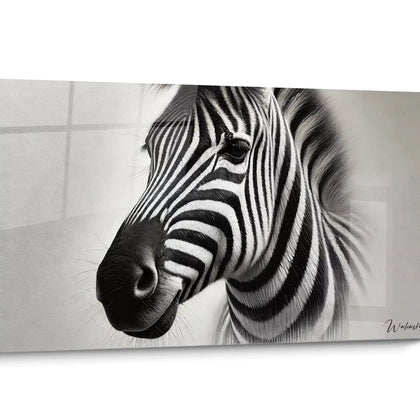
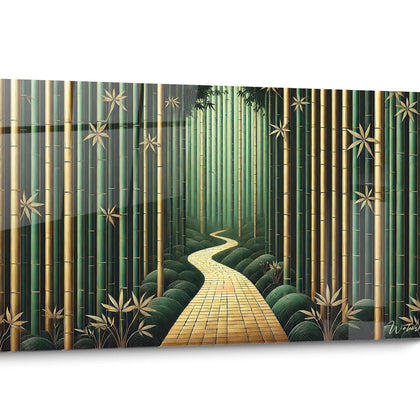
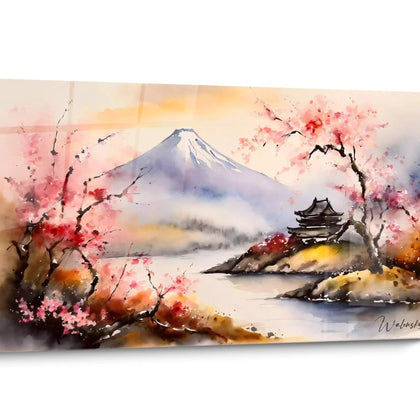
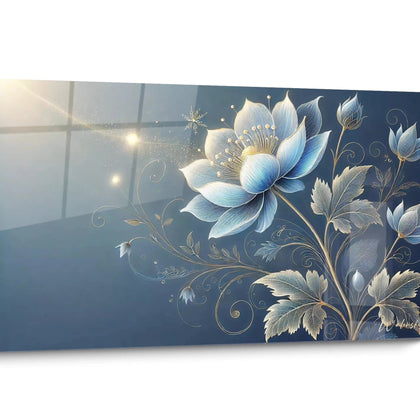
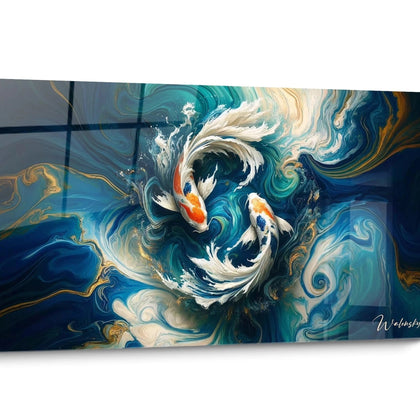
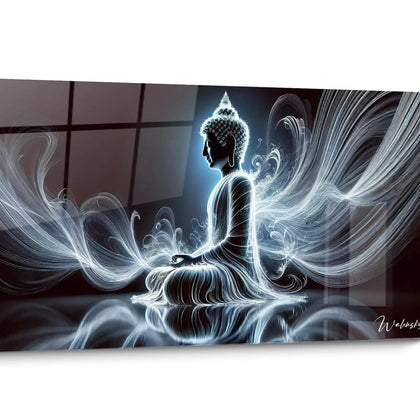
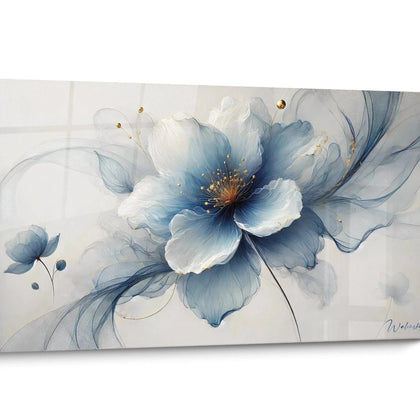
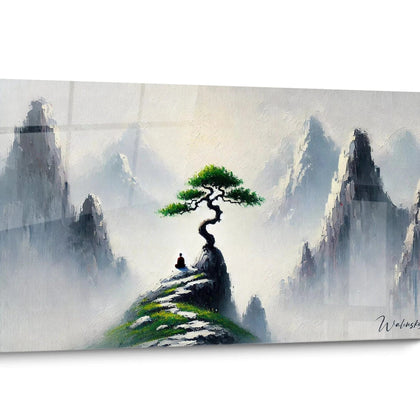
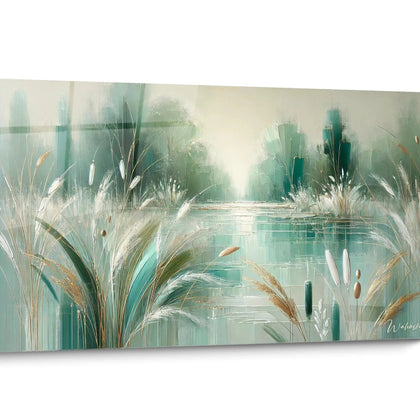
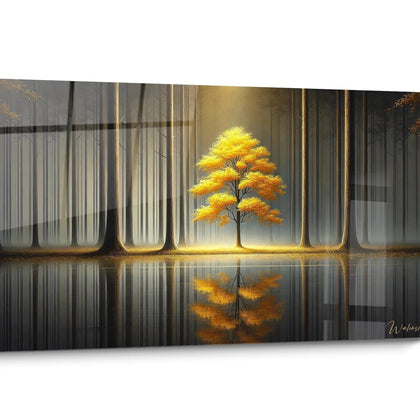
Transforming the atmosphere of your medical office with a landscape painting for medical offices represents a strategic decision to improve patients' psychological comfort. These large-format wall creations in horizontal orientation offer a visual window onto soothing horizons, creating a beneficial focal point during waiting times and consultations. The integration of panoramic natural views in care spaces responds to documented needs for reducing pre-consultation stress and actively contributes to humanizing medical environments. Landscape formats fully exploit the width of waiting room and consultation office walls, establishing visual continuity that expands the spatial perception of often cramped spaces.
Creating a Visual Escape in Care Spaces
Installing a landscape painting for medical offices radically transforms patients' perception of time in waiting areas. Representations of ocean horizons, mountain panoramas, or vast natural expanses act as mental projection supports, allowing anxious patients to divert their attention from immediate medical concerns. This visual escape encourages deeper and more regular breathing, a particularly beneficial phenomenon before consultations that generate tension.
Which landscapes should be prioritized to reduce pre-consultation anxiety?
Compositions featuring dominant horizontal lines, characteristic of landscape formats, naturally slow heart rate and induce a contemplative state. Representations of sunsets over the ocean, rolling meadows, or mountain lakes offer this soothing structure. Cool and neutral tones, particularly deep blues and soft greens, reinforce this relaxing effect in medical environments where visual stimulation should remain moderate. For a more contemporary complementary approach, some practitioners also opt for a landscape painting for medical offices abstract that maintains this calming dynamic while proposing a different visual reading.
The impact of panoramic formats on the perception of waiting time
A large-scale landscape painting creates an immersive focal point that substantially modifies the subjective experience of waiting. Studies in environmental psychology demonstrate that patients exposed to panoramic natural views estimate their waiting time as 20 to 30% shorter than actual duration. This positive distortion results from the cognitive engagement necessary to visually explore the depth of field and details of a complex landscape composition. Horizontal formats encourage lateral eye scanning, a natural eye movement associated with relaxation and exploration rather than vigilance.
How to maximize the contemplative effect in an examination room?
Positioning the landscape painting facing the examination chair or in the direct field of vision of the reclined patient transforms the consultation into a less confrontational moment. This strategy proves particularly effective in dermatology, dentistry, or gynecology, where patients adopt vulnerable positions. The panoramic view offers mental refuge during uncomfortable procedures, reducing muscle tension and facilitating medical intervention. Landscapes with balanced and symmetrical compositions are particularly suitable for these intimate spaces where visual stability supports the sense of security.
Optimizing Patient Experience Through Environmental Design
The integration of a landscape painting for medical offices directly participates in the perceived quality of care and measurably influences patient satisfaction. Medical environments enriched with visual natural elements generate significantly higher post-consultation evaluations, even when waiting time or the nature of the examination remain identical. This improvement is explained by the activation of neurological mechanisms associated with attentional restoration, a central concept in environmental psychology applied to healthcare spaces.
Why do horizontal landscapes facilitate doctor-patient communication?
Landscape formats create an atmosphere of horizontal neutrality that contrasts with the verticality often perceived as hierarchical in the caregiver-patient relationship. A strategically positioned panoramic painting becomes a third object, supporting indirect conversation particularly valuable in pediatrics or geriatrics. Anxious children naturally focus on the details of the represented landscape, facilitating the practitioner's approach. Elderly patients find in these representations memorial references that free speech and enrich medical history. This dynamic transforms the artwork into a passive therapeutic tool that supports the establishment of a solid therapeutic alliance.
The influence of represented seasons on the mood of chronic patients
For offices welcoming regular patients followed long-term, the choice of seasonal landscapes carries particular psychological significance. A landscape painting evoking spring or summer maintains a symbolic connection with renewal and vitality, particularly beneficial for patients suffering from chronic or degenerative conditions. Autumn representations with warm tones suit spaces dedicated to geriatric consultations, evoking maturity without melancholy. This permanence of a positive season in the medical environment compensates for external climate variations that significantly affect patient mood, particularly those with seasonal affective disorders.
How do panoramic views improve the memorization of medical instructions?
A visually soothing environment, anchored by a quality landscape painting, reduces emotional cognitive load and frees attentional resources for integrating therapeutic recommendations. Patients consult in a state of heightened receptiveness when the physical environment does not generate additional stress. Offices equipped with such installations observe better therapeutic compliance and a decrease in post-consultation calls for clarification, testifying to more effective communication during the medical appointment.
Architectural Harmonization and Medical Functionality
Installing a landscape painting for medical offices requires architectural analysis specific to the constraints of care spaces. Medical offices present particular spatial configurations, with fluid circulation necessary, strict hygiene zones, and standardized lighting requirements. The landscape format adapts ideally to the longitudinal walls of rectangular waiting rooms, typical of urban medical installations where spatial optimization prevails. These horizontal artworks visually compensate for often-low ceilings in professional spaces, creating an impression of depth and amplitude beneficial to the psychological breathing of occupants.
Which dimensions should be prioritized based on office size?
For waiting rooms of 15 to 25 m², a landscape painting of 120 to 150 cm in width establishes sufficient visual presence without saturating the space. Individual consultation offices of 10 to 12 m² benefit from formats of 80 to 100 cm that create a focal point without dominating the technical environment. Collective spaces in medical centers or multidisciplinary health clinics justify panoramic installations of 180 to 200 cm that structurally organize vast wall surfaces. This proportionality ensures the artwork fulfills its function as a soothing visual anchor without competing with mandatory regulatory displays or medical equipment.
Compatibility with hygiene standards and cleaning protocols in medical facilities
Landscape paintings intended for medical offices must withstand regular disinfection protocols without visual degradation. Treated surfaces allow frequent cleaning with standardized hydroalcoholic or detergent solutions, a critical requirement in environments where preventing nosocomial infections remains a priority. Wall fixtures must avoid dust-collecting corners, favoring minimal suspension systems compliant with healthcare facility hygiene recommendations. This sanitization compatibility ensures aesthetic improvement never compromises asepsis standards.
How to integrate a landscape painting in a multi-specialty office?
Medical structures grouping several practitioners require visual choices that are agreeable to various specialties. A landscape painting for medical offices with neutral tones and universal appeal, avoiding overly marked cultural references, satisfies this requirement for transversality. Marine or mountain landscapes offer this thematic neutrality, evoking natural archetypes recognized positively by all patients, regardless of demographic or cultural profile. This universality makes the landscape format the preferred choice for shared spaces where visual coherence must transcend individual medical specificities.
Frequently asked questions about landscape paintings for medical offices
Is a landscape painting suitable for pediatric offices?
Absolutely, landscapes with soft compositions and colors captivate the attention of young patients while maintaining a reassuring professional atmosphere for parents. Natural scenes offer identifiable elements that children can name, facilitating distraction during care.
What replacement frequency for a landscape painting in a medical office?
Visual wear resulting from daily exposure recommends renewal every 5 to 7 years to maintain an impression of freshness and modernity. This rotation also allows adaptation of the visual atmosphere to demographic changes in the patient population or modifications to the office layout.
Do landscape paintings for medical offices require specific lighting?
Standard ambient lighting generally suffices, but avoiding direct reflections on the surface guarantees optimal readability. Medical spaces equipped with LED lighting at neutral color temperature particularly enhance the subtle nuances of landscape compositions without requiring additional dedicated lighting installation.


 Painting Inspired by Wanderer Above the Sea of Fog by Caspar David Friedrich No.3 – Tribute to Famous Artist233,90 €
 Eternal Tranquility Wall Art - Tree Nature Edition233,90 €
 Waterfall Painting No.2 - Landscape Edition233,90 €
 Lake Painting No. 1 - Landscape Edition233,90 €
 Fir Tree Painting No. 1 - Nature Edition233,90 €
 Painting Inspired by Spring by Jean-François Millet No. 2 – Tribute to a Renowned Artist233,90 €
 Painting Inspired by Moonrise Over the Sea by Caspar David Friedrich No.1 – Tribute to Famous Artist233,90 €
 Inner Journey Painting - Feng Shui Zen Edition233,90 €
 Lavender at Twilight Canvas - Lavender Fields Landscape Edition233,90 €
 Painting Embraced by the Sea - Beach Landscape Edition233,90 €
 Natural View Painting No.1 - Landscape Edition233,90 €
 Landscape wall art N°1 - Landscape edition233,90 €
 Mountain Soul Canvas - Mount Fuji Asia Edition233,90 €
 Asian wall art No. 1 - Asia Edition233,90 €
 Minimalist Harmony Wall Art - Zen Edition233,90 €
 River of Dreams Wall Art - Asia Edition233,90 €
 Spring Softness Wall Art - Asia Edition233,90 €
 Mist and Cherry Blossoms Wall Art - Asia Edition233,90 €