


Psychedelic Op Art Wall Art
Our Painting Collection Op Art Psychedelic brings together captivating visual works that play with perception and optical illusions. Inspired by the Op Art movement, each creation features psychedelic geometric motifs and hypnotic optical effects that captivate the eye. These modern paintings transform your spaces with dynamic compositions, contrast games, and kinetic forms. Perfect for daring contemporary art enthusiasts, they bring a unique artistic dimension to your interior decoration.
 Tiger Fur Psychedelic Painting - Op Art Edition273,90 €
 Concentric Circles Pulsating Retinal Patterns - Op Art Edition Wall Art273,90 €
 Wavy Lines Artwork Colorful Pulsation - Op Art Edition273,90 €
 Concentric Circles Magnetic Spiral Wall Art - Op Art Edition273,90 €
 Stripe artwork Rhythm optical - Op Art edition228,90 €
Explore further
In Psychedelic Op Art Wall Art
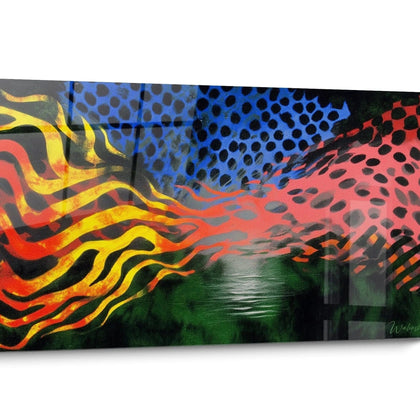
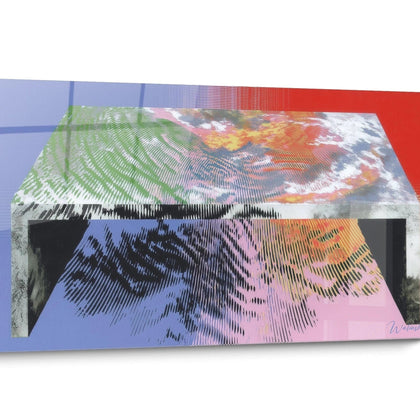
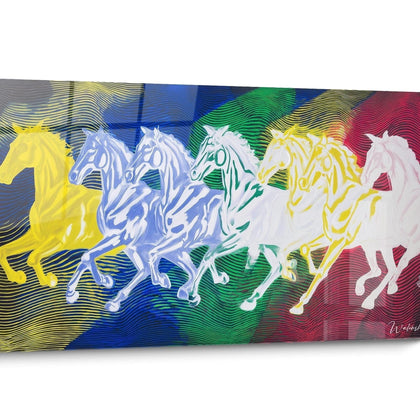
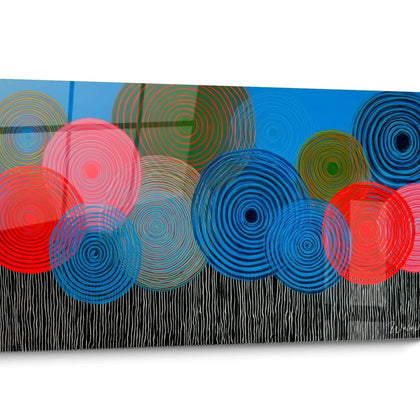
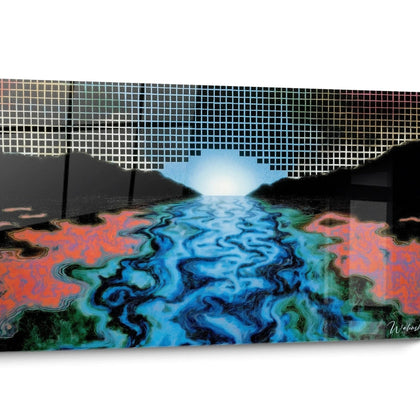
All about Psychedelic Op Art Wall Art
- Presentation Painting Op Psychedelic Art
- Optical Effects and Perception
- Decorative Hypnotic Dynamism
- Immersive Spatial Integration
A psychedelic op art painting transforms your space into a captivating visual experience, where optical illusions meet hallucinatory chromatic intensity. These large-scale wall creations create perpetual motion phenomena that captivate the eye and redefine the spatial perception of your interior environment. Designed to disrupt traditional decorative conventions, these monumental works stand as hypnotic focal points that generate fascination and dialogue.
Kinetic Visual Art at the Service of Your Wall Decoration
The psychedelic op art painting exploits the principles of optical kinetic art to create unprecedented retinal vibrations. Repetitive geometric patterns generate visual oscillations that seem to animate the wall surface, transforming a static wall into a dynamic theater. These compositions use saturated chromatic contrasts and complex structural arrangements that provoke prolonged visual aftereffects.
How do illusions of depth redefine architectural space?
Spiral structures and concentric gradients create perspective tunnels that seem to perforate the vertical wall. This illusory depth visually multiplies the volume of the room, particularly effective in compact urban spaces where every square meter counts. Monumental formats amplify these spatial distortions, generating the impression of dimensional openings at the heart of your contemporary living room or office.
Synergy with Geometric Abstract Movement
A abstract op art painting shares this radical non-figurative approach, but the addition of the psychedelic dimension introduces extreme chromatic saturation and obsessive visual rhythms. Moiré undulations and optical interferences create visual energy fields that dialogue with ambient lighting, changing intensity according to viewing angles and light sources.
What are the perceptual effects on visitors?
Prolonged observation of a psychedelic op art painting generates fascinating after-images : complementary shapes temporarily appear after looking away. These visual residues transform the act of contemplation into an active neurological experience, where the brain becomes a creative participant. Professionals decorating creative spaces exploit these stimulating properties to foster lateral thinking and conceptual innovation.
Strobo-kinetic patterns integrate calculated visual frequencies that activate different zones of the visual cortex simultaneously. This multidirectional stimulation creates total sensory engagement, ideal for environments where memorable impact is a priority: showrooms, creative agencies, high-end commercial exhibition spaces.
Hallucinatory Chromaticism and Permanent Retinal Vibrations
The chromatic intensity of a psychedelic op art painting far exceeds conventional palettes. Juxtapositions of saturated complementary hues generate edge vibrations, a phenomenon where the contours between colored zones seem to tremble and pulse continuously. This programmed visual instability creates perpetual animation without resorting to any electronic device.
The impact of extreme simultaneous contrasts
Magenta-lime pairings, cyan-incandescent orange, or violet-electric yellow exploit the physiological limits of human vision. These combinations produce a controlled retinal fatigue that paradoxically intensifies visual attraction. In premium commercial environments, this irresistible optical magnet captures attention even in peripheral visual fields, naturally guiding traffic flow.
Can we modulate the psychedelic intensity according to the environment?
Compositions dominated by fluorescent hues react differently to varying light sources: daylight, cool LED lighting, or warm-spectrum bulbs. This chromatic reactivity transforms the wall art into an evolving installation that reinvents itself throughout the day. XXL formats amplify these transitions, creating immersive atmospheres that completely redefine the spatial ambiance according to the moments.
Some radial structures incorporate chromatic progressions inspired by synesthetic visualizations, where colors seem to emit imaginary sound frequencies. This suggested multisensory dimension enriches the contemplative experience, particularly valued in alternative wellness spaces, contemporary yoga studios, or secular meditation rooms.
Amplification strategies for monumental spaces
The halls of innovative companies and lobbies of design hotels exploit panoramic formats that transform entire walls into visual portals. Monumental scale multiplies the psychedelic impact: what would work as a decorative detail in a small format becomes an architectural event in full wall dimensions. Visitors frequently report a sensation of total immersion, as if the architectural space itself vibrated and undulated.
Architecturing Space through Controlled Visual Disruption
Integrating a psychedelic op art wall art is as much an architectural decision as it is a decorative one. These monumental compositions redefine the perceived geometry of volumes, visually curving rectilinear planes and creating gravitational focal points that reorganize spatial circulation. Minimalist environments particularly benefit from this concentrated injection of visual energy.
How to create zones of visual magnetic attraction?
Hypnotic spirals and chromatic vortices act as optical gravitational wells that irresistibly draw the gaze. Positioned strategically facing main entrances, they create an immediate memorial anchor point: visitors remember the space precisely thanks to this intense visual marker. This mnemonic property particularly values high-end commercial spaces where distinctive visual identity constitutes a competitive asset.
Synergy with contemporary, streamlined architectures
Raw concrete interiors, neutral lacquered surfaces, and minimalist geometric furniture offer the perfect contrast to maximize the psychedelic impact. The absence of visual competition allows the monumental wall art to fully deploy its hypnotic potential. Avant-garde interior designers exploit this rest-stimulation dialectic to create balanced spaces where architectural calm amplifies the punctual intensity.
Multi-panel configurations allow fragmentation and recombination of op art patterns across multiple adjacent surfaces, creating impossible visual continuities that defy spatial logic. This integrated architectural approach transforms room corners into dimensional portals and perpendicular walls into interconnected planes of a single visual energy field.
What furniture configurations amplify the immersive effect?
Low seating and deep sofas encourage prolonged contemplation, allowing optical phenomena to fully unfold. Reflective surfaces – mirrors, polished metals, glossy lacquers – multiply patterns through fragmented reflections, creating a total kaleidoscopic environment. This strategy of controlled visual saturation characterizes premium lounge spaces and avant-garde private clubs.
Would a psychedelic op art painting be suitable for conservative professional spaces?
Paradoxically, inserting a psychedelic piece into a traditional corporate environment signals innovation and creative boldness without compromising professionalism. Positioned in reception areas or brainstorming rooms, it demonstrates the organization's ability to embrace disruptive thinking while maintaining operational rigor in functional spaces.
How does a monumental format differently influence a small format?
Full-scale wall dimensions create total peripheral immersion impossible with reduced formats. With the visual field being saturated, the brain switches to global rather than analytical perception mode, intensifying the psychedelic experience. This scale transforms the artwork from a decorative object into a habitable environment, fundamentally redefining the contemplator-space relationship.
Do rotating patterns work better than linear compositions?
Spiral and radial structures generate circular visual pathways with no escape, keeping attention captive for longer. Linear compositions rather create directional flows that guide the gaze towards specific zones. The choice depends on the spatial objective: meditative concentration versus directional dynamization of circulations.
Further reading
Our articles on this topic
- How Can Op Art Be Used or Avoided Depending on Neurological Conditions?
- Create a prophetic artwork open to interpretation
- Optical Effect Paintings: Play with Perception and Attention
- Interactive Visual Artworks, Pieces That Evolve With Your Perspective
- Art with illusions and visual effects: awaken your curiosity and amaze your gaze
- Highly Structured Artwork vs. Chaotic Artwork: Which Room?
L'art qui suscite l'envie
Maison belge d'art mural grand format
14 jourspour changer d'avis*
Protection Walenskyincluse
Fabriquéen Italie
FormatXXL
Kit de fixationtoujours fourni
* Hors tableaux personnalisés et tailles personnalisées


