


Geometric Op Art Wall Art
Our Optical Art Geometric collection celebrates kinetic art and hypnotic visual illusions. Each creation plays with perspectives, black and white contrasts, and repetitive patterns to create a striking sense of movement. These geometric optical artworks transform your walls into dynamic visual experiences. Perfect for modern and contemporary interiors, these geometric paintings illusionist artworks captivate the eye and stimulate perception. Explore a universe where geometry and optics meet.
 Moving Table Illusion Wall Art - Op Art Edition273,90 €
 Grid Perspective Kaleidoscope Wall Art - Op Art Edition273,90 €
 Hypnotic Grid Fountain Wall Art - Op Art Edition273,90 €
 Stripe artwork Rhythm optical - Op Art edition228,90 €
 Grid Illusion Kinetic Wall Art - Op Art Edition228,90 €
Explore further
In Geometric Op Art Wall Art
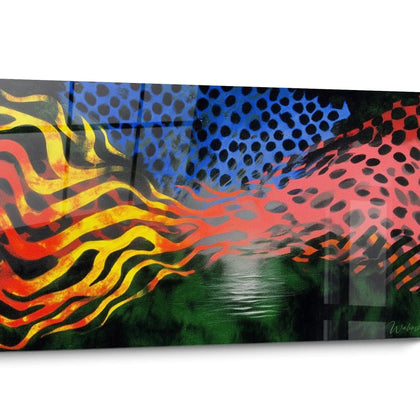
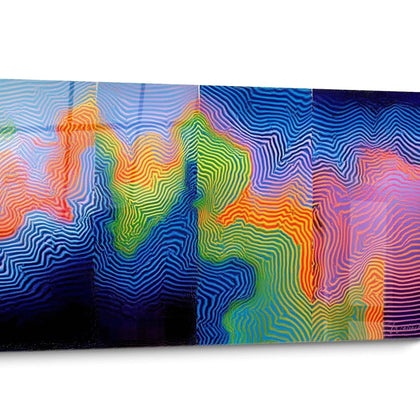
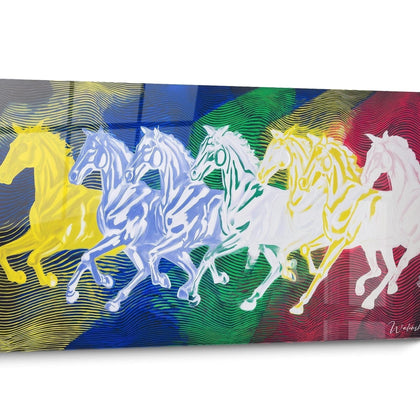
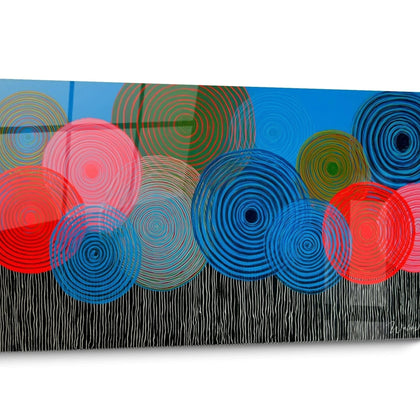
All about Geometric Op Art Wall Art
- Op Art Geometric Wall Art Presentation
- Visual Dynamics and Perception
- Contemporary Interior Architecture
- Psychosensory Immersion
A geometric Op Art painting radically transforms the spatial perception of an environment through optical illusions created by precise mathematical patterns. These wall creations exploit scientific principles of retinal perception to generate effects of movement, three-dimensional depth, and chromatic vibration without any mechanical elements. Designed to captivate the eye instantly, these monumental formats become architectural focal points capable of restructuring the surrounding space visually through their hypnotic presence.
The Kinetic Impact of Geometric Optical Illusions
The geometric Op Art painting exploits neurological vision mechanisms to create a visual experience in perpetual motion. Repetitive configurations of angular shapes — hexagons, interlocking diamonds, logarithmic spirals — constantly stimulate the visual apparatus, generating effects of pulsation and apparent rotation. This continuous perceptual stimulation irresistibly attracts attention, transforming every wall into a dynamic living surface.
What Psychophysiological Effects Do Geometric Optical Patterns Produce?
The visual structures of the geometric Op Art painting trigger measurable physiological responses: pupil dilation facing extreme contrasts, rapid eye micromovements attempting to stabilize the perceived image, increased activation of the primary visual cortex. These involuntary neurological reactions create a hypnotic fascination particularly sought after in upscale commercial spaces, professional reception halls, and conceptual showrooms where capturing lasting attention becomes a strategic goal.
Modulation of Chromatic Tonal Contrasts
Beyond classical black and white, contemporary compositions integrate subtle tonal progressions — gradients of silvery grays toward deep anthracites, transitions from electric blues toward saturated ultramarine. These calculated chromatic variations amplify depth illusions, creating effects of recession and advance of geometric planes. In minimalist environments with neutral palettes, an abstract Op Art painting with extreme binary contrasts establishes radical visual punctuation that structures the entire spatial composition.
Adaptation to Contemporary Glazed Architectures
The large glass surfaces of industrial lofts and modern urban apartments constantly modify lighting conditions. Geometric optical patterns react differently according to light incidence: shadows cast on perceived reliefs intensify in grazing morning light, while zenith lighting at noon flattens certain illusions to reveal others. This perceptual variability throughout the day maintains renewed visual interest, avoiding habituation to static decoration.
Architectural Integration in Contemporary Volumes
In modern residential and professional spaces characterized by generous volumes and streamlined lines, the large-format geometric Op Art painting establishes a sophisticated dialogue with the surrounding architecture. Radial or linear perspective patterns deliberately amplify or contradict the structural lines of the space — visually extending a corridor through converging lines, perceptually widening a narrow wall thanks to expansive horizontal patterns.
How Do Geometric Patterns Redefine Spatial Proportions?
Compositions with converging lines create tunnel vision effects that seem to pierce the wall, adding an illusory dimension of depth to confined spaces. Conversely, centrifugal radiant patterns generate perceptual expansion that optically widens rooms with reduced proportions. This ability to manipulate volumetric perception makes the geometric Op Art painting a particularly valued spatial design tool for interior architects facing dimensional constraints.
The Creation of Focused Attention Zones
In open professional spaces or unpartitioned lofts, the absence of physical separation requires visual zoning strategies. A monumental geometric Op Art painting positioned strategically implicitly defines a functional territory — reception area, lounge space, reflection sector — without erecting material barriers. Hypnotic patterns naturally capture the eye, creating a visual anchor point that psychologically structures open space.
Harmonization with Raw Architectural Materials
Converted industrial environments — exposed concrete, brushed steel, structural glass — present cold textures and reflective surfaces. Geometric optical compositions with marked contrasts create aesthetic resonance with these raw materials while introducing organic visual complexity. Partial reflections of patterns on polished metal or glass surfaces multiply optical effects, creating duplication and distortion play that enriches the overall spatial experience.
Immersive and Cognitive Experience of Optical Compositions
The geometric Op Art painting transcends mere decorative function to establish a true interactive cognitive experience. Unlike passive figurative representations, geometric illusions actively solicit the perceptual system, forcing the brain to continuously resolve visual ambiguities. This intellectual stimulation generates prolonged engagement, transforming each observation into renewed perceptual exploration.
Effects of Perceptual Temporal Distortion
Kinetic patterns create subjective sensations of acceleration or deceleration of perceived time. Centripetal spirals suggest visual entrainment toward a focal point that seems to draw the gaze, creating meditative immersion. Conversely, compositions with radiant explosion generate dynamic expansive energy. These perceptual manipulations of temporal rhythm find applications in therapeutic relaxation spaces or creative environments requiring intellectual stimulation.
What Influence Do Optical Geometries Exert on Psychological State?
Environmental psychology research demonstrates that regular geometric patterns reduce anxiety through their structural predictability, while their optical variations maintain an optimal level of cognitive alertness. This paradoxical combination of order and visual surprise creates an ideal mental state for spaces of strategic reflection — executive offices, brainstorming rooms, personal libraries — where concentration and creativity must coexist.
Perceptual Evolution According to Viewing Angle
Large wall formats reveal different facets depending on the observer's position. In direct frontal vision, the main illusion dominates; in lateral approach, secondary patterns emerge; at distance, the ensemble reorganizes into global superstructure. This multilayered perceptual richness encourages circulation and movement through space, transforming the geometric Op Art painting into an active architectural element that orchestrates visual pathways.
FAQ - Frequently Asked Questions About Geometric Op Art Painting
Is a Geometric Op Art Painting Suitable for Professional Concentration Spaces?
Contrary to common assumptions, geometric optical compositions favor concentration in peripheral vision: they absorb environmental distractions without monopolizing direct attention. Positioned laterally to the main work station, they create a visually enriched environment without disturbing focus on primary tasks.
How Does Perception of a Geometric Op Art Painting Evolve According to Ambient Lighting?
Light variations radically modify illusion intensity: soft diffuse light attenuates contrasts for subtle soothing effects, while accentuated directional lighting amplifies optical vibrations for dramatic presence. This adaptability allows modulating spatial ambiance simply by adjusting architectural lighting.
Does the Geometric Op Art painting Integrate into Interiors Already Featuring Decorative Patterns?
Optical compositions function optimally as a single dominant visual element in a refined environment. In already ornate interiors, prioritize monochrome versions with moderate contrasts that dialogue with existing patterns without creating visual cacophony, or use them as an exclusive focal point in a dedicated room.


