


Op Art Landscape Painting
The Op Art Painting Landscape collection merges optical illusions with natural beauty. These captivating works transform panoramas into hypnotic geometric compositions where lines, curves, and perspectives create optical moving landscapes. Each creation plays with visual perception to offer a unique artistic experience. Ideal for lovers of contemporary optical art, this collection brings dynamism and sophistication to your interior.
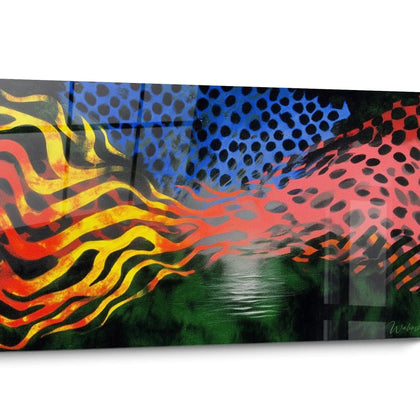
 Hypnotic Water Landscape Artwork - Op Art Edition273,90 €
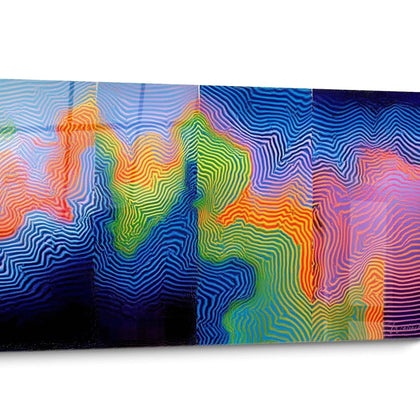
 Fragmented Spectrum Landscape Painting - Op Art Edition273,90 €
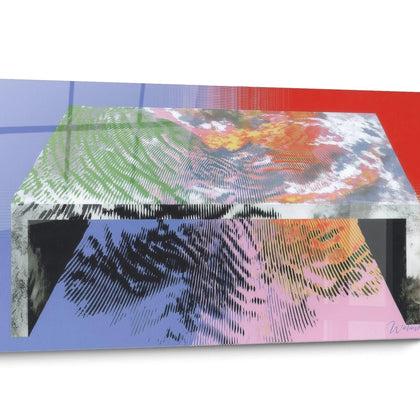
 Moiré Horizons Landscape Wall Art - Op Art Edition273,90 €
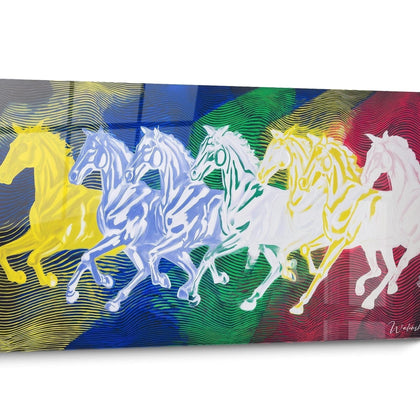
 Abstract Landscape Painting Hypnotic Waves - Op Art Edition228,90 €
Explore further
In Op Art Landscape Painting
All about Op Art Landscape Painting
- Painting Presentation Op Art Landscape
- Kinetic Perspectives
- Vibratory Horizons
- Optical Immersion
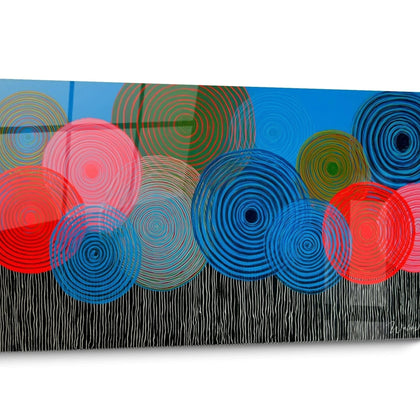
The op art landscape painting reinvents the contemplation of natural panoramas by integrating dynamic optical illusions and hypnotic geometric structures. This fusion of landscape representation and visual kinetics transforms each view into an immersive experience where undulating lines create sensations of infinite depth and perpetual movement. Unlike traditional representations, these monumental works exploit chromatic contrasts and rhythmic repetitions to generate visual vibrations that simultaneously evoke the serenity of natural spaces and the energy of abstract compositions. Perfect for large-scale contemporary architectural spaces, these imposing wall creations capture the eye and redefine the perception of interior volumes.
Kinetic Art Applied to Natural Panoramas
How do optical illusions transform landscape perception?
The op art landscape painting exploits the principles of perceptual distortion to create horizons that appear to move according to the angle of observation. Wavy stripes and geometric gradients generate optical moiré phenomena that mimic the atmospheric vibrations of deserts, marine oscillations, or thermal waves above plains. This kinetic approach transforms a static scene into a living composition, where each movement of the viewer reveals new depths and perspectives. Monumental formats amplify these effects by creating enveloping visual fields that physically alter the perception of the surrounding space.
The dynamics of concentric lines in terrestrial compositions
The concentric circles and spirals characteristic of optical art find a particular application in the representation of geological formations and desert landscapes. These radiant motifs evoke sandy undulations, volcanic craters, or aquatic swirls while maintaining the geometric abstraction characteristic of the movement. The use of subtle chromatic progressions in ochre, turquoise, or slate tones creates atmospheric transitions that suggest different times of day or weather conditions. These large-scale wall works function as visual portals that dissolve the boundaries between interior space and vast natural expanses.
Architectural integration of panoramic formats
Large-scale op art landscape paintings are particularly well-suited to double-height professional spaces, spacious entrance halls, and converted industrial lofts. Their extended format creates optical vanishing lines that artificially extend existing architectural perspectives. In minimalist environments with smooth surfaces, these compositions bring a measured visual complexity that enriches the spatial experience without overwhelming. The interaction between variable natural lighting and geometric patterns produces visual metamorphoses throughout the day, transforming the work into a dynamic architectural element rather than a simple wall decoration.
What psychological effects do these hybrid compositions produce?
The combination of landscape serenity and optical stimulation generates an active contemplative state particularly sought after in spaces for reflection or creativity. Visual oscillations maintain attention without creating excessive eye fatigue, thanks to the balance between chromatic resting zones and sections with high geometric density. For collectors seeking an alternative to purely geometric abstract op art paintings , these landscape versions offer figurative anchor points while retaining the formal sophistication of the optical movement.
Chromatic Vibrations and Extended Spatiality
Color systems inspired by natural phenomena
The landscape op art painting develops atmospheric palettes that reproduce the specific luminosities of different ecosystems: the electric greens and deep blues of tropical forests, the incandescent oranges and purples of arid zones at dusk, or the silvery and arctic grays and whites. These chromatic choices do not merely evoke places; they use the perceptual properties of colors to create sensations of warmth, coolness, or vastness. Gradual transitions between adjacent hues on the color wheel generate visual pulsation effects that amplify the hypnotic dimension of the work while maintaining naturalist consistency.
How to maximize visual impact in open living spaces?
In open-plan residential configurations, these large-format artworks function as visual separators that define functional zones without obstructing light circulation. Positioned facing the main sources of natural light, the landscape op art painting captures and diffracts rays creating subtle play of reflections that animate the adjacent space. For environments with high ceilings, the accentuated vertical format creates a perceptual elevation that balances proportions and avoids visual crushing. The spatial expansion effect generated by converging lines visually compensates for narrow or cluttered configurations.
Geometric rhythm and circulatory flows
The repetitive motifs and modular progressions characteristic of these compositions establish a visual rhythm that naturally accompanies movement through space. Horizontal bands evoke geological strata or multiple horizons creating a sensation of progressive advancement particularly suitable for exhibition hallways or private galleries. Polyptych formats allow installation on multiple adjacent panels, creating a continuous visual narrative that guides the eye along the wall surfaces. This sequential approach transforms simple contemplation into an exploratory journey where each segment reveals new variations of the central landscape theme.
What balance to find between abstraction and figuration?
The distinctive strength of the landscape op art painting lies in its ability to suggest recognizable natural elements while maintaining formal geometric autonomy. Mountain ridges become angular zigzags, lake surfaces transform into undulating checkerboards, vegetation is reduced to accumulations of points or rhythmic dashes. This radical stylization allows for harmonious integration into contemporary interiors that would reject overly literal traditional landscape representations. The interpretive ambiguity stimulates the viewer's imagination who projects their own natural references onto the proposed abstract structures.
Immersive Experiences and Optical Monumentality
Perceptual saturation in large-scale murals
The imposing dimensions of the op art landscape wall art create a visual submersion that transforms the act of looking into a total bodily experience. When the artwork occupies a significant portion of the visual field, the optical illusions no longer remain confined to the pictorial surface but seem to invade the surrounding space. The effects of tremor, vibration, or apparent rotation intensify with proximity, inviting a progressive approach where each distance reveals a different reading: a distant landscape overview, discovery of the optical mechanisms at medium range, appreciation of the executive precision up close. This perceptual stratification considerably enriches the contemplative durability of the artwork.
What synergies with contemporary architectural materials?
The clean geometric surfaces of the op art landscape wall art establish natural formal dialogues with industrial materials: raw concrete, brushed steel, structural glass, or mineral resins. Linear patterns echo architectural joints, structural ribs, and modular grids typical of contemporary architecture. In environments with organic textures such as solid wood or natural stone, the contrast between the geometric regularity of the artwork and the material irregularity creates a productive visual tension that enhances each element. Matte finishes preserve the readability of optical illusions by avoiding parasitic reflections that could disrupt the calculated kinetic effects.
Collection strategies for optical art enthusiasts
For collectors wishing to develop a thematic coherence, associating an op art landscape wall art with purely geometric compositions creates a narrative journey between pure abstraction and natural evocation. This progression allows exploring the different facets of optical movement while maintaining a visual diversity that avoids saturation. Seasonal or climatic variations of the same geographic site interpreted in different color palettes constitute a particularly satisfying serial approach. Acquiring complementary formats (vertical/horizontal, large/medium) offers installation flexibility that adapts to future spatial rearrangements.
How do these artworks age in private collections?
Unlike ephemeral decorative trends, the op art landscape wall art benefits from the aesthetic permanence of historical optical movement while integrating universally accessible natural references. This double anchoring in the history of art and the fundamental human experience guarantees lasting relevance that transcends fleeting fashions. Optical effects retain their perceptual effectiveness regardless of stylistic evolutions, functioning according to constant physiological principles of human vision. For professional spaces, this timelessness constitutes a substantial economic advantage by avoiding frequent renewals necessary with more conjunctural choices.
FAQ: Essential questions about the op art landscape wall art
What is the optimal viewing distance for a large-format op art landscape wall art?
The ideal distance corresponds approximately to 1.5 times the diagonal of the artwork for a balanced perception of the optical effects and the overall landscape composition. This position allows to simultaneously appreciate the kinetic illusions and the overall structure without requiring excessive eye movements. Installations in rooms allowing sufficient distance fully enhance these monumental dimensions.
Is an op art landscape wall art suitable for family residential environments?
Absolutely, these artworks bring a visual sophistication that positively stimulates the spatial perception of occupants of all ages. Geometric patterns particularly fascinate young observers while offering adults a lasting contemplative depth. Their abstract nature avoids figurative representations that could quickly become tiresome, while landscape references maintain immediate accessibility.
How to identify a quality landscape op art wall painting for collection?
Essential criteria include the geometric precision of repetitive patterns, the consistency of chromatic progressions, and the effectiveness of the optical illusions produced. Quality artworks retain their visual readability under different lighting conditions and viewing distances. Conceptual density is manifested in the subtle balance between recognizable landscape suggestion and formal abstract autonomy, avoiding both literal illustration and total geometric hermeticism.
Further reading
Our articles on this topic
L'art qui suscite l'envie
Maison belge d'art mural grand format
14 jourspour changer d'avis*
Protection Walenskyincluse
Fabriquéen Italie
FormatXXL
Kit de fixationtoujours fourni
* Hors tableaux personnalisés et tailles personnalisées


