


Multicolored Street Art Canvas
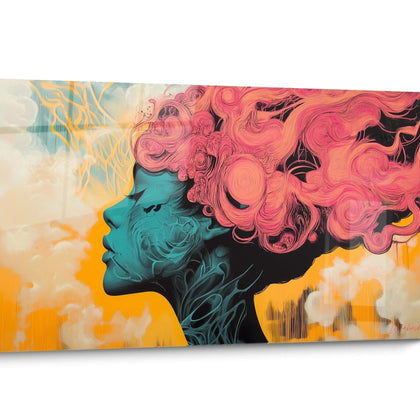
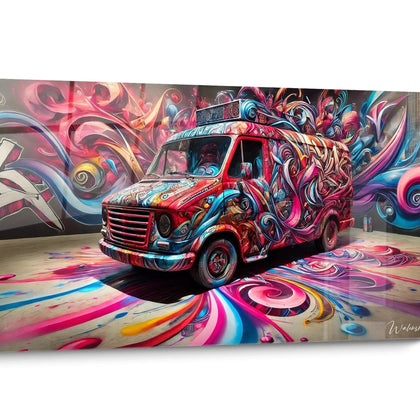
The Painting Street Art Multicolore brings the explosive energy of the street into your interior. This collection captures the essence of contemporary urban art with vibrant compositions where graffiti, stencils and tags blend into a bold chromatic symphony. Perfect for lovers of modern colorful street art, each work transforms your spaces into vibrant urban galleries. Discover creations that celebrate freedom of expression and the authenticity of street culture.
 Street Art Wall Art N°5 - Street Art Diverse Edition233,90 €
 The Urban Spirit Painting - Graffiti Street Art Edition233,90 €
 Chromatic Passages Wall Art - Street Art Edition233,90 €
 Phantom Quarter Artwork - street art edition232,90 €
 Chromatic Passage Canvas - street art edition232,90 €
 Rebel Colors Wall Art - street art edition232,90 €
 Urban Carousel Painting - street art edition213,90 €
 Nomadic Art Wall - Street Art Graffiti Edition233,90 €
 Urban Throne Painting - Mosaic Street Art Edition233,90 €
 The Colors of the Pavement Painting - Mosaic Street Art Edition233,90 €
 Street Art Canvas No.9 - Diverse Street Art Edition233,90 €
 Street Art Wall Art N°7 - Diverse Street Art Edition233,90 €
Explore further
In Multicolored Street Art Canvas

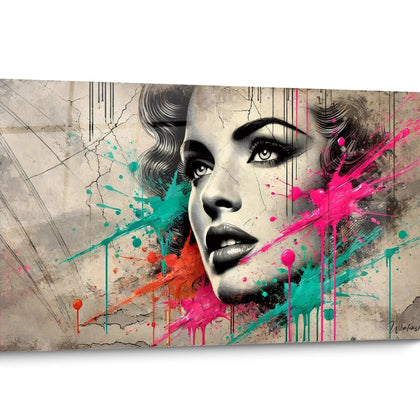
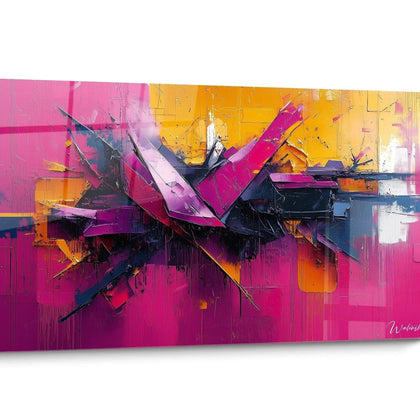
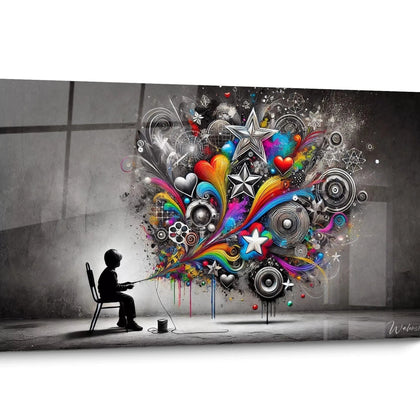
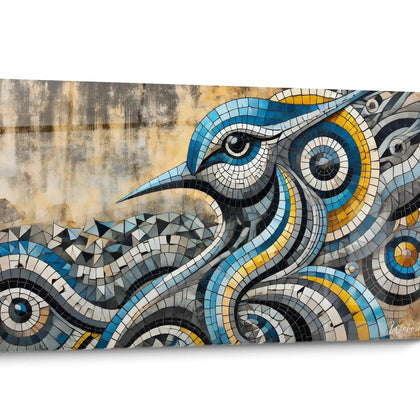
All about Multicolored Street Art Canvas
- Multicolor Street Art Canvas Presentation
- Explosive Urban Art
- Chromatic Energy
- Decorative Impact
A multicolor street art canvas instantly transforms your space into a contemporary urban gallery. This form of artistic expression captures the raw energy of global metropolises by combining vibrant pigments, layering techniques, and cultural references. Each large-scale creation becomes the absolute focal point of a modern interior, reflecting the boldness and personality of its owner. Investment in an oversized artwork responds to a search for visual authenticity and immediate impact in demanding living or professional spaces.
The Chromatic Explosion of Contemporary Graffiti
The multicolor street art canvas embodies the fusion between underground mural tradition and premium decorative sophistication. This artistic category exploits saturated color ranges — from electric magenta to intense cyan, from cadmium yellow to deep violet — creating vibrant compositions that defy classical aesthetic conventions.
Which color combinations maximize visual impact in large format?
Large-scale pieces require a specific chromatic strategy. Urban artists prioritize simultaneous contrasts between complementary hues to generate maximum visual tension. Saturated orange set against cobalt blue creates perceptible optical vibration from meters away. Multichromatic gradients in spray technique produce smooth transitions impossible to reproduce with traditional mediums. The use of fluorescent colors creates magnetic zones of attraction in space.
Layer superposition as technical signature
The specificity of the multicolor street art canvas lies in its construction through successive strata. Interlaced lettering, colored drippings, and intentional smudge effects create unique tactile depth. This partial covering technique — inherited from urban mural palimpsests — generates visual richness that evolves based on viewing angle. XXL formats reveal hidden details: cryptic signatures, micro-characters, coded cultural references that only prolonged observation allows deciphering.
Urban pop iconography revisited
Compositions frequently integrate references to popular culture icons transformed by an explosive palette. Superheroes revisited in neon versions, monetary symbols exploded into chromatic fragments, tribal masks merging with contemporary geometric patterns. This visual appropriation creates a universal language comprehensible in New York lofts and Paris apartments alike. To explore compositions dominated by abstract geometries with an explosion of vivid hues, the abstract street art canvas offers fascinating alternatives based on pure formal deconstruction.
Spatial Dynamism and Monumental Presence
How does a multicolor street art canvas restructure a space visually?
Installing a monumental piece radically modifies the volumetric perception of a room. Large formats — easily exceeding 120×80 cm or 150×100 cm — function as chromatic windows projecting their energy into the immediate environment. Saturated hues reflect natural light differently depending on the hour, creating an evolving atmosphere from sunrise to sunset. A multicolor canvas strategically placed captures attention upon crossing the threshold, immediately establishing the space's bold character.
Decorative balance in minimalist interiors
Paradoxically, the multicolor street art canvas finds its full expression in refined environments. Against an immaculate white wall, the chromatic explosion reaches maximum intensity without visual competition. This monochromatic surrounding approach allows fuchsia pinks, lime greens, and tangerine oranges to dominate without dilution. Industrial spaces with raw concrete, metal, and glass amplify this contrast between architectural coldness and artistic warmth. Sober furniture — black leather, brushed steel — serves as a foil to pictorial richness.
Why do professionals choose these works for their commercial spaces?
Creative agencies, design studios, and coworking spaces massively adopt these creations for several strategic reasons. First, they instantly communicate values of innovation and nonconformism to clients. Second, their photogenic nature generates organic social content — visitors and collaborators naturally immortalizing these spectacular pieces. Finally, their monumental scale compensates for the high ceiling heights typical of renovated tertiary spaces. A 180×120 cm composition maintains its presence even in a 200m² open floor plan.
Complementarity with contemporary materials
The vibrant pigments of multicolor street art create fascinating dialogues with modern raw materials. Against an exposed brick wall, vermillion reds and canary yellows generate rustic-urban tension. Associated with veined marble, color projections establish a bridge between classical luxury and contemporary rebellion. Reflective surfaces — smoked mirrors, display cases — multiply chromatic impact by creating visual echoes in the space.
Artistic Investment and Decorative Singularity
The distinctive value of an authentic piece
Acquiring a multicolor street art canvas represents far more than a simple decorative purchase. It is the appropriation of a fragment of contemporary urban culture, a testament to assumed aesthetic commitment. Generous formats — often unique or produced in extremely limited series — guarantee exclusivity unattainable in standardized decoration. This singularity transforms each piece into a conversation starter, a catalyst for social interactions during receptions or professional visits.
How to identify balanced composition despite chromatic profusion?
Despite apparent visual anarchy, successful creations obey rigorous compositional principles. Look for visual anchoring points — areas where the eye naturally rests before exploring the whole. A well-controlled piece generally presents three reading levels: immediate impact (dominant forms, major contrasts), secondary exploration (intermediate details, textures), and in-depth discovery (signatures, micro-elements). The best compositions maintain dynamic balance between saturated zones and visual breathing room.
Perceptual evolution over time
A fascinating phenomenon characterizes these works: their capacity to progressively reveal new aspects. After several weeks, the eye suddenly identifies a detail previously overlooked — a face hidden in gradients, a word camouflaged in splatters. This latent richness justifies investment in generous dimensions: the larger the surface, the higher the potential for discovery. Knowledgeable collectors favor pieces offering this exploratory depth rather than single univocal immediate effect.
Which space benefits most from a multicolor street art canvas?
While reception areas seem obvious, other configurations reveal the full potential of these creations. Home offices gain creative energy facing stimulating chromatic explosion. Contemporary master bedrooms welcome these compositions to break the monotony of conventional decorative codes. Spacious entrance halls use these pieces as declarations of immediate intent. Private workout rooms exploit their dynamism to generate motivation and intensity. The essential remains consistency with surrounding architecture and assumed commitment to a disruptive aesthetic.
Is a multicolor street art canvas suitable for family residential spaces?
Absolutely, provided you adjust the visual intensity to the room's function. Circulation areas — corridors, entryways — perfectly absorb maximum energy. Collective living spaces benefit from balanced compositions mixing saturated zones and chromatic breathing room. What matters is consistency with furniture and personal commitment to this contemporary artistic expression.
What is the pigment durability in a multicolor street art canvas?
Professional creations intended for interiors use UV-stabilized pigments resistant to premature aging. Modern synthetic hues — high-resistance acrylics — maintain their saturation for decades under normal interior conditions. Simply avoid prolonged direct sunlight exposure, which would accelerate degradation of certain particularly sensitive fluorescent hues.
How to choose between multiple multicolor street art canvases of similar dimensions?
Beyond immediate aesthetic preferences, consider compositional complexity — favor pieces offering multiple reading levels. Evaluate balance between visual impact and breathing room allowing the eye to circulate. Check technical signature — controlled superpositions, fluid gradients, careful details. Finally, project yourself into the future: which work will continue to fascinate after six months of daily contemplation?
Further reading
Our articles on this topic
- How to Incorporate Street Art Painting into Your Decor
- Should You Choose Colorful or Monochrome Street Art?
- 5 Street Art Decor Ideas for a Unique Interior
- Basquiat Wall Art: From New York Street Art to Urban Lofts
- Where to Buy Quality Street Art for Your Living Room?
- Which Street Art Prints Suit an Industrial Loft?


