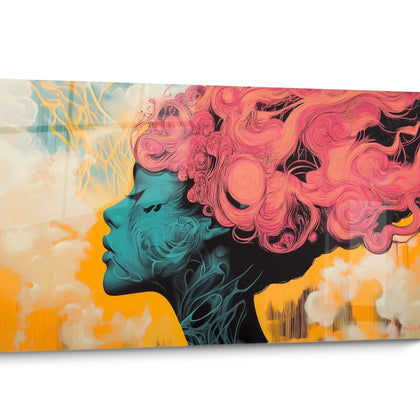
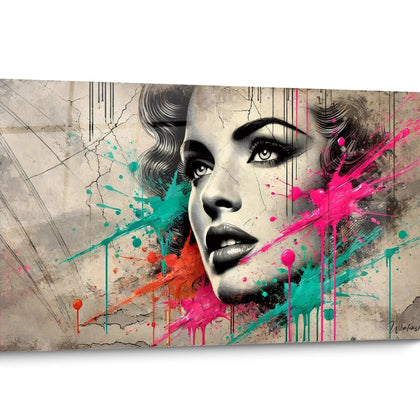
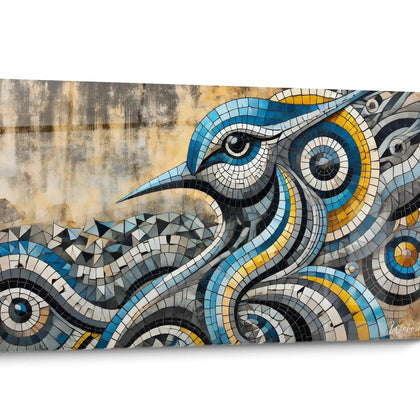
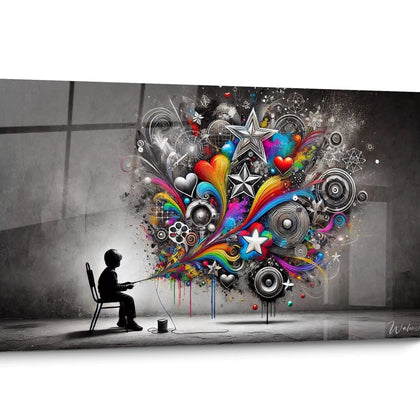
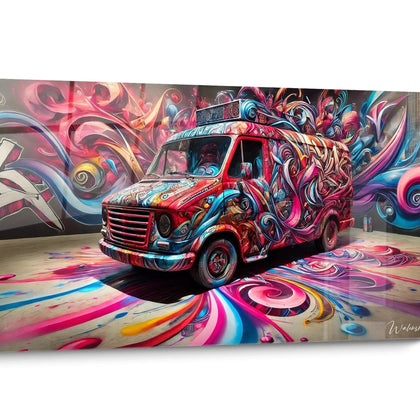
The street art portrait wall art embodies the fusion between contemporary urban art and monumental figurative representation. These large-scale creations transform anonymous or iconic faces into genuine visual manifestos, capturing the rebellious and expressive essence of the graffiti movement while celebrating humanity through hyperrealistic or stylized features. Each monumental work becomes a powerful artistic statement that dialogues with modern architectural space.
The Narrative Intensity of Contemporary Urban Portraiture
Large-format street art portrait wall art transcend simple decoration to become captivating visual narratives. Unlike abstract works such as those presented in abstract street art collections, these figurative portraits tell human stories through striking facial expressions, penetrating gazes, and masterfully executed physiognomic details. The monumental scale of these creations allows appreciation of every brushstroke, every paint splash that constitutes the characteristic texture of graffiti aesthetics.
How do facial expressions transform the atmosphere of a professional space?
In creative offices, communication agencies, or design studios, a monumental street art portrait generates a unique psychological dynamic. The direct gaze of a face spanning several meters unconsciously influences spatial perception and collective energy. Portraits with determined or contemplative expressions stimulate creativity and reinforce the visual identity of avant-garde companies. This artistic human presence creates an emotional connection impossible to reproduce with other forms of wall art.
Mixed techniques in contemporary urban portraiture
Contemporary street art artists combine traditional academic portrait methods with typically urban interventions. Colored dripping superimposed on hyperrealistic strokes, strategically applied stencils over photorealistic zones, or paint runs that seem to defy gravity around a meticulously rendered face create this characteristic visual tension. These monumental works require a sufficiently vast wall surface so that all techniques coexist harmoniously without visual compression.
Iconic personalities versus anonymous faces
The large-format street art portrait wall art market divides into two distinct narrative approaches. On one hand, portraits of cultural, musical, or historical icons reinterpreted with modern urban aesthetics offer immediate recognition and shared cultural connection. On the other, anonymous faces with universal features allow greater personal projection, transforming the work into an emotional mirror for each observer. This duality defines the psychological impact sought in high-end residential or distinctive commercial space design.
The Monumental Presence of the Face in Interior Architecture
Why prioritize a street art portrait for double-height spaces?
Industrial lofts, monumental staircases, and cathedral-like living rooms require works capable of visually conquering vertical space. A large-format street art portrait wall art naturally exploits this verticality through human face proportions extending several meters high. Unlike horizontal compositions, the vertical portrait guides the gaze upward, creating an architectural presence that structures the space rather than simply decorating it. This statuesque dimension transforms the wall into an immersive artistic installation.
The psychological effect of monumental eye contact
Environmental neuroscience demonstrates that large-scale faces activate specific brain regions linked to social interaction and emotional memory. In premium commercial spaces such as automotive showrooms, avant-garde fashion boutiques, or conceptual restaurants, a monumental street art portrait unconsciously establishes a relationship between the visitor and brand identity. The portrayed subject's gaze, whether frontal, averted, or introspective, subtly orchestrates circulation and attention within the commercial space.
The explosive color palettes typical of street art amplify this psychological interaction. Violent contrasts between hyperrealistic skin tones and saturated neon backgrounds, superimpositions of complementary hues that create optical vibration, or dramatic monochromes punctuated with strategic color bursts transform the portrait into a genuine visual magnet. This chromatic intensity requires generous dimensions to avoid sensory saturation while maximizing emotional impact.
Positioning strategies to maximize visual confrontation
Installing a monumental street art portrait follows specific spatial rules distinct from traditional museum conventions. Positioning facing the main entrance creates an effect of surprise and simultaneous welcome, while lateral placement transforms the work into a progressive revelation as you move through the space. Contemporary minimalist environments particularly benefit from this direct confrontation with an expressive face spanning several meters, where the portrait becomes the sole point of visual complexity in refined architecture.
Integration of Urban Portraiture into Contemporary Decorative Universes
The alliance between brutalist architecture and street art facial expression
Raw concrete interiors, exposed metal structures, and industrial volumes find their ideal emotional counterpoint in the monumental street art portrait wall art. This juxtaposition between the material coldness of brutalist architecture and the vibrant humanity of an expressive face creates an aesthetic tension particularly sought after in renovations of industrial spaces converted into residential lofts or commercial galleries. The portrait brings the human and emotional dimension that intentionally austere architecture refuses to offer.
Extra-wide panoramic formats also allow innovative compositions where multiple faces coexist or fragment, creating complex visual narratives. These contemporary urban polyptychs tell stories of diversity, human connection, or identity multiplicity particularly relevant for modern collaborative spaces, high-end coworking, or technology company halls. Segmenting the portrait across multiple adjacent panels adds an architectural dimension to the work itself.
Which decorative elements effectively complement a monumental street art portrait?
Accompanying a large-scale urban portrait requires a minimalist approach to avoid visual competition. Furniture with clean lines in black leather, brushed metal, or untreated raw wood creates a contemporary setting without diverting attention from the monumental face. Architectural lighting, particularly adjustable spotlights or grazing lateral sconces, sculpts the work's reliefs and intensifies chromatic contrasts without adding decorative complexity. Large-scale architectural plants like Monstera deliciosa or Strelitzia can dialogue with the portrait's scale without rivaling its presence.
Temporal evolution and dialogue with natural light
An overlooked advantage of street art portrait wall art lies in its ability to transform a space's atmosphere according to daily light variations. Soft morning light reveals subtleties of gradations and skin tone nuances, while evening grazing light dramatizes contrasts and intensifies gaze expressivity. This perceptual variability transforms the work into a living element of interior architecture, offering constant visual renewal without physical intervention.
Where to position a street art portrait wall art in an open living space?
In contemporary open-plan layouts, the monumental portrait functions ideally as a visual divider between functional zones. Positioned perpendicular to the main wall on a partial partition, it subtly delimits the living area from the dining zone while remaining visible from both sides. The alternative is installing it facing the open kitchen, transforming culinary preparation into a performance observed by the portrait's gaze, creating unique spatial dynamics.
Is a street art portrait wall art suitable for minimalist Scandinavian interiors?
Absolutely, the contrast between Nordic purity and urban portrait intensity generates remarkable contemporary sophistication. Neutral Nordic palettes of whites, grays, and light wood serve as a perfect backdrop for portrait chromatic explosions, allowing the work to radiate without visual cacophony. This hybrid decorative approach characterizes next-generation Scandinavian interiors that integrate touches of urban boldness.
Do street art portraits enhance premium commercial spaces?
In high-end retail, boutique hospitality, or conceptual gastronomic dining, the monumental street art portrait instantly communicates an avant-garde and culturally engaged brand identity. It signals an urban, informed target clientele sensitive to contemporary artistic codes. Investment in a distinctive monumental work becomes a tangible element of competitive differentiation that directly influences the perception of value and exclusivity.


 Hair Storm Artwork - street art edition233,90 €
 Floral Ascension Canvas - Street Art Edition233,90 €
 Abstract Presence Artwork - street art edition213,90 €
 Modern Temptation Wall Art - Graffiti Street Art Edition233,90 €
 The Chaos Mask Painting - Graffiti Street Art Edition233,90 €
 Grafitti-Layered Portrait - Graffiti Street Art Edition233,90 €
 Fragments of Identity Wall Art - Graffiti Street Art Edition233,90 €
 Soul Cracks Artwork - Graffiti Street Art Edition233,90 €
 Resilience Face Painting - Mosaic Street Art Edition233,90 €
 Reverie Floral Wall Art - Mosaic Street Art Edition233,90 €
 Street Art Wall Art N°7 - Diverse Street Art Edition233,90 €
 Street Art Wall Art N°6 - Street Art Diverse Edition233,90 €
 Street Art Wall Art No. 1 - Street Art Diverse Edition233,90 €