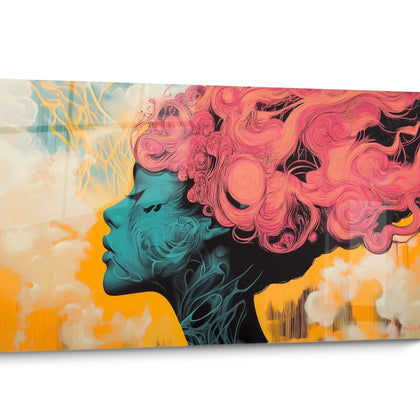
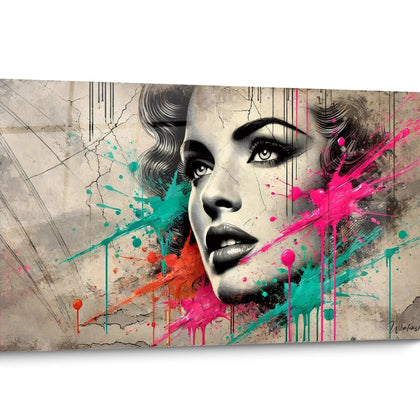
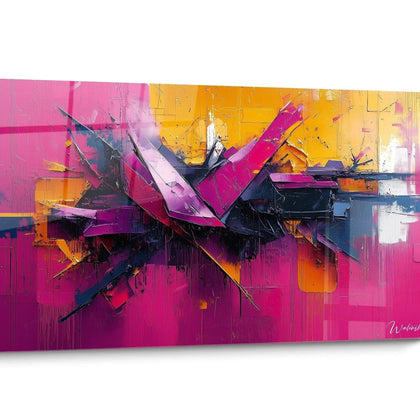
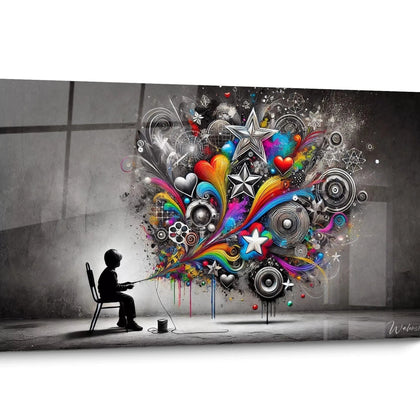
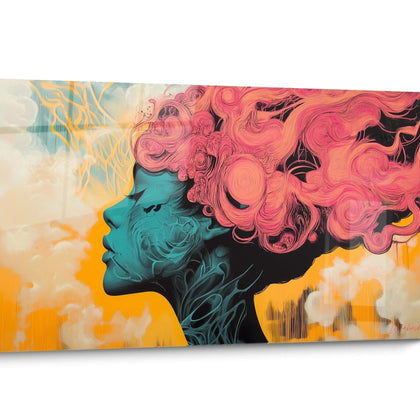
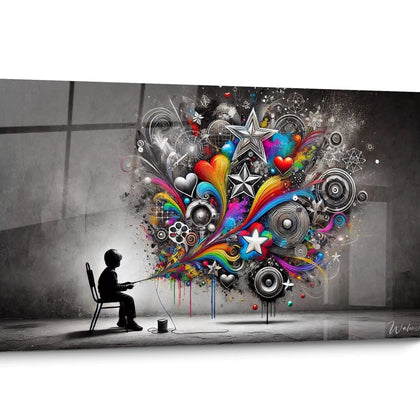
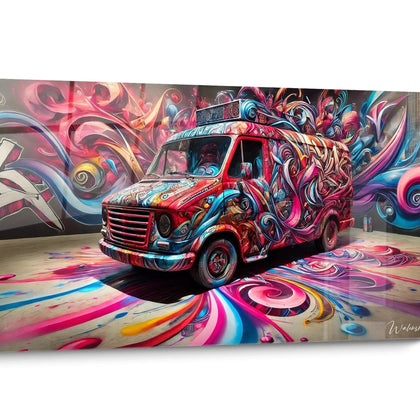
The street art mosaic wall art represents a bold fusion between contemporary urban art and visual fragmentation inspired by ancestral mosaic techniques. This form of mural expression transforms the codes of graffiti and street art by creating shattered compositions where each fragment becomes an essential piece of a spectacular visual puzzle. Designed to adorn large modern architectural spaces, these monumental creations capture the raw energy of metropolises while offering unparalleled graphic sophistication. Chromatic explosion and geometric fragmentation characterize these mural works that reinvent contemporary urban decoration with striking visual intensity.
The Aesthetics of Fragmentation in Contemporary Urban Art
The street art mosaic wall art draws its identity from the visual deconstruction that characterizes contemporary urban aesthetics. This fragmented approach reflects the multiplicity of cultural influences that coexist in modern metropolises, where each tessella represents a different voice in the urban dialogue. Street artists adopt this technique to visually translate the complexity of stratified urban landscapes, creating shattered narratives that invite the eye to mentally reconstitute the whole.
How does geometric segmentation amplify the urban message?
The division of space into multiple visual cells creates a unique reading dynamic that slows observation and deepens viewer engagement. In a large-scale street art mosaic wall art, this segmentation allows the simultaneous integration of multiple cultural references, urban typographies, and iconic graffiti motifs without creating visual confusion. Each fragment functions as an independent window onto the urban universe, while contributing to a harmonious overall composition. This modular structure naturally evokes the overlapping tagged walls of metropolitan alleys where artistic interventions accumulate over time.
The Explosive Chromatic Juxtaposition
The visual impact of a street art mosaic wall art largely depends on the intense chromatic contrasts between different segments. Urban artists exploit saturated palettes typical of graffiti culture—fluorescent pinks, electric blues, acid yellows—which they brutally confront to generate maximum visual tension. This bold approach to chromatic associations reflects the uncompromising aesthetics of street art, where subtlety gives way to direct affirmation. For collectors of imposing mural works, this chromatic intensity guarantees dominant presence in spacious architectural environments like industrial lofts or innovative corporate halls.
Deconstructed Typographies and Fragmented Urban Calligraphies
The graffiti lettering tradition finds new expression in mosaic compositions where typographic characters fragment across different cells. This deconstruction of letters into dispersed elements creates a visual encryption effect that actively engages the viewer in a decryption process. Stylized tags, artist signatures, and coded messages disseminate through the mosaic structure, establishing visual connections between fragments like so many interwoven narrative threads. This approach resonates particularly with abstract street art wall art enthusiasts who appreciate semantic complexity and interpretive ambiguity.
Technical Layering and Reconstructed Urban Materiality
The authenticity of a street art mosaic wall art resides in its capacity to evoke the material stratification of urban environments. Creators integrate visual references to degraded surfaces—peeling walls, torn posters, patinated concrete textures—distributing them across different fragments as testimonies to urban wear. This reconstruction of street materiality confers narrative depth that transcends simple decoration to become commentary on contemporary urban life.
Which iconic elements distinguish mosaic urban compositions?
The visual vocabulary of street art mosaic wall art draws directly from contemporary metropolitan imagery: stylized spray cans, cut-out urban silhouettes, counter-culture symbols, hip-hop and skateboard culture references. These iconic motifs distribute across the fragmented structure, creating instant recognition points for insiders while maintaining overall visual coherence. The stencil characteristics of urban art—anonymous faces, totemic animals, protest slogans—insert into different cells like windows onto street imagination. This iconographic richness transforms each work into a visual catalog of alternative urban culture.
The Collage Effect and Stratified Visual Citation
The mosaic composition technique naturally favors a collagist approach where visual citations and cultural references accumulate in layers. A large-scale street art mosaic wall art can simultaneously integrate references to New York graffiti history, Parisian political stencils, Mexican murals, and contemporary Asian tags. This cultural stratification reflects the cosmopolitan nature of urban centers where artistic influences circulate and blend freely. For professional spaces seeking multicultural and contemporary visual identity, this referential diversity constitutes a major asset.
The Tension Between Geometric Order and Organic Chaos
One of the fascinating paradoxes of street art mosaic wall art resides in the coexistence of rigorously geometric structure and chaotic, spontaneous visual content. The segmentation grid imposes rational, nearly architectural order, while the graphic elements it contains—paint runs, improvised gestures, controlled splatters—express the rebellious spontaneity of street art. This dialectic creates productive tension that maintains the work in dynamic balance between construction and deconstruction, discipline and creative freedom. Discerning collectors recognize in this formal tension a metaphor for urban experience itself, constantly negotiated between institutional control and spontaneous individual expression.
Monumental Presence and Transformation of Architectural Spaces
Installing a large-scale street art mosaic wall art radically transforms the spatial perception of contemporary interior environments. These monumental works function as visual anchoring points that restructure architectural experience by creating zones of maximum intensity in otherwise neutral spaces. Their imposing scale and visual complexity generate an immersion effect that literally transports street urban energy into sophisticated interiors.
Why prioritize monumental format for mosaic compositions?
The fragmentary logic of street art mosaic wall art requires a sufficiently extended surface so that the multiplication of cells reaches critical visual mass. On monumental format, the profusion of details distributed across numerous segments creates an abundance and narrative richness effect impossible to achieve on reduced surface. This scale also allows playing with reading distances: from afar, the work reveals its overall structure and major chromatic balances; up close, each fragment unveils its specific micro-narrative with particular typographic details and cultural references. For innovative commercial spaces, this dual readability guarantees immediate impact while offering depth that rewards prolonged observation.
Dynamizing Circulation and Creating Visual Destinations
A strategically positioned street art mosaic wall art transforms circulation flows by creating magnetic visual destinations. In reception halls of creative companies, coworking spaces, or open residential lofts, these works function as visual beacons that structure space and instinctively guide movement. Chromatic intensity and compositional complexity naturally attract the gaze and invite approach, transforming simple passage into contemplative experience. This capacity to create moments of pause in daily flow represents considerable added value for professional environments wishing to encourage spontaneous interactions and stimulate creativity.
Identity Signature for Creative-Focused Spaces
Adopting a street art mosaic wall art as visual centerpiece constitutes strong identity positioning for businesses and cultural institutions. This fragmented urban aesthetic instantly communicates values of innovation, cultural diversity, openness to counter-cultures, and proximity to contemporary artistic movements. For creative agencies, design studios, alternative cultural spaces, or lifestyle brand showrooms, this visual affirmation reinforces coherence between physical environment and brand identity. The mental association between street art and urban authenticity also confers particular cultural legitimacy valued by young audiences sensitive to emerging trends.
Is street art mosaic wall art suitable for private residential environments?
Absolutely, particularly in loft-type architectural configurations or apartments with generous volumes where industrial-urban aesthetics naturally find their place. These monumental works transform living spaces into private galleries reflecting contemporary sensibility and familiarity with international urban culture.
How does a street art mosaic wall art evolve visually over the years?
The fragmented structure of these compositions confers remarkable visual resistance to fatigue: the multiplicity of details distributed across different cells offers perpetually renewed discovery, with secondary elements progressively emerging from overall visual complexity, sustaining interest over time.
Which architectural spaces particularly value large-format street art mosaic wall art?
Blind walls of great height, typical of industrial conversions and contemporary double-height constructions, constitute ideal placement. These extended vertical surfaces allow the fragmented composition to fully deploy its multiplicative logic while benefiting from the necessary distance for appreciating overall structure.


 Ceramic Flow Canvas - Mosaic Edition233,90 €
 Stone Traveler Painting - Mosaic Street Art Edition233,90 €
 Resilience Face Painting - Mosaic Street Art Edition233,90 €
 Urban Throne Painting - Mosaic Street Art Edition233,90 €
 Reverie Floral Wall Art - Mosaic Street Art Edition233,90 €
 Wall of Secrets - Mosaic Street Art Edition233,90 €
 The Traces of the Past Wall Art - Mosaic Street Art Edition233,90 €
 The Colors of the Pavement Painting - Mosaic Street Art Edition233,90 €
 The Mark of Sin Painting - Mosaic Street Art Edition233,90 €
 Song of Tiles Artwork - Mosaic Street Art Edition233,90 €