


Minimalist Porcelain Style Wall Art
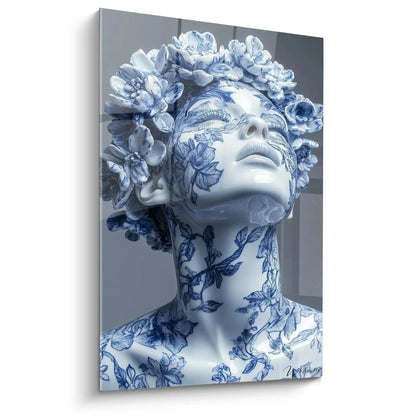
Our Porcelain Style Painting Minimalist collection celebrates the essence of artistic purity. Inspired by the delicacy of fine ceramics, this series offers elegant minimalist wall artworks with subtle nuances and clean lines. Each creation evokes the discreet sophistication and visual harmony characteristic of porcelain-inspired minimalist art. Perfect for enhancing contemporary interiors, these paintings bring a touch of refinement and serenity to your living space.
 Eternal Flower Wall Art - Porcelain Style Edition273,90 €
 Porcelain Scale Wall Art - Porcelain Style Edition273,90 €
 Flawed Beauty Wall Art - Porcelain Style Edition273,90 €
Explore further
In Minimalist Porcelain Style Wall Art



All about Minimalist Porcelain Style Wall Art
- Minimalist Porcelain Wall Art Presentation
- Refined Aesthetics
- Spatial Integration
- Ceramic Harmonies
Minimalist porcelain-style wall art represents the perfect alliance between ancestral ceramic tradition and contemporary simplicity. This category of mural artworks distinguishes itself through its ability to transform spaces into sanctuaries of serenity, where every visual element is reduced to its essence. Unlike compositions laden with detail, these creations privilege expressive void, refined lines, and monochromatic palettes that evoke the purity of traditional celadons and blue-and-whites. Designed for large-scale environments, these imposing mural pieces create contemplative focal points that breathe and soothe. The minimalist approach applied to porcelain motifs generates a unique visual tension between the historical richness of the ceramic medium and the formal sobriety of contemporary philosophy.
The Visual Essence of Minimalist Porcelain-Style Wall Art
The minimalist porcelain-style wall art embodies a decorative philosophy where restraint becomes expression. These large-scale mural compositions exploit the visual language of white ceramics, delicate crackle effects, and geometric forms reduced to their simplest expression. The aesthetic privileges neutral ivory backgrounds, stone tones, and pearl-gray nuances that characterize Song porcelains, a historical period recognized for its extreme refinement.
What are the visual characteristics of an authentic minimalist porcelain wall artwork?
The authenticity of a minimalist porcelain-style wall art rests on several distinctive aesthetic markers. The chromatic palette revolves around subtle variations of off-whites, ceramic beiges, and nuanced grays that recall noble glazes. Motifs limit themselves to a few symbolic elements: a solitary calligraphic stroke, a bare plum branch, or a circular form evoking the moon. This visual economy contrasts with more ornate traditional Asian porcelain-style wall art, creating the spatial breathing essential to contemporary interiors.
The visual grammar of refined ceramic surfaces
Large mural surfaces inspired by minimalist porcelain exploit the characteristic textures of the ceramic medium: delicate crackle effects, suggested translucent glazes, controlled irregularities evoking kiln firing. These controlled imperfections generate a tactile depth that enriches apparent simplicity. XXL formats amplify these micro-variations, transforming what might seem austere in small dimensions into an immersive meditative landscape when deployed across several square meters.
Reduced symbolism and maximum impact
The minimalist approach applied to porcelain motifs operates according to the principle of Japanese ma, that negative space-time which gives meaning to the visible. A single cobalt-traced ideogram on milky-white ground, a simplified vase silhouette, or a ripple suggesting water suffices to create a complete narrative universe. This symbolic economy confers upon mural pieces a precious timelessness, avoiding ephemeral decorative trends while maintaining magnetic visual presence in contemporary architectural spaces.
Architectural Integration of Monumental Formats
How do you position minimalist porcelain-style wall art in a large space?
The installation of a large-scale minimalist porcelain-style wall art obeys specific principles that differ from conventional decorative approaches. These artworks function as architectural visual pauses, requiring clear surroundings to deploy their contemplative effect. Double-height spaces, blind walls in renovated industrial lofts, or generous corridors in contemporary residences constitute ideal locations where monumentality meets simplicity.
The rule of peripheral void applies particularly: providing at least 80 centimeters of clear space on each side allows the gaze to breathe and the minimalist composition to reveal its full power. Unlike galleries of multiple artworks, these pieces demand wall solitude, transforming an entire architectural section into a ceramic contemplation zone.
Material dialogues with the built environment
The minimalist porcelain-style wall art establishes sophisticated material conversations with its surroundings. Polished concrete surfaces, natural light stone walls, or troweled plaster partitions constitute architectural backdrops that amplify the suggested preciousness of porcelain. This encounter between structural rusticity and ceramic delicacy creates a productive aesthetic tension.
Spaces bathed in diffuse natural light progressively reveal the subtle nuances of monochromatic compositions. Variations in light intensity throughout the day transform the artwork into a visual sundial, where ivory tones warm during golden hours and cool into lunar grays by evening. This natural chromatic dynamism considerably enriches daily spatial experience.
Contemplative zoning of residential environments
Strategic placement of a monumental minimalist porcelain wall art allows creation of visual decompression zones essential in modern homes. Positioned facing the main entrance, it immediately establishes a refined aesthetic code. Installed at the end of an open living area, it functions as a visual escape point that organizes space around its contemplative axis. This capacity to structure spatial experience while maintaining discreet presence constitutes the productive paradox of ceramic minimalism applied to large mural surfaces.
Chromatic Compositions and Cultural Resonances
The monochromatic palettes inspired by historical celadons
The minimalist porcelain-style wall art draws from a millennia-old chromatic vocabulary while refining it according to contemporary codes. Infinite variations of white constitute the heart of this palette: cold porcelain white, warm cream white, slightly-rosy off-white evoking Ding ceramics, or grayed white recalling Qingbai. These subtle nuances create atmospheric gradients that avoid clinical coldness while maintaining absolute formal sobriety.
Gray-blue monochrome compositions directly evoke Song celadons, those legendary glazes whose luminous depth fascinated connoisseurs. Transposed into XXL mural format, these pale jade tonalities, discreet water-green, or misty-blue generate calming atmospheres particularly suited to spaces dedicated to concentration or domestic meditation.
Why choose minimalist porcelain-style wall art for a zen interior?
The natural affinity between minimalist ceramic aesthetics and zen environments rests on shared philosophical principles. The concept of wabi-sabi, which celebrates the beauty of imperfection and impermanence, finds perfect expression in renderings of aged porcelain surfaces with delicate suggested crackles. These markers of slowed time evoke the noble patina of ancient ceramics without falling into literal reproduction.
Monumental formats amplify the meditative effect through their capacity to absorb the gaze without excessive stimulation. Unlike visually charged compositions that fragment attention, these unified large surfaces create homogeneous contemplative fields. The eye can wander freely across subtle variations in texture and tone without encountering narrative obstacles, naturally inducing a state of mental calm conducive to profound relaxation.
Decorative associations and overall aesthetic coherence
Successful integration of a minimalist porcelain-style wall art within a coherent decorative environment requires a holistic approach. Furniture with refined lines in light natural wood, textiles in raw linen ecru, or matte stoneware elements extend the ceramic vocabulary without creating visual redundancy. Architectural foliage plants like Monsteras or ficus lyrata add organic touches that dialogue with stylized botanical motifs sometimes present in compositions.
Complementary decorative objects must respect the same formal discipline: contemporary ceramics with simple forms, translucent blown-glass containers, or minimalist stone sculptures. This material orchestration creates an environment where each element breathes, avoiding accumulation while generating sensory richness through quality rather than quantity.
Is minimalist porcelain-style wall art suitable for professional spaces?
Absolutely. High-end professional environments such as law offices, executive offices, or reception areas particularly benefit from these artworks that simultaneously project sophistication and serenity. Their timeless aesthetic avoids rapid visual aging, guaranteeing lasting decorative relevance without requiring frequent renewal.
What's the difference between minimalist porcelain wall art and ceramic photography?
The minimalist porcelain-style wall art artistically interprets the visual language of ceramics rather than reproducing it photographically. This approach enables compositional freedoms, graphic simplifications, and chromatic amplifications impossible in pure photography, creating artworks that evoke the essence of porcelain rather than its literal reality.
Do large-scale minimalist porcelain wall artworks require special maintenance?
These mural artworks require minimal maintenance similar to any quality wall decoration. Occasional gentle dusting with a dry microfiber cloth generally suffices. Avoiding prolonged exposure to intense direct sunlight preserves long-term chromatic stability, particularly for the subtle white and gray nuances that characterize this refined ceramic aesthetic.
Further reading
Our articles on this topic
- Minimalist Nude Fashion Painting: The Female Silhouette That Elevates Your Modern Interior
- Minimalist Paintings: The Essence of Visuals in the Service of Elegance
- Japanese ceramic teapot painting on black background: the art of refined contrast
- Minimalist Style in Wall Art: Clean Yet Powerful
- How to integrate a porcelain-style painting into Haussmann-style decor
- Luxury Minimalist Artwork: Subtle Refinement or Lack of Impact?
L'art qui suscite l'envie
Maison belge d'art mural grand format
14 jourspour changer d'avis*
Protection Walenskyincluse
Fabriquéen Italie
FormatXXL
Kit de fixationtoujours fourni
* Hors tableaux personnalisés et tailles personnalisées


