




Asian Porcelain Style Wall Art
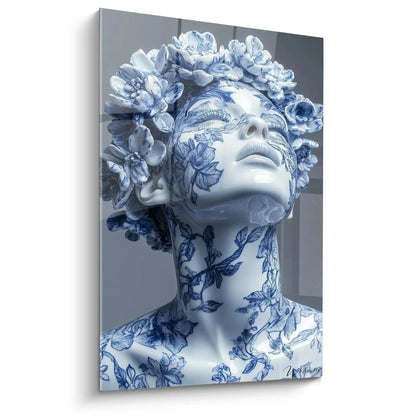
Our Painting style porcelain Asian collection celebrates the millennial elegance of the Orient with creations inspired by ancestral ceramics. Each work captures the delicacy of traditional Asian motifs : majestic dragons, cherry blossoms, zen landscapes and refined calligraphy. These porcelain-inspired decorative paintings bring sophistication and serenity to your decor. Cobalt blue tones, ivory white and golden accents recreate the authenticity of Chinese and Japanese decorative arts.
 Chinese Face Artwork - Porcelain Style Edition273,90 €
 Porcelain Scale Wall Art - Porcelain Style Edition273,90 €
 Flawed Beauty Wall Art - Porcelain Style Edition273,90 €
 China Rose Painting - Porcelain Style Edition228,90 €
Explore further
In Asian Porcelain Style Wall Art



All about Asian Porcelain Style Wall Art
- Asian Porcelain Art Panel Presentation
- Oriental Aesthetics and Motifs
- Decorative Integration
- Symbols and Authenticity
An Asian porcelain-style wall art transposes the millennia-old heritage of Chinese and Japanese ceramics into a monumental mural format, capturing the delicacy of ancient glazes and the depth of traditional decorations on a surface adapted to contemporary spaces. This artistic interpretation faithfully reproduces the characteristic crazing, firing nuances, and symbolic motifs that made imperial porcelains renowned, while offering an unparalleled visual scale to enhance refined interiors. Each creation evokes the ancestral techniques of Jingdezhen or Arita, transforming your wall into a genuine oriental art gallery where history, exceptional craftsmanship, and spectacular decorative presence intertwine.
The Art of Porcelain Transposed into Monumental Wall Decoration
The visual characteristics of Asian ceramics reproduced at grand scale
The Asian porcelain-style wall art reproduces with remarkable precision the glaze effects typical of Chinese and Japanese ceramics, notably the famous celadon crazing, enamel runs, and firing variations that create this unique depth. Monumental formats allow full appreciation of the microscopic details of floral motifs, misty mountain landscapes, or narrative scenes inspired by dynastic painted scrolls. The surface evokes the smooth and lustrous texture of genuine porcelain, capturing natural light to generate subtle reflections that evolve with the time of day and ambient lighting.
Sinuous dragons, majestic phoenixes, and luxuriant peonies unfold with spectacular amplitude when enlarged, revealing details invisible on traditional pieces of reduced dimensions. This mural transposition transforms each composition into an architectural focal point capable of structuring an entire space visually, particularly in spacious vestibules, private libraries, or reception rooms where oriental art integrates harmoniously.
Why choose a porcelain representation rather than classic Asian painting?
Unlike traditional silk paintings or ink art, the Asian porcelain-style wall art brings a unique material dimension that instantly evokes the prestige of imperial collections and museum treasures. This direct reference to ceramic craftsmanship—considered one of the pinnacles of Asian artistic creation—confers immediate cultural legitimacy and distinctive refinement. The characteristic color palette of porcelains, particularly the famous Asian porcelain blue-and-white wall art designs inspired by Ming creations, offers elegant sobriety particularly suited to contemporary interiors seeking oriental touches without visual overload.
Asian art collectors especially appreciate these representations that evoke museum pieces while circumventing the conservation constraints linked to authentic ceramics. The absence of fragility inherent to three-dimensional objects allows secure installation in high-traffic areas while preserving the aesthetic impact of genuine antiquities.
Which Asian porcelain motifs to prioritize for maximum impact?
Stylized floral decorations—chrysanthemums, lotuses, flowering plum blossoms—constitute timeless choices that harmonize with various decorative styles, from classical to transitional. Landscape scenes with pagodas, arched bridges, and misty mountains create a captivating narrative depth, ideal for meditative spaces or reading areas. Geometric motifs derived from decorative friezes and ceramic borders provide rhythmic visual structure, particularly effective in contemporary architectural spaces with clean lines.
Symbolic animal representations—koi carp gliding through waves, century-old cranes, or longevity tortoises—add an auspicious dimension valued in feng shui design. Panoramic formats allow deployment of complex narrative compositions inspired by imperial dining services, where multiple scenes flow harmoniously across an extended surface, creating a genuine visual narrative that captivates the viewer.
Integrating Asian Porcelain Wall Art into Contemporary Spaces
How to enhance ceramic aesthetics in a modern interior?
Installing an Asian porcelain-style wall art in a contemporary environment requires thoughtful approach to create harmonious dialogue between tradition and modernity. Neutral walls—pure white, pearl gray, or linen beige—constitute the ideal canvas to showcase the subtle nuances of reproduced glazes and the complexity of decorative motifs. A clear surrounding space around the artwork allows full appreciation of its monumental scale without visual competition, transforming the wall into a genuine sanctuary dedicated to oriental art.
Association with clean-lined furniture—lacquered consoles, minimalist coffee tables, geometric-structure seating—creates sophisticated contrast that underscores the ornamental richness of the artwork without creating decorative saturation. Natural materials such as raw wood, polished stone, or bamboo strengthen the connection with Asian aesthetics while maintaining contemporary coherence. Focused architectural lighting reveals the subtleties of crazing and chromatic variations, reproducing the museum experience within domestic intimacy.
Which spaces benefit most from porcelain-inspired decoration?
Spacious entryways gain exceptional benefit from large-format Asian porcelain-style wall art, immediately establishing the refined aesthetic tone of the residence and impressing visitors upon crossing the threshold. Formal dining rooms find in these ceramic representations a natural historical resonance, evoking precious table settings and imperial banquets while creating an atmosphere conducive to elegant entertaining. High-end executive offices and professional spaces use these cultural references to project sophistication, artistic knowledge, and international perspective.
Master bedrooms advantageously accommodate soothing compositions—misty landscapes, delicate floral motifs, monochrome palettes—that promote serenity and contemplation. Private libraries and reading rooms particularly benefit from complex narrative scenes inviting prolonged observation and progressive detail discovery, creating an intellectually stimulating environment. Domestic spas and wellness spaces find perfect concordance with oriental aesthetics and wellness philosophies of balance and harmony.
How to create a coherent collection around porcelain aesthetics?
Building a decorative ensemble around Asian porcelain-style wall art begins with selecting objects that dialogue without duplicating: contemporary vases in shapes inspired by classical ceramic silhouettes, abstract sculptures evoking organic pottery curves, textiles with geometric motifs recalling decorative friezes. Integration of authentic pieces—small antique bowls, mounted ceramic fragments, or museum-quality reproductions—in lit display cases creates conversation between two-dimensional representation and three-dimensional craftsmanship reality.
Metal accessories—patinated bronze chandeliers, brushed brass frames, aged copper furniture handles—establish connection with traditional mountings of precious porcelains and bring complementary material richness. Living plant elements, particularly minimalist ikebana arrangements or century-old bonsais, reinforce the oriental atmosphere while introducing the organic and changing dimension that contrasts with the permanence of the ceramic image.
Symbolism and Cultural Authenticity of Ceramic Representations
Decoding traditional symbols of Asian porcelain decorations
Each decorative element present on an Asian porcelain-style wall art carries profound symbolic meanings deeply rooted in Chinese and Japanese cultural traditions. Peonies represent prosperity and honor, making them a privileged choice for professional spaces or reception areas. Flowering plum blossoms symbolize resilience and renewal, particularly appropriate in environments of personal transformation or creativity. Imperial dragons embody benevolent power and wisdom, traditionally reserved for spaces of authority and decision-making.
The Eight Buddhist Treasures—dharma wheel, parasol, fish, vase, lotus, shell, eternal knot, and banner—frequently appear in ceramic compositions and bring specific blessings according to their arrangement. Stylized wave motifs evoke fluidity and adaptability, while swirling clouds represent the connection between earthly and celestial realms. This symbolic richness allows selecting a wall art not only for its aesthetics but also for its underlying message and resonance with personal aspirations.
Style differences between Chinese and Japanese porcelains
Representations inspired by Chinese ceramics generally favor ornamental density and narrative complexity, with lavish compositions where each square centimeter participates in the overall decoration. Palettes often include famous famille rose or famille verte polychrome designs, with their delicate enamels and generous gilding. Circular or octagonal formats evoke serving platters and ceremonial trays, while vertical compositions reference monumental vases from Ming and Qing periods.
Japanese aesthetics, embodied by Arita or Kutani porcelains, tend toward more pronounced restraint, with deliberate empty spaces creating visual breathing characteristic of the ma concept. Motifs are often asymmetrical, reflecting zen influence and wabi-sabi philosophy celebrating imperfect beauty. Imari representations integrate deep reds and intense blues in balanced compositions, while Kakiemon styles privilege soft palettes with generous white spaces that showcase each decorative element.
The importance of reproduction quality in preserving ceramic spirit
Superior-quality Asian porcelain-style wall art faithfully reproduces the textural subtleties characterizing genuine ceramics: micro-surface variations created by enamel runs, intentional celadon network crazing, slight irregularities testifying to the artisanal process. Monumental formats require exceptional image resolution to preserve sharpness of minute details—calligraphy, decorative brushwork, gradual chromatic transitions—visible on original pieces.
Color fidelity constitutes a decisive criterion, particularly for characteristic cobalt blues, iron reds, copper greens, or imperial yellows whose precise nuances identify different production periods and workshop origins. Advanced printing techniques allow restitution of the translucent luminosity of glazes and the depth of underglaze decorations, creating this three-dimensionality illusion distinguishing successful representations from flat, soulless reproductions.
Where ideally to place Asian porcelain-style wall art in a home?
Optimal positioning occurs in formal reception spaces where the artwork can be admired without haste—living rooms, dining rooms, libraries—facing a clear viewpoint allowing distant observation. Walls perpendicular to windows benefit from lateral natural lighting that reveals subtle reliefs without creating bothersome reflections, while installations in spacious hallways create private galleries inviting contemplative strolling.
Can different Asian porcelain styles be associated in the same space?
Successful association of varied ceramic styles—Chinese, Japanese, Korean—requires unification through chromatic palette or decorative theme rather than geographic origin. Coherence in formats or framing creates an intentional collection, while variation in represented periods enriches historical narrative without creating visual cacophony, particularly if a unifying element like blue dominance or floral motifs connects the different pieces.
What longevity can be expected from quality Asian porcelain-style wall art?
Representations produced according to professional standards with UV-resistant pigments and stable supports retain their chromatic brilliance and structural integrity for several decades, provided direct intense sunlight exposure and excessive humidity are avoided. The stability of porcelain-inspired images often surpasses standard photographic prints thanks to the relative simplicity of their palettes and absence of complex photographic gradients susceptible to shifting over time.


