


Golden Pekingese Dog Painting
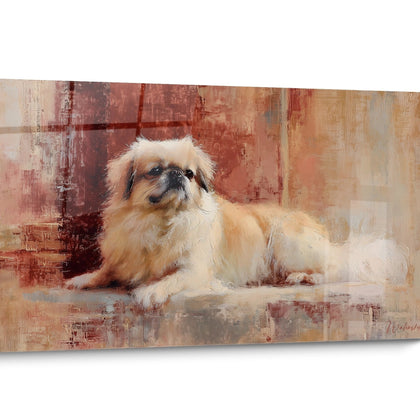
The Golden Pekingese Dog painting sublimely captures the majesty of this Chinese imperial breed through sumptuous artistic creations. Each work captures the aristocratic elegance and legendary charm of the Pekingese, with golden tones evoking its royal heritage. Our golden Pekingese wall art collection transforms your interior into a refined gallery, perfect for enthusiasts of this iconic breed. Discover decorative paintings Pekingese dog that celebrate the nobility and unique character of this imperial companion.
 Pekingese Golden Coat in Luminous Canyon - Solar Splendor - Pekingese Edition233,90 €
 Pekingese with Long Golden Hair on Floral Background - Contemplative Portrait - Pekingese Edition233,90 €
 Fawn Pekingese Long-Haired Portrait by Window - Golden Light - Pekingese Edition233,90 €
 Golden-Haired Pekingese Sitting on Wooden Bench - Noble Portrait - Pekingese Edition233,90 €
 Pekingese Painting with Golden Tones on Abstract Background - Contemplative Portrait - Pekingese Edition233,90 €
 Golden and White Tones Dog Painting - Majestic Canine Portrait - Pekingese Edition233,90 €
 Golden-Haired Dog Painting Brushstroke Effect - Tender Gaze - Pekingese Edition233,90 €
 Golden Pekingese by the Window - Silent Contemplation - Pekingese Edition233,90 €
 Pekingese Dog with Golden Long Hair on Log - Canine Elegance - Pekingese Edition213,90 €


All about Golden Pekingese Dog Painting
- Golden Pekingese Painting Presentation
- The Golden Brilliance of the Pekingese
- Imperial Golden Majesty
- Golden Majesty & Decoration
The golden Pekingese dog painting embodies the very essence of canine royalty, capturing the historical nobility of this Chinese imperial breed through a luminous and precious palette. This artistic representation celebrates the luxurious coat and ancestral dignity of the Pekingese through golden tonalities evoking the palaces of the Forbidden City. Designed for refined interiors seeking a touch of cultural opulence, this large-scale wall format transforms your space into a genuine gallery dedicated to Asian aristocratic heritage. The dominance of gold and bronze hues creates a warm and prestigious atmosphere, particularly suited to classical living rooms, private libraries, or reception spaces where the exclusive character of the Pekingese resonates with Chinese imperial history.
The Symbolism of Gold in the Representation of the Imperial Pekingese
The golden Pekingese dog painting draws its visual power from the deep historical connection between this breed and Chinese dynasties. Golden tonalities are not merely an aesthetic choice: they directly evoke imperial silks, palatial ornaments, and the sacred status the Pekingese held as the lion dog guardian of emperors. This precious chromatic palette amplifies the characteristic mane of the breed, transforming each strand into living thread of gold.
Why do golden hues particularly enhance the Pekingese?
The unique morphology of the Pekingese, with its abundant coat forming a true leonine mane, finds in golden tones a natural magnification. Amber reflections highlight the silky texture of the long hair, creating plays of light reminiscent of ancient Buddhist temple frescoes. This warm palette also valorizes the flattened muzzle and large expressive eyes, physical characteristics that earned the breed its nickname of "lion dog". For collectors of Asian animal art, this chromatic approach constitutes a bridge between Chinese pictorial tradition and contemporary luxury aesthetics.
The visual impact of golden metallic finishes
Creations incorporating metallic effects or pigments with copper reflections transform the golden Pekingese painting into a true piece of wall jewelry. These techniques confer a three-dimensional quality to the represented fur, where each viewing angle reveals new nuances oscillating between pale gold and deep bronze. In high-end reception spaces, this subtle brilliance naturally attracts the gaze and establishes conversation around Chinese imperial iconography. The association with a modern Pekingese dog painting with refined lines allows for creating a fascinating dialogue between golden tradition and contemporary minimalism.
Chromatic harmonies to enhance gold tones
The optimal deployment of a golden Pekingese dog painting requires an environment that respects its chromatic richness without competing with it. Neutral backgrounds such as anthracite gray, linen beige, or off-white form ideal frames, allowing golden hues to shine fully. The addition of decorative elements in brushed brass, bronze-framed mirrors, or mustard-colored velvet textiles creates a sophisticated visual coherence. Admirers of Orientalism particularly appreciate the association with lacquered screens, traditional Chinese ceramics, or gilded bamboo lighting fixtures that extend the palatial atmosphere.
The Golden Pekingese as a Manifesto of Aristocratic Refinement
Integrating a golden Pekingese dog painting into one's interior is far more than a decorative choice: it is the affirmation of sensitivity to imperial history and symbols of social status. This breed, forbidden to commoners for centuries and reserved exclusively for the Chinese imperial family, carries within it a unique aristocratic legitimacy in the canine world. The golden representation amplifies this message by evoking the inaccessible treasures of the Forbidden City.
How does monumental format reinforce imperial presence?
The generous dimensions available for this type of wall creation transform the Pekingese into a true portrait of state, akin to European equestrian representations of monarchs. An imposing format allows appreciation of each anatomical detail specific to the breed: the short curved legs, the majestically carried tail on the back, the broad forehead, and the heart-shaped ears adorned with silky fringes. This monumental scale is particularly suited to spacious entrance halls, gallery walls above a Chesterfield sofa, or high-end professional spaces such as law offices, art galleries, or luxury boutiques.
The psychology of gold in prestige environments
Research in environmental psychology demonstrates that golden tonalities stimulate mental associations with prosperity, wisdom, and achievement. In a residential context, a golden Pekingese dog painting subtly communicates the owner's taste for refined cultural references and the history of civilizations. For collectors of canine-themed works, this piece stands radically apart from representations of Western breeds through its Oriental symbolic charge. It naturally dialogues with libraries containing books on the Middle Kingdom, collections of Chinese lacquer, or Asian antiquities.
Strategic positioning to maximize visual impact
The optimal placement of a golden Pekingese painting requires reflection on natural light flows. Unlike works with cool colors, golden pigments gain depth when capturing the raking light of morning or evening, creating spectacular iridescent effects. A wall perpendicular to primary windows offers this evolving luminous dynamic throughout the day. In spaces lacking direct natural light, installation of warm-temperature spotlights (2700-3000K) preserves the authenticity of amber tones while avoiding visual flattening. Knowledgeable collectors also favor placements where the gaze naturally encounters the work during daily movements, transforming each passage into a moment of contemplation.
Composing a Decorative Universe Around the Golden Pekingese
The acquisition of a golden Pekingese dog painting opens infinite decorative possibilities for passionate enthusiasts of sino-imperial aesthetics. This work functions as the cornerstone of a thematic arrangement that can progressively expand, incorporating Ming-inspired furniture, Asian art objects, and precious textiles. The key lies in balance between historical fidelity and contemporary comfort.
Furniture associations for imperial coherence
The golden Pekingese flourishes particularly in interiors blending dark woods and metallic accents. Furniture in mahogany, rosewood, or teak creates a stable visual foundation that contrasts magnificently with the luminous radiance of the work. The integration of red and gold lacquered Chinese consoles, restored opium cabinets, or armchairs with bamboo frames extends the palatial atmosphere. For a more contemporary approach, mid-century design pieces with refined lines in walnut and brass allow anchoring the golden Pekingese in a less literal yet equally refined aesthetic. Enthusiasts of cultural fusion particularly appreciate the association with art deco elements, a period historically fascinated by Oriental exoticism.
Which decorative objects amplify the imperial aura of the Pekingese?
Building coherent visual narration around the painting requires rigorous selection of complementary accessories. Family rose or green porcelains, displayed on adjacent shelves, reinforce reference to Qing dynasties. Textiles also play a crucial role: cushions in silk embroidered with peony or dragon motifs, saffron-colored cashmere throws, Persian rugs with burgundy and gold dominants. The addition of bronze or jade foo lion sculptures creates direct symbolic resonance with the Pekingese's "lion dog" status. For contemporary spaces, soberly framed black and white photographs of the Forbidden City establish an elegant cultural bridge without veering into pastiche.
Lighting strategies to dramatize the golden presence
Lighting constitutes the determining technical element for fully revealing the chromatic richness of the golden Pekingese painting. Directional spotlighting allows creating accentuation zones that visually sculpt the represented fur. Installing dimmers offers flexibility to adapt intensity according to time of day and occasions: soft dimmed light for intimate evenings, powerful lighting for receptions where the work becomes conversation subject. Latest-generation LED solutions with color rendering index above 90 guarantee perfect fidelity of golden hues without thermal degradation. Some collectors opt for programmable lighting systems that simulate natural luminous variations, creating an evolving contemplative experience.
FAQ - Frequently Asked Questions about the Golden Pekingese Dog Painting
Does a golden Pekingese dog painting suit minimalist modern interiors?
Absolutely, the chromatic richness of gold works remarkably as a unique focal point in a refined environment with neutral tones. The contrast between contemporary architectural simplicity and the historical opulence of the subject creates sophisticated visual tension highly prized by avant-garde interior designers. The essential lies in isolating the work, avoiding decorative overload, to allow it to breathe visually.
What is the difference in impact between a golden Pekingese and other colorways?
The golden treatment confers a radically different symbolic and emotional dimension from naturalistic or cool-toned representations. While a gray-toned Pekingese evokes contemporary distinction and a multicolor version celebrates the genetic diversity of the breed, the golden palette specifically activates references to Chinese imperial heritage, timeless luxury, and Buddhist spirituality. This chromatic choice primarily addresses collectors sensitive to Asian cultural history.
How to maintain the visual brilliance of a golden Pekingese painting over time?
Preservation of golden hues requires particular attention to environmental factors. Avoid direct sunlight exposure which can progressively alter metallic pigments, instead favoring controlled artificial lighting. Gentle monthly dusting with a dry microfiber cloth preserves surface brilliance without abrading finishes. For creations incorporating genuine gold leaf or special varnishes, consult a contemporary art restoration specialist every three to five years for professional cleaning that will revive the original intensity of gilding.


