


Pekingese Dog Painting Black and White
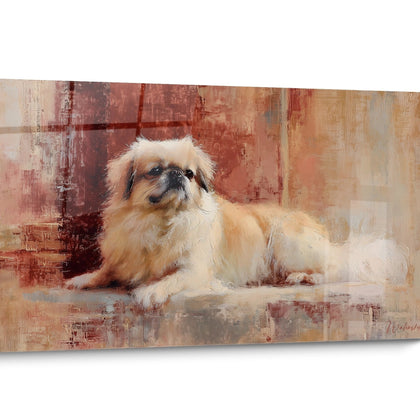
The Pekingese Dog Black and White painting sublimates the ancestral nobility of this imperial Chinese breed. Each artwork captures the majestic expression and distinguished character of the Pekingese in an elegant monochrome composition. These artistic creations reveal the timeless beauty of this legendary companion dog. Perfect for lovers of refined dog wall decoration , this collection transforms your interior into a gallery dedicated to sophisticated animal art.
 Dog Portrait Painting with Expressive Eyes in Black and White - Tender Gaze - Pekinese Edition233,90 €
 Canine Portrait Painting with Expressive Eyes in Black and White - Tender Gaze - Pekingese Edition233,90 €
 Pekingese Expressive Eyes Painting - Majestic Portrait - Pekingese Edition233,90 €
 Black and White Pekingese Portrait Painting Contemplative Gaze - Canine Tenderness - Pekingese Edition233,90 €
 Black and White Pekingese Dog Wall Art with Large Eyes - Striking Portrait - Pekingese Edition213,90 €
Explore further
In Pekingese Dog Painting Black and White


All about Pekingese Dog Painting Black and White
- Presentation Artwork Pekingese Black and White
- Monochrome Aesthetic
- Decorative Impact
- Selection and Placement
The Pekingese black and white painting embodies the timeless elegance of a Chinese imperial breed through a refined visual interpretation. This monochrome representation enhances the characteristic traits of the Pekingese: its abundant mane, its flattened muzzle, and its deep gaze that has captivated imperial courts for millennia. The absence of color allows for maximum concentration on the contrasting textures of its luxuriant fur and the natural expressiveness of this ancestral breed. Designed to adorn contemporary and minimalist spaces, this artistic format amplifies the majestic presence of the Pekingese while harmoniously integrating into sophisticated interiors that favor chromatic sobriety.
The Graphic Power of Black and White for the Pekingese
The black and white Pekingese painting reveals a sculptural dimension that color would mask. Shades of gray translate the exceptional depth of its layered fur, creating a striking visual relief that captures attention in modern entrances or living rooms with a clean design. This monochrome palette transforms each strand of hair into a graphic element, each shadow contrast into an artistic signature.
How does monochrome intensify the nobility of the Pekingese?
The elimination of color focuses the eye on the imperial proportions of this legendary lion-like dog. Light areas naturally illuminate its domed forehead and voluminous ruff, while deep shadows sculpt its distinctive muzzle and accentuate the penetrating depth of its gaze. This approach recalls the state portraits of the Ming and Qing dynasties, where the Pekingese reigned alongside emperors. Interior designers prefer this interpretation for spaces requiring a sophisticated animal presence without chromatic disruption.
The visual architecture of contrasting textures
The Pekingese's fur presents a unique textile complexity among dog breeds: long, silky guard hairs superimposed on a dense, wavy undercoat. The black and white rendering dissects these strata by creating zones of variable density that evoke ancient engraving techniques. Collectors of canine art particularly seek out these representations where grazing light traverses the silky fringes creating natural gradients impossible to reproduce in color. This virtual tactile dimension is amplified on monumental formats where every detail becomes perceptible from a distance, transforming a simple animal portrait into a contemplative work. To explore other chromatic interpretations of this breed, enthusiasts also discover the golden Pekingese painting which offers a luxurious alternative to neutral tones.
Why choose black and white to enhance the imperial heritage?
The black and white Pekingese immediately evokes archival photography from the last Chinese dynasties, a period when these sacred dogs were photographed alongside the imperial family. This historical resonance adds a narrative depth absent from colored representations. Spaces dedicated to animal art collections or contemporary cabinets of curiosities use this style to create visual dialogues with other heritage pieces, establishing an aesthetic coherence transcending eras.
Decorative Integration of Monochrome Pekingese in Modern Spaces
The black and white Pekingese painting asserts itself as a visual anchor in Scandinavian minimalist interiors, industrial lofts with exposed concrete walls, and renovated Haussmann apartments with a neutral palette. Its lack of color gives it exceptional versatility: it instantly adapts to seasonal changes in decoration without ever appearing out of place or dated.
Visual amplification strategies for large spaces
Generous architectural volumes require works proportional in scale. A black and white Pekingese painting of imposing dimensions creates a dramatic focal point in double-height rooms or on the blank walls of open spaces. The chromatic simplification prevents any visual saturation despite the monumental size, unlike multicolored representations that can overload the space. Decorators exploit this property to dress the main walls of prestigious waiting rooms or high-standing building halls, where the breed itself symbolizes exclusivity and refinement.
Can this painting be combined with colorful environments?
Paradoxically, the black and white Pekingese painting works remarkably well in interiors with pronounced chromatic accents. It acts as a visual neutralizer, offering a resting place for the eye that balances emerald green, petrol blue, or terracotta walls that are now popular. This ability to temper without disappearing explains its growing presence in interior designers' projects exploring bold palettes. The monochrome format also dialogues with raw materials: natural stone, untreated wood, patinated metals, creating particularly sought-after material-image agreements in neo-rustic or wabi-sabi interiors.
What emotional depth for a monochrome animal portrait?
Black and white paradoxically amplifies canine expressiveness by eliminating chromatic distractions. The gaze of the Pekingese, already naturally intense with its large dark eyes framed by light fur, acquires a hypnotic dimension in this stripped-down interpretation. Pekingese owners frequently choose this style to capture the contemplative and slightly haughty essence characteristic of the breed, creating an almost meditative presence in home offices or private libraries. This concentrated emotional charge transforms the painting into a daily visual companion rather than a simple decorative element.
Selection and Optimization of the Black and White Pekingese Painting
Acquiring a black and white Pekingese painting requires reflection on several criteria specific to this breed and its monochrome rendering. Anatomical fidelity distinguishes quality representations: proportions of the brachycephalic skull, precise ratio between body length and height, characteristic distribution of the fur forming the typical rectangular silhouette.
What anatomical criteria should be checked for a faithful portrait?
An authentic black and white Pekingese painting faithfully reproduces the breed standard: wide and flat forehead, short muzzle with truffle positioned between the eyes, heart-shaped ears drowned in abundant mane. Breed connoisseurs immediately spot approximations: legs too long, head insufficiently massive, absence of the characteristic ruff forming the leonine "mane". Generous formats allow you to appreciate these morphological subtleties that disappear in small dimensions. Breeders and dog show exhibitors prefer these precise representations to decorate their exhibition kennels or reception areas, transforming the work into an educational reference as well as an aesthetic one.
Optimization of location according to natural lighting
The black and white Pekingese painting reacts differently to light depending on the treatment of the blacks and the contrast dynamics. Interpretations favoring deep blacks gain impact in areas receiving sidelight that reveals micro-tonal variations. Conversely, versions predominantly exploiting mid-gray tones thrive in bright, indirect spaces where subtle nuances remain perceptible without glare. This particular light sensitivity in monochrome requires prior observation of the intended space at different times of the day, particularly in east-west facing rooms where the quality of light varies radically.
Decorative associations amplifying the imperial presence
The black and white Pekingese painting naturally dialogues with certain decorative elements: monochrome Chinese ceramics, Chinese ink calligraphy, photographs of Asian architecture, black lacquered furniture. This cultural coherence reinforces the breed's heritage dimension without falling into oriental pastiche. Contemporary designers also pair it with modern Scandinavian or brutalist pieces, creating fascinating temporal counterpoints where the former imperial prestige meets contemporary austerity. The imposing dimensions of the painting allow it to visually anchor these eclectic compositions without being dominated by other elements.
Is the black and white Pekingese painting suitable for lovers of other Chinese breeds?
Absolutely. This format is often the centerpiece of a collection dedicated to ancient Asian breeds, harmoniously dialoguing with representations of Shih Tzu, Chow Chow or Lhasa Apso. The monochrome coherence visually unifies these different canine morphologies while allowing appreciation of their respective specificities.
What size should be favored for maximum impact of the monochrome Pekingese?
Monumental formats fully reveal the complexity of the fur's texture and the intensity of the breed's characteristic gaze. A minimum dimension of 90 cm on the shortest side allows appreciation of the distinctive anatomical details while creating an authoritative presence consistent with the historical temperament of the Pekingese, guardian of imperial palaces.
How does black and white modify the perception of the Pekingese's temperament?
Elimination of color accentuates the breed's visual character traits: dignity, independence, quiet confidence. The monochrome rendering evokes period Victorian and Edwardian photographs, a period when the Pekingese conquered the West after the looting of the Summer Palace in 1860, reinforcing the historical and aristocratic dimension of this exceptional breed.


