


Pekingese Dog Pop Art Wall Art
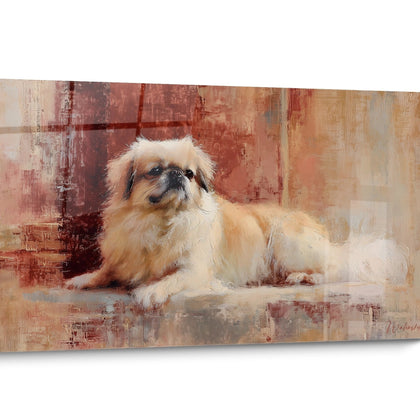
Our Pekingese Dog Painting Pop Art sublimates this majestic breed through vibrant colors and a bold artistic style. Each creation captures the natural elegance of the Pekingese with an explosive contemporary touch. Perfect for lovers of pop art dog decoration, this collection transforms your interior into a modern gallery. The bright hues and striking contrasts reveal the personality of this imperial dog. Ideal for giving or enhancing your walls with a contemporary animal art unique and trendy.
 Multicolor Canine Portrait Painting in Violet and Golden Tones - Chromatic Explosion - Pekingese Edition273,90 €
 Pekingese Painting with Golden Eyes on Multicolor Background - Color Explosion - Pekingese Edition273,90 €
 Rainbow-Colored Dog Painting Expressive Gaze - Colorful Portrait - Pekingese Edition273,90 €
 Pekingese Rainbow Light Painting - Chromatic Explosion - Pekingese Edition273,90 €


All about Pekingese Dog Pop Art Wall Art
- Presentation Chinese Pop Art Painting
- Pop Art Dog Decoration
- Visual Impact & Aesthetics
- Choice & Placement
Transform your interior with a Pekingese Pop Art painting that captures the essence of royalty and the expressiveness of this ancestral Chinese breed. The Pop Art aesthetic reveals the full personality of the Pekingese: its flattened muzzle, majestic mane, and penetrating gaze are magnified by saturated colors and striking contrasts. These large-format wall creations celebrate the imperial nobility of this dog-lion in a contemporary visual register that instantly energizes living spaces. The Pop Art technique amplifies the characteristic traits of this millennium-old breed, transforming each portrait into a vibrant chromatic manifesto.
Dog Wall Art that Transforms Contemporary Spaces
A Pekingese Pop Art painting asserts itself as an architectural element in modern interiors seeking a distinctive visual signature. The monumental dimensions of these wall creations make it possible to create a magnetic focal point that structures the living room, executive office, or private gallery. The imperial heritage of the Pekingese lends itself particularly well to Pop Art interpretation: this guardian breed of the Forbidden City possesses a natural bearing that electric colors and graphic blocks transcend into a true artistic statement.
Why does the Pekingese stand out as an ideal subject for Pop Art aesthetics?
The Pekingese's unique morphology offers exceptional graphic richness: its flattened face with prominent eyes, its dense fur forming a veritable golden halo, and its haughty expression create textural contrasts that the Pop Art approach sublimates. Each portrait transforms these anatomical characteristics into a play of geometric shapes and chromatic masses. Artists exploit the facial symmetry of the Pekingese to compose balanced works where fluorescent nuances dialogue with deep shadow areas, creating spectacular visual depth on large formats.
The emotional dimension amplified by Pop Art codes
The characteristic facial expression of the Pekingese – a mixture of aristocratic arrogance and tenderness – takes on an almost human dimension in Pop Art representations. Digital screen printing techniques multiply tonal variations around the penetrating gaze of this breed, creating compositions where several emotional states are superimposed. This approach transforms the Pekingese Pop Art painting into a true psychological portrait, captivating for collectors sensitive to the intersection of animal art and exploration of canine personality. Acidic color variations amplify the intensity of the gaze without ever betraying the authenticity of the expression.
Complementary collections for lovers of golden aesthetics
Lovers of luxurious representations of the Pekingese will also appreciate the artistic interpretations of the Pekingese in golden tones that celebrate the imperial heritage of this revered breed. While the golden register directly evokes the dynastic palaces and Chinese solar symbolism, the contemporary Pop Art approach contemporizes this heritage by infusing it with urban and transgressive energy. Both aesthetics nevertheless share this desire to magnify the natural bearing of the Pekingese through assumed visual choices and imposing formats that command attention.
Chromatic Dynamics and Visual Architecture of the Dog Portrait
The effectiveness of a Pekingese Pop Art painting relies on the chromatic strategy used to reveal the complexity of this double-natured breed: both imperial toy and courageous guardian. Neon palettes – electric fuchsia, saturated cyan, cadmium yellow, apple green – create optical vibrations that draw the eye through spacious rooms. This color saturation transforms the animal portrait into an immersive experience where each nuance of the Pekingese's coat becomes a pretext for visual exploration. XXL formats exploit this richness by deploying each color area on surfaces large enough to reveal the subtleties of gradations and transitions.
How do contrasts structure the monumental composition?
Radical tonal oppositions form the compositional backbone of the large-format Pekingese Pop Art painting. The contrast between the light fur of the face and the deep shadow areas around the eyes generates a visual tension that the artist amplifies with bold color choices. An intense turquoise background makes a saturated orange mane vibrate, while the black muzzle stands out against magenta blocks. This orchestration of simultaneous contrasts creates a optical depth that compensates for the characteristic flattening of Pop Art aesthetics, giving the portrait a paradoxical three-dimensional presence.
The visual texture in large-format representations
The imposing dimensions allow exploration of the characteristic texture of the Pekingese's fur through innovative graphic techniques. Some compositions integrate repetitive patterns evoking long hairs – parallel lines, directional hatching, screen printing dots – which create a visual vibration from a distance while revealing their geometric structure up close. This duality of perception transforms the painting into an evolving work depending on the distance of observation. Dense fur areas become experimental grounds for artists who overlay several translucent color layers on them, creating moiré and iridescent effects impossible on smaller formats.
The balance between stylization and morphological recognition
The major artistic challenge is to push Pop Art stylization to its expressive limits while preserving the immediate identifiability of the Pekingese. The characteristic proportions – domed skull, ultra-short muzzle, globular eyes, drooping ears disappearing into the mane – must remain legible despite chromatic and geometric distortions. Successful creations find this point of balance where the viewer instantly recognizes the breed while discovering a renewed, almost hallucinatory, vision of its appearance. This tension between figuration and abstraction makes the Pekingese Pop Art painting a renewable object of contemplation that resists visual fatigue.
Strategic Selection for Discerning Collectors and Decorators
Acquiring a Pekingese Pop Art painting requires careful consideration of spatial integration and overall aesthetic coherence. These monumental works function as true visual anchors that redefine the atmosphere of an entire room. In an industrial loft with raw walls, the colorimetric portrait of the Pekingese creates a striking contrast that softens the architectural severity while asserting an assumed aesthetic choice. Conversely, in a minimalist Scandinavian interior, the chromatic explosion becomes the only decorative element, concentrating all the visual energy of the space on this pop canine celebration.
What criteria should be prioritized when selecting a composition?
The chromatic palette is the first decision-making criterion: some compositions favour analogous harmonies (variations of pinks, purples and oranges) creating a enveloping atmosphere, while others exploit complementary colours (blue/orange, red/green) to maximise the visual impact. The gaze direction of the Pekingese also influences the spatial dynamics: a profile portrait generates a lateral movement that guides the eye to other decorative elements, while a frontal gaze creates a direct confrontation with the viewer, intensifying the presence of the artwork. Lovers of balanced compositions will prefer symmetrical representations that exploit the facial morphology of the Pekingese, while bold collectors will opt for off-centre framing creating a compositional tension.
Spatial positioning to maximize decorative effectiveness
A large-scale Pekingese Pop Art painting requires sufficient visual distance to appreciate the overall composition. In open spaces, it works ideally as a visual separator between functional zones – defining the living room space from the dining area, for example. Installation facing the main entrance transforms the work into a welcoming element that immediately defines the character of the home. For collectors with generous ceiling heights, a slightly elevated position amplifies the majestic dimension of the Pekingese, recalling its status as an imperial dog contemplating its domains from the palace terraces. Indirect lateral lighting reveals textural subtleties and creates variable saturation zones depending on the time of day.
Decorative associations to amplify the aesthetic impact
The Pekingese Pop Art painting dialogues particularly well with furniture with clean lines that does not compete visually: monochromatic sofas, geometric coffee tables, minimalist sculptural luminaires. Reflective materials – lacquered surfaces, mirrors, polished metals – multiply chromatic reflections and amplify the luminous presence of the work. Informed collectors create subtle chromatic echoes by selecting cushions, rugs or decorative objects that pick up one or two colors from the painting without ever seeking total matching that would attenuate the impact. Association with sculptural plants – monstera, ficus lyrata, strelitzia – brings an organic dimension that counterbalances the Pop Art geometrization while maintaining a contemporary aesthetic coherence.
Is a Pekingese Pop Art painting suitable for classic interiors?
Absolutely, the contrast between contemporary Pop Art aesthetics and classic decor creates a refreshing decorative tension. In a Haussmannian interior with ornamental moldings, the colorimetric portrait of the Pekingese injects a transgressive energy that modernizes without denaturing. This juxtaposition of eras and sensibilities is a testament to a cultivated decorative approach, avoiding the pitfall of historical pastiche.
How to maintain the chromatic intensity of a Pekingese Pop Art painting over the years?
Direct exposure to UV rays is the main threat to the permanence of saturated colors. Positioning avoiding prolonged direct sunlight, combined with the use of UV films on glazing, preserves the brilliance of fluorescent shades. Contemporary printing techniques on treated supports nevertheless offer remarkable color resistance, guaranteeing several decades of intact color vibration under normal domestic exposure conditions.
Does the Pekingese Pop Art painting integrate into a diversified animal art collection?
This artwork works remarkably well as a contrasting centerpiece within a collection featuring naturalist or photographic representations of other breeds. The radically stylized Pop Art approach creates a stimulating dialogue with more conventional aesthetics, revealing the biases of each style by contrast. For thematic collectors focusing on Asian breeds or historical companion dogs, the Pop Art Pekingese offers a contemporary interpretation that enhances the entire collection.


