


Abstract Neural Art
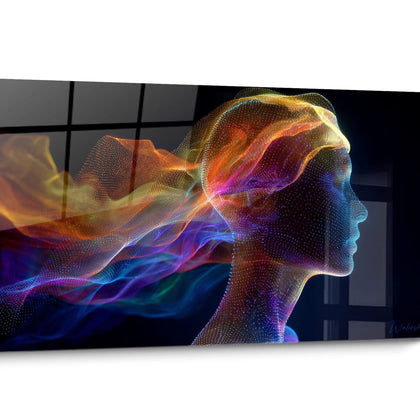
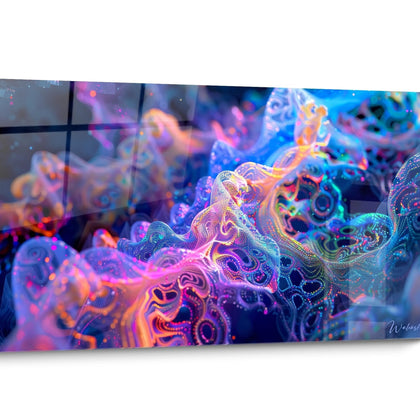
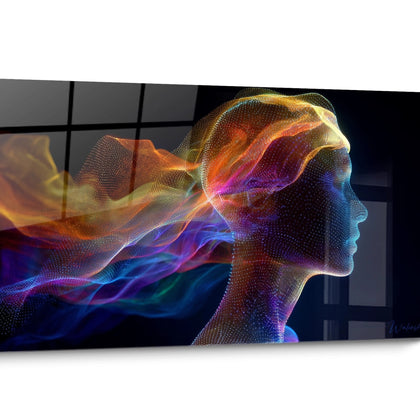
The Abstract Neural Painting celebrates the fusion of contemporary art and artificial intelligence. This exclusive collection explores organic motifs inspired by neural networks, where intertwined lines and luminous nodes evoke the complexity of the human brain. Each creation reveals a captivating futuristic universe, blending digital abstraction and scientific aesthetics. Perfect for modern spaces, these works transform your interior into a technological art gallery and bring a unique intellectual dimension to your decoration.
 Iridescent Neural Spiral Panel - Cosmic Connections - Neural Edition273,90 €
 Abstract Neural Network Panel - Golden Synaptic Connections - Neural Edition273,90 €
 Synaptic Connections Panel - Neural Fusion - Neural Edition273,90 €
 Synaptic Connections Wall Art - Abstract Neuronal Explosion - Neuronal Edition273,90 €
 Abstract Neural Network Painting - Synaptic Connections - Neuronal Edition242,90 €
 Neural Network Painting - Abstract Synaptic Connections - Neuronal Edition273,90 €
 Cosmic Synaptic Connections Painting - Abstract Neuronal Fusion - Neural Edition228,90 €
 Abstract Neural Synapse Wall Art - Colorful Cellular Fusion - Neuronal Edition228,90 €
Explore further
In Abstract Neural Art

All about Abstract Neural Art
- Presentation Painting Neural Abstract
- Neural abstract architecture
- Symbolism and visual cognition
- Contemporary spatial integration
An neural painting abstract represents the fascinating convergence between contemporary neuroscience and conceptual artistic expression. These large-format wall creations visually translate the complexity of synaptic networks, brain connections, and information flows that characterize neuronal activity. Unlike classic anatomical representations, these works prioritize abstraction to capture the dynamic and non-linear essence of cognitive processes. Designed for demanding professional spaces such as neuroscience research centers, neuropsychology clinics, artificial intelligence laboratories, and specialized medical environments, these monumental wall pieces create an immediate intellectual resonance with visitors and collaborators in these cutting-edge sectors.
Visual architecture of synaptic networks in monumental format
Acquiring an neural painting abstract of large dimension radically transforms the spatial perception of environments dedicated to cognitive neuroscience. These monumental compositions materialize complex neural architectures through organic ramifications, interconnected nodes, and directional flows that instantly evoke synaptic transmission systems. Imposing formats, often exceeding 120x80 cm, allow for total visual immersion in these abstract reticular structures.
Why do neuroscience laboratories prefer these abstract representations?
Research spaces specializing in computational neurobiology seek visualizations that transcend simple anatomical illustration. A large-format abstract neural painting offers a visual metaphor for machine learning mechanisms, neural networks, and connectionist models. This conceptual approach particularly resonates with teams working on brain-machine interfaces, where abstraction better translates algorithmic complexity than conventional diagrams.
Chromatic dynamics inspired by functional brain imaging
The palettes used in these works are directly inspired by the colorimetric codes of functional magnetic resonance imaging and neural activation maps. Thermal gradients ranging from deep blues to electric oranges visually reproduce areas of high cerebral metabolic activity. Indeed, a neural blue painting specifically exploits this color associated with states of cerebral rest and memory consolidation phases.
Non-Euclidean geometries and neural topologies
The compositions adopt topological structures reminiscent of connectivity graphs analyzed in structural neuroimaging. Intersections, bifurcations, and visual convergences materialize critical neuronal hubs identified in connectomic studies. This non-linear organic geometry creates a visual tension particularly suited to open-plan offices of technology companies specializing in artificial intelligence and deep learning, where these neuroscientific references are an integral part of the company culture.
Cognitive symbolism and intellectual resonance of synaptic motifs
Beyond aesthetics, a painting of abstract neurons functions as an environmental cognitive stimulation device in demanding professional spaces. The recurring patterns of dendritic ramifications and axonal arborizations unconsciously activate mental associations linked to complexity, interconnection, and emergence – core concepts in contemporary cognitive sciences.
How do these artworks influence the atmosphere of neuropsychology centers?
Cabinets specializing in neuropsychological assessment and cognitive rehabilitation integrate these wall pieces to create an environment consistent with their expertise. The presence of a monumental abstract neuronal painting in the waiting room or consultation space instantly establishes the practitioner's scientific legitimacy while partially demystifying brain processes for patients. This visual mediation facilitates therapeutic conversations about executive functions, neuronal plasticity, and attentional mechanisms.
Visual metaphors of plasticity and learning
Dynamic compositions, with their multiple connections and alternative pathways, perfectly symbolize the concept of neuroplasticity – the brain's ability to continuously reorganize itself. For higher education institutions in neuroscience, cognitive psychology, or computational sciences, these wall artworks concretely illustrate the theories taught. Students and researchers evolve daily in a visual environment that reinforces concepts of adaptive networks, synaptic optimization, and parallel information transmission.
Visual encoding of information and semantic density
Unlike figurative representations, abstract neuronal imagery allows for maximum information density without cognitive overload. Each visual element – whether it be nodal points, curved trajectories, or zones of chromatic confluence – can be interpreted at multiple conceptual levels simultaneously. This visual polysemy corresponds exactly to the parallel and distributed processing modes characterizing actual brain function, creating a conceptual coherence between the artistic medium and its scientific reference.
Acquisition for neurofeedback consultation spaces
Practitioners specializing in neurofeedback and EEG biofeedback seek decorative elements aligned with their therapeutic protocols. A large-format abstract neuronal painting immediately establishes the conceptual framework of the intervention – visualizing and modulating one's own brain activity. This environmental consistency reinforces patient therapeutic engagement and facilitates understanding of neuronal self-regulation mechanisms.
Architectural integration into technology innovation ecosystems
The installation of a painting of abstract neurons responds to specific imperatives in high-technology professional environments. Startups specializing in machine learning, pharmaceutical R&D departments working on neurodegenerative pathologies, and neurotechnology incubators seek visual elements that materialize their area of expertise while creating a distinctive spatial identity.
Visual zoning in collaborative research spaces
Within interdisciplinary laboratories bringing together neuroscientists, AI engineers, and interface designers, these large-format wall artworks serve as subtle territorial markers. Strategically positioned in brainstorming areas or client presentation spaces, they instantly communicate the organization’s technical specialization. The imposing dimensions – often 150x100 cm or larger – ensure immediate visibility upon entering the space, creating a lasting memorable impact on visitors and potential partners.
What spatial configuration optimizes the impact of an abstract neuronal painting?
Unlike conventional decorative artworks, these pieces require positioning that takes into account prolonged lines of sight and multiple viewing angles. Main circulation corridors, walls facing elevators, or back walls of auditoriums are privileged locations. The visual complexity of the abstract neuronal patterns rewards repeated observation – each passage reveals new connections, trajectories, or configurations, maintaining visual interest over the long term.
Visual dialogue with data visualization screens
Contemporary technological environments massively integrate screens displaying metrics, dashboards, and real-time data visualizations. An abstract neuronal painting creates a fascinating analog counterpoint to these digital informational flows. This juxtaposition between static organic representation and algorithmic dynamic displays generates a productive aesthetic tension, recalling the duality between biological substrate and symbolic computation in embodied cognition theories.
Investment for cognitive preventive medicine clinics
Medical centers specializing in the prevention of cognitive decline and brain performance optimization position these artworks as elements of their visual communication strategy. The presence of a monumental abstract neuronal painting signals a rigorous scientific approach while humanizing the medical environment through artistic dimension. This science-art duality exactly corresponds to the positioning of these establishments seeking to differentiate themselves from conventional medical structures.
Is an abstract neuronal painting suitable for private residential spaces?
Although primarily intended for specialized professional environments, these artworks find their place in the interiors of neuroscience enthusiasts, researchers wishing to extend their professional universe, or collectors of scientific conceptual art. Personal libraries, home offices, or meditation spaces are appropriate residential contexts for these intellectually stimulating pieces.
What is the visual durability of an abstract neuronal painting in the face of scientific advancements?
The abstract approach guarantees superior aesthetic durability to precise anatomical illustrations that may become obsolete with scientific advances. By avoiding literal representation in favor of conceptual evocation, these artworks retain their relevance even when neuroscientific models evolve, functioning more as timeless visual metaphors than as dated didactic schemes.
How does an abstract neuronal painting integrate into a spatial neuromarketing strategy?
Companies applying neuromarketing principles to their space design recognize that the visual environment subconsciously influences cognitive and emotional states. A monumental abstract neuronal artwork, with its complex organic patterns and implicit scientific references, simultaneously activates visual processing circuits, pattern recognition, and conceptual association, creating an optimal state of attentive engagement for visitors in these cutting-edge professional spaces.
Further reading
Our articles on this topic
- Why Do Some Abstract Paintings Resonate With Us More Than Others?
- The Influence of Artificial Intelligence on Contemporary Abstract Creation
- Figurative Art vs Abstract, Different Neurological Reactions in the Brain
- How Does Abstract Art Challenge Our Perception of Reality?
- Neuroscience and the Perception of Abstraction: Brain Mechanisms
L'art qui suscite l'envie
Maison belge d'art mural grand format
14 jourspour changer d'avis*
Protection Walenskyincluse
Fabriquéen Italie
FormatXXL
Kit de fixationtoujours fourni
* Hors tableaux personnalisés et tailles personnalisées


