


Blue Neural Artwork
The Neural Painting Blue captures the fascinating essence of neural networks in an enchanting azure palette. This collection of neural digital art transforms the complexity of synaptic connections into hypnotic visual compositions. Each work reveals the mysterious architecture of artificial intelligence through blue neural network motifs where science and aesthetics meet. Perfect for modern spaces, this unique style brings a technological and contemplative dimension.
 Luminescent Neuron Canvas - Synaptic Connections - Neuronal Edition273,90 €
 Abstract Neural Network Panel - Golden Synaptic Connections - Neural Edition273,90 €
 Neuron Synaptic Panel - Purple Electrical Connections - Neural Edition273,90 €
 Synaptic Connections Panel - Neural Fusion - Neural Edition273,90 €
 Luminous Neuron Painting - Electrical Synapse - Neuronal Edition No. 2242,90 €
 Synaptic Connections Wall Art - Abstract Neuronal Explosion - Neuronal Edition273,90 €
 Abstract Neural Network Painting - Synaptic Connections - Neuronal Edition242,90 €
 Neural Network Painting - Abstract Synaptic Connections - Neuronal Edition273,90 €
 Luminous Neuron Painting - Electric Synapse - Neuronal Edition228,90 €
Explore further
In Blue Neural Artwork
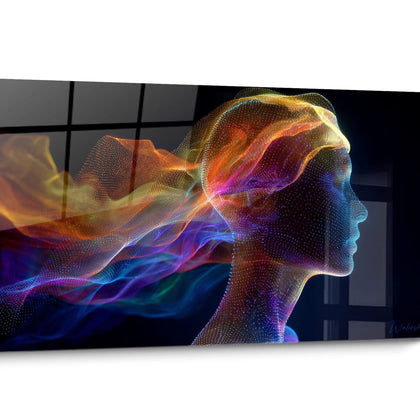


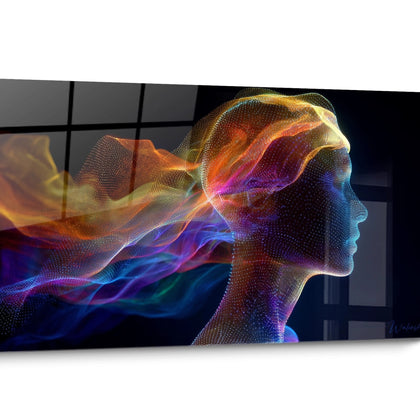
All about Blue Neural Artwork
- Presentation Neural Painting Blue
- Visual decoding of brain networks
- Symbolism of neural azure
- Cognitive and spatial impact
A neural painting blue constitutes a monumental artistic representation of synaptic networks and brain circuits, enhanced by a chromatic palette dominated by shades of azure, cobalt and cyan. This contemporary neuroscientific aesthetic transforms the complexity of neuronal connections into a fascinating visual mapping, where each branch evokes the billions of interconnections that make up our brain architecture. These large-format creations capture the very essence of biological intelligence through luminous arborizations and synaptic patterns that seem to pulse with electrochemical energy.
The predominant use of blue tones is never arbitrary in these neural representations. This chromaticism directly refers to scientific visualizations of brain electrical signals, functional magnetic resonance imaging and neural activity mapping used in cognitive neuroscience. A giant neural painting blue thus transcends simple wall decoration to become a visual manifesto celebrating human consciousness, particularly suitable for professional environments requiring mental concentration and intellectual stimulation.
Visual architecture of synaptic circuits in azure hues
The blue neural paintings are distinguished by their ability to materialize the invisible: the mechanisms of information transmission between neurons. Unlike classic anatomical representations, these monumental works favor a dynamic approach where dendrites, axons and synapses form interconnected luminous constellations. Chromatic gradients ranging from electric blue to deep cyan faithfully reproduce the differences in action potential observed during neuronal activity, creating an authentic scientific dimension.
What structural characteristics define an effective blue neural painting?
The visual effectiveness of a blue neural painting rests on three architectural pillars: the density of branches evoking the complexity of the cerebral cortex, the chromatic variation reproducing differential activation zones, and the depth of field suggesting the three-dimensionality of neural networks. Monumental formats accentuate this immersion by allowing the eye to follow the synaptic pathways over several meters, mimicking the experience of researchers facing neuroimaging visualizations. This approach resonates particularly in abstract neural paintings where the conceptual dimension amplifies the visual impact.
Differentiation of synaptic patterns according to the brain areas represented
The most sophisticated creations integrate morphological variations corresponding to the different neural architectures: dense and intertwined networks evoke the prefrontal cortex involved in decision-making, while more linear structures recall sensory pathways. This anatomical differentiation transforms each blue neural painting into a specific cognitive mapping, allowing buyers to choose a representation corresponding to the brain functions they wish to symbolically value in their professional or private space.
Printing technologies reproducing synaptic luminescence
Recreating the bioluminescence effects characteristic of neuronal activity requires sophisticated printing processes. High-definition giclée printing techniques capture subtle transitions between areas of intense activation (bright blue) and resting regions (darker tones). Some productions incorporate reflective pigments reproducing the fluorescence effect of markers used in optogenetics, this neuroscientific discipline manipulating brain activity with light.
Psychological and symbolic dimension of azure brain tones
The dominant use of blue in neuronal representations is never arbitrary and is rooted in documented psychophysiological foundations. This particular chromaticity specifically activates attentional mechanisms and promotes sustained concentration states, thus reproducing at a metacognitive level the optimal conditions for intellectual activity. A blue neuronal painting of a large dimension creates a visual environment conducive to higher cognitive processes, particularly sought after in spaces dedicated to strategic thinking or technological innovation.
How do azure shades influence the cognitive perception of space?
Research in environmental psychology demonstrates that cool blue tones increase the perception of volumetric space while inducing a sensation of infinite depth. Applied to monumental neuronal representations, this chromatic effect amplifies the impression of immersion in the microscopic universe of the brain. Variations between deep navy blue and bright cyan generate a visual dynamic evoking phases of neuronal activity and rest, creating a visual rhythm synchronized with the natural attentional cycles observed in cognitive neuroscience.
Cultural resonance of brain imagery in contemporary aesthetics
The enthusiasm for blue neuronal paintings reflects a growing societal fascination with neuroscience and the understanding of thought mechanisms. These works visually embody the era of neuroculture where consciousness, artificial intelligence, and brain mapping converge. For professionals in the technological, scientific, or medical sectors, acquiring such a piece constitutes an identity affirmation valuing scientific rationality and cognitive complexity. This symbolic dimension transforms the work into a cultural marker of belonging to an intellectual community.
Chromatic associations optimizing blue neuronal impact
Integrating a blue neuronal painting into an architectural environment requires reflection on peripheral chromatic harmonies. Associations with neutral tones (anthracite gray, pure white) accentuate the visual presence of azure ramifications and reproduce the aesthetics of neuroscience laboratories. The occasional addition of orange or yellow accents (complementary colors) can evoke the activity of excitatory neurotransmitters, creating a dynamic visual tension. These strategic chromatic choices maximize visual impact while preserving the desired atmosphere of intellectual concentration.
Spatial optimization and environmental applications of large-scale neuronal murals
The installation of a blue neuronal painting of monumental dimensions radically transforms the spatial dynamics of a professional or residential environment. These large-format artworks excel particularly in contemporary architectural configurations characterized by high ceilings and open volumes. The inherent verticality of the dendritic structures naturally harmonizes with double-height spaces, while the horizontality of the synaptic networks suits the extended accent walls of open spaces and strategic meeting rooms.
In what professional environments does a blue neuronal painting maximize its impact?
Sectors valuing cognitive innovation constitute excellence contexts for these representations: neurotechnology research laboratories, incubators for artificial intelligence startups, medical training centers, coworking spaces focused on cognitive science. In these environments, the blue neuronal painting acts as a visual anchor reinforcing collective professional identity. Cognitive psychology and neuropsychology practices also find a visual support facilitating communication with patients on brain mechanisms, transforming the artwork into a sophisticated educational tool.
Strategies for integration into contemporary residential architectures
Beyond professional applications, private residences integrating spaces dedicated to intellectual work (personal libraries, study offices, meditation rooms) particularly benefit from these monumental installations. The optimal positioning favors walls perpendicular to natural light sources, allowing the blue chromatic variations to play with the circadian light evolution. This dynamic interaction between natural light and neuronal representation creates a visually evolving environment stimulating natural cognitive rhythms throughout the day.
Technical considerations for very large format installations
Blue neuronal paintings exceeding two meters in dimension require reinforced fixing systems adapted to contemporary wall supports. Cellular concrete structures or modular partitions require specific load distribution systems. Perfect support planarity becomes critical for monumental formats to avoid any visual distortion of the neuronal ramifications. Anticipating these technical constraints from the selection phase guarantees a permanent installation preserving the visual integrity of the artwork and its optimal spatial impact.
Is a blue neuronal painting suitable for spaces open to the public?
Absolutely, particularly in reception halls of scientific, medical or technological institutions where it instantly communicates values of innovation and cognitive excellence. Waiting rooms of specialized neurology practices also benefit from this soothing and intellectually stimulating effect, reducing preoperative anxiety while valuing the practitioner's expertise.
What durability to expect from a large blue neuronal painting?
Productions using archival pigments and anti-UV treated supports retain their chromatic intensity for several decades, even in indirect exposure to natural light. Monumental formats economically justify the use of premium materials guaranteeing this durability, transforming the acquisition into a sustainable heritage investment.
How does a blue neuronal painting evolve with design trends?
The scientific grounding of the neural representations preserves them from fleeting stylistic fluctuations. Their relevance grows in parallel with advances in neuroscience and the cultural democratization of this knowledge, guaranteeing increasing symbolic value rather than aesthetic obsolescence, unlike purely decorative motifs without conceptual foundations.
L'art qui suscite l'envie
Maison belge d'art mural grand format
14 jourspour changer d'avis*
Protection Walenskyincluse
Fabriquéen Italie
FormatXXL
Kit de fixationtoujours fourni
* Hors tableaux personnalisés et tailles personnalisées


