




How Does Abstract Art Challenge Our Perception of Reality?
October 11, 2025 · 3 min read · by Walensky
Abstract art quietly revolutionizes our brains. Unlike figurative works that engage our neural circuits for immediate recognition, abstract creations force our visual system to completely reconstruct its understanding of the world. This profound transformation alters our relationship with reality itself, creating new perceptual patterns that transcend traditional artistic experience.
The neurobiological mechanisms of abstract art on perception
Neuroscience reveals that abstract art activates different brain areas than those stimulated by figurative art. Our brain must work differently than when confronted with a figurative image. The prefrontal cortex is massively activated to interpret these new forms, creating new neural connections in regions usually less solicited.
This neuroplasticity explains why our appreciation evolves with repeated exposure to abstract works. The more we are exposed to abstract art, the more our brain develops neural connections to grasp and appreciate these works. This adaptability reveals the fundamental malleability of our perceptual processes, demonstrating that our vision of the world is not fixed.
Recent studies demonstrate that abstract art forces the cognitive activity of the observer, more than figurative art. This intense stimulation generates a reorganization of perceptual circuits, permanently modifying our way of processing visual information. The brain thus develops an enhanced ability to abstraction which transcends the artistic domain.
Abstract art transforms the mental construction of reality
The psychological impact of abstraction goes beyond simple aesthetic contemplation to reach the foundations of our cognition. Abstract art is part of a greater psychological distance and takes us to unexplored inner territories. This psychological distance modifies our relationship with time and space, shifting us from concrete thinking to conceptual thinking.
Research from the National Academy of Sciences in Washington reveals that exposure to abstract art directly influences our cognitive processes. It would help to "draw on our feelings by distancing our cognitive functions from concrete details, to take them towards the abstract". Our brain learns to deconstruct and then rebuild reality according to new paradigms, developing increased mental flexibility.
This cognitive metamorphosis extends beyond the artistic framework, modifying our overall perception of the surrounding world. Among abstract paintings contemporary, some works create particularly pronounced perceptual distortions. These creations generate modified cognitive states where the boundary between real and imaginary fades.

Our favourite
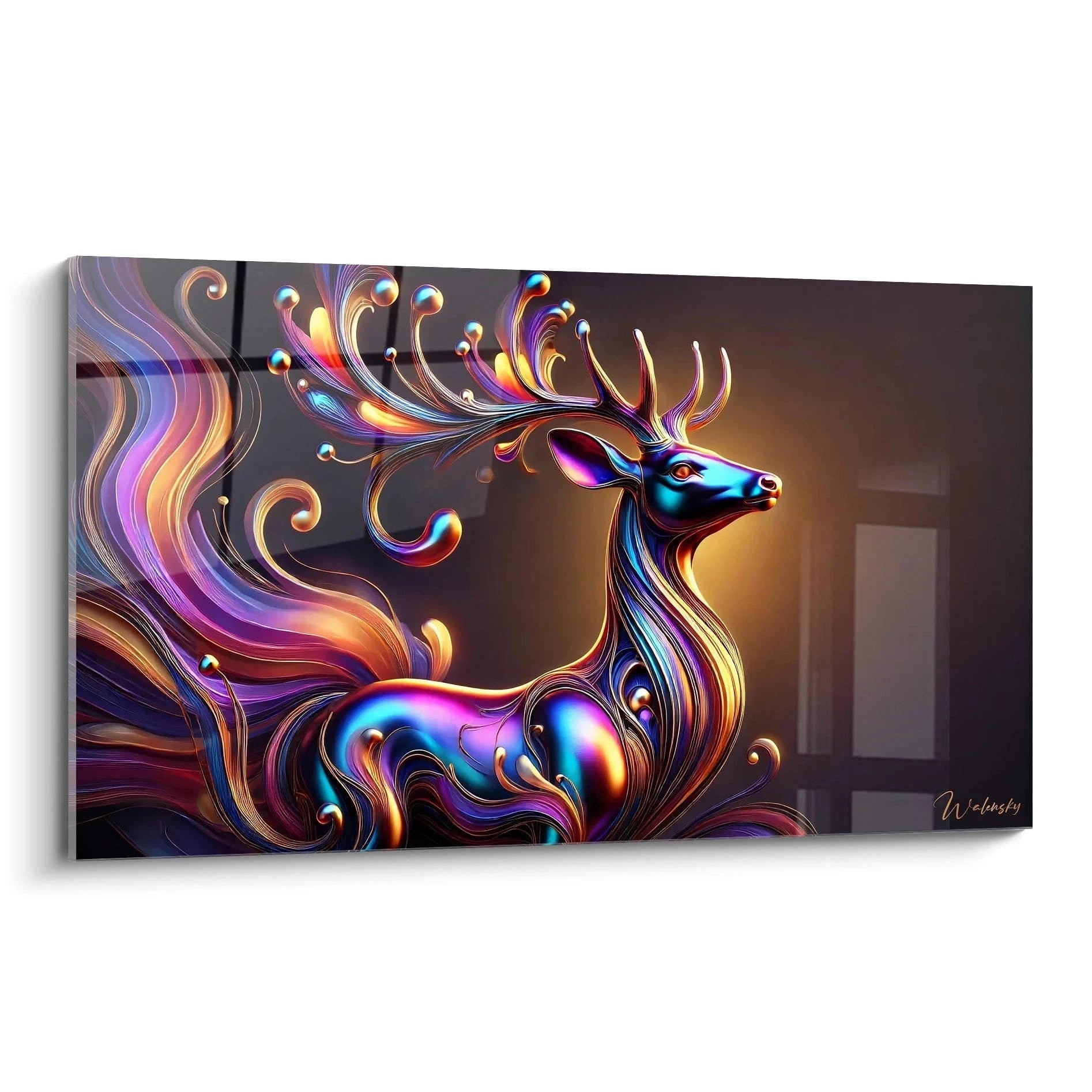
Golden Swirls Painting - Blue and Gold Symphony - Modern Abstract Edition
233,90€
Discover this artworkAbstraction techniques that disrupt visual perception
Mondrian's geometric abstraction and Kandinsky's expressionism mobilize specific visual strategies to destabilize our perceptual references. The pure geometric forms short-circuit our natural recognition system, forcing the brain to create new mental categories.
- Asymmetrical compositions force a spatial restructuring of our vision
- Saturated colors activate unexpected emotional circuits
- Abstract textures generate virtual tactile sensations
- Visual rhythms modify our perception of time
- Chromatic contrasts create lasting perceptual illusions
These techniques exploit the flaws in our perceptual system to reveal the arbitrariness of our mental constructions of reality. Each work thus becomes a laboratory for cognitive experimentation, questioning our certainties about the very nature of perception.
Abstract art optimizes cognitive processes of perception
Perceptual training induced by abstract art significantly improves our overall cognitive abilities. The brain rejoices when it manages to "solve" this problem posed by abstraction. This mental gymnastics strengthens our cognitive flexibility and ability to adapt to the unknown, developing a sophisticated visual intelligence.
The benefits extend to areas of creativity, problem-solving, and innovation. Abstract art develops divergent thinking that allows us to consider unprecedented solutions to everyday challenges. This cognitive optimization is one of the most lasting effects of regular exposure to abstraction.
Neuroaesthetics studies show that this regular exposure restructures neural networks responsible for creativity, increasing our ability to establish unexpected connections between seemingly disparate concepts.
Perceptual plasticity in the face of contemporary abstract art
Digital art and new technologies amplify the transformative effects of abstraction. Immersive installations create totally artificial perceptual environments that push the limits of our sensory adaptability. This technological evolution opens up unprecedented horizons for research on human perceptual plasticity.
Contemporary abstract art now integrates interactive elements that personalize each viewer's perceptual experience. This approach revolutionizes our understanding of subjectivity and the individual construction of reality. Each work becomes a unique mirror of our intimate cognitive processes, revealing the secret mechanisms of our perception of the world.
This perceptual revolution continues to amplify, promising new upheavals in our understanding of reality and our place within it.
— Our selection


Explore our collections


