


Abstract African Dance Wall Art
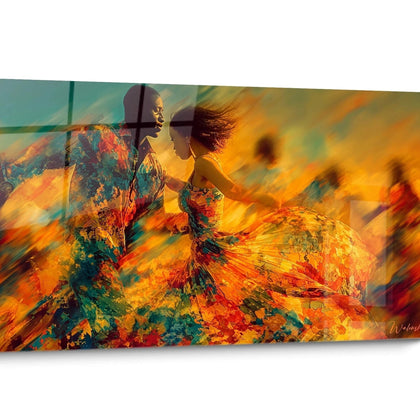
The African Dance Abstract painting captures the vibrant essence of African traditions through modern and expressive compositions. This unique collection celebrates the movement, spirituality, and energy of traditional African dances reinterpreted in a contemporary artistic language. Each work evokes the cultural richness of the continent through organic forms, warm colors, and dynamic compositions. Perfect for enhancing your interior, our abstract African wall art creates an authentic atmosphere.
 Modern African Dancer Artwork - Tribal Elegance - African Dance Edition273,90 €
 African Dancers Painting - Celebration in Motion - African Dance Edition273,90 €
 African Dancers Painting - Tribal Celebration - African Dance Edition228,90 €
 African Dancer Telluric Energy Painting - African Dance Edition273,90 €
 Dancers Community Joy Painting - African Dance Edition273,90 €
 Dancers Rhythmic Beats Wall Art - African Dance Edition273,90 €
 Dancers Liberating Movement Wall Art - African Dance Edition273,90 €
 Dancers Painting Sahelian Cadence - African Dance Edition228,90 €
 Dancer Painting Ngoma Powerful - African Dance Edition228,90 €
 Dancer Painting Ancestral Passage - African Dance Edition228,90 €
 Woman Beating the Sacred Djembe Artwork - African Dance Edition228,90 €
Explore further
In Abstract African Dance Wall Art



All about Abstract African Dance Wall Art
- African Dance Abstract Wall Art Presentation
- Abstract African Dance Mural Art
- Ethnic Abstract Dance Wall Decor
- Abstract African Dancers Canvas Art
The abstract African dance painting represents a captivating artistic fusion between the traditional corporeal expression of the African continent and the visual codes of contemporary art. This category of wall decoration transforms ancestral choreographic movements into geometric compositions, fluid form play, and chromatic explosions that transcend classical figurative representation. Each creation deconstructs dancer silhouettes to extract pure emotional essence, visually translating the rhythmic power and spiritual energy of African ceremonial dances. These large-scale works capture the vibrant soul of danced rituals while adopting a resolutely modern plastic language, ideal for interiors seeking deep cultural connection without sacrificing contemporary refined aesthetics.
Visual Transcription of Ritual Movement into Abstract Forms
The abstract African dance painting operates a fascinating plastic translation of ceremonial gestures into contemporary graphic language. Unlike traditional figurative representations, this approach deconstructs ritual postures into geometric fragments, dynamic curves, and colored fields that evoke kinetic energy without describing it literally. Artists specialized in this aesthetic capture the amplitude of raised arms during celebration dances, the torso twisting in trance movements, and the striking of feet against the earth using only lines of force, chromatic spirals, and overlapping planes.
How does abstraction magnify the emotional intensity of African dances?
Abstraction allows concentration on vibratory essence rather than anatomical details. In a large-scale abstract African dance painting, ochre, burnt earth, and saffron colors evoke dusty village soils, while touches of purple and indigo recall ceremonial adornments. Spiraled forms translate the hypnotic rotations of possession dances, and graphic splashes reproduce the energetic burst of drum strikes. This visual deconstruction paradoxically amplifies emotional impact by engaging the viewer's imagination more deeply.
Balance between cultural reference and aesthetic universality
These mural creations skillfully navigate between specific cultural anchoring and universal visual accessibility. A large-format abstract African dance painting integrates motifs inspired by kente cloth or traditional scarifications, transformed into contemporary graphic textures. Suggested rather than drawn silhouettes allow each viewer to project their own interpretation while preserving African energetic signature. For multicultural professional spaces or cosmopolitan residences, this approach offers sophisticated cultural celebration without folklorization. Collectors particularly appreciate this capacity to honor ancestral choreographic traditions while speaking the visual language of international contemporary art, creating aesthetic bridges between heritage and modernity.
Which spaces particularly showcase these abstract compositions?
Large entry halls, main living room walls in open spaces, and meditation areas particularly benefit from these imposing works. Their visual dynamism creates a magnetic focal point while maintaining a certain serenity through abstract forms. Cultural professionals' offices, holistic wellness centers, and spaces dedicated to live arts find particular resonance in these paintings with their activities, establishing an inspiring atmosphere that dialogues with values of movement, corporeal expression, and spiritual connection.
Symbolic Color Palette of Danced Rituals
In an abstract African dance painting, color doesn't merely decorate: it embodies the spiritual and emotional dimensions of danced ceremonies. Sienna and yellow ochre tones evoke the telluric connection of bare feet striking the soil, while deep reds and oranges reproduce the intensity of ritual fire around which dancers gravitate. Touches of pure white symbolize states of trance and communion with ancestors, creating luminous points that structure the composition like moments of spiritual revelation within continuous movement.
Chromatic contrasts as translation of musical polyrhythm
The rhythmic complexity of traditional African music finds its visual equivalent in audacious juxtapositions of complementary colors. A contemporary abstract African dance painting frequently opposes deep blues to brilliant yellows, creating optical vibration that mimics the superposition of djembe, balafon, and kora rhythms. These contrasts generate dynamic visual tension that keeps the eye in constant motion, reproducing the sensory experience of witnessing a live performance where multiple rhythmic levels coexist. For buyers seeking energizing wall decoration, this chromatic polyphony transforms a static wall into a vibrant surface.
Why prioritize monumental formats for these compositions?
Monumental scale proves essential for recreating the immersive experience of collective danced ceremonies. A large-dimension abstract African dance painting envelops the gaze and creates spatial presence comparable to a circle of dancers. Imposing formats also allow development of complex compositions where multiple energetic centers coexist, reflecting the communal nature of African dances where each participant contributes to overall harmony. These imposing works visually anchor a space, establishing clear decorative hierarchy and affirming an assumed aesthetic stance that dialogues with contemporary architecture featuring generous volumes.
How do these works integrate into minimalist interiors?
Paradoxically, these rich abstract compositions harmonize beautifully with refined spaces. Their abstraction makes them compatible with minimalist vocabulary, while their chromatic energy compensates for environmental sobriety. In an interior with neutral tones and pure lines, a blue African dance painting brings cultural depth and human warmth without creating visual overload. Abstraction acts as a sophisticated filter allowing introduction of African tradition vitality into resolutely contemporary contexts, thus satisfying the growing desire for interiors that tell a story without sacrificing aesthetic clarity.
Expression of Collective Corporality Through Gestural Abstraction
The abstract African dance painting excels at representing the communal dimension of choreographic rituals. Rather than isolating an individual dancer, these compositions suggest the multiplicity of bodies in synchronized movement through form repetitions, graphic echoes, and rhythmic variations of the same motif. Overlappings of stylized silhouettes create visual density evoking the interweaving of participants during circle or line dances. This approach captures the very essence of African traditions where dance constitutes a federating social act rather than individual performance.
Superposition techniques to evoke collective trance
Contemporary artists use transparency, glazing, and layer superposition to visually translate altered states of consciousness achieved collectively. In a large-dimension abstract African dance painting, multiple planes overlap: clear forms in the foreground represent physically grounded dancers, while more diffuse spirals in the background suggest the spiritual energy released by repetitive movement. This layering creates metaphorical depth transcending simple two-dimensionality, inviting the gaze to penetrate different strata of ritual experience. Knowledgeable collectors specifically seek this compositional complexity that reveals new details with each observation.
Which decorative associations amplify the impact of these works?
To maximize cultural and aesthetic resonance, associate your abstract African dance painting with textured natural elements: raw wood sculptures, woven wall baskets, or artisanal textiles with geometric patterns. Avoid thematic overload however: one or two complementary objects suffice to create dialogue without transforming the space into ethnographic reconstruction. Lighting fixtures with organic forms in natural fibers reinforce ambiance without visually competing with the main work. For professional spaces, association with contemporary furniture featuring refined lines creates sophisticated contrast that simultaneously values cultural heritage and assumed modernity.
How do these creations evolve in their environment?
Unlike purely decorative works, an abstract African dance painting develops evolving presence that transforms according to lighting conditions. Textured reliefs capture natural morning light and artificial evening light differently, revealing changing chromatic nuances. This living quality reproduces the ephemeral and contextual nature of danced performances themselves, always unique despite repetition of the same ritual movements. For buyers sensitive to authenticity, this temporal dimension adds immaterial value far exceeding the acquisition of a simple static decorative object.
FAQ
What size should you choose for an abstract African dance painting in a living room?
Prioritize formats exceeding 120 cm in width to create visual impact proportional to the energy of represented dances. Abstract compositions require sufficient surface area to develop their rhythmic complexity and chromatic nuances. Measure your wall and reserve at minimum one-third of its width for the work to establish balanced presence without visual overwhelming.
Are these works suitable for professional work spaces?
Absolutely, their abstraction makes them appropriate for corporate environments while infusing human and cultural dimension. Architecture offices, creative agencies, training centers, and coworking spaces particularly appreciate their capacity to stimulate creativity and affirm cultural openness values. Their visual dynamism energizes meeting spaces without distracting, fostering inspiring atmosphere conducive to constructive exchanges.
How to maintain a large-scale abstract African dance painting?
Monthly dusting with a dry microfiber cloth generally suffices. Avoid direct sun exposure which could alter pigments over time, particularly for organic tones traditionally used in contemporary African art. For textured works with impasto, use a soft brush for reliefs. Maintain stable ambient humidity between 40 and 60% to preserve material integrity and guarantee longevity of your artistic investment.
Further reading
Our articles on this topic
L'art qui suscite l'envie
Maison belge d'art mural grand format
14 jourspour changer d'avis*
Protection Walenskyincluse
Fabriquéen Italie
FormatXXL
Kit de fixationtoujours fourni
* Hors tableaux personnalisés et tailles personnalisées


