


African Dance Painting Orange
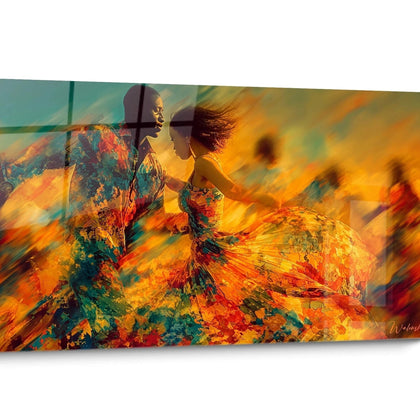
The African Dance Orange painting captures the vibrant essence of African culture and traditions. This collection celebrates the beauty of African tribal dances through dynamic compositions where the vibrant orange symbolizes the warmth, joy, and energy of the continent. Each artwork retranscribes the graceful movement of the dancers and the authenticity of contemporary African arts. Perfect for creating a warm and cultural atmosphere, this collection transforms your walls into true artistic celebrations.
 Nubian Queen Woman Painting - African Dance Edition273,90 €
 Dancing Women Harmonious Flexions Painting - African Dance Edition273,90 €
 African Dancers Painting - Celebration in Motion - African Dance Edition273,90 €
 African Warrior Painting - Traditional Ritual Dance - African Dance Edition228,90 €
 Dancing Women Golden Jewelry Painting - African Dance Edition273,90 €
 Dancing Women Spiritual Trance Painting - African Dance Edition273,90 €
 African Dancer Ethnic Adornments Painting - African Dance Edition273,90 €
 African Dancers Rhythmic Hips Painting - African Dance Edition273,90 €
 African Dancers Tribal Tempo Painting - African Dance Edition273,90 €
 Masks Traditions Painting - African Dance Edition242,90 €
 Dancers Community Joy Painting - African Dance Edition273,90 €
 Dancers Mystical Trance Painting - African Dance Edition273,90 €
 Dancers Village Festivities Painting - African Dance Edition273,90 €
 Dancer Painting Spiritual Offering - African Dance Edition273,90 €
 Dancers Sacred Drum Wall Art - African Dance Edition273,90 €
 Women Ancestral Choreography Wall Art - African Dance Edition273,90 €
 Musician Painting Ceremonial Rhythm - African Dance Edition228,90 €
 Dancer Painting Ancestral Passage - African Dance Edition228,90 €
 Woman Beating the Sacred Djembe Artwork - African Dance Edition228,90 €
 African Dancer Painting - Expressive Movement - African Dance Edition228,90 €
Explore further
In African Dance Painting Orange



All about African Dance Painting Orange
- African Dance Orange Wall Art Presentation
- Symbolism and Chromatic Energy
- Visual Impact and Interior Design
- Cultural Authenticity and Expression
An African dance orange wall painting instantly transforms the atmosphere of a living space through the evocative power of this solar hue associated with the choreographic movements of the African continent. This decorative artwork captures the vibrant essence of festive traditions where orange embodies the warmth of ochre earth, the intensity of sunset over the savanna, and the communicative energy of community celebrations. Designed for collectors of contemporary ethnic art and enthusiasts of bold decoration, this monumental creation stands as a magnetic focal point in large architectural volumes. The generous format of these mural artworks enables total immersion in the African choreographic universe, where each dancing silhouette dialogues with orange nuances to create a dynamic and enveloping composition. Acquiring such a decorative element responds to a search for cultural authenticity enriched with contemporary aesthetic dimensions, ideal for high-end residential spaces, artistic lofts, or corporate offices wishing to convey values of creativity and intercultural openness.
Orange as an Energy Vector in African Choreographic Representation
The African dance orange wall painting masterfully exploits color psychology to amplify the emotional intensity of dancing scenes. This hue sits at the exact intersection between the passion of red and the brightness of yellow, creating a visual frequency that simultaneously stimulates enthusiasm and conviviality. In representations of traditional Mandinka, Zulu, or Bambara dances, orange naturally evokes the natural pigments extracted from Sahelian clays used during the bodily ritualizations preceding performances.
Why does orange intensify the perception of dancing movement?
Visual neuroscience demonstrates that orange wavelengths capture peripheral attention more effectively than cool tones, making each dancing silhouette immediately identifiable even in complex architectural spaces. An African dance orange wall painting of large dimensions exploits this phenomenon to create a sensation of perpetual movement: the curves of bodies in action seem to extend their trajectory beyond the frame itself. This dynamic proves particularly sought-after in reception areas where the artwork must generate a warm ambiance without recourse to additional artificial lighting.
Orange Nuances and Their Specific Cultural Significance
Unlike generic representations, an authentic African dance orange wall painting declines this color according to several symbolic registers. Burnt orange recalls the tones of mahogany wood from djembes accompanying dances, while coppery orange evokes traditional jewelry worn during ceremonies. Contemporary artists specialized in this theme layer up to seven tonal variations of orange to create spatial depth suggesting the dust raised by bare feet striking the ground during dancing trances. For those who also appreciate more stylized approaches, an abstract African dance wall painting can offer a complementary geometric interpretation of these same chromatic energies.
Orange as a Marker of Decorative Intentionality
Acquiring an African dance orange wall painting reveals a deliberate desire to break free from neutral decorative codes to assert a bold personality. This hue demands strong visual commitment, transforming the space into an aesthetic manifesto. Discerning collectors specifically seek this orange dominance to counterbalance contemporary architectures with cold lines, thus creating a striking dialogue between modern minerality and organic warmth. Monumental formats reinforce this effect, allowing orange gradations to create zones of variable visual temperature depending on the angle of observation.
Spatial Orchestration Around an African Dance Orange Wall Painting
The integration of an African dance orange wall painting into a residential or professional environment requires in-depth architectural reflection due to its dominant chromatic presence. Wall surfaces hosting this artwork should ideally measure a minimum of 3 meters in width to allow the eye to immerse itself in the choreographic scene without visual compression. Double-height spaces prove particularly conducive, as the orange hue diffuses vertically, creating a natural luminous column that structures the entire volume.
How does orange dialogue with surrounding materials?
Anthracite-gray polished concrete constitutes the ideal partner for an African dance orange wall painting, creating thermal contrast that maximizes the impact of each dancing silhouette. Dark woods such as wengé or ebony establish a material connection with the geographic origin of the represented dances, while brushed copper or bronze metals create chromatic resonances enriching the overall palette. Conversely, entirely white environments minimize context to concentrate attention exclusively on the visual performance of the artwork itself.
Arrangement Strategies to Maximize Visual Impact
An African dance orange wall painting in large format functions optimally when benefiting from a minimum observation distance of 2.5 meters, allowing the eye to simultaneously embrace the entire choreographic composition and gestural details. In multifunctional spaces, this artwork effectively serves as a visual boundary between living zones and reception areas, its orange palette creating a natural energetic transition. Discerning collectors avoid placements adjacent to west-facing windows, where direct sunlight could create counterproductive chromatic saturation, preferring perpendicular walls receiving indirect light that enhances nuances.
Which decorative complements enhance an African dance orange wall painting?
The environment of an African dance orange wall painting benefits from integrating botanical elements with graphic foliage such as Strelitzias or Monstera deliciosa, whose structured forms dialogue with the represented body postures. Textiles featuring geometric patterns in earth sienna, yellow ochre, or raw sienna tones create sophisticated chromatic echoes without visual competition. Sculptures in patinated bronze or artisanal ceramics with matte finishes establish cultural coherence while maintaining the visual supremacy of the painting. Ambient lighting should favor warm color temperatures (2700-3000K) to preserve the intensity of oranges while avoiding direct spotlights that would flatten the depth of the composition.
Cultural Authenticity and Contemporary Interpretation of African Dances in Orange
The market for African dance orange wall paintings is characterized by creative tension between ethnographic fidelity and contemporary artistic freedom. The most sought-after works capture the kinesthetic essence of ritual dances—whether Senegalese Sabar, South African Gumboot, or Congolese Dombolo—while allowing themselves bold chromatic transpositions. Orange, though historically less present than reds or browns in traditional attire, imposes itself as a visual metaphor for the vital energy transmitted by these ancestral bodily practices.
Typologies of Representation in African Dance Orange Wall Paintings
Three principal approaches emerge in the creation of quality African dance orange wall paintings. The first privileges graphic silhouetting where dancers appear as solid blocks of black or dark brown against orange-gradient backgrounds, creating a theatrical effect recalling shadows projected during fires around which nocturnal dances occurred. The second approach details muscular anatomies and ornamental adornments by exploiting the entire orange range to model body volumes. The third, more conceptual, fragments dancing bodies into colored geometric elements where orange structures the composition while suggesting movement rather than representing it literally.
What is the heritage value of an African dance orange wall painting?
Beyond its decorative function, an African dance orange wall painting constitutes a vector for preserving the memory of choreographic practices threatened by accelerated urbanization of the continent. Each captured posture testifies to sophisticated non-verbal communication systems where gestures transmit mythological histories, social codes, and therapeutic knowledge. Conscious collectors seek specifically artworks accompanied by documentation clarifying the specific cultural origin of represented dances, transforming the acquisition into an act of cultural preservation as much as aesthetic investment.
Orange as a Bridge Between Tradition and Modernity
The orange hue enables contemporary reappropriation of traditional iconographies without brutal rupture. In cosmopolitan urban interiors, a large-scale African dance orange wall painting functions as a conversational catalyst, inviting exploration of intersections between African cultural expressions and globalized aesthetics. This color, less literal than the ochres naturally associated with Africa, authorizes more abstract and universal reading while preserving geographic grounding. Interior designers specializing in afro-contemporary ambiances systematically use these artworks as starting points for extended chromatic palettes, orange subsequently dictating choices of furniture and accessories to create cohesive and sophisticated ensembles.
Is an African dance orange wall painting suitable for professional spaces?
Absolutely, particularly in creative, cultural, or tourism-related sectors where this artwork instantly communicates values of openness, dynamism, and cultural diversity. Large formats are prized in corporate entrance halls of companies wishing to project an innovative image while paying tribute to non-Western artistic heritages.
How to maintain an African dance orange wall painting to preserve its chromatic intensity?
Since orange is particularly sensitive to photochemical degradation, avoid direct UV exposure and favor monthly dusting with a dry microfiber cloth. For textured surfaces, a natural-fiber feather duster preserves relief without abrasion. Annual professional inspection ensures pigment longevity.
What dominant emotion does an African dance orange wall painting convey in an interior?
This combination generates resolutely optimistic and stimulating energy, creating an atmosphere conducive to social exchanges and creativity. Orange amplifies the festive and communal dimension inherent in African dances, transforming the space into a warm welcoming place where vitality predominates without visual aggression.
L'art qui suscite l'envie
Maison belge d'art mural grand format
14 jourspour changer d'avis*
Protection Walenskyincluse
Fabriquéen Italie
FormatXXL
Kit de fixationtoujours fourni
* Hors tableaux personnalisés et tailles personnalisées


