


African Dance Red Wall Art
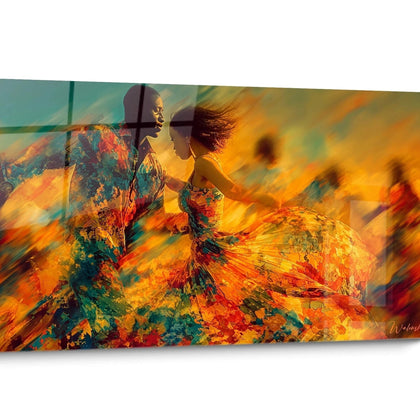
The Painting African Dance Red captures the vibrant energy and cultural richness of the African continent. This collection celebrates the beauty of traditional African dances through works where red symbolizes passion and vitality. Each creation evokes the captivating rhythm of ceremonies and the elegance of ancestral movements. Perfect for creating a contemporary African wall decoration, this collection brings warmth and authenticity to your living space.
 Dancing Women Harmonious Flexions Painting - African Dance Edition273,90 €
 Stylized African Dancer Artwork - Tribal Energy - African Dance Edition273,90 €
 Tribal Dancer Painting - Ancestral Movement - African Dance Edition273,90 €
 Dancers Sacred Drum Wall Art - African Dance Edition273,90 €
 African Dancer Ethnic Adornments Painting - African Dance Edition273,90 €
 Sacred Drum Musicians Wall Art - African Dance Edition273,90 €
 African Warrior Painting - Traditional Ritual Dance - African Dance Edition228,90 €
 Woman Beating the Sacred Djembe Artwork - African Dance Edition228,90 €
 African Dancing Woman Painting - Spiritual Grace - African Dance Edition273,90 €
 Dancing Women Spiritual Trance Painting - African Dance Edition273,90 €
 Dancers Mystical Trance Painting - African Dance Edition273,90 €
 African Dancers Kente Fabric Wall Art - African Dance Edition273,90 €
 Dancing Women Golden Jewelry Painting - African Dance Edition273,90 €
 African Dancers Painting - Celebration in Motion - African Dance Edition273,90 €
 Dancer Painting Ancestral Passage - African Dance Edition228,90 €
 Modern African Dancer Artwork - Tribal Elegance - African Dance Edition273,90 €
 African Dancer Painting - Expressive Movement - African Dance Edition228,90 €
 Dancers Community Joy Painting - African Dance Edition273,90 €
 African Dancers Rhythmic Hips Painting - African Dance Edition273,90 €
Explore further
In African Dance Red Wall Art



All about African Dance Red Wall Art
- Presentation Painting African Dance Red
- Symbolic Power
- Chromatic Ambiances
- Visual Dynamism
A painting African dance red instantly transforms your space by celebrating the vibrant energy and cultural richness of the continent. These monumental works capture the intensity of traditional dance gestures while harnessing the emotional power of red, the color of passion, vitality, and celebration. Perfect for spacious living rooms, contemporary professional spaces, or urban lofts, these large-scale paintings create a striking focal point that dialogues with modern architecture. The combination of choreographed movement frozen in time and the red hue creates a captivating visual tension, evoking both the ochre earth of the savannas, the fire of ritual ceremonies, and the intensity of African cultural festivals.
The Ritual Strength of Red in African Body Iconography
The African dance red painting draws its depth from the sacred dimension that this shade holds in the cultures of the continent. Red traditionally embodies the passage between worlds, used in initiation dances where the body becomes a spiritual medium. This chromatic evokes the ferruginous clay that adorns the dancers during territorial anchoring ceremonies, creating an immediate visual connection between the work and its cultural reference.
How does red amplify the gestural energy of the dancers depicted?
In large-format mural compositions, the dominant red acts as an emotional amplifier of the captured movements. The silhouettes in full choreography seem to literally vibrate on the support, their dynamics accentuated by the tonal variations from carmine to vermilion. This chromatic intensity transforms each frozen gesture into a powerful visual statement, particularly effective in spaces requiring an injection of stimulating energy such as creative offices or architectural firm waiting rooms.
Cultural authenticity translated through red nuances
Artists specializing in this register often use variations of red reminiscent of natural African pigments: red ochre from Senegal, Siennese earth from the Ethiopian highlands, or brick tones of the Saharan facades. These chromatic references give the works a visual legitimacy that transcends simple decoration. For collectors seeking an authentic long-tail African dance red painting, this fidelity to traditional palettes is a major acquisition criterion, distinguishing superficial creations from works truly rooted in a profound cultural understanding.
Synergies with contemporary approaches
Many creators establish bridges between ritual tradition and modern expression, particularly in abstract African dance painting where silhouettes dissolve into red geometric compositions. This hybridization meets the expectations of a sophisticated urban clientele, seeking to honor African heritage while maintaining consistency with minimalist, refined interiors. Monumental formats then allow for the creation of wall installations where red becomes a universal visual language, communicating vitality and identity anchoring without requiring prior cultural decoding.
Composing Interior Atmospheres through Red-Neutral Contrast
Integrating a painting of African dance in red into a living space is a sophisticated color strategy. These imposing works work ideally against pristine white walls, concrete gray or matte black, creating a visual dialectic between chromatic rest and a burst of color. This opposition generates a spatial breathing where the gaze alternates between calm areas and points of intensity, a fundamental principle in high-end interior design.
Which environments benefit most from this vibrant red hue?
Nordic spaces with natural elements find a vital, saving counterpoint in these compositions. Red effectively combats the coldness of industrial materials such as brushed steel or glass, while warming mineral atmospheres. In lofts with generous volumes, a large-format painting of African dance in red acts as a source of visual warmth, compensating for architectural austerity with its bodily expressiveness. Medical practices specializing in holistic medicine or yoga studios particularly appreciate this stimulating energy that evokes vitality without aggression.
Chromatic balances for discerning collectors
Acquiring a piece dominated by red requires reflection on the overall decorative ecosystem. Designers recommend accompanying these works with dark wood elements (wenge, ebony) that recall African essences and anchor the red within a coherent material narrative. Natural linen or ecru cotton textiles create soft transitions, while touches of aged copper or brass establish subtle metallic connections with the golden accents often present in these compositions.
Managing surrounding light intensity
A crucial parameter for enhancing a painting of African dance in red lies in mastering ambient lighting. Contrary to popular belief, these works gain depth under indirect natural light rather than direct spotlights. Morning eastern exposure particularly enhances the carmine nuances, creating tonal variations that evolve throughout the day. For north walls or poorly lit rooms, a museum-style diffused lighting on rail preserves chromatic intensity without creating disturbing reflections, a strategy favored by gallerists for collector's pieces.
Capturing Movement: Kinetic Tension and Red Composition
What fundamentally distinguishes a painting of African dance in red from other chromatic variations is its unique ability to translate movement through color. Red inherently possesses a superior visual speed to cool tones, creating a sensation of spatial advancement. When applied to silhouettes in full choreographic gesture, it generates a dynamic that seems to defy the fixity of the support, particularly striking on formats exceeding 120 centimeters.
Why does red intensify the perception of rhythm in these compositions?
Visual neuroscience demonstrates that red stimulates the visual cortex more quickly than other colors, creating a sensation of urgency and liveliness. Applied to the curved lines of dancing bodies, this phenomenon transforms each curve into an energetic trajectory. Artists exploit this property by superimposing several dancers in different phases of gesture, creating visual sequences that evoke chronophotography. This approach is particularly suitable for buyers seeking an online purchase of a painting of African dance in red capable of visually animating a long hallway or a spacious entrance hall.
Monumental formats and amplified spatial presence
The generous dimensions characterizing these creations (often a minimum of 150x100 cm) are not the result of aesthetic chance but of an expressive necessity. Red requires space to deploy its intensity without visually saturating the environment. A large format also allows detailing the gesture: the position of the hands evoking traditional mudras, the curve of the back recalling Mandingue dances, the characteristic striking of the ground of the Gwoka. This precision transforms the work into an anthropological document as much as a decorative object, a crucial enhancement for a culturally conscious clientele.
Hanging strategies to maximize visual impact
The installation of a monumental red African dance painting requires a specific spatial approach. Designers recommend positioning it at seated eye level rather than standing, creating a visual intimacy with the dancing figures. In double-height spaces, a slightly low hanging (center of the work at 130 cm from the floor) allows to appreciate both the gestural details and the overall composition. Some collectors opt for an offset presentation from the wall (caisse system with spacers), creating a play of shadows that accentuates the perceived three-dimensionality of the silhouettes.
Is a red African dance painting suitable for all interior styles?
This work integrates perfectly into contemporary, urban industrial and luxurious Afro-fusion universes. It provides the vital counterpoint necessary for minimalist Scandinavian spaces or concrete lofts, while naturally harmonizing with decors already incorporating ethnic African elements such as Baoulé masks or Kente fabrics.
What is the chromatic durability of red in these wall compositions?
Professional creations use UV-resistant pigments and museum-quality conservation fixatives, guaranteeing the stability of the red for several decades. However, it is advisable to avoid direct exposure to intense sunlight for more than 4 hours daily, particularly in sunny regions, to preserve the brilliance of the carmine and vermilion shades.
How to choose between figurative representation and stylization in a red African dance painting?
The choice depends on the welcoming environment: professional spaces often prefer stylized or semi-abstract approaches for their narrative neutrality, while residential interiors can accommodate more figurative representations telling a specific cultural story. XXL formats also allow to hybridize the two approaches with detailed areas and others more suggestive.
L'art qui suscite l'envie
Maison belge d'art mural grand format
14 jourspour changer d'avis*
Protection Walenskyincluse
Fabriquéen Italie
FormatXXL
Kit de fixationtoujours fourni
* Hors tableaux personnalisés et tailles personnalisées


