


Modigliani Inspired Painting Minimalist Contemporary Art
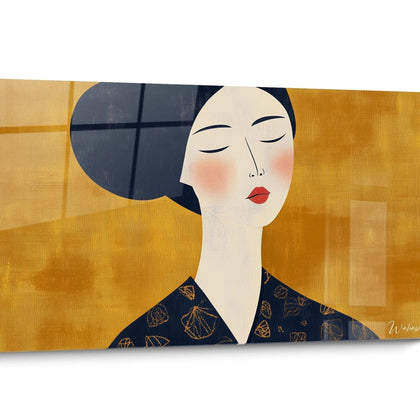
The Painting inspiration Amedeo Modigliani Minimalist Contemporary captures the essence of the Italian master with elegance. This collection celebrates elongated portraits, delicate features, and the poetic melancholy of the Livorno genius. Our creations blend the artistic heritage of the early 20th century with a clean and modern approach. The paintings minimalists style Modigliani reveal the beauty of simplified forms and subdued colors. Perfect for lovers of contemporary modern art, they bring refinement and character to any space.
 Painting Inspired by Amedeo Modigliani Head N°3 – Homage to a Famous Artist273,90 €
 Painting Inspired by Portrait of Paul Guillaume by Amedeo Modigliani No.1 – Tribute to Famous Artist273,90 €
 Painting Inspired by The Beautiful Roman Woman by Amedeo Modigliani No.3 – Tribute to Celebrated Artist273,90 €
 Painting Inspired by The Beautiful Roman Woman by Amedeo Modigliani N°1 – Tribute to Celebrated Artist273,90 €
 Painting Inspired by Seated Jeanne Hébuterne by Amedeo Modigliani N°2 – Tribute to Celebrated Artist273,90 €
Explore further
In Modigliani Inspired Painting Minimalist Contemporary Art

All about Modigliani Inspired Painting Minimalist Contemporary Art
- Painting Presentation Contemporary Modigliani
- Modern, Streamlined Aesthetics
- Contemporary Design Integration
- Timeless Artistic Expression
The painting inspired by Amedeo Modigliani’s minimalist contemporary style transcends the codes of traditional wall decor by merging the expressive heritage of the Italian master with the visual rigor of contemporary art. This large-scale artwork revisits Modigliani’s iconic elongated portraits by stripping them of any superfluous narrative complexity, retaining only the emotional essence of melancholic faces and slender silhouettes. In contemporary architectural spaces characterized by generous volumes and clean surfaces, this work becomes a hypnotic focal point that dialogues with the surrounding sobriety while imbuing a rare psychological depth.
Visual Economy Serving Modiglianesque Expression
The painting inspiration Amedeo Modigliani minimalist contemporary achieves a strategic chromatic reduction that paradoxically amplifies the emotional intensity of the compositions. By limiting the palette to three or four carefully selected tones, the work focuses attention on the distinctive morphological characteristics of the Modigliani style: those stretched necks that defy conventional anatomy, those pupil-less eyes that gaze into eternity, those ovoid faces with simplified features. This streamlined approach eliminates complex backgrounds and anecdotal details to retain only the essential structure of the portrait, creating a fascinating dialogue with the principles of Scandinavian design and brutalist architecture.
How does formal simplification intensify emotional impact?
In industrial lofts with raw walls and cathedral ceilings, a painting inspired by Amedeo Modigliani’s minimalist style of large dimension creates a striking contrast between the material coldness of the environment and the human warmth emanating from the stylized portrait. The absence of superficial details forces the gaze to linger on the curve of a nape, the melancholic tilt of a head, the subtle geometry of a face reduced to its guiding lines. This economy of visual means generates a monumental presence that transforms the architectural space into a contemplative gallery where each passage becomes a silent encounter with the work.
The geometric abstraction of elongated silhouettes
The process of contemporizing Modiglianesque vocabulary involves an increased geometrization of the original organic forms. Sinuous curves transform into perfect arcs, shoulders become pure horizontals, necks stretch into vertical columns that structure the composition according to orthogonal axes. This formal rationalization allows the contemporary minimalist painting to integrate harmoniously into spaces governed by the principles of late modernism, where every decorative element must justify its presence by its contribution to the overall balance. Panoramic formats accentuate the characteristic elongation of the figures, creating horizontal rhythms that dialogue with the architectural lines of open spaces.
Strategic monochromaticism and psychological depth
The adoption of an almost monochrome palette – often declined around ochres, warm grays, or muted blues – eliminates color distraction to reveal the structural power of the Modiglianesque drawing. This chromatic restriction gives the painting a minimalist contemporary Amedeo Modigliani inspiration a meditative gravity particularly suited to spaces of reflection such as contemporary private libraries or master bedrooms with soothing atmospheres. Subtle tonal variations create effects of depth without resorting to traditional perspective, thus maintaining the planarity characteristic of minimalist aesthetics while suggesting infinite psychological spaces behind these enigmatic faces.
Synergy Between Bohemian Heritage and Current Architectural Rigor
Integrating a painting minimalist contemporary Amedeo Modigliani inspiration into modern residential environments reveals a productive tension between two seemingly contradictory aesthetic philosophies. On one side, the Bohemian heritage of Montparnasse with its melancholic sensuality and rejection of academic conventions; on the other, the functionalist rigor of contemporary interiors governed by the principles of Mies van der Rohe. This large-scale artwork becomes the bridge between these universes, bringing visceral humanity to purified spaces that sometimes risk impersonal coldness. The formal simplification operated by the contemporary minimalist approach makes this harmonious coexistence possible by eliminating ornamentation that would clash with the surrounding sobriety.
Why does this style transcend fleeting decorative trends?
Unlike ephemeral trends that periodically saturate the interior decoration market, the painting minimalist contemporary Amedeo Modigliani inspiration is part of a century-old artistic lineage while adopting a resolutely current visual language. This double temporality protects it from rapid obsolescence: its anchoring in the history of modern art confers lasting cultural legitimacy, while formal purification ensures its relevance in avant-garde interiors. Discerning buyers are precisely looking for this rare intersection between heritage value and aesthetic relevance, particularly in urban penthouses where every visual element contributes to affirming a sophisticated cultural identity.
Dialogue with contemporary raw materials
Mineral surfaces favored in contemporary architecture – polished concrete, natural stone, brushed steel – find an ideal counterpoint in the organic softness of revisited Modiglianesque forms. A large-scale contemporary minimalist painting displayed on a raw concrete wall creates a visual alchemy where the cold rigidity of the architectural support exalts, by contrast, the fluidity of curved lines and the warmth of ochre or Sienna earth tones. This juxtaposition materializes the balance sought in contemporary lofts between raw structural affirmation and cultural refinement. Monumental vertical formats accentuate the generous ceiling height of these spaces, creating visual columns that structure open volumes.
Adaptation to architectural transition zones
Wide hallways and the characteristic circulation spaces of contemporary residences offer strategic locations for these large-format wall artworks. A minimalist contemporary painting inspired by Amedeo Modigliani installed in a passageway transforms this functional non-place into a private gallery where each daily movement becomes a renewed contemplative experience. The pronounced verticality of the stylized Modigliani portraits naturally accompanies the movement of the body, creating a visual dynamic that subtly guides circulation. The clean chromatic planes avoid visual saturation in these transitional spaces while maintaining a memorable presence that enriches the overall spatial experience of the home.
Emotional Permanence in the Contemporary Domestic Environment
Beyond its decorative function, the painting inspired by Amedeo Modigliani minimalist contemporary establishes a lasting contemplative presence that gradually transforms the perception of the living space. The enigmatic faces with blind eyes, a characteristic signature of the Italian master reduced here to its formal essence, create meditative focal points in contemporary visual agitation. This timeless quality is particularly valuable in primary residences where constant stimulation is not sought but rather stable emotional anchors. The large size of these works confers sufficient visual authority to resist the competition of omnipresent screens and incessant digital solicitations.
What perceptual evolution over time?
One of the fascinating aspects of the contemporary minimalist painting inspired by Modigliani lies in its ability to progressively reveal new subtleties over months and years of daily cohabitation. What initially appears as a radical simplification gradually reveals itself as an intense concentration of visual and emotional information. Variations in natural lighting throughout the day modify the perception of volumes suggested by the discreet modeling, transforming the work into a dynamic entity despite its material fixity. This gradually revealed richness justifies the investment in a monumental format that becomes a silent companion of domestic life rather than a simple wall ornament.
Constitution of a residential cultural identity
For emerging collectors and cultured urban professionals, acquiring a painting inspired by Amedeo Modigliani minimalist contemporary constitutes a strong identity gesture that signals belonging to a specific aesthetic community. This work positions the habitat at the intersection of appreciation of modern art history and commitment to refined contemporary aesthetics, avoiding the pitfalls of historical pastiche and impersonal modernism. In double-height living rooms and generous reception areas, such a painting becomes the subject of cultured conversation, a starting point for discussions on the evolution of modern portraiture, formal reduction as an expressive strategy, or the parallels between the early 20th century Parisian avant-garde and current artistic trends.
Compatibility with the evolution of interior layouts
One of the decisive advantages of a contemporary minimalist wall art lies in its exceptional contextual flexibility when faced with the inevitable reconfigurations of living space. Unlike works strongly stylistically connoted that impose rigid decorative constraints, this refined creation harmoniously adapts to the evolution of surrounding furniture and accessories. Whether the layout evolves towards a clearer Scandinavian aesthetic, a more assertive industrial style, or a radically minimalist Japanese ambiance, the wall art retains its relevance by serving as a constant visual element around which changes are articulated. This aesthetic longevity justifies the investment in an imposing format intended to last through the decades without ever appearing dated or out of place.
Would a contemporary minimalist wall art inspired by Amedeo Modigliani be suitable for modern professional spaces?
Absolutely, particularly in executive offices, high-end law firms, and reception areas of creative companies. The balance between cultural sophistication and formal sobriety projects an image of intellectual seriousness without excessive austerity, creating a refined professional atmosphere conducive to strategic exchanges.
How does this style differ from classic reproductions of Modigliani?
Unlike faithful reproductions that directly transplant the bohemian aesthetic of the early 20th century, the contemporary minimalist wall art inspired by Amedeo Modigliani operates as a creative translation that extracts the essential formal principles – elongation, simplification, melancholy – to rearticulate them according to current visual codes with a reduced palette, increased geometrization, and elimination of contextual details of the time.
What is the optimal viewing distance for a monumental format of this type?
Large formats ideally require a viewing distance equivalent to 1.5 to 2 times their height for a global appreciation of the composition, which naturally lends them to spacious rooms. However, a close approach reveals subtle textural and chromatic qualities impossible to perceive from afar, creating a double visual experience depending on the observer's position in the space.
L'art qui suscite l'envie
Maison belge d'art mural grand format
14 jourspour changer d'avis*
Protection Walenskyincluse
Fabriquéen Italie
FormatXXL
Kit de fixationtoujours fourni
* Hors tableaux personnalisés et tailles personnalisées


