


Art Deco Crane Wall Art
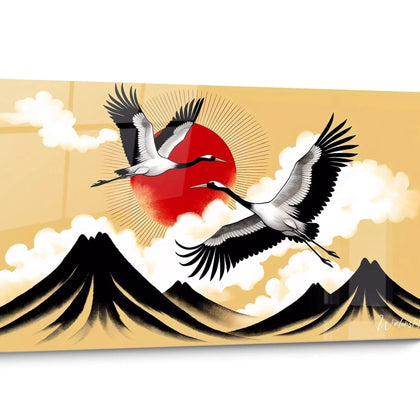
The Crane Art Deco painting celebrates the perfect union between the majestic bird and the refinement of the 1920s. This collection captures the essence of Japanophile Art Deco with its elegant geometric lines and characteristic gold motifs. A symbol of longevity and elegance, the crane stands out as a preferred subject of vintage Art Deco decoration. Each work evokes the glamour of the roaring twenties while bringing a touch of oriental exoticism to your interior. Perfect for lovers of retro chic style and timeless aesthetics.
 Crane in Flight Wall Art - Ornithological Elegance - Art Deco Edition273,90 €
 Crane in Flight Painting - Majestic Ascent - Art Deco Edition273,90 €
 Art Deco Cranes Artwork - Golden Elegance - Art Deco Edition228,90 €
Explore further
In Art Deco Crane Wall Art



All about Art Deco Crane Wall Art
- Description Painting Crane Art Deco
- Art Deco Symbolism
- Sophistication of the 1920s
- Large Height Decoration
The crane painting Art Deco embodies the excellence of an artistic movement that revolutionized interior decoration between the 1920s and 1930s. This large-scale wall ornament sublimates the natural elegance of the iconic bird with the aesthetic codes characteristic of this period: clean geometry, stylized lines and a refined color palette combining neutral tones and metallic accents. The imposing formats offered instantly transform a space into a private gallery where nature and decorative modernity meet. The iconography of the Japanese crane reinterpreted according to Art Deco canons simultaneously evokes longevity, aristocratic grace and this fascination for oriental exoticism that characterized the Parisian living rooms of the interwar period. Each wall composition becomes a focal point capable of structuring the generous volumes of contemporary lofts, prestigious entrance halls or spaces requiring an affirmed aesthetic statement.
The Symbolic Heritage of the Crane in Art Deco Aesthetics
The crane painting Art Deco draws on a particularly rich double cultural heritage. On the one hand, the Japanese tradition where this wading bird represents conjugal fidelity, millennial longevity and spiritual fulfillment. On the other hand, the Western interpretation of the 1920s which transforms these ancestral meanings into a decorative motif highly sophisticated. This creative synthesis perfectly characterizes the spirit of Art Deco: to appropriate oriental influences to create a resolutely modern visual vocabulary.
Why did the crane dominate the decorative iconography of the 1920s?
The enthusiasm for stylized ornithological representations responded to several converging trends of the time. Colonial exhibitions fueled the fascination for the Far East, while the modernist movement called for purified forms far from academic naturalism. The slender silhouette of the crane offered creators of Art Deco an ideal subject: elegant vertical lines, a sinuous neck conducive to graphic arabesques, and plumage allowing for geometric pattern games. Representations often favored hieratic postures, the bird in ascending flight or in a statuary position evoking nobility.
The integration of geometric codes in the representation of birds
Unlike naturalistic illustrations, the crane painting Art Deco translates the anatomy of the wading bird into simplified and angular forms. Feathers become geometric fans, legs transform into architectural lines, and the surrounding vegetation adopts a symmetrical stylization reminiscent of wrought iron patterns. This radically modern approach made it possible to harmonize the natural element with the interiors with clean lines characteristic of contemporary architecture. The color palette favored marked contrasts: black lacquer on ivory background, silver silhouettes highlighted with emerald or sapphire accents.
How does an Art Deco crane painting dialogue with a contemporary interior?
The installation of a monumental format in a contemporary space creates a fascinating temporal resonance. The visual codes of the 1920s — rigorous symmetry, stripped-down elegance, discreet luxury — naturally harmonize with the contemporary minimalist aesthetic. In a loft with generous volumes, this wall decoration vertically structures the space while bringing a refined cultural dimension. Decorative associations favor furniture with clean lines, reflective surfaces such as brass-framed mirrors, and noble materials: veined marble, precious woods with satin finishes, brushed metals. For those seeking complementary color variations, exploring compositions of golden crane painting enriches the decorative palette with warm tones.
Multi-Panel Compositions and Art Deco Visual Storytelling
Some Art Deco crane paintings adopt triptych or diptych configurations inherited from Japanese screens. This segmentation accentuates the narrative dimension: a visual sequence showing a bird at rest, preparing to take flight, then in its aerial majesty. This sequential approach was particularly suitable for the vast partitions of bourgeois apartments of the time, creating a decorative rhythm over several linear meters. In contemporary spaces, these segmented compositions offer appreciable flexibility to dress complex architectural configurations such as projecting corners or walls interrupted by openings.
The Mastered Opulence of the Interwar Years
An Art Deco crane painting immediately evokes the sophisticated atmosphere of Parisian interiors that defined modern luxury. This pivotal period between tradition and avant-garde sought a delicate balance: to preserve artisanal excellence while embracing modernity. Large murals depicting stylized herons typically adorned reception rooms, hotel lobby entrances, and refined smoking rooms where the cultural elite gathered. Their presence instantly signaled the owners' refinement and their knowledge of contemporary artistic trends.
The Characteristic Color Palettes of the 1925-1935 Period
Analysis of Art Deco interiors reveals recurring color schemes that contemporary crane paintings faithfully reinterpret. Backgrounds favored elegant neutral tones: pearl gray, eggshell beige, deep black, or off-white. Metallic accents—pale gold, oxidized silver, patinated bronze—stood out against these bases, creating the characteristic subtle luminosity of the style. Color touches remained measured: deep emerald to evoke stylized pines, midnight blue recalling Asian lacquers, or carmine red used sparingly. This chromatic restraint allowed the work to be integrated into varied decorative environments without creating visual dissonance.
Which Contemporary Spaces Benefit Most from a Monumental Art Deco Crane Painting?
Imposing formats require proportionate architectural volumes to fully reveal their impact. Entrance halls with high ceilings constitute the ideal location: the mural composition becomes the first artistic impression offered to visitors. Transition spaces such as wide hallways or stair landings gain dignity thanks to this vertical presence that naturally guides the eye upwards. In open-plan lofts, the painting structures the space by creating a focal point that subtly defines functional zones without physically partitioning them. Executive offices seeking a refined professional aesthetic also find a distinctive element evoking excellence and long-term vision.
Association with the Noble Materials of the Time
To maximize stylistic coherence, particular attention deserves to be paid to the immediate decorative environment. The Art Deco crane painting dialogues harmoniously with rosewood or macassar ebony paneling, these exotic woods prized for their spectacular grain. Brass metal elements—wall sconces, mirror frames, handrails—reprise the golden accents often present in the compositions. Textured wall coverings such as embossed wallpapers or lime plaster create a complementary tactile depth to the flatness of the pictorial support. Ambient lighting also plays a crucial role: prioritize indirect sources creating soft shadow zones rather than uniform lighting that would flatten the chromatic nuances.
How Does Monumental Dimension Transform Spatial Perception?
A large-scale Art Deco crane painting radically alters the experience of a space. Its accentuated verticality attracts the eye upwards, creating an impression of increased volume even in rooms of standard dimensions. This visual elevation produces a psychological effect of aristocratic grandeur particularly sought after in representative spaces. The composition also creates a scale of reference: the surrounding furniture is perceived in relation to this dominant presence, which requires furniture with generous proportions to maintain visual balance. Tall consoles, vertical bookcases, and slender luminaires constitute harmonious complements that reinforce rather than compete with this verticality.
Enhancing Volumes with Monumental Wall Art
Installing a large Art Deco crane painting responds to specific architectural considerations often overlooked by conventional decorative approaches. Contemporary spaces with high ceilings — whether industrial renovations, architect-designed homes, or Haussmann apartments — present a particular decorative challenge: how to appropriately adorn these vertical surfaces without creating visual emptiness or overwhelming the space. The solution lies in adopting decorative elements proportional to the architectural scale.
Positioning Strategies to Maximize Visual Impact
Unlike standard recommendations suggesting eye-level placement, monumental formats adhere to different rules. Visual anchoring typically begins between 40 and 60 centimeters from the floor, allowing the vertical development of the composition to unfold without constraint up to a height of 2.5 to 3.5 meters. This elevation creates an architectural presence rather than simply a decorative one. In stairwell configurations, alignment ideally follows the ascending diagonal line, creating a visual dynamic that naturally accompanies physical progression. For double-height spaces, considering the angle of view from the upper floor allows optimizing the readability of details in the upper part of the composition.
Why Avian Motifs are Particularly Suitable for Vertical Spaces?
The representation of wading birds in vertical extension or upward flight naturally exploits the length of the support. The physiology itself of the crane — long legs, slender neck, spread wings — translates into compositions that take advantage of the available height rather than constraining it. This natural fit between subject and format avoids the effect of artificial filling that other forced themes produce in unsuitable proportions. The eye instinctively follows the vertical trajectory of the bird, creating an upward visual movement that literally elevates the gaze and, by extension, the atmosphere of the space.
Decorative Balance in Spaces with Exceptional Proportions
A monumental Art Deco crane painting never functions in isolation: it dialogues with all the elements present. In spaces with generous volumes, the temptation to multiply focal points often creates a visual cacophony. The recommended approach prioritizes clear hierarchy: the wall composition dominates as the main element, while secondary decorative accessories — accent sculptures, architectural plants like tall sansevierias, sculptural lighting — play a role of visual punctuation without competing for attention. This strategy of considered dominance produces a visually restful environment despite the presence of a spectacular element.
How to Adapt Lighting to Large Wall Compositions?
Appropriate illumination reveals the chromatic and textural subtleties that general lighting neglects. Adjustable beam spotlights, positioned at a sufficient distance to evenly cover the surface, create a museum-like effect. The ideal angle of incidence is between 30 and 45 degrees to minimize reflections while creating a slight shadow modulation accentuating any reliefs. For interiors with adaptable atmospheres, integrating these sources into a dedicated lighting circuit allows independent control of the artwork's light intensity, creating different atmospheres depending on the time of day. Peripheral indirect lighting — concealed LED strips or lateral wall sconces — harmoniously complements without creating visual competition.
FAQ - Frequently Asked Questions about the Art Deco Crane Painting
Is an Art Deco crane painting suitable for contemporary minimalist interiors?
Absolutely. Art Deco aesthetic codes — geometric purification, restrained palette, architectural lines — naturally harmonize with current minimalism. The composition brings cultural dimension and historical depth often absent from overly sparse spaces, while respecting the characteristic visual discipline of these interiors.
What is the minimum distance to observe between the Art Deco crane painting and the surrounding furniture?
For monumental formats, maintaining a clear space of at least 80 centimeters to one meter allows appreciating the composition in its entirety without obstruction. This buffer zone also prevents furniture from visually competing with the artwork, preserving its decorative prominence while facilitating circulation.
How to durably maintain a large-scale Art Deco crane painting?
Regular maintenance mainly consists of delicate dusting with a dry microfiber cloth, every two to three months. Absolutely avoid liquid cleaning products that could alter the pigments or finishes. For locations exposed to direct natural light, consider UV protection via filtered glazing or specialized window films preserving color intensity over the long term.
L'art qui suscite l'envie
Maison belge d'art mural grand format
14 jourspour changer d'avis*
Protection Walenskyincluse
Fabriquéen Italie
FormatXXL
Kit de fixationtoujours fourni
* Hors tableaux personnalisés et tailles personnalisées


