


Zen Crane Wall Art
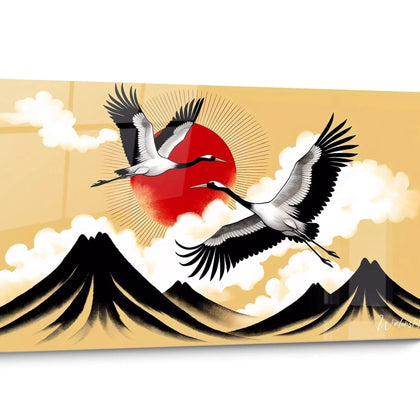
Our Crane Painting Zen collection celebrates the ancestral beauty of this sacred bird in Japanese Art. Symbol of longevity and inner peace, the crane embodies the very essence of Zen philosophy. Each Japanese Art Crane Painting captures the natural grace of this majestic bird in refined and harmonious compositions. Perfect for creating a Zen and soothing decoration, these works transform your spaces into havens of serenity. Explore our artistic universe where Eastern tradition and contemporary aesthetics meet.
 Wall Art In the Silence of the Reeds - Japanese Asia Edition273,90 €
 High Perch Wall Art - Asia Edition273,90 €
 Crane Guardian of Waters Wall Art - Crane Edition228,90 €
 Crane Mirror of Souls Wall Art - Crane Edition228,90 €
 Lotus Dance Painting - Chinese Art Asia Edition273,90 €
Explore further
In Zen Crane Wall Art



All about Zen Crane Wall Art
- Presentation Crane painting Zen
- Symbolism and Spirituality
- Meditation Spaces
- Minimalist Philosophy
The zen crane painting embodies the perfect balance between spiritual contemplation and Japanese minimalist aesthetics. This majestic artistic representation of the sacred bird instantly transforms your interior into a sanctuary of serenity, inviting daily meditation and inner harmony. Our large-scale wall art captures the very essence of wabi-sabi, this Japanese philosophy celebrating the beauty of imperfection and refined simplicity.
The Spiritual Iconography of the Crane in Zen Art
The zen crane painting draws its roots from Buddhist and Shinto traditions where the wading bird symbolizes longevity, transcendent wisdom, and spiritual elevation. Unlike Western representations, the Japanese crane appears in a meditative posture, often surrounded by morning mists or stylized reeds according to the codes of sumi-e. This traditional ink painting favors empty spaces that become as eloquent as the lines themselves.
How does a zen crane transform the energy of a space according to Feng Shui?
In Asian energetic practices, positioning a zen crane painting in the northeast sector of your home activates the area of knowledge and spiritual cultivation. The imposing wingspan of our wall art amplifies this beneficial energy flow, particularly when the bird is depicted in ascending flight or in a meditative watchful attitude. Feng Shui masters recommend avoiding placements facing entrance doors, preferring alcoves dedicated to contemplative practice.
The visual codes of Japanese minimalism in animal representation
Chromatic sobriety characterizes an authentic zen crane painting: monochrome palettes declining anthracite grays, sand beiges, and deep blacks. This color restraint is never austere but invites visual contemplation, allowing the eye to rest in a world saturated with stimuli. Contemporary artists sometimes integrate subtle touches of vermilion red on the bird's cranial crest, recalling the sacred crown without breaking the minimalist balance. For a more ornamental approach while maintaining the oriental spirit, discover our Art Deco crane painting which blends graphic elegance and Japanese symbolism.
The philosophical teachings conveyed by the sacred wading bird
Beyond its decorative dimension, the zen crane painting becomes a support for daily meditation. The characteristic posture of the bird standing on one leg teaches the precarious balance of existence, while its gracefully curved neck illustrates the flexibility needed to face adversity. Zen masters traditionally use these representations during zazen sessions to anchor attention and cultivate mindful presence.
Creating a Meditative Sanctuary with the Iconography of the Crane
Integrating a zen crane painting into your spiritual practice space requires careful consideration of the sensory architecture of the place. Yoga studios specializing in oriental traditions systematically position these representations facing the tatamis, creating a focal point during balancing postures and pranayamas. The monumental dimension of our wall art generates a soothing presence without visual dominance, respecting the Japanese principle of ma (the sacred interval).
What materials should be prioritized to preserve zen authenticity?
The support of the painting crane zen significantly influences its meditative impact. Matte finishes absorb light rather than reflect it, avoiding visual distractions during contemplation. The large dimensions allow you to appreciate each nuance of the stylized plumage and the subtle variations of the ink, transforming observation into a meditative practice in its own right. Absolutely avoid shiny surfaces that create disturbing reflections incompatible with the sought-after serene atmosphere.
The spiritual acoustics of spaces adorned with avian representations
Paradoxically, the crane zen painting influences the perception of sound in a meditation space. Its calming visual presence predisposes the mind to perceive ambient sounds differently: the chime of koshi wind chimes, the murmur of tsukubai fountains, or the vibrant silence become more perceptible. Practitioners report an amplification of the auditory experience in spaces dominated by this minimalist iconography, as if the wading bird invited deep listening.
Why do professional meditation studios choose monumental formats?
Zen retreat centers prefer large-scale wall creations to create a unified visual field accessible simultaneously to multiple meditators. An imposing painting crane zen becomes a collective convergence point without requiring dispersive eye movement. This architectural scale transforms the work into a true vertical mandala, a support for shared concentration during group sessions where each person finds their personal visual anchor in the details of the plumage or the curve of the neck.
Wabi-Sabi Philosophy and Aesthetics of Impermanence
The crane zen painting perfectly embodies the Japanese concept of mono no aware, this melancholic sensitivity to the ephemeral beauty of things. Contemporary artists intentionally capture the fleeting moment when the wading bird lands on calm waters or unfolds its wings before taking flight, crystallizing this transient moment in an eternal composition. This paradoxical fixation of impermanence resonates deeply with Buddhist philosophies of constant change and detachment.
Minimalist living spaces enhanced by avian iconography
In contemporary, uncluttered interiors influenced by Scandinavian and Japanese design, the painting crane zen becomes the sole meaningful decorative element, following the principle "less is more". Interior architects specializing in minimalism recommend a specific spatial ratio: for every square meter of wall representation, provide approximately four square meters of surrounding blank surfaces. This visual breathing allows the work to radiate without competition, transforming a neutral wall into a silent philosophical statement.
How to integrate the zen crane into a process of existential decluttering?
Beyond aesthetic minimalism, the crane zen painting accompanies profound simplification initiatives such as Japanese dan-shari (material detachment). Acquiring a monumental but unique wall creation advantageously replaces the accumulation of scattered decorative objects. This centerpiece becomes the visual anchor around which a space freed from superfluity is harmoniously organized, where each retained element has a specific function or spiritual resonance.
The symbolism of the seasons in contemplative crane representations
Traditional compositions often associate the heron with subtle seasonal elements: snow-laden pines evoking winter resilience, plum branches suggesting springtime renewal, or autumnal reeds symbolizing flexibility. A zen crane painting incorporating these minimalist botanical codes creates a cyclical connection with natural time, reminding the contemplator of the inscription of their spiritual practice in cosmic rhythms larger than daily agitation.
Is a zen crane painting suitable for professional spaces requiring concentration?
Absolutely. Therapists' offices, architecture studios, and quiet coworking spaces greatly benefit from this soothing iconography. The heron in a meditative posture subliminally induces a calm focus attitude, reducing performance anxiety and fostering deep creative thinking without aggressive visual distraction.
What wall orientation optimizes the meditative impact of a zen crane painting?
Favor walls perpendicular to windows to avoid direct reflections while benefiting from lateral natural lighting that reveals subtle nuances. Orientation is traditionally associated with wisdom in Feng Shui, making this wall the ideal choice for your representation of the sacred heron in spaces dedicated to study or contemplation.
Do the monumental dimensions of a zen crane painting risk dominating a small zen space?
Unlike loaded works, the minimalist composition of the zen crane painting creates an illusion of spatial expansion even in compact alcoves. Large formats visually open up the space thanks to the blank zones inherent in the sumi-e style, where the painted void dialogues with the surrounding wall to generate a soothing continuity rather than a claustrophobic fragmentation.
L'art qui suscite l'envie
Maison belge d'art mural grand format
14 jourspour changer d'avis*
Protection Walenskyincluse
Fabriquéen Italie
FormatXXL
Kit de fixationtoujours fourni
* Hors tableaux personnalisés et tailles personnalisées


