


Dutch Shepherd Dog Portrait Wall Art
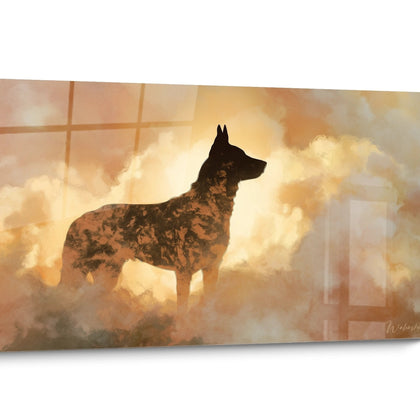
The Painting Dutch Shepherd Dog Portrait captures the majestic essence of this iconic Dutch breed. Each artwork highlights the keen intelligence and loyal character of the Dutch Shepherd Dog in portrait artistic, with a penetrating gaze and a noble posture. This collection offers Dog portraits Dutch Shepherd Dog that enhance the characteristic brindle coat and athletic appearance of these working dogs. Perfect for dog lovers and animal art enthusiasts.
 Dutch Shepherd with Piercing Gaze in Nature - Majestic Canine Portrait - Dutch Shepherd Edition273,90 €
 Dutch Shepherd Profile Portrait Wall Art with Intense Gaze - Canine Nobility - Dutch Shepherd Edition273,90 €
 Dutch Shepherd Black and White Portrait Painting Artistic - Canine Elegance - Dutch Shepherd Edition273,90 €
 Dutch Shepherd Portrait Painting Red and Beige - Retro Engraving - Dutch Shepherd Edition273,90 €
 Dutch Shepherd Portrait Painting with Gold and Black Tones - Deep Gaze - Dutch Shepherd Edition273,90 €
 Dutch Shepherd Portrait Watercolor Ochre and Black Canvas - Intense Gaze - Dutch Shepherd Edition273,90 €
 Dutch Shepherd Portrait Majestic Gaze with Amber Eyes - Canine Nobility - Dutch Shepherd Edition273,90 €
 Canine Portrait Painting with Amber Eyes - Intense Gaze - Dutch Shepherd Edition273,90 €
 Dutch Shepherd Amber Eyes Canvas Striking Portrait - Intense Gaze - Dutch Shepherd Edition273,90 €
 Dutch Shepherd with Amber Eyes - Watercolour Portrait - Dutch Shepherd Edition228,90 €
 Dutch Shepherd Portrait Black and White - Piercing Gaze - Dutch Shepherd Edition228,90 €
 Dutch Shepherd Watercolor Portrait Canvas - Noble Gaze - Dutch Shepherd Edition228,90 €
Explore further
In Dutch Shepherd Dog Portrait Wall Art
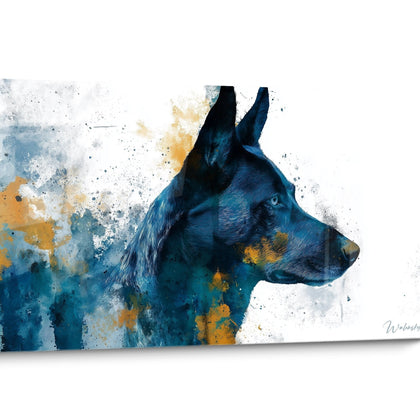
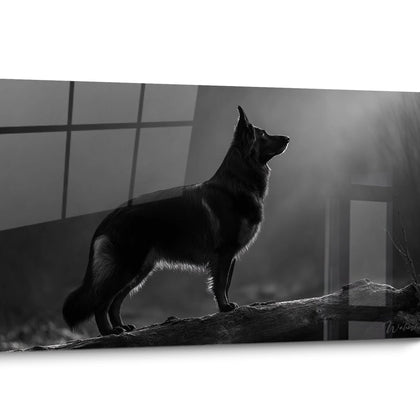
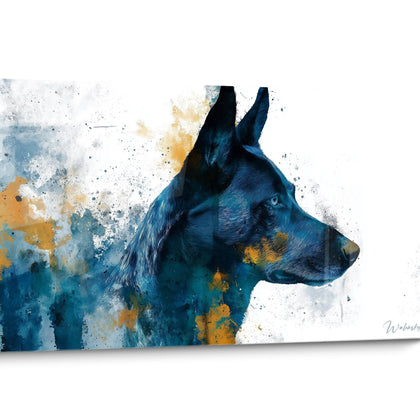
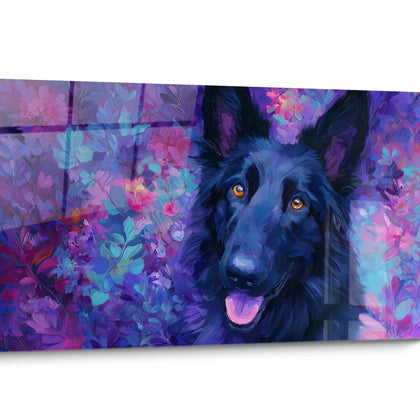

All about Dutch Shepherd Dog Portrait Wall Art
- Presentation Dutch Shepherd Portrait
- Authenticity of the Portrait
- Expression and Character
- Photographic Representation
A painting Dutch Shepherd Portrait captures the very essence of this athletic and devoted breed, immortalizing its penetrating gaze and proud head carriage. These large-format representations highlight every characteristic anatomical detail of the Dutch Shepherd: its elongated muzzle, its triangular erect ears, and its alert expression that testifies to its exceptional intelligence. The portrait dimension allows for an in-depth study of the canine face, creating a direct visual connection with the animal depicted. These wall creations offer owners and admirers of the breed a genuine celebration of this Dutch working dog, perfectly suited to contemporary interiors seeking a noble and distinctive animal touch.
The Authenticity of the Dutch Shepherd Canine Portrait
The painting Dutch Shepherd Portrait stands out for its ability to transcribe the unique morphology of this Dutch breed. Unlike generic representations, these wall creations respect the established breed standards: the slightly domed skull, the moderate frontal transition, and the dark-colored almond-shaped eyes that express vigilance and determination.
How to recognize an authentic Dutch Shepherd portrait?
The authenticity of a portrait is verified through several specific anatomical markers. The proportions of the skull to the muzzle must follow a ratio of 1:1, a fundamental characteristic of the Dutch Shepherd that distinguishes it from the Belgian Malinois. The ears, carried high and pointed, form a perfect equilateral triangle, a distinctive sign of the breed. A painting Dutch Shepherd Watercolor can sublimate these details with fluid touches that capture the essence of the brindle coat.
The faithful representation of racial expressions
Large-format Dutch Shepherd portraits allow for detailed observation of facial expressions specific to this breed. The direct and intense gaze reflects the working and concentrated temperament of these dogs used in police and protection service. Photographic portraits restore the natural shine of the eye, while artistic interpretations play on contrasts of light to accentuate the depth of the gaze.
Coat variations in portraits
The Dutch Shepherd exists in three coat varieties: short, long, and wirehaired. Portraits must respect these textural specifics to guarantee authenticity. The short brindle gold coat variety is the most photographed, offering natural light games particularly suited to imposing wall formats. For a contemporary approach, a painting Dutch Shepherd Golden magnifies the warm nuances of the typical coat.
The importance of framing in canine portraiture
A close-up framing of the face accentuates the emotional impact of the portrait, creating an imposing presence even from a distance. Large vertical formats favor the inclusion of the muscular chest, an anatomical element revealing the physical power of the Dutch Shepherd. This vertical composition integrates perfectly into circulation areas such as hallways or entrances, where the dog's gaze naturally accompanies the movement of visitors.
Expression and Character of the Dutch Shepherd in Portrait
A painting depicting a Dutch Shepherd dog transcends a simple physical representation to capture the exceptional temperament of this breed. The Dutch Shepherd's facial expression reveals its operational intelligence, its ability to maintain prolonged concentration, and its deep attachment to its master. These psychological qualities are reflected in the gaze, the position of the ears, and the muscle tension of the face.
Why does the gaze of the Dutch Shepherd captivate so much?
The gaze of the Dutch Shepherd possesses a particular intensity due to several anatomical and behavioral factors. Its slightly oblique, oval-shaped eyes create a constant evaluative expression that testifies to its permanent state of alertness. A large-format portrait amplifies this visual connection, transforming the work into an almost living presence. Paintings of Dutch Shepherd dogs in Pop Art style exploit this intensity by accentuating the chromatic contrasts of the gaze.
The representation of subtle canine emotions
High-quality portraits manage to capture the micro-expressions that differentiate active attention from simple observation. In the Dutch Shepherd, the corners of the lips, the tension of the forehead, and the orientation of the vibrissae are subtle emotional indicators. These details, often imperceptible on reduced formats, take on all their dimension on large-format wall art creations where every facial nuance becomes visible.
The direction of the gaze and the spatial composition
A portrait of a Dutch Shepherd whose gaze is directed slightly upwards evokes receptiveness to orders, a characteristic of this obedience breed. Conversely, a direct horizontal gaze engages in a peer-to-peer relationship with the observer, perfect for shared living spaces. For a more structured atmosphere, a painting of a Dutch Shepherd dog in Geometric style reinterprets these expressions through angular shapes.
Temperament markers in posture
Even in a tight portrait framing, the posture of the neck and the angle of the head reveal the temperament of the Dutch Shepherd. A slight tilt of the head manifests curiosity and intelligence, while a straight posture expresses authority and confidence. Profile three-quarter representations allow to enhance the powerful neck line, an essential morphological characteristic of this athletic breed developed for endurance.
Photographic Representation and Realistic Rendering of the Portrait
A painting depicting a Dutch Shepherd dog in a realistic photographic style is the preferred approach for lovers of anatomical precision. These high-fidelity representations capture every detail of the brindle fur, the moist texture of the truffle, and the luminous reflections in the iris, creating a particularly striking illusion of physical presence on imposing wall formats.
Photographic rendering techniques in large format
Photographic portraits of Dutch Shepherds exploit lateral lighting techniques that sculpt the volumes of the skull and accentuate the facial musculature. The shallow depth of field, characteristic of professional canine portraiture, keeps the focus on the eyes while creating a progressive artistic blur towards the background. A painting of a Dutch Shepherd dog in Black and White amplifies these contrasts by eliminating chromatic distraction.
What viewing distance for a large-format portrait?
Portraits of Dutch Shepherd in imposing mural dimensions require an optimal viewing distance of 1.5 to 2 times their height for complete perception. At close range, the micro-textural details of the fur become visible: individual guard hairs, variations in brindle pigmentation, transition areas between fawn and black tones. This double reading – overall impact at a distance, detailed exploration up close – justifies the investment in generous sizes.
The capture of frozen movement in a static portrait
Although static by definition, a successful portrait of a Dutch Shepherd suggests the latent dynamism of this energetic breed. The orientation of the erect ears, the slight opening of the mouth, and the visible tension in the masseter muscles evoke the moment preceding action. This suggestion of movement transforms the portrait into a testament to the active temperament of the Dutch Shepherd, particularly appreciated by sporting owners. To discover other interpretations, see our complete collection of painting Dutch Shepherd.
How does a large-format portrait transform a space?
Integrating a large-format portrait of a Dutch Shepherd creates an animal focal point that immediately humanizes the environment. In professional spaces related to canine services – training centers, veterinary clinics, specialty stores – these representations affirm breed expertise. In residential interiors, they serve as a visible tribute to the human-dog relationship, particularly significant for owners of this demanding breed who invest time and energy in training their companion.
FAQ: Frequently Asked Questions about Portrait Dutch Shepherd paintings
Is a Dutch Shepherd painting Portrait suitable for all interior styles?
The realistic photographic portrait particularly adapts to contemporary, Scandinavian, and industrial interiors where animal representation brings an organic touch counterbalancing the clean lines. Traditional décors benefit more from subtle artistic treatments that harmonize with classic furniture without creating a brutal stylistic break.
What is the difference between a Dutch Shepherd portrait and portraits of other shepherd breeds?
The Dutch Shepherd has distinct facial characteristics: a slightly less angular skull than the Malinois, proportionally larger ears than the German Shepherd, and above all a unique brindle coat within the group of shepherd dogs. An authentic portrait highlights these morphological specificities that allow for immediate breed identification, even for the uninitiated.
Why choose a Dutch Shepherd painting Portrait rather than an action scene?
The portrait offers an emotional intimacy impossible to achieve in action scenes. It allows a direct eye-to-eye connection that creates a psychological bond with the animal depicted. For Dutch Shepherd owners, this approach constitutes a personal celebration of their companion's individual character, beyond the breed's athletic abilities. This contemplative dimension is particularly suitable for relaxation areas where the soothing presence of the portrait accompanies moments of relaxation.
Further reading
Our articles on this topic
- Which painting size to choose for an English Bulldog portrait
- Which German Shepherd painting style to choose for your home decor
- Miniature American Shepherd painting for a modern living room: how to choose it well
- Realistic German Shepherd painting for living room: how to choose it without getting it wrong
- How to Choose a Bouvier des Flandres Portrait as a Gift
- Which painting style to choose to celebrate your Bernese Mountain Dog based on the emotion you want to convey
L'art qui suscite l'envie
Maison belge d'art mural grand format
14 jourspour changer d'avis*
Protection Walenskyincluse
Fabriquéen Italie
FormatXXL
Kit de fixationtoujours fourni
* Hors tableaux personnalisés et tailles personnalisées


