


Renaissance Baroque Wall Art
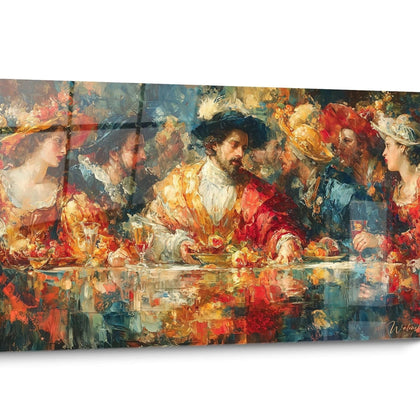
Our Renaissance Paintings Baroque collection transports you to the golden age of European art. Admire the magnificence of Renaissance-inspired artworks and classic Baroque style , where each creation evokes the grandeur of the old masters. These paintings celebrate the ornamental richness, dramatic contrasts, and emotional depth characteristic of these fascinating artistic periods. Ideal for bringing sophistication and prestige to your interior decoration.
 Philosopher Divine Nectar Painting - renaissance edition273,90 €
 Orange Flowers Symphony Wall Art - renaissance edition273,90 €
 Male Portrait Painting Muse of the Arts - Renaissance Edition273,90 €
 Woman with Flowers Passion Incarnate Painting - renaissance edition273,90 €
 Noble Lord Autumn Warmth Painting - renaissance edition228,90 €
Explore further
In Renaissance Baroque Wall Art


All about Renaissance Baroque Wall Art
- Renaissance Baroque Painting Presentation
- Masters and Artistic Influences
- Symbolism and Iconography
- Decorative Integration
A Renaissance Baroque painting represents the fascinating fusion between two major artistic movements that marked the history of European art. This transitional period, situated between the late 16th century and early 17th century, gave birth to masterful works combining the harmonious balance of the Renaissance with the dramatic exuberance of Baroque. These large-scale wall reproductions capture the very essence of this pivotal era when Italian, Flemish and Spanish masters revolutionized pictorial representation through their technical innovations and compositional audacity.
The Great Masters of the Renaissance Baroque Transition
The stylistic evolution between late Renaissance and early Baroque is magnificently embodied in the works of emblematic figures such as Caravaggio, whose revolutionary technique of dramatic chiaroscuro radically transformed pictorial approach. A Renaissance Baroque painting reflects this aesthetic mutation where geometric rigor and mathematical perspective inherited from the Renaissance confront the emotional intensity and theatrical movement characteristic of nascent Baroque.
How to recognize the influence of late Mannerism?
Mannerism constitutes the essential stylistic bridge between these two periods. Current reproductions of Renaissance Baroque paintings capture these transitional elements: elongated bodies with artificial elegance, complex spiral compositions, artificially saturated colors announcing baroque exuberance. Artists such as Tintoretto and El Greco embodied this intermediate phase where Renaissance idealization gradually gives way to baroque emotional expressivity.
The Legacy of Venetian and Roman Workshops
The great workshops of Venice and Rome played a decisive role in this artistic transformation. A large-scale Renaissance Baroque painting often evokes the monumental commissions created for papal palaces and aristocratic residences. The Venetian school, with Titian and then Veronese, developed a luxuriant chromatic approach prefiguring baroque opulence, while the Roman school favored a more architectural and sculptural approach in composition.
What technical innovations define this period?
Technical mastery reaches its apex during this transitional period. Artists perfect the technique of atmospheric perspective, systematically exploit light contrasts to create dramatic depth, and develop sophisticated glazes allowing unparalleled chromatic richness. These Renaissance Baroque paintings reproduced today in monumental wall format restore the technical virtuosity that characterizes the originals preserved in Europe's greatest museums.
Deciphering Renaissance Baroque Symbolism
Iconography constitutes a fundamental dimension for understanding a Renaissance Baroque painting. This period marks the transition between the optimistic humanism of the Renaissance and the tormented spirituality of the Catholic Counter-Reformation. Mythological scenes coexist with intensely dramatic religious representations, creating a visual repertoire of exceptional richness that continues to fascinate contemporary wall art collectors.
Religious Themes of the Counter-Reformation
The Catholic Church, confronted with the Protestant Reformation, instrumentalized art as a tool for spreading the faith. Renaissance Baroque paintings illustrating the martyrdoms of saints, mystical ecstasies or dramatic biblical scenes responded to this spiritual reconquest strategy. These compositions privilege immediate emotional impact on the viewer, abandoning Renaissance contemplative serenity in favor of theatricality aimed at evoking devotion through visceral emotion. A gilded Renaissance painting amplifies this spiritual dimension through the sumptuous use of gilt evoking divine transcendence.
What is the significance of mythological allegories?
Alongside religious themes, Graeco-Roman mythology continues to fuel artistic imagination. Ovid's metamorphoses inspire dynamic compositions where human bodies and natural elements intertwine in swirling movements. These profane allegories, often commissioned by cultivated aristocracy, allowed artists to explore sensuality and movement with a freedom impossible in ecclesiastical commissions.
Still Lifes as Philosophical Vanities
The still life genre experiences spectacular development during this period. Far from being mere exercises in technical virtuosity, these compositions of luxuriant flowers, exotic fruits, scientific instruments and precious objects function as meditations on the vanity of earthly existence. A Renaissance Baroque painting representing these symbolic assemblies invites philosophical reflection on the ephemeral and eternal, a theme perfectly suited to sophisticated interiors seeking contemplative depth.
How to interpret aristocratic allegorical portraits?
Portraiture evolves considerably during this transition, abandoning sober Renaissance realism for theatrical staging. Aristocratic patrons had themselves represented as mythological divinities or ancient heroes, in sumptuous settings saturated with symbolic attributes affirming their political power, intellectual erudition or moral virtue. These monumental allegorical portraits find new life today as centerpieces in spaces seeking timeless elegance.
Why choose a Renaissance Baroque painting for a reception room?
A large-scale Renaissance Baroque painting immediately transforms a reception room into a culturally sophisticated space. Its rich iconography offers a fascinating conversation topic for cultivated guests, while its monumental visual presence instantly establishes an atmosphere of historical refinement and intellectual depth impossible to achieve with standardized contemporary decoration.
Are Renaissance Baroque paintings suitable for prestigious professional environments?
Absolutely, these wall reproductions find their ideal place in law offices, notary practices, headquarters of heritage companies or historic financial institutions. Their aesthetic conveys values of tradition, institutional stability and cultural excellence particularly appropriate for these professional contexts where the image of seriousness and permanence constitutes a strategic commercial asset.
How does a Renaissance Baroque painting influence the perception of a private library?
In a library or reading room, a Renaissance Baroque painting establishes a fascinating visual dialogue between literary culture and artistic heritage. These works, often inspired by classical or religious texts, create intellectual coherence with surrounding books. Their monumental presence transforms the space into a sanctuary dedicated to knowledge, where written and visual heritage complement each other harmoniously to create an atmosphere conducive to scholarly reflection.
Decorative Enhancement of Renaissance Baroque Paintings
The successful integration of a Renaissance Baroque painting in a contemporary or classical interior requires a refined understanding of its visual language and spatial requirements. These large-scale wall reproductions function as architectural focal points that structure the entire surrounding space, imposing their aesthetic codes while harmonizing with adjacent decorative elements.
Which architectural arrangements magnify these monumental works?
A Renaissance Baroque painting deploys its full visual power in spaces with generous volumes, ideally with ceiling heights exceeding three meters. Rooms with architectural moldings, ornate cornices, herringbone parquets or checkered tilework create natural stylistic continuity. Architectural framing becomes visual dialogue: a marble fireplace, antique woodwork or fluted columns reinforce the intrinsic majesty of these dramatic pictorial compositions.
Lighting Strategies to Reveal Chromatic Depth
The tradition of chiaroscuro characteristic of this period requires a sophisticated lighting approach. Adjustable spotlight systems with warm color temperature (2700-3000K) recreate the ambiance of candles and torches that originally lit these works. Raking side lighting reveals chromatic nuances and compositional depth, while ambient soft lighting preserves the dramatic contrast between luminous areas and deep shadows that constitutes the very essence of nascent baroque aesthetics.
Furniture Associations for Stylistic Coherence
The furniture accompanying a Renaissance Baroque painting should privilege affirmative architectural lines rather than discreet forms. Louis XIII armchairs with their turned wood structures, carved Renaissance chests, walnut console tables with baluster feet create relevant formal echoes. In a contemporary register, minimalist furniture with generous proportions and noble materials (patinated leather, dark solid wood, brushed metals) allows harmonious cohabitation through assumed contrast rather than clumsy historicist mimicry.
Why prioritize prestigious circulation spaces?
Monumental entrance halls, grand staircases and circulation galleries constitute strategic locations for these imposing wall compositions. Historically, these works adorned precisely these spaces of social representation where they immediately affirmed the cultural status and intellectual sophistication of the owners. A Renaissance Baroque painting installed in a vestibule establishes an atmosphere of refinement as soon as the threshold is crossed, favorably conditioning the perception of the entire residence.


