









Realistic Basenji Dog Painting
The Realistic Basenji Dog Painting celebrates the incomparable elegance of this ancestral African breed. Each artwork accurately captures the distinctive features of the Basenji: its erect ears, its intelligent gaze, and its noble posture. Our collection offers realistic Basenji portraits with stunning details, revealing the natural beauty of this barkless dog. Perfect for enthusiasts of this exceptional breed, this gallery offers decorative Basenji dog paintings that sublimate any interior with refinement.
 Red Dog with Pink Tongue at Rest - Intimate Portrait - Basenji Edition273,90 €
 Dogs with Newborns Canvas - Maternal Tenderness - Basenji Edition273,90 €
 Red Dog Hunting in Autumn Landscape Painting - Wild Instinct - Basenji Edition273,90 €
 Red Dog Lying with Insect Painting - Tender Curiosity - Basenji Edition273,90 €
 Russet Dog Canvas with Intense Gaze Against Golden Sky - Striking Portrait - Basenji Edition273,90 €
 Basenji Painting Red Dog and Extended Hand - Warm Complicity - Basenji Edition273,90 €
 Sleeping Basenji Painting Golden Tones - Peaceful Dreams - Basenji Edition273,90 €
 Dog Canvas Reddish Watercolor in Contemplation - Introspective Gaze - Basenji Edition228,90 €
 Dog with Amber Eyes on Black Background Canvas - Striking Portrait - Basenji Edition228,90 €
 Painting Duo of Red and Tricolor Dogs in Verdant Setting - Canine Complicity - Basenji Edition228,90 €
Explore further
In Realistic Basenji Dog Painting
-
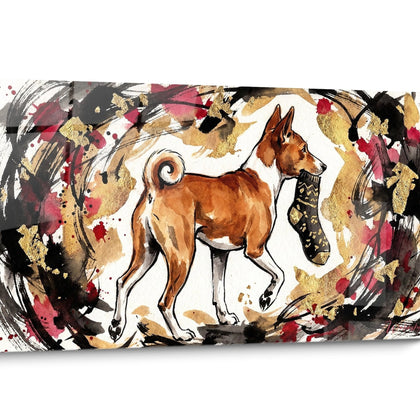 Basenji Dog Wall Art50
artworks
Basenji Dog Wall Art50
artworks
-
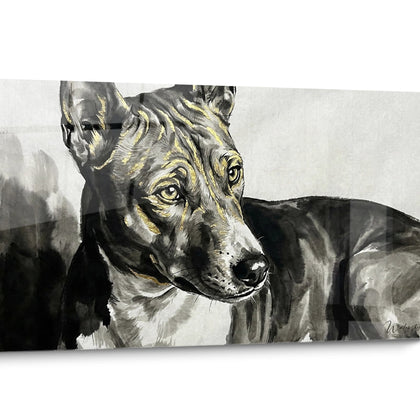 Black and White Basenji Dog Canvas4
artworks
Black and White Basenji Dog Canvas4
artworks
-
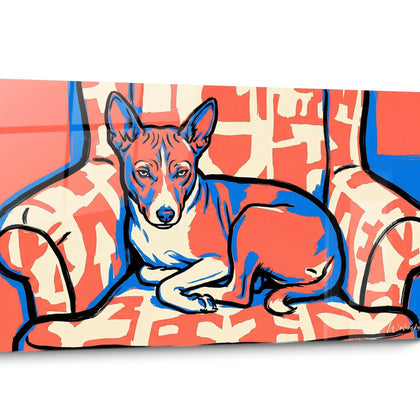 Basenji Dog Pop Art Canvas6
artworks
Basenji Dog Pop Art Canvas6
artworks
-
 Watercolor Basenji Dog Painting3
artworks
Watercolor Basenji Dog Painting3
artworks
-
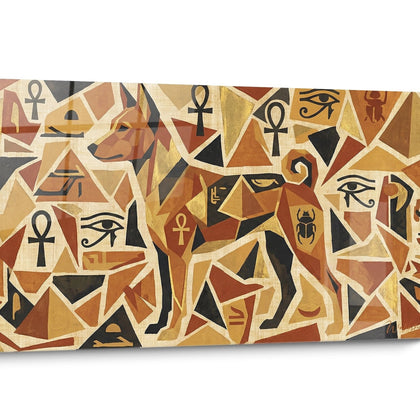 Geometric Basenji Dog Wall Art5
artworks
Geometric Basenji Dog Wall Art5
artworks
-
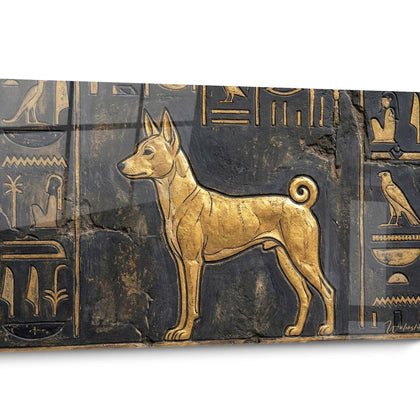 Golden Basenji Dog Wall Art14
artworks
Golden Basenji Dog Wall Art14
artworks
-
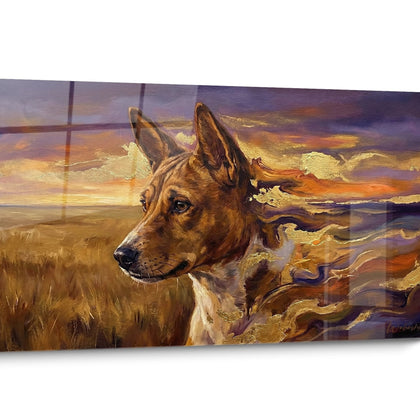 Basenji Dog Canvas Sunset4
artworks
Basenji Dog Canvas Sunset4
artworks
-
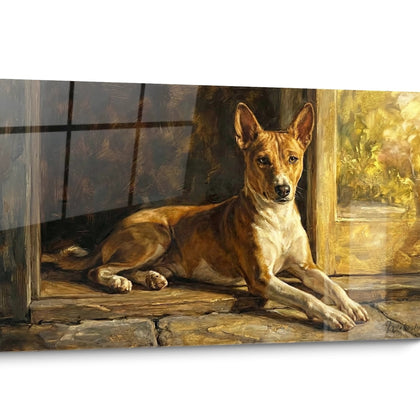 Vintage Basenji Dog Wall Art3
artworks
Vintage Basenji Dog Wall Art3
artworks
All about Realistic Basenji Dog Painting
- Presentation Basenji Painting Realistic
- Intensity of Gaze
- Photographic Textures
- Authentic Canine Presence
The realistic Basenji dog painting embodies the very essence of this enigmatic African breed through a strikingly photographic fidelity representation. This artistic approach captures every anatomical nuance of the Basenji, from the subtleties of its silky coat to the penetrating intensity of its amber gaze. Unlike stylized interpretations, the realistic version favors a near-scientific precision that allows to immortalize the natural grace and the elegant posture characteristic of this barkless dog. Lovers of this primitive breed will discover in these hyperrealistic representations a meticulous celebration of each morphological detail that makes the Basenji a unique specimen in the canine world. These large-format wall art pieces transform any space into a gallery dedicated to the raw authenticity of this ancient breed, offering a refined alternative for enthusiasts seeking decoration that transcends conventional artistic codes.
The Captivating Facial Expression of the Basenji in Realistic Representation
The realistic Basenji dog painting excels in the meticulous reproduction of the facial features that give this breed its distinctive character. The characteristic frontal wrinkles of the Basenji, veritable anatomical signatures of the species, require exceptional technical mastery to restore their depth and natural movement. These expressive wrinkles are particularly accentuated when the dog concentrates its attention, creating a facial topography that only a realistic approach can capture accurately.
How does light reveal the subtleties of the tricolor coat?
The Basenji's coat presents complex chromatic variations ranging from copper red to deep black, with delicate markings positioned. A large-scale realistic painting exploits the interplay of light and shadow to reveal the variable density of the hair according to the body areas. Auburn reflections on the flanks contrast with the denser texture of the back, while the immaculate white areas of the chest and paws capture the ambient light differently. This natural chromatic orchestration transforms each representation into an in-depth study of the optical properties of canine coat.
Capturing the typical questioning gaze of the breed
The eye intensity of the Basenji constitutes the central element of any successful realistic representation. Its almond-shaped eyes, often described as bearers of ancestral intelligence, reflect a rich emotional palette that lovers of this breed immediately recognize. The faithful reproduction of reflections in the iris, pigmentation variations and the nictitating membrane give these wall paintings an almost living presence. For collectors seeking other stylistic interpretations, the Basenji watercolor painting offers a more fluid complementary approach, while the Basenji black and white painting versions accentuate structural contrasts.
Neglected anatomical details revealed in large format
The generous dimensions of the realistic paintings allow to appreciate morphological particularities often invisible on more modest supports. The cartilaginous structure of the erect ears, with their delicate ribs and subtle asymmetrical positioning during attentive listening, becomes a decorative element in its own right. The athletic musculature of the Basenji, inherited from millennia of hunting in African terrain, is visible beneath the coat with a precision that celebrates the contained power of this breed. These anatomical details transform the painting into a documentary reference as well as a decorative piece for demanding cynophile enthusiasts.
The Techniques of Hyperrealistic Rendering Applied to the Basenji
Creating a realistic Basenji dog painting relies on artistic methodologies that borrow as much from photography as from traditional painting. This technical convergence allows for the reproduction of the distinctive short and dense coat texture of the Basenji, the fineness of which requires particular attention to chromatic transitions. Unlike long-haired breeds, the Basenji presents a body surface where each individual hair contributes to the overall impression, demanding microscopic precision in areas of high visibility.
What challenges do color transition zones pose?
The boundaries between the russet, black, and white patches on the Basenji’s coat never follow sharp geometric lines. An authentic realistic rendering reproduces these transition zones where hairs of different colors blend gradually, creating organic gradients impossible to simulate with approximate techniques. On a large-scale support, these nuances become captivating visual elements that attract the eye and invite close examination. Collectors appreciating alternative approaches can explore the geometric Basenji dog painting which stylizes these transitions, or the Basenji dog pop art painting versions which deliberately exaggerate them.
Restoring the natural sheen of healthy fur
A well-maintained Basenji presents a characteristic luminosity of its coat, a result of the structure of the fur itself and its natural distribution of sebum. Realistic representations capture these areas of variable sheen according to anatomy: more pronounced on muscular areas, more matte in skin folds. This fidelity to natural reflective properties radically distinguishes realistic paintings from more free artistic interpretations. Lovers of contrasting styles will also appreciate the gilded Basenji dog painting which amplifies this luminosity in a distinct decorative direction.
The importance of environmental context in the composition
Although centered on the canine subject, a realistic large-format Basenji painting often integrates background elements that place the animal in a credible context. The use of progressive photographic blurring directs attention to areas of maximum sharpness – typically the face and gaze – while suggesting a three-dimensional environment. This artificial depth of field, borrowed from professional photographic techniques, gives wall paintings a dimensionality that transcends the simple flat surface. Stylistic variations such as the Basenji dog sunset painting exploit these principles by adding a specific chromatic dimension to the background.
The Emotional Impact of Realistic Basenji Representations
Hyperrealism in the representation of the Basenji establishes an immediate emotional connection with viewers, particularly those familiar with this breed with its unique temperament. This artistic approach bypasses subjective interpretation to offer a visual encounter that mimics the real physical presence of the dog. Basenji owners frequently report an instant recognition of specific behavioral traits characteristic of their companion, transforming the painting into a faithful mirror of their daily experience with this primitive breed.
Why do realistic representations particularly resonate with breeders?
Dog breeders seek in realistic paintings of Basenjis a celebration of the morphological standards they strive to perpetuate. Every anatomical detail correctly reproduced – from the precise angle of ear insertion to the characteristic curve of the curled tail – validates their meticulous genealogical work. These representations become visual references that embody the racial ideal, sometimes serving as educational tools to illustrate the desired characteristics. The imposing dimensions allow these details to be displayed at cynophile events or in the reception areas of professional kennels.
Nostalgia captured for grieving owners
For those who have lost a Basenji, a personalized realistic painting offers a form of commemoration that far exceeds conventional photographs. The artistic transposition, while maintaining photographic fidelity, confers a noble permanence to the memory of the deceased companion. Large-scale murals transform the tribute into a daily decorative presence, allowing a visual connection to be maintained with the specific traits that made each Basenji unique. This memorial function fundamentally distinguishes realistic paintings from more abstract interpretations such as the vintage Basenji dog painting , which prioritize atmosphere over individual precision.
How do different realistic styles influence interior ambiance?
Integrating a realistic Basenji painting into a residential or professional space creates a focal point that dialogues differently depending on the architectural context. In sleek contemporary interiors, the photographic precision of the rendering brings a warm organic touch without compromising the minimalist aesthetic. More traditional environments benefit from the inherent nobility of realistic animal portraiture, a legacy of European aristocratic artistic traditions. The complete Basenji dog painting collection offers various stylistic variations to adapt the choice to each specific decorative project.
Is a realistic Basenji dog painting suitable for professional veterinary spaces?
Veterinary clinics and cynophile establishments find in these hyperrealistic representations a visual communication tool that demonstrates their specialized expertise. Anatomical precision reassures clients about the in-depth knowledge of racial specifics, while the aesthetic dimension helps to humanize the medical environment often perceived as cold.
How to preserve the visual quality of a realistic Basenji dog painting over time?
Large-format realistic representations require protection from exposure to ultraviolet rays, which can alter the subtle pigments reproducing the nuances of the coat. Strategic positioning avoiding direct sunlight significantly extends chromatic fidelity, particularly for reddish tones sensitive to photochemical discoloration.
Why choose a realistic Basenji dog painting rather than a simple enlarged photograph?
The artistic transposition, even hyperrealistic, brings an interpretive dimension that a raw photograph does not possess. The artist consciously selects the details to accentuate, optimizes the virtual lighting and composes the image to maximize the emotional impact, whereas the photograph captures a moment without this intentional orchestration.
L'art qui suscite l'envie
Maison belge d'art mural grand format
14 jourspour changer d'avis*
Protection Walenskyincluse
Fabriquéen Italie
FormatXXL
Kit de fixationtoujours fourni
* Hors tableaux personnalisés et tailles personnalisées


