


Pointillism Sunset Wall Art
Our Pointillism Painting Sunset collection celebrates the impressionistic technique of the pointillist masters. Each artwork captures the magic of sunsets through thousands of colored touches that harmonize to create pointillist landscapes at sunset. Shades of orange, pink, and gold intertwine in a luminous dance characteristic of this pointillist twilight painting. Ideal for bringing warmth and sophistication to your interior, this collection transforms your spaces into contemporary art galleries.
 River Landscape Painting Solitary Boat - pointillism edition273,90 €
 Impressionist Landscape Painting Reverie - Pointillism Edition273,90 €
 Twilight Landscape Painting Brilliant - Pointillism Edition273,90 €
 Sunset Painting Fire Dots - Pointillism Edition273,90 €
 Golden Shimmer Landscape Painting - Pointillism Edition273,90 €
 Fisherman Twilight Serene Painting - Pointillism Edition273,90 €
 Vibrant Sunset Landscape Painting - Pointillism Edition273,90 €
 Tuscan Landscape Sunset Painting - Pointillism Edition273,90 €
 Urban Sunset Painting Flaming Pixels - pointillism edition273,90 €
 Maritime Landscape Painting Emerald Shimmer - pointillism edition273,90 €
 Sunset Painting Undulating Reflections - Pointillism Edition228,90 €
 Marine Landscape Impressionist Emotion Painting - Pointillism Edition228,90 €
Explore further
In Pointillism Sunset Wall Art
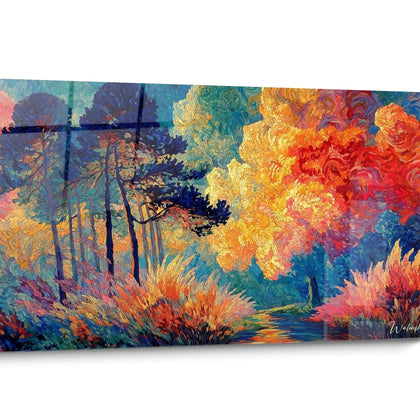


All about Pointillism Sunset Wall Art
- Painting Presentation Pointillism Sunset
- Crepuscular Light in Dots
- Chromatic Palette of the Setting Sun
- Panoramic and Meditative Atmosphere
A pointillism sunset painting transforms your interior space into a visual sanctuary where fragmented light recreates the captivating atmosphere of evenings. This artistic technique, heir to the optical research of Seurat and Signac, decomposes orange, purple and golden hues into thousands of distinct touches that merge in the gaze to reveal the depth of the last solar rays. Unlike traditional representations, these large-format wall creations exploit the optical vibration of pointillism to generate a sensation of perpetual movement, as if the light of the sunset were actually shimmering on your wall. Ideal for contemporary living spaces seeking a sophisticated artistic presence, this pictorial approach is particularly suitable for minimalist interiors where every decorative element must justify its presence by its visual intensity and its ability to structure the atmosphere.
The luminous vibration of twilight captured by the pointillist technique
Acquiring a pointillism sunset painting responds to a precise search for changing luminous atmosphere in large residential spaces. The particularity of this approach lies in its ability to reproduce the chromatic variations of the twilight sky by juxtaposing thousands of colored dots that optically dialogue. Unlike uniform blocks of color, this method generates a three-dimensional depth where layers of light seem to naturally overlap.
How does pointillism amplify the perception of declining sunlight?
The fragmentation of the pictorial matter into discontinuous touches creates a shimmering effect that perfectly mimics the reverberation of the last rays on the horizon. In an imposing wall format, this vibration becomes architectural and modifies the overall perception of space. The orange, magenta and violet tones respond to each other at varying distances depending on the angle of observation, generating a renewed visual experience with each movement in the room.
Optical interactions with natural residential lighting
Owners of vast west-facing living rooms note that these wall creations dialogue exceptionally well with declining natural light. When the rays of the evening penetrate laterally into the space, they reactivate the pigments differently according to their incidence, creating a disturbing correspondence between the real sky and its fragmented representation. This synchronization transforms the living room into a chromatic observatory where art and nature temporarily merge.
Differentiation from classic impressionistic approaches
While a abstract pointillism painting explores non-figurative compositions, the representation of the sunset retains a referential mooring while exploiting optical decomposition. This tension between recognizable figuration and technical abstraction offers a perfect balance for collectors seeking an accessible work without compromising on formal sophistication. Large formats accentuate this duality by encompassing the peripheral visual field.
Enhancement of architectural transition spaces
Spacious hallways, mezzanines or stair landings particularly benefit from these horizontal compositions that accompany movement. The visual progression of warm tones to the dark areas of the night sky creates a directional gradient that naturally guides circulation while offering a meditative focal point during pauses.
Specific chromatic palette and strategies for integration into contemporary interiors
Investing in a painting sunset pointillism involves a fine understanding of its distinctive color range and its resonances with the surrounding materials. The characteristic hues—cadmium oranges, quinacridone pinks, dioxazine purples, and golden yellows—require an environment capable of supporting their intensity without creating visual dissonance.
What architectural materials magnify these twilight compositions?
Raw concrete, brushed steel, or grey natural stone surfaces constitute ideal backgrounds that neutralize any chromatic competition. In industrial lofts or minimalist villas, this association creates a dramatic contrast where the luminous warmth of the pointillist sky radiates against the mineral coolness of the structures. Large-scale murals fully exploit this opposition, establishing themselves as the dominant chromatic source of the space.
Cycles of observation and daily perceptual variations
Acquirers of these monumental works report a fascinating cyclical temporal experience. In the morning, under indirect lighting, violet and blue-night points visually dominate, creating a contemplative atmosphere. Midday brightness reveals the structural complexity of the pointillist composition. It is at the actual dusk that the magical synchronization occurs: the work dialogues with the exterior sky, creating a double reading between representation and reality.
Integration into spaces dedicated to meditation and well-being
High-end yoga studios, professional massage rooms, and residential relaxation spaces widely adopt these compositions for their ability to induce a progressive state of calm. The hypnotic repetition of colored points, combined with the soothing theme of the sunset, facilitates the attentional anchoring necessary for meditative practices. Generous dimensions allow for complete visual immersion even in a lying position.
Compatibility with programmable architectural lighting systems
Modern home automation systems allow programming light sequences that evolve the appearance of the sunset pointillism painting throughout the day. LED projectors with variable color temperature can simulate different observation conditions, alternately revealing warm or cool color layers according to the programmed time, transforming the work into a dynamic architectural element.
Panoramic dimension and psychological impact of monumental formats
Acquiring a painting sunset pointillism in a large format responds to a desire for an immersive experience rather than simple wall decoration. These extended horizontal compositions reproduce the real scale of a twilight horizon, engaging peripheral vision and creating a fictitious window onto an infinite luminous landscape.
Why prioritize panoramic formats for this theme?
The representation of the sunset requires a significant width to restore the characteristic extent of the natural phenomenon. A restricted format would betray the very essence of this spatial experience. Generous dimensions also allow the pointillist technique to fully develop its optical effects: at the appropriate distance, the thousands of points merge into complex atmospheric gradients, while close observation reveals the fascinating rhythmic structure of the composition.
Applications in demanding professional environments
Prestigious office reception areas, specialized medical waiting rooms, and hotel reception spaces adopt these wall art pieces for their ability to humanize volumes that are often impersonal. The universal reference to sunset emotionally touches all cultural audiences, while the technical sophistication of pointillism signals a high-end positioning. Large formats assert themselves visually without aggression, creating a memorable and soothing presence.
Positioning strategies for open architectural spaces
Contemporary open plans, where kitchens, dining rooms, and living rooms form a continuum, require structuring elements that subtly delineate functional zones. A pointillism sunset painting of considerable dimensions, positioned on the main wall of the living room, creates a magnetic focal point that hierarchizes the space without physical partitions. Its warm palette naturally defines the area for conviviality and relaxation.
What is the optimal viewing distance to fully appreciate the technique?
Monumental formats require a minimum distance of three to four meters for the optical fusion effect to occur completely. This spatial constraint naturally lends them to vast living rooms, open-plan offices, or mezzanines where distance is available. At this distance, the chromatic vibration reaches its maximum intensity, creating a sensation of moving light that transforms the wall into an energetic surface.
Perceptual evolution according to seasons and ambient light
Owners note that their pointillism sunset painting seems to evolve with the seasons. In winter, under early artificial light, warm tones radiate intensely against the outside darkness. In summer, abundant light reveals subtle nuances in the dark areas. This perceptual variability enriches the ownership experience and maintains visual interest over the long term.
FAQ: Essential questions about pointillism sunset paintings
Is a pointillism sunset painting suitable for spaces with strong natural light?
Absolutely, these compositions resist remarkably well to intense light exposure thanks to the optical depth generated by the superposition of thousands of colored points. Unlike flat areas that may appear washed out in strong light, the pointillist technique retains its vibration and complexity even in full sun, revealing chromatic interactions invisible under subdued lighting.
What is the recommended contemplation time to benefit from the soothing effects of a pointillism sunset painting?
Studies on the psychological impact of natural representations suggest that an observation of three to five minutes is sufficient to induce a measurable reduction in stress. The visual complexity of pointillism naturally extends this duration by offering multiple levels of reading that maintain attention without conscious effort, creating a form of passive visual meditation.
Do pointillism sunset paintings work in Scandinavian interiors with a clean style?
Perfectly, because their warm palette precisely compensates for the typical chromatic coolness of Nordic interiors while respecting the requirement for formal simplicity. The contrast between the sobriety of light furniture and the luminous intensity of the pointillist sunset creates a balanced visual tension, adding the emotional dimension often absent from minimalist interiors while maintaining their overall aesthetic coherence.
Further reading
Our articles on this topic
- How Do Painters Capture the Golden Light of Sunset?
- Torii painting at sunset: the perfect ally for a cosy atmosphere
- Sunset painting for a warm dining room
- Sunset palm tree painting: creating a soothing tropical mood in an adult bedroom
- Sunset landscape painting: create a warm atmosphere in your office
- Sunset beach painting: how to integrate it into a modern living room
L'art qui suscite l'envie
Maison belge d'art mural grand format
14 jourspour changer d'avis*
Protection Walenskyincluse
Fabriquéen Italie
FormatXXL
Kit de fixationtoujours fourni
* Hors tableaux personnalisés et tailles personnalisées


