


Abstract Pointillism Canvas
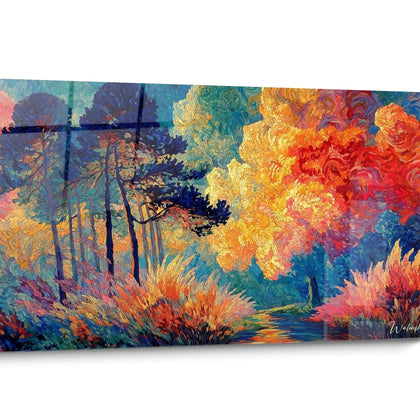
Our Pointillism Painting Abstract collection celebrates the meeting between historical pointillist technique and contemporary art. Each artwork reveals fascinating compositions where points of pure color create captivating visual harmonies. Modern pointillist art transforms your spaces with original creations combining precision and spontaneity. These abstract pointillist canvases bring depth and dynamism to your interior decoration, offering a unique and refined visual experience.
 Landscape Painting Colorful Vibrations - pointillism edition273,90 €
 Explosion Primordial Breath Painting - pointillism edition273,90 €
 Natural Pixels Landscape Painting - Pointillism Edition273,90 €
 Wave Energy Marine Painting - Pointillism Edition273,90 €
 Sun Spiral Painting Hypnotic - pointillism edition228,90 €
 Landscape Painting Gradient Rainbow - pointillism edition228,90 €
 Spectral Circles Painting Energetic - pointillism edition228,90 €
 Golden Sun Landscape Painting - Pointillism Edition228,90 €
Explore further
In Abstract Pointillism Canvas


All about Abstract Pointillism Canvas
- Pointillism Abstract Wall Art Presentation
- Visual Mastery of Points
- Monumental Abstract Depth
- Optical Chromatic Vibrations
The pointillism abstract wall art embodies the fusion of two revolutionary movements in art history: the divisionist technique of pure color points and contemporary non-figurative expression. This encounter creates mural compositions of remarkable visual intensity, particularly suited to architectural spaces demanding a strong graphic presence without imposed figurative narrative. Monumental formats amplify the optical effect of chromatic vibration, transforming each work into an evolving perceptual experience according to viewing angle and ambient luminosity. These large-scale creations redefine modern wall decoration by proposing active rather than passive contemplation, where the eye continuously reconstructs the overall chromatic composition from thousands of distinct colored fragments.
Optical Construction Through Chromatic Fragmentation
The pointillism abstract wall art relies on meticulous orchestration of thousands of colored points which, unlike classical figurative approaches, draw no recognizable form but generate purely visual vibratory fields. This technique exploits the retina's capacity to optically merge juxtaposed hues, creating internal luminosity impossible to obtain through traditional pigment mixing. In monumental formats, the calculated spacing between each point creates atmospheric depth where color layers appear to float at different distances from the mural plane.
How do variable densities structure abstract space?
Variations in point concentration define zones of visual tension without resorting to contours. Dense accumulations generate compact chromatic masses, while dispersals create luminous breathing spaces. This rhythmic modulation transforms the two-dimensional surface into perceived three-dimensional environment, particularly effective in contemporary architectural spaces where spatial fluidity takes precedence over rigid segmentation. The absence of figurative narrative liberates personal interpretation, making each observation unique according to the viewer's emotional state.
Chromatic intensification through pure juxtaposition
Unlike subtractive mixtures that dull hues, the divisionist method of pointillism abstract wall art preserves maximum saturation of each pigment. Adjacent complementaries exalt one another, generating effects of optical scintillation amplified by large dimensions. This continuous vibration naturally captures peripheral attention, creating a dynamic focal point even in vast architectural volumes. Subtle tonal progressions, built through accumulation of close nuances, produce atmospheric gradients of unmatched refinement.
Adaptation to daily light cycles
The pointillist structure reacts to natural lighting variations with particular sensitivity. Grazing morning light accentuates the microscopic relief of each point, revealing the physical texture of the surface. Zenith light fuses hues further into unified masses, while twilight ambiences isolate the brightest tones. This continuous transformation throughout the day multiplies possible readings of the same composition, fully justifying investment in a monumental format that maximizes these perceptual metamorphoses.
Monumental Abstraction and Its Spatial Repercussions
The transition of pointillism abstract wall art to architectural dimensions radically amplifies its psychophysiological impact on the environment. Beyond 120 centimeters, the composition exceeds direct field of vision, forcing active eye movement that transforms static contemplation into corporal experience. This monumental scale establishes an immersive relationship where the work no longer merely adorns the space but reconfigures it perceptually, creating an enveloping chromatic atmosphere particularly sought after in contemporary minimalist architectures.
The dissolution of compositional boundaries
In imposing formats, the painting's edges become secondary to the internal visual expansion of the pointillist composition. The eye no longer perceives a defined frame but a window toward a potentially infinite chromatic continuum. This sensation of openness effectively counterbalances the massiveness of load-bearing walls, introducing paradoxical lightness despite substantial physical presence. Residential spaces with high ceilings or generously proportioned professional environments find in this approach a decorative solution respecting architectural fluidity without creating visual rupture.
What effects do large formats generate on temporal perception?
Observing a pointillism abstract wall art of large dimension requires significantly greater apprehension time than figurative compositions. The eye must travel, analyze, and synthesize thousands of point-based information before grasping overall harmony. This contemplative slowness imposes welcome deceleration in contemporary environments saturated with instantaneous visual stimuli. Professional reception spaces exploit this effect to establish an atmosphere of reflective sophistication, subtly signaling corporate culture valuing analytical depth.
Sculptural anchoring in architecture
A monumental format acquires quasi-sculptural presence that dialogues with surrounding structural elements. The rhythmic repetition of points creates formal correspondences with contemporary architectural textures: textured concrete, perforated metal cladding, geometric lattice screens. This visual resonance unifies the work and its spatial context rather than opposing them. In open residential environments, the pointillism abstract wall art architecture establishes visual bridges between distinct functional zones, creating decorative cohesion without physical compartmentalization.
Chromatic Dynamics and Their Spatial Applications
The pointillism abstract wall art exploits optical interactions between colors in scientifically orchestrated manner to generate specific spatial ambiances. Cool ranges built around deep blues, teals, and violets create spatial recession effects, particularly effective for visually enlarging constrained volumes. Conversely, warm progressions based on saturated oranges, vermilions, and solar yellows generate energizing proximity, ideal for dynamizing collective creativity spaces or family living zones.
Tonal progressions as atmosphere modulators
Gradual transition from one chromatic family toward its complement creates visual trajectories subtly guiding eye movement. These optical pathways can be oriented vertically to accentuate ceiling height, or horizontally to amplify wall width perception. Compositions centered toward a tonal convergence point establish magnetic focal effect, while eccentric dispersals generate expansive energy. This directional versatility allows precise adaptation of the work to specific architectural constraints of each location.
Which chromatic combinations optimize professional spaces?
Contemporary tertiary environments seek decorative solutions stimulating concentration without creating visual fatigue. Balanced triadic accords, where three equidistant hues on the chromatic circle distribute in points of varying densities, maintain constant visual dynamism without aggressive dominance. Analogous harmonies, grouping adjacent nuances, establish soothing cohesion favorable to activities requiring sustained attention. Monumental format amplifies these psychophysiological effects, transforming workspace into cognitively optimized environment.
Interaction with contemporary architectural materials
Abstract pointillist surfaces establish fascinating textural dialogues with mineral and metallic finishes privileged in current architecture. Facing smooth concrete, point density brings contrasting visual tactile richness. Associated with brushed metal coatings, chromatic scintillation creates sophisticated luminous correspondences. In residential environments integrating natural woods, pointillist compositions introduce urban sophistication balancing organic warmth. This material adaptability explains growing adoption of these works in signature architectural projects seeking equilibrium between visual avant-garde and warm habitability.
Which pointillism abstract wall art suits high natural light spaces?
Environments bathed in abundant natural light require compositions integrating medium to dark tones to avoid glare from overexposure. Progressions including deep blues, dense purples, and olive greens partially absorb excessive luminosity while preserving sufficient chromatic vibration. Vertical formats exploit luminosity variation between upper portion (more exposed) and lower (more shaded), creating visual metamorphoses throughout the day.
How to integrate this type of work in existing decoration?
Pointillist abstraction functions as chromatic transition element between different decorative zones. Selecting a composition echoing a dominant hue from surrounding furnishings ensures coherence, while its tonal variations gradually introduce new nuances without abrupt rupture. In eclectic interiors, the work acts as visual synthesis unifying disparate elements through its multiple simultaneous chromatic references.
Why prioritize abstract pointillism for large volumes?
Vast architectural spaces require decorative solutions maintaining visual interest at different observation distances. The pointillist technique offers this versatility: appreciable in close vision for technical virtuosity of each individual point, and in distant vision for overall chromatic cohesion. This dual distance/proximity reading economically justifies investment in monumental format remaining visually performant from all possible observation points within the volume.
Further reading


