


Pointillism Flower Painting
The Painting Pointillism Flower captures botanical beauty through the iconic technique of thousands of color points. This collection celebrates pointillist floral art with compositions where each touch of paint forms luminous petals and vibrant gardens. Our modern floral pointillism creations transform your spaces into refined galleries, combining Impressionist heritage and contemporary aesthetics for elegant and timeless wall decor.
 Flower Poetic Emergence Painting - Pointillism Edition273,90 €
 Flower Blooming Vibrant Painting - Pointillism Edition273,90 €
 Flower Metamorphosis Light Painting - Pointillism Edition273,90 €
Explore further
In Pointillism Flower Painting
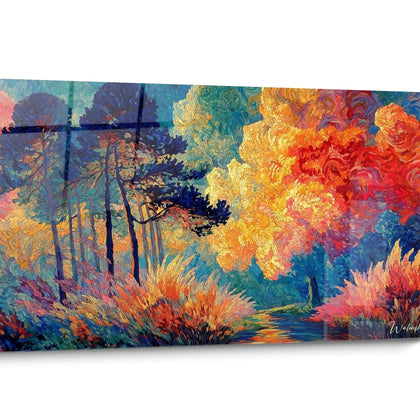


All about Pointillism Flower Painting
- Presentation Painting Pointillism Flower
- Botanical Pointillist Atmosphere
- Chromatic Floral Dynamism
- Large-Scale Decorative Impact
A painting pointillism flower transforms the interior space through its unique ability to fragment natural light while enhancing organic plant forms. This divisionist technique applied to floral motifs creates a visual vibration that evolves according to the viewing angle and ambient light intensity, offering a renewed contemplative experience with each passage. The floral compositions treated in juxtaposed dots progressively reveal their chromatic nuances, inviting the eye to mentally reconstruct petals, pistils, and corollas in a constant dialogue between proximity and distance.
The Botanical Essence Revealed by Chromatic Division
The painting pointillism flower exploits optical fragmentation to restore the ephemeral beauty of plants with a light intensity unattainable by traditional pictorial techniques. Each colored dot acts as an individual receptacle of pure pigment, allowing adjacent tones to fuse directly on the retina rather than on the painted surface. This technical particularity amplifies the natural brightness of floral compositions, making poppies reds, lavenders violets, or sunflowers yellows vibrate with remarkable chromatic purity.
How does pointillism amplify the luminosity of floral motifs?
The juxtaposition of distinct dots creates microscopic spaces where ambient light reflects differently according to the time and solar orientation. In a south-facing living room, a large-scale pointillism flower painting captures the variations in morning and evening light intensity, progressively transforming the appearance of the petals throughout the day. Areas where orange and yellow dots are concentrated seem to literally illuminate during the passage of the golden rays of twilight, creating a natural animation without technological intervention.
The evolving perception of botanical details
In the immediate vicinity, the observer distinguishes the constellation of colored touches that compose each plant element – an approach that reveals the methodical construction of the work and its quasi-scientific dimension in chromatic decomposition. As you gradually move away, this apparent mosaic merges into coherent organic forms where stems, foliage, and flowers emerge clearly. This perceptual duality makes the pointillism flower painting an ideal subject for circulation areas such as corridors or entrance halls, where physical movement successively reveals dotted abstraction and botanical figuration.
Decorative synergy with other divisionist approaches
Integrating an abstract pointillism painting into the same environment creates a fascinating visual conversation between naturalist representation and pure formal exploration. This association allows exploring different facets of the divisionist technique while maintaining a global aesthetic coherence. Monumental formats are particularly imposing in the generous volumes of lofts or duplexes, where their structuring presence dialogues with the purified contemporary architecture.
Chromatic Vibrations and Optical Dynamism of Floral Compositions
The painting pointillism flower generates a fundamentally different visual dynamism than conventional botanical representations thanks to the phenomenon of active optical mixing. Simultaneous contrasts between complementary dots create a chromatic effervescence that confers a persistent organic vitality to floral compositions. The borders where petals and backgrounds meet vibrate with a particular energy, zones of colored tensions where the eye constantly makes micro-perceptual adjustments.
What effect does the variable density of dots have on floral depth?
The modulation of the spacing between pointillist touches allows to sculpt the volumes of corollas and calyxes visually without resorting to traditional gradients. In areas with high condensation, the chromatic saturation increases and suggests the curved parts of petals receiving direct light. Conversely, the spaces where the points gradually spread evoke areas of shadow and recession, giving a surprising three-dimensionality to floral motifs. This optical stratification works particularly well in spaces requiring visual depth, such as narrow rooms or hallways, where the large-scale floral pointillism painting creates a perceptual opening compensating for architectural constraints.
Chromatic temperature orchestration in pointillist bouquets
The calculated alternation between warm and cool tones within the same floral composition generates a visual thermal balance particularly suited to contemporary interiors with neutral palettes. The cool blues and violets of the shaded areas contrast with the warm oranges and pinks of the illuminated parts, creating an autonomous chromatic regulation. This property makes the floral pointillism painting exceptionally versatile in its decorative integration, capable of harmonizing with both minimalist Scandinavian environments and warmer Mediterranean or bohemian atmospheres.
Psychological impact of floral dotted rhythms
The rhythmic repetition of colored touches induces a soothing effect comparable to the natural patterns observed in botanical gardens or wild meadows. This visual regularity, combined with the organic irregularity of floral shapes, simultaneously stimulates the brain areas associated with order and creativity. Demanding professional environments such as medical offices, mediation spaces, or creative offices particularly benefit from this double cognitive stimulation, promoting productive concentration and mental relaxation.
Monumental Presence and Spatial Structuring through Floral Pointillism
The generous formats of the floral pointillism painting radically transform the volumetric perception of contemporary residential and professional spaces. A large-scale floral composition treated in divisionist technique creates a magnetic focal point that visually reorganizes the entire room around its chromatic presence. The multiplication of thousands of colored points at a monumental scale generates a dense visual texture that simultaneously absorbs and diffuses the gaze, creating an unprecedented depth of field even on a flat surface.
How to size a floral pointillism painting in a generous volume?
For spaces with ceilings over 3 meters high, prioritize vertical formats where stems and floral compositions naturally rise, accompanying the ascending architecture. In cathedral-like living rooms or mezzanines, a floral pointillism painting of at least 150x200 cm establishes a harmonious proportion with the surrounding volume without being visually overwhelmed. The pointillist technique retains its readability even at a large scale, each touch remaining perceptibly individually during close approaches, offering a detail richness proportional to the imposing dimensions.
Visual zoning and spatial circulation around floral compositions
The installation of a painting with a monumental floral pointillism naturally creates zones of attraction and contemplation that influence movement within the space. Visitors are instinctively drawn to these vibrant compositions, creating points of slowing conducive to exchanges in reception areas or waiting rooms. This magnetic property is particularly valuable in high-end commercial environments – galleries, concept stores, boutique hotels – where visitor flow management directly contributes to the customer experience.
Perceptual evolution according to monumental distance
Very large formats allow for an extended discovery sequence impossible with standard dimensions. At ten meters, only the overall floral impression emerges in its botanical coherence. At five meters, the chromatic variations between zones become more precise. At two meters, the pointillist structure becomes manifest. At fifty centimeters, each touch reveals its internal nuances and applicative gesture. This perceptual gradation multiplies the possible contemplative experiences and constantly renews visual interest, an essential quality for decorative acquisitions intended to remain present daily for years.
What maintenance does a large-scale pointillism floral painting require?
Large surfaces require regular dusting with an antistatic microfiber cloth to preserve the brilliance of the pigments and the sharpness of the chromatic contrasts. Avoid prolonged direct exposure to UV rays, which could alter certain delicate shades, particularly violets and pinks often present in pointillist floral compositions.
Is a pointillism floral painting suitable for demanding professional spaces?
Absolutely, the technical rigor of the divisionist method combined with the universally appreciated theme of floral motifs creates a sophisticated decorative proposal without being intimidating. Medical, legal, or financial environments find an accessible elegance that humanizes the space while maintaining professional credibility.
Can a pointillism floral painting be combined with minimalist contemporary furniture?
This combination works remarkably well because the visual density of the pointillist technique effectively compensates for the streamlined lines of contemporary furniture. The painting brings the missing chromatic and textural complexity to minimalist environments, creating an enriching aesthetic balance without visual overload.
L'art qui suscite l'envie
Maison belge d'art mural grand format
14 jourspour changer d'avis*
Protection Walenskyincluse
Fabriquéen Italie
FormatXXL
Kit de fixationtoujours fourni
* Hors tableaux personnalisés et tailles personnalisées


