


Historical Military Wall Art
Historical Military Wall Art : our collection transports you to the heart of great battles and decisive moments in history. Each artwork celebrates the courage, honor, and bravery of soldiers throughout the ages. From scenes of epic Napoleonic battles to portraits of legendary generals in uniform, these creations captivate through their dramatic intensity. Perfect for history enthusiasts and collectors, they bring a noble dimension to your interior while honoring the memory of heroes.
 Silent Dawn Soldier Wall Art - World War One Edition228,90 €
 Steel motorcycle cavaliers painting - World War Two edition228,90 €
 Soldiers Battle Echoes Painting - World War II Edition273,90 €
 Soldier Devastated Path Wall Art - World War Two Edition273,90 €
 Band of Brothers Soldiers Painting - World War II edition273,90 €
 Soldier Smoke Tragedy Painting - Second World War Edition228,90 €
 Soldier Purple Mists Canvas - World War Two edition273,90 €
 Pilot Guardian of the Sky Artwork - World War II Edition228,90 €
 Soldier Ashes of Duty Painting - World War II Edition228,90 €
 Soldiers Fatal Mist Wall Art - Second World War edition228,90 €
 Soldier Clouds of Blood Painting - French Revolution edition273,90 €
 Soldiers Floating Banner Wall Art - French Revolution Edition273,90 €
 Soldier Lost Gaze Painting - World War I Edition273,90 €
 Soldier Mournful Silence Wall Art - World War One Edition273,90 €
 Soldier Painting Steel Gaze - edition World War One Artwork273,90 €
 Soldier Painting Dust of Honor - World War I Painting edition273,90 €
 Soldier Painting Inner Storm - World War I Painting Edition273,90 €
 Soldiers Twilight of War Wall Art - World War I Edition273,90 €
 Soldier Frozen Soul Artwork - World War I Edition273,90 €
 Soldiers Hardened Souls Wall Art - World War One Edition273,90 €
 Gas Mask Ghost Breathing Wall Art - World War I Edition273,90 €
 Soldier Distant Hope Wall Art - First World War Edition273,90 €
 Soldier Helmet Witness Canvas - World War I Edition273,90 €
 Soldier Drops of Bravery Painting - First World War Painting Edition228,90 €
Explore further
In Historical Military Wall Art
-
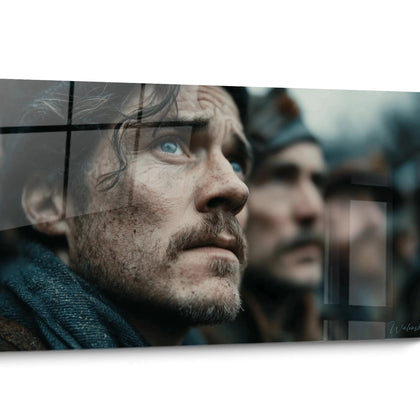 Historical Wall Art123
artworks
Historical Wall Art123
artworks
-
 Black and White Historical Wall Art12
artworks
Black and White Historical Wall Art12
artworks
-
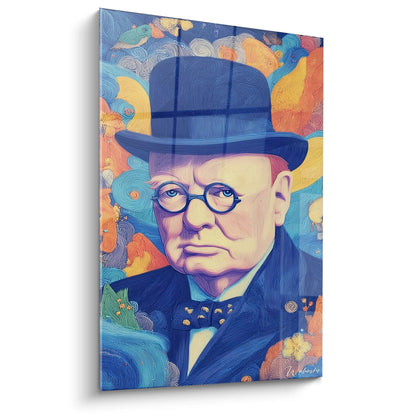 Historical Pop Art Canvas8
artworks
Historical Pop Art Canvas8
artworks
-
 Golden Historical Artwork12
artworks
Golden Historical Artwork12
artworks
-
 Historical Portrait Artwork24
artworks
Historical Portrait Artwork24
artworks
-
 Cubist Historical Wall Art5
artworks
Cubist Historical Wall Art5
artworks
-
 Vintage Historical Wall Art18
artworks
Vintage Historical Wall Art18
artworks
-
 Expressionist Historical Painting5
artworks
Expressionist Historical Painting5
artworks
-
 Historical Equestrian Wall Art9
artworks
Historical Equestrian Wall Art9
artworks


All about Historical Military Wall Art
- Historical Military Wall Art Presentation
- Periods and Major Battles
- Collections and Authenticity
- Acquisition Guide
The historical military wall art embodies the collective memory of great conflicts and military epics that have shaped our civilization. These monumental works, designed to capture the dramatic intensity of confrontations, the strategic rigor of combat formations and the heroism of soldiers, transform your space into a genuine commemorative gallery. Each large-scale reproduction testifies to a decisive moment in world military history, offering visual immersion in the events that redefined geopolitical borders and lastingly marked the historical consciousness of nations.
The Great Napoleonic Campaigns and Their Wall Representations
The historical military wall paintings dedicated to Napoleonic campaigns constitute the most sought-after segment among collectors and enthusiasts of imperial history. These monumental representations immortalize emblematic battles such as Austerlitz, Jena and Wagram, where the Grande Armée demonstrated its tactical superiority and legendary discipline.
How to identify authentic First Empire battle scenes?
The authenticity of a Napoleonic historical military wall painting is recognized by several distinctive elements: the precision of regimental uniforms with their specific colors, the geometric arrangement of infantry squares, the faithful representation of the Imperial Guard's horse artillery, and topographic details corresponding to actual battlefields. The large dimensions allow appreciation of the complexity of troop movements and the density of combat formations characteristic of this era.
World conflicts in decorative military imagery
Beyond the Napoleonic wars, paintings representing the two world conflicts appeal to a clientele seeking works laden with family and national memory. Scenes of the Normandy landing, the Battle of Verdun or Pacific combat offer a particularly powerful commemorative dimension in heritage offices, institutional reception halls or private spaces dedicated to memorial transmission.
Why prioritize monumental formats for these works?
The imposing size of a historical military wall painting responds to an essential narrative requirement: restoring the epic dimension and strategic complexity of confrontations. A generous format allows simultaneous distinction of different army corps, appreciation of battlefield depth and understanding of the scale of engaged forces. This monumentality also reinforces emotional impact and transforms the work into a genuine temporal window onto these decisive historical moments. For a different artistic approach to historical themes, some collectors also explore cubist historical painting which geometrically deconstructs war scenes.
Works dedicated to medieval battles such as Agincourt, Crécy or Bouvines particularly attract heraldry enthusiasts and historical reenactment fans. These representations detail characteristic weaponry, feudal banners and tactical formations specific to chivalry, offering total immersion in the martial universe of the Middle Ages. Investment in these pieces testifies to a genuine patrimonial preservation approach.
Building a Thematic Military Wall Collection
Developing a coherent collection of historical military wall paintings requires a methodical approach favoring either chronological unity, geographic focus, or specialization by army type. Discerning collectors organize their acquisitions around precise narrative axes: the evolution of French military art from the 17th to 20th century, major colonial battles, or independence conflicts in America and South America.
What chronological progression to adopt for your private gallery?
The progressive construction of a wall ensemble dedicated to military history gains coherence when following temporal logic: begin with the founding major battles of the Old Regime such as Rocroi or Fontenoy, continue with revolutionary and imperial epic, then integrate 19th century conflicts (Crimean War, colonial campaigns) before concluding with 20th century confrontations. This progression creates a genuine educational journey visible on your walls.
The importance of uniformological details in perceived value
A superior quality historical military wall painting distinguishes itself through rigorous uniformological documentation. Discerning collectors scrutinize the fidelity of shakos, epaulettes, baldrics and regimental insignia. Large dimensions then become essential to appreciate these subtleties differentiating grenadiers from voltigeurs, hussars from chasseurs, or various line regiments. This precision confers historical legitimacy on the work and justifies its premium positioning.
How to associate multiple military works in the same space?
The spatial arrangement of several historical military wall paintings follows specific museographic principles. Favor linear chronological arrangement along an institutional corridor, or opt for thematic grouping in a dedicated room. Monumental formats require generous spacing between each work to avoid visual saturation and permit individual contemplation of each battle. Lighting should evoke the atmosphere of historic armories.
Scenes representing heavy cavalry charges constitute a particularly sought-after sub-segment. French Cuirassiers at Eylau, British cavalry at Waterloo, or Cossack charges: these moments of equestrian bravery offer spectacular visual dynamism. The emotional power of these representations makes them centerpieces for private libraries, traditional smoking rooms or masculine spaces attached to classical martial values. Their decorative impact remains incomparable.
Investing in the Visual Heritage of Great Campaigns
The acquisition of a historical military wall painting represents far more than a simple decorative purchase: it is an act of memorial preservation and cultural affirmation. These monumental works are particularly suited to institutional spaces such as boardrooms of century-old family companies, law offices specializing in patrimonial law, primary residences of families attached to their military lineage, or private clubs celebrating national traditions.
What technical criteria to prioritize before purchase?
Before investing in a large-scale historical military wall painting, carefully examine image definition which must allow detail readability even from close proximity, chromatic depth essential for restoring battlefield atmosphere, resistance to hygrometric variations in historic rooms often less climate-controlled, and reproduction quality rivaling museum standards. An imposing format amplifies any defects: therefore demand technical excellence.
For which buyer profiles are these works intended?
The historical military wall painting market primarily attracts military history collectors, descendants of officer lineages wishing to honor family memory, enthusiasts of ancient strategy and tactics, leaders of patriotic or commemorative institutions, as well as decorators of traditional masculine spaces. These buyers share particular sensitivity for transmitting values of courage, discipline and sacrifice embodied by these representations.
How to evaluate the historical relevance of a reproduction?
The legitimacy of a historical military wall painting rests on its conformity to documentary sources: battle plans preserved in military archives, contemporary general staff accounts, officers' correspondence, and period representations created by painters officially attached to armies. Works faithfully reproducing compositions of recognized masters such as Detaille, Meissonier, Vernet or Yvon offer the best authenticity guarantees and justify their positioning in demanding collections.
Historical naval battles also constitute a sought-after segment, notably confrontations from the age of sail: Trafalgar, the Battle of the Nile, Chesapeake, or Barbary corsair combats. These maritime scenes provide different strategic dimension, highlighting squadron maneuvers, naval artillery duels and crew heroism. Their installation in coastal residences, historic yacht clubs or shipowner offices creates particularly appreciated thematic coherence.
Where to place a historical military wall painting in a traditional residence?
Preferred locations include the family library where the work dialogues with archives and historical volumes, the executive office to inspire leadership and determination, the entrance hall as immediate identity affirmation, the formal dining room where it stimulates cultivated conversations, or the monumental stairwell whose vertical dimensions allow installation of exceptional formats.
How does a historical military wall painting enhance real estate heritage?
Beyond its decorative function, an authentic historical military wall painting of museum quality contributes to patrimonial enhancement of a character property. It testifies to occupants' cultural level, reinforces the historical identity of the place, creates narrative continuity with classical architecture, and constitutes an element of intergenerational transmission valued during succession. This patrimonial dimension justifies substantial investment.
Why do monumental formats dominate this specific market?
Unlike other decorative categories where modest dimensions suffice, the historical military wall painting naturally demands generous proportions for several technical and narrative reasons: battlefield depth restitution, simultaneous readability of different army corps, emotional impact proportional to visual surface, museographic tradition of military panoramas, and necessity to create immersive temporal window onto these founding events.


