


Black and White Historical Wall Art
The Historical Painting Black and White captures the essence of great eras through powerful monochrome art. This collection celebrates significant moments in history with a timeless aesthetic where each historical black and white painting reveals the depth of past events. Perfect for enhancing your interior, this collection historical art monochrome transforms your walls into true galleries where the past dialogues with the present in a sober and refined elegance.
 Silver Beard King Painting - Charlemagne Edition228,90 €
 Woman with Astral Diadem Painting - Marie-Antoinette Edition273,90 €
 Louis XVI Painting Eternal Dignity - Louis XVI Edition273,90 €
 Band of Brothers Soldiers Painting - World War II edition273,90 €
 Louis XVI Painting Sovereign Gaze - Louis XVI edition228,90 €
 Warrior Glory Sculpture Painting - Alexander the Great Edition273,90 €
 Eternal Marble Bust Wall Art - Alexander the Great Edition273,90 €
 Wall art Alexander the Great Conquering Wind - elegant Walensky art228,90 €
 Soldier Lost Gaze Painting - World War I Edition273,90 €
 Soldiers Brothers in Trenches Wall Art - World War I Edition273,90 €
 Soldier Frozen Soul Artwork - World War I Edition273,90 €
 Soldiers Hardened Souls Wall Art - World War One Edition273,90 €
Explore further
In Black and White Historical Wall Art
-
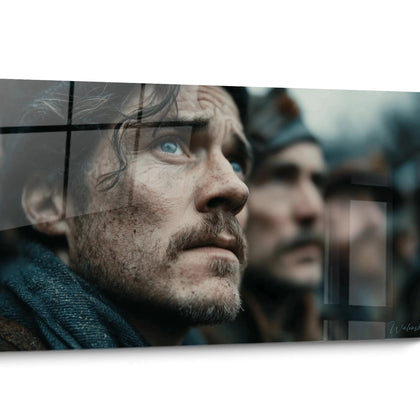 Historical Wall Art123
artworks
Historical Wall Art123
artworks
-
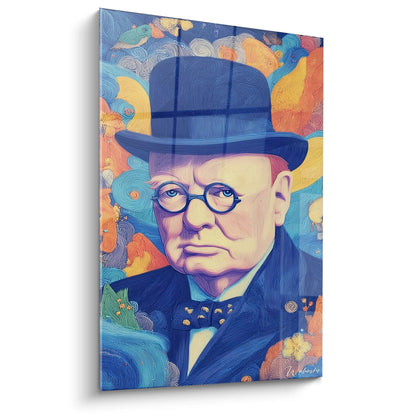 Historical Pop Art Canvas8
artworks
Historical Pop Art Canvas8
artworks
-
 Golden Historical Artwork12
artworks
Golden Historical Artwork12
artworks
-
 Historical Portrait Artwork24
artworks
Historical Portrait Artwork24
artworks
-
 Cubist Historical Wall Art5
artworks
Cubist Historical Wall Art5
artworks
-
 Vintage Historical Wall Art18
artworks
Vintage Historical Wall Art18
artworks
-
 Expressionist Historical Painting5
artworks
Expressionist Historical Painting5
artworks
-
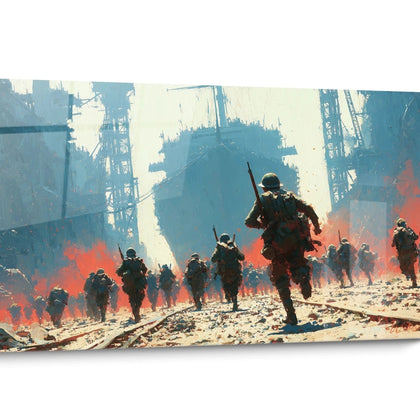 Historical Military Wall Art24
artworks
Historical Military Wall Art24
artworks
-
 Historical Equestrian Wall Art9
artworks
Historical Equestrian Wall Art9
artworks


All about Black and White Historical Wall Art
- Black and White Historical Painting Presentation
- Historical Monochrome Aesthetic
- Black and White Visual Impact
- Heritage Decoration
The black and white historical painting stands as an exceptional work for enthusiasts of visual heritage and timeless aesthetics. This monochrome approach transcends eras by capturing the very essence of decisive historical moments, from portraits of iconic figures to reconstructions of landmark scenes. The radical contrast between deep shadows and brilliant light creates an incomparable dramatic intensity, transforming each composition into a gripping testimony of the past. These large-format reproductions magnify documentary authenticity while harmoniously integrating into contemporary interiors, creating a fascinating dialogue between collective memory and current design.
Monochrome Authenticity of Great Historical Scenes
Black and white historical paintings perpetuate the visual authenticity of archive photographs and old engravings that immortalized founding events. This reduced palette eliminates any chromatic distraction to focus attention on composition, expressions, and the gestures of represented characters. Large-format reproductions of Napoleonic battles, portraits of monarchs, or revolutionary scenes gain emotional power through this deliberate sobriety.
Why choose black and white for a historical painting?
Monochrome strengthens the documentary and heritage dimension of the work. It immediately evokes period imagery - daguerreotypes, lithographs, illustrated newspapers - creating visual continuity with authentic historical sources. This aesthetic coherence confers particular legitimacy to representations of periods before the twentieth century, when color photography did not yet exist. Discerning collectors favor this approach for its faithfulness to original visual codes.
Contrast in Service of Historical Narrative
Gray variations allow hierarchical structuring of narrative elements in complex compositions. Principal figures emerge through accentuated contrasts, while backgrounds fade into subtle gradations. This technique naturally guides the eye toward essential protagonists - military commanders, political figures, privileged witnesses - while preserving contextual richness. Imposing formats amplify this dramatic effect, transforming the wall into a temporal window toward decisive moments.
Visual Heritage of Artistic Movements
The black and white historical painting belongs to the lineage of great artistic currents that shaped the representation of the past. From Gustave Doré's engravings to expressionist compositions, this monochrome tradition has always privileged emotional intensity over color seduction. Admirers of cubist historical painting will also appreciate this formal deconstruction which, combined with black and white, amplifies the conceptual force of reconstructions. Contemporary mural formats reinterpret these heritages for current spaces, creating striking focal points in libraries, offices, or living rooms where history dialogues with everyday life.
Decorative Impact of Monochrome Historical Compositions
A black and white historical painting of large dimensions radically transforms the atmosphere of a space by infusing it with intellectual depth and visual sophistication. Unlike colored works that can saturate the environment, monochrome establishes a majestic yet balanced presence. Reconstructions of diplomatic congresses, coronations, or scientific explorations become visual anchors that structure furniture arrangement while preserving sober elegance.
How does black and white amplify the monumental dimension?
The absence of color accentuates lines of force and compositional masses in collective scenes. Processions, assemblies, and represented crowds acquire a graphic density that fills wall space without weighing it down. This characteristic proves particularly valuable in rooms with neutral tones - off-whites, pearl grays, beiges - where a colored painting might create dissonance. Historical monochrome integrates naturally, bringing contrast and depth without compromising overall chromatic coherence.
Visual Texture of Large-Format Reproductions
Imposing formats reveal the richness of details in historical compositions: embroidered uniforms, background architecture, individualized facial expressions. Black and white convey these subtleties through infinite tonal variations that the eye distinguishes at different distances. From afar, the overall composition imposes itself with force; up close, a universe of nuances unfolds. This dual reading enriches daily experience, transforming the work into a visual companion that never tires.
Create a Cultural Focal Point
In reception or work spaces, these paintings immediately signal intellectual interests. A representation of the signing of a historic treaty or major scientific discovery communicates values of erudition and reflection. Visitors are naturally drawn to these visual testimonies that invite conversation and questioning. Generous dimensions - often exceeding one meter - ensure perfect legibility even in large volumes, guaranteeing that the historical message remains perceptible and impactful regardless of spatial configuration.
Valuing Heritage Through Contemporary Decoration
Acquiring a black and white historical painting responds to a cultural as much as aesthetic approach. These reproductions allow honoring the founding moments that shaped our civilization, while benefiting from accessibility impossible with original works. Discerning collectors seek representations of specific periods - Renaissance, Enlightenment, Industrial Revolutions - to create coherent thematic environments reflecting their personal historical passions.
Which historical events to prioritize in monochrome?
Diplomatic, military, and scientific scenes particularly gain gravity through monochrome treatment. International congresses, decisive battles, polar expeditions, or historic astronomical observations express themselves with a solemnity that color would attenuate. Black and white confers an almost documentary universality, elevating the representation to the rank of authentic visual testimony. Lovers of political history favor portraits of leaders or constituent assemblies, while technology enthusiasts opt for representations of inventions or monumental infrastructure.
Association with Furniture and Materials
These historical compositions dialogue remarkably with noble materials: patinated leather club chairs, solid wood libraries, brushed metals of industrial luminaires. Monochrome harmonizes naturally with these timeless textures, creating decorative ensembles that transcend ephemeral trends. In executive offices or reception rooms, this alliance of materials-historical iconography projects an image of stability, expertise, and cultural depth particularly valued.
Transmission and Visual Pedagogy
Beyond their decorative function, these monumental paintings constitute permanent educational supports. Families use them to introduce younger generations to great historical moments, transforming daily life into informal learning opportunities. Professional spaces - law firms, cultural institutions, educational establishments - value them as identity markers that instantly communicate their fields of excellence. Large size ensures optimal visibility during guided tours or presentations, reinforcing memorial impact.
Does a black and white historical painting suit minimalist interiors?
Absolutely. Historical monochrome integrates perfectly into pared-down aesthetics thanks to its restricted palette that avoids any visual overload. Structured compositions bring the character and depth necessary to minimalist spaces without compromising their fundamental sobriety.
What viewing distance should be planned to appreciate a large black and white historical painting?
For formats exceeding 120 centimeters, a minimum distance of 2 to 3 meters allows embracing the overall composition. However, the richness of monochrome details also justifies closer observation that reveals tonal subtleties and the fineness of execution in complex scenes.
Does black and white suit certain historical periods better?
Particularly periods before the twentieth century and events initially documented in monochrome. Medieval, classical, and nineteenth-century periods benefit from this approach which naturally evokes archive imagery, strengthening the perceived authenticity of historical representation.


