


Golden Historical Artwork
Our Historical Painting Gold collection sublimates great historical moments through artistic creations with precious tones. Each work evokes the splendor of past eras with gilded historical scenes that captivate the eye. These creations combine classic refinement with golden brilliance to enhance your interiors. Perfect for lovers of luxurious historical art , they transform every space into an exceptional gallery and celebrate cultural heritage with elegance.
 Richelieu Eternal Gaze Painting - Richelieu Edition228,90 €
 Gentleman Painting Eternal Refinement - Louis XIV edition228,90 €
 Napoleon Eagle Gaze Painting - Napoleon Edition273,90 €
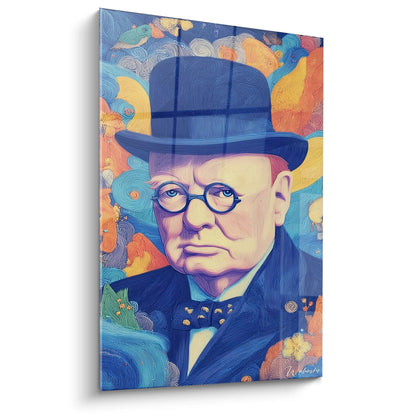
 Winston Churchill Political Ether Wall Art - Winston Churchill Edition273,90 €
 Louis XIV Painting Equestrian Communion - Louis XIV Edition273,90 €
 Aristocrat Portrait Painting Precious Lace - Louis XIV Edition273,90 €
 Aristocrat Painting Golden Splendor - Louis XIV Edition273,90 €
 Portrait Painting Timeless Nobility - Richelieu Edition228,90 €
 Lace Dew Portrait Wall Art - Marie-Antoinette Edition228,90 €
 Warrior Noble Profile Painting - Alexander the Great Edition273,90 €
 King Sacred Ornaments Painting - Charlemagne Edition273,90 €
 Master Timeless Portrait Painting - Alexander the Great Edition228,90 €
Explore further
In Golden Historical Artwork
-
 Historical Wall Art123
artworks
Historical Wall Art123
artworks
-
 Black and White Historical Wall Art12
artworks
Black and White Historical Wall Art12
artworks
-
 Historical Pop Art Canvas8
artworks
Historical Pop Art Canvas8
artworks
-
 Historical Portrait Artwork24
artworks
Historical Portrait Artwork24
artworks
-
 Cubist Historical Wall Art5
artworks
Cubist Historical Wall Art5
artworks
-
 Vintage Historical Wall Art18
artworks
Vintage Historical Wall Art18
artworks
-
 Expressionist Historical Painting5
artworks
Expressionist Historical Painting5
artworks
-
 Historical Military Wall Art24
artworks
Historical Military Wall Art24
artworks
-
 Historical Equestrian Wall Art9
artworks
Historical Equestrian Wall Art9
artworks


All about Golden Historical Artwork
- Golden Historical Painting Presentation
- Historical Golden Art
- Golden Wall Decor
- Golden Historical Gallery
A golden historical painting dramatically transforms the atmosphere of a space by combining the visual majesty of past scenes with the prestigious brilliance of gold finishes. These large-scale wall artworks immediately captivate the eye through their imposing presence and their ability to reflect natural and artificial light, creating interplays of shadows and luminosity that evolve throughout the day. The alliance of historical representations and golden treatments offers exceptional visual depth, ideal for enhancing reception areas, private libraries, or executive offices. This combination simultaneously brings the narrative weight of History and the luminous refinement of precious finishes, establishing a distinctive decorative signature that evokes both aristocratic curiosity cabinets and contemporary galleries.
The Golden Aesthetic of Historical Representations
The golden historical painting stands out through its particular chromatic treatment that magnifies scenes from the past. Gold finishes accentuate contrasts between light and dark zones, creating visual dramatization that reinforces the emotional impact of depicted events. This aesthetic approach recalls medieval altarpieces and court paintings, where gold symbolized permanence and historical importance.
How do golden finishes transform historical scenes?
Gold treatments impart an almost sacred dimension to historical representations. Naval battles, imperial coronations, or revolutionary assemblies gain solemnity when their key elements are highlighted by golden accents. This visual technique naturally guides the eye toward central protagonists, hierarchizing narrative reading intuitively.
The interaction between historical patina and metallic brilliance
The most striking visual effect results from the contrast between sepia or anthracite tones of ancient scenes and the contemporary brilliance of golden applications. This temporal dialogue creates a fascinating aesthetic tension: the past glorified by modern treatment. Large dimensions allow full appreciation of architectural details in historical settings enhanced with gold, such as palatial columns or ceremonial armor.
Which artistic movements inspire this golden approach?
Beyond the cubist historical painting that geometrically deconstructs scenes from the past, the historical golden aesthetic draws from symbolism, art nouveau, and neoclassicism. These influences converge to create compositions where each golden element underscores a symbol of power, a point of narrative tension, or a significant architectural detail. Monumental formats amplify this decorative effect, transforming each visualization into an immersive experience.
This aesthetic approach responds to the expectations of collectors seeking large golden historical wall pieces capable of visually structuring a space while telling a story. Gold is not limited to an ornamental role: it becomes a visual language that actualizes the past, making it relevant for demanding contemporary interiors.
Architectural Integration of the Golden Historical Painting
Installing a large golden historical painting requires precise understanding of spatial and luminous dynamics. These artworks function as architectural amplifiers, visually redesigning room proportions through their reflective capacity. In high-ceilinged spaces, they create an enhanced verticality effect, while in horizontal rooms, they establish directional lines of force.
What role does light reflection play in these spaces?
Golden surfaces capture and redistribute light in complex ways. A large golden historical painting positioned perpendicular to a window will act as a directional mirror, illuminating adjacent areas typically dark. This particularity transforms the artwork into a functional element for light optimization, potentially reducing artificial lighting needs during daylight hours.
Harmony with existing architectural materials
Gold finishes naturally dialogue with certain materials: veined marbles, dark woodwork, deep velvets, or patinated leathers. In an executive office, the combination of a golden historical painting with mahogany wainscoting creates visual cohesion evoking boardrooms of century-old institutions. For contemporary minimalist interiors, the contrast between raw concrete and historical golden ornamentation generates stimulating aesthetic tension.
How do these artworks redefine prestige zones?
In high-end professional environments, positioning a golden historical wall painting instantly delimits decision-making spaces. Placed in an entrance hall, it immediately communicates values of heritage and excellence. In a meeting room, it establishes a visual backdrop that confers gravity and importance to exchanges. Imposing dimensions reinforce this spatial theatricalization effect, transforming each space into a stage where significant professional interactions unfold.
Interior architects favor these pieces for their dual function: strong visual anchoring and chromatic regulator. Gold absorbs and softens excess coldness in overly spare interiors, while bringing metallic warmth that compensates for gray or white dominants. This functional versatility explains the enthusiasm for large-format golden historical representations in prestigious renovation projects.
Heritage Valorization and Decorative Investment
Acquiring a large golden historical painting constitutes a strategic decorative investment for several reasons. These artworks combine the timelessness of historical subjects with the universality of precious finishes, guaranteeing lasting aesthetic relevance independent of trend fluctuations. Their imposing format positions them as masterpieces insensitive to fashion effects, unlike modest-sized decorative elements.
What durability do these golden wall creations offer?
The visual stability of golden historical compositions rests on their grounding in shared cultural references. Whether ancient, medieval, or revolutionary scenes, these representations benefit from immediate recognition that transcends generations. Gold finishes add a dimension of symbolic permanence: this material crosses centuries without losing its conceptual brilliance, ensuring the artwork retains its perceived value.
The impact on high-end space valorization
In the premium real estate sector, the presence of a large golden historical painting positively influences the quality perception of a property. These installations demonstrate sophisticated decorative attention, signaling to visitors that no detail has been neglected. For prestige properties, executive offices, or professional reception spaces, this investment translates into tangible competitive differentiation.
How do these artworks evolve with their environment?
Unlike static decorative elements, a golden historical painting develops an evolving relationship with its space. Seasonal light variations constantly modify the intensity of golden reflections, creating renewed visual experience. After several years, the artwork becomes inseparable from the location's identity, anchoring memorization and emotional attachment. This gradual integration transforms the initial acquisition into personal or corporate heritage.
Selection criteria for optimal investment
Discerning buyers favor compositions balancing narrative legibility and visual complexity. A golden wall painting depicting historical scenes that is too cluttered risks visual saturation, while an overly spare composition will not fully exploit large-format potential. Optimal balance presents zones of visual breathing alternating with concentrations of golden details, naturally guiding the eye in progressive exploration of the artwork.
Where should you place a golden historical painting to maximize visual impact?
The ideal location is on a wall perpendicular to the primary natural light source, allowing golden finishes to capture and redistribute light throughout the day. In spaces without windows, indirect ceiling-directed lighting progressively reveals composition depths while avoiding disagreeable direct reflections.
Does a golden historical painting suit minimalist contemporary interiors?
Absolutely, provided you treat it as a deliberate counterpoint rather than a harmony element. In a spare environment, the visual opulence of a golden historical representation creates a dramatic focal point that breaks monotony without compromising overall coherence. This mastered-contrast strategy generates superior decorative sophistication to stylistic uniformity.
How do you maintain the golden finishes of a large historical painting?
Quality golden surfaces require only periodic dusting with a dry microfiber cloth. Absolutely avoid liquid cleaning products that could alter surface treatments. The dimensional stability of monumental formats makes them less sensitive to hygrometric variations than smaller works, simplifying their long-term conservation.
Further reading


