


Cubist Historical Wall Art
Our Historical Painting Cubist collection celebrates the revolutionary legacy of Cubism with fascinating contemporary creations. Explore modern cubist artworks that revisit the codes of Picasso and Braque: multiple perspectives, fragmented geometric shapes, and bold color palettes. Each wall decoration Cubist style transforms your interior into a sophisticated art gallery, bringing intellectual depth and unique character to your spaces.
 Face Painting Crystal Expression - Charlemagne Edition228,90 €
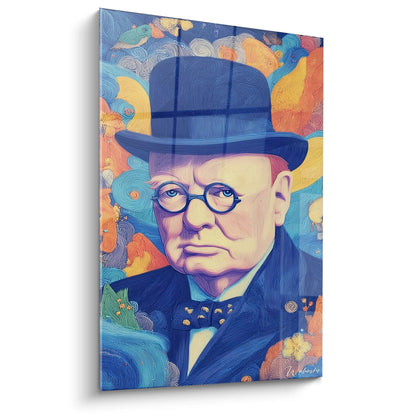
 Winston Churchill Cubist Dawn Wall Art - Winston Churchill Edition273,90 €
 Expressive Puzzle Face Artwork - Napoleon Edition228,90 €
 Cubic Reflections Portrait Painting - Christopher Columbus edition273,90 €
 King Painting Geometric Power - Charlemagne Edition273,90 €
Explore further
In Cubist Historical Wall Art
-
 Historical Wall Art123
artworks
Historical Wall Art123
artworks
-
 Black and White Historical Wall Art12
artworks
Black and White Historical Wall Art12
artworks
-
 Historical Pop Art Canvas8
artworks
Historical Pop Art Canvas8
artworks
-
 Golden Historical Artwork12
artworks
Golden Historical Artwork12
artworks
-
 Historical Portrait Artwork24
artworks
Historical Portrait Artwork24
artworks
-
 Vintage Historical Wall Art18
artworks
Vintage Historical Wall Art18
artworks
-
 Expressionist Historical Painting5
artworks
Expressionist Historical Painting5
artworks
-
 Historical Military Wall Art24
artworks
Historical Military Wall Art24
artworks
-
 Historical Equestrian Wall Art9
artworks
Historical Equestrian Wall Art9
artworks


All about Cubist Historical Wall Art
- Cubist Painting Presentation
- Geometric Decryption
- Fractured Architecture
- Acquisition & Integration
The historic cubist painting represents a major aesthetic revolution of the early twentieth century, championed by Picasso, Braque and Juan Gris. This visual fragmentation transforms traditional representation by proposing a simultaneous reading of multiple perspectives. Acquiring a large-scale cubist artwork allows you to introduce this fundamental artistic rupture into your space, creating a permanent dialogue between analytical geometry and modern expression. Each monumental wall reproduction captures the essence of this formal deconstruction that marked the history of Western art.
Cubist Deconstruction and Its Radical Visual Codes
Acquiring a historic cubist painting requires understanding the logic of fragmentation that structures these compositions. Unlike classical figurative movements, analytical cubism decomposes volumes into angular facets, creating a paradoxical depth where planes overlap and interpenetrate. This multiplication of simultaneous viewpoints demands active observation, transforming the viewer into a decoder of reconstructed reality.
Why does the monochrome palette dominate cubist creations?
The ochre, gray and brown tones characteristic of cubist works are not arbitrary choices. This deliberate chromatic restriction concentrates attention on geometric structure and interplay of planes. By eliminating colorist seduction, Picasso and Braque impose an intellectual reading of pure form. For a large wall format, this chromatic sobriety brings timeless sophistication that transcends decades without aging, unlike saturated palettes that quickly become dated.
Spatial integration of fragmented forms
A monumental cubist painting creates productive visual tension in contemporary architectural spaces. Broken lines and multiplied volumes naturally dialogue with minimalist structures, raw concrete and large bay windows. This affinity between historic cubism and modern architecture is no accident: Le Corbusier himself was a passionate collector of cubist works. Imposing scale amplifies the effect of controlled disorientation, transforming a wall into an aesthetic manifesto.
Recurring motifs in cubist vocabulary
Musical instruments, still lifes with fragmented newspapers, portraits with doubled faces: cubist iconography draws from everyday life to transfigure it. Recognizing these emblematic motifs allows identification of periods and specific approaches. A large format reproducing a Dora Maar cubist portrait or a deconstructed Braque guitar carries different symbolic weight, evoking either fragmented psychological intimacy or meditation on the mundane object elevated to metaphysical subject.
Wall Architecture and Rupture with Decorative Tradition
Installing a large-format historic cubist painting constitutes a radical decorative act that breaks with conventions of soothing harmony. This painting refuses immediate visual comfort to propose a stimulating cognitive experience. Informed collectors specifically seek this capacity to generate intellectual presence in space, transforming living rooms or offices into permanent aesthetic reflection spaces.
How does synthetic cubism differ from the analytical phase?
While analytical cubism deconstructs toward illegibility, synthetic cubism reintroduces vivid color and simplifies forms into clear geometric fields. For a purchase intended for a professional space demanding visual impact and legibility, works from the synthetic period offer an ideal compromise: maintained formal radicality with increased accessibility. Picasso's collages or Juan Gris's colorful compositions bring dynamism and modernity without off-putting hermeticism.
Specific lighting for fragmented surfaces
Multiple facets of a cubist painting react differently depending on angle and light intensity. Zenith lighting reveals the depth of superimposed planes, while lateral sources accentuate angular contrasts. For a large-scale reproduction, prioritize adjustable directional lighting allowing you to modulate volume reading throughout the day. This perceptual variability constitutes one of monumental cubism's major strengths: the work never reveals itself identically.
Association with Art Deco period decorative elements
Historic cubism maintains fruitful correspondences with contemporary Art Deco aesthetics. Stylized geometric motifs, broken lines and fascination with machinery echo in 1920s-1930s furniture. A large cubist painting naturally integrates alongside Eileen Gray chairs, Desny lamps or mirrors with angular forms. For authenticity-seeking collectors, this cubism-Art Deco period association creates documented decorative narrative. Conversely, contrast with a gilded historic painting of baroque style generates productive tension between ornamental opulence and geometric austerity.
Strategic Acquisition and Patrimonial Value of Monumental Reproductions
Investing in a large-scale historic cubist painting responds to several complementary logics. Beyond immediate decorative impact, these wall reproductions provide access to major modern art history compositions without the financial and security constraints of originals. Monumental format amplifies the visual power of works originally conceived for early-century Parisian gallery walls.
What criteria for selecting an authentic cubist reproduction?
Reproduction quality measures itself through chromatic fidelity and capacity to restore original texture. Cubist works often present visible impasto, subtle glazes and matte-glossy contrasts that standard printing flattens. Seek processes guaranteeing depth of blacks, essential to Braque compositions, and precision of warm ochres characteristic of analytical palette. For large format intended for reception space, this technical rigor determines overall credibility.
Strategic positioning in contemporary spaces
A monumental cubist painting demands a clear wall offering sufficient distance to embrace overall composition. Unlike impressionist works tolerating proximity, cubist reading requires distance for fragments to mentally reorganize. Spacious entry halls, back walls of through-living rooms or wide office corridors constitute privileged locations. Avoid cluttered spaces where the eye cannot circulate freely: cubism demands air to deploy its visual restructuring effect.
Building a coherent thematic collection
Acquiring a first cubist painting naturally opens toward a collection exploring early twentieth-century avant-gardes. Fauvism, Futurism, Suprematism and Constructivism maintain fruitful dialogues with cubism. For collectors wishing to develop chronological wall narrative, associating different Picasso periods (Blue, Rose, Cubist, Neoclassical) creates pedagogical and visually stimulating journey. Large formats allow establishing hierarchized focal points in an apartment or professional space, guiding circulation and rhythming spatial experience.
Where to ideally place a historic cubist painting in an industrial loft?
Loft-type spaces with generous volumes and raw materials constitute the ideal setting for a large cubist painting. Prioritize exposed brick or raw concrete walls that dialogue with cubist chromatic austerity. Hanging opposite a large window maximizes natural light variations revealing the complexity of superimposed planes.
Is a historic cubist painting suitable for a conservative professional office?
Paradoxically, historic cubism today carries patrimonial legitimacy that reassures. More than a century after creation, this revolutionary movement has become museified, integrating recognized Western art canon. In a law or architecture firm, a cubist Picasso signals culture, controlled audacity and grounding in historical modernity rather than unpredictable contemporary experimentation.
How does the historic cubist painting evolve with decorative trends?
One of cubism's major strengths lies in its capacity to transcend fashion without obsolescence. Its radical geometry anticipates 1960s minimalism, dialogues with current deconstructivist architecture and resonates with fragmented digital aesthetics. This temporal plasticity guarantees that investment in large-scale cubist format retains relevance and modernity across decades, unlike ephemeral decorative currents.
Further reading
Our articles on this topic
- Which Cubism Artwork to Choose for a Chic Industrial Style Urban Loft?
- How to Choose a Cubism Painting for a Creative and Modern Professional Office?
- Cubist Landscapes: Fragmentation of Natural Space in Picasso
- What influence did the theory of relativity have on the representations of space in Cubism?
- Reimagining Cubism: A Bold Style for Confident Decor


