The table tennis watercolor painting represents an unprecedented fusion between athletic dynamics and the poetic artistry of fluid techniques. This artistic category transforms the intensity of table tennis into compositions where pigments dilute, creating effects of transparency and movement that capture the very essence of this rapid sport. Each large-scale artwork magnifies technical gestures, ball trajectories, and the energy of exchanges through a delicate aesthetic that contrasts with the vigor of the game.
The Magic of Watercolor Gradients in the World of Table Tennis
Creations in table tennis watercolor painting masterfully exploit the unique properties of diluted pigments to restore the exceptional speed characteristic of ping-pong. Fluid hues are layered in successive strata, generating zones of transparency that perfectly evoke the curved trajectories of spinning balls. This technique allows simultaneous visualization of multiple phases of the same movement, as if the artwork captured the chronophotography of a smash or a topspin serve.
How do watercolor nuances convey the velocity of the game?
Artists specializing in table tennis watercolor use subtle chromatic gradients to materialize the notion of speed without resorting to conventional graphic lines. A deep blue gradually brightening toward translucent white suggests the lightning acceleration of a ball during a counterattack. These color transitions create a sensation of temporal fluidity particularly suited to spaces dedicated to athletic practice or recreational halls.
The effects of pigmentary dispersion serving athletic expression
The natural dispersion of watercolor pigments generates organic patterns impossible to reproduce with other mediums. In the context of table tennis, these dispersions evoke the energetic burst of an intense exchange, the splattering visually recalling the sweat projected during a marathon rally. For large formats, these effects take on a spectacular dimension that transforms an entire wall into a visual testimony of athletic intensity.
The chromatic association specific to watercolor representations of ping-pong
The palettes traditionally employed for a large-scale table tennis watercolor painting favor orange-blue associations recalling official equipment, or green-red combinations evoking racket coverings. These choices are far from arbitrary: they unconsciously activate the visual memory of practitioners while maintaining a pictorial elegance compatible with contemporary interiors. Watercolor naturally softens these contrasts that might seem aggressive in other artistic styles, including abstract table tennis painting with more geometric compositions.
Creating a Refined Athletic Ambiance through Watercolor
Why is watercolor suitable for multifunctional spaces?
The watercolor approach to table tennis watercolor painting offers exceptional decorative versatility for spaces hosting both athletic activity and moments of conviviality. Unlike raw photographic representations of table tennis, watercolor compositions filter the strictly competitive aspect to favor a contemplative dimension. This dual reading allows these artworks to be installed in multipurpose rooms without creating an exclusively athletic atmosphere that would limit the space's uses.
Imposing wall formats radically transform the perception of an amateur play room by introducing an artistic dimension often absent from traditional equipment. The visual lightness inherent to watercolor techniques optically compensates for the massiveness of table tennis tables, creating aesthetic balance in volumes sometimes dominated by athletic furniture. This visual compensation proves particularly valuable in domestic configurations where the space dedicated to table tennis must maintain harmony with the rest of the home.
The sensory evocation of play through watercolor textures
The variations in pigmentary density characteristic of a table tennis watercolor wall painting generate zones of concentration and dispersion that visually translate the different phases of match intensity. Saturated zones correspond to striking moments where energy culminates, while dilutions evoke periods of preparation and anticipation. This rhythmic alternation creates a visual dynamic that resonates with the lived experience of practitioners, establishing a deeper emotional connection than simple descriptive illustration.
Suggesting movement without literal figuration
One of the major strengths of table tennis watercolor painting lies in its ability to suggest movement through the organization of color masses rather than detailed representation of players. Trails of diluted pigments evoke rapid lateral movements, torso rotations, and arm extensions without requiring anatomical precision. This partial abstraction considerably broadens the potential audience: non-practitioners appreciate the aesthetic composition while players instantly recognize the specific gestures of their discipline.
Watercolor blur zones also materialize the actual visual effect perceived by a player concentrating during a rapid exchange, where only the ball remains sharp while the environment dissolves into peripheral color impressions. This visual transcription of a subjective experience transforms the artwork into an authentic testimony of the pongist's experience, transcending simple sport documentation to access an introspective dimension.
Enhance Your Practice Space with Watercolor Table Tennis Art
Adaptation to acoustic and lighting constraints of playing spaces
Spaces dedicated to table tennis often present acoustic challenges related to the reverberation of ball impacts on hard surfaces. A table tennis watercolor painting of large dimensions, through its extended wall presence, psychologically contributes to softening the sound perception of the space by visually introducing elements of fluidity and gentleness. This perceptual compensation operates according to the principle of multisensory coherence: our brain interprets the acoustic environment differently in the presence of visual elements evoking lightness rather than rigidity.
Regarding lighting conditions, watercolor compositions present the technical advantage of not generating bothersome reflections like bright-surfaced representations might. The middle values characteristic of watercolor maintain a balanced luminosity level that does not interfere with visual ball tracking during play, while offering sufficient chromatic presence to visually mark the space during periods of inactivity.
How does the watercolor painting structure the identity of a table tennis space?
The installation of a decorative table tennis watercolor painting immediately establishes the space's purpose while elevating its status beyond simple utilitarian premises. This visual definition proves particularly strategic in semi-professional contexts such as sports clubs or companies with recreational facilities. The artwork signals the value accorded to the activity, transforming an equipped room into a recognized place affectively invested by its users.
Imposing wall formats also create visual reference points facilitating spatial orientation and memorization of places. In sports complexes with several identical rooms, this artistic personalization allows differentiation of spaces and the creation of preferential attachments that enrich the overall experience of regular practitioners.
Complementary decorative associations to watercolor artworks
To maximize the decorative impact of a table tennis watercolor painting, the immediate environment should enhance its chromatic characteristics without creating visual overload. Adjacent wall surfaces benefit from remaining neutral, in light gray or beige tones that allow the delicate watercolor nuances to express themselves fully. Indirect lighting constitutes the optimal choice for revealing pigmentary subtleties without creating glare zones that would simultaneously disturb artistic appreciation and playing conditions.
Is a table tennis watercolor painting suitable for professional spaces?
Absolutely, the table tennis watercolor painting integrates perfectly into professional environments with relaxation spaces or break rooms. The aesthetic sophistication of watercolor corresponds to contemporary office decorative standards while valuing the culture of well-being through sport, a strong signal in terms of employer brand.
What durability for a table tennis watercolor painting in a practice room?
Large-scale artworks generally benefit from protective treatments adapted to demanding environments. Positioned strategically away from direct impact zones, they retain their chromatic brilliance for decades, the pigment stability of quality watercolor compositions guaranteeing excellent resistance to ambient light in interior spaces.
Does the table tennis watercolor painting adapt to different skill levels?
The interpretive versatility of table tennis watercolor painting makes it relevant for both beginner installations and spaces frequented by experienced players. Novices appreciate the accessible and inspiring aesthetic, while experienced practitioners recognize in the compositional subtleties the technical nuances of their favorite discipline.


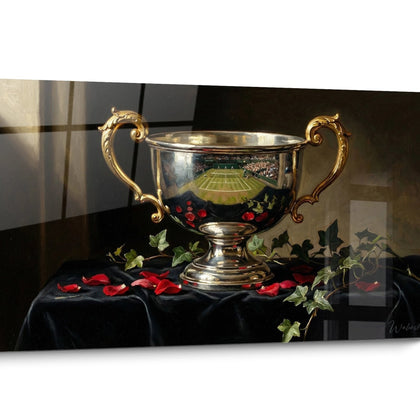
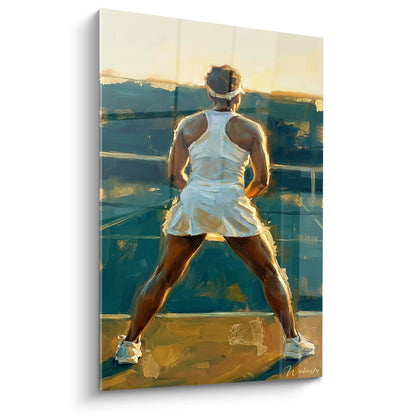
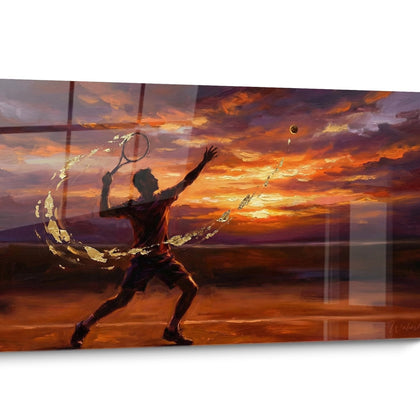
 Tennis Player Watercolor Painting - Expressive Movement - Tennis Edition233,90 €
 Tennis Player Watercolor Painting - Spiritual Elevation - Tennis Edition233,90 €
 Abstract Blue Watercolor Canvas - Celestial Fluid - Tennis Edition233,90 €