


Vintage World War II Wall Art
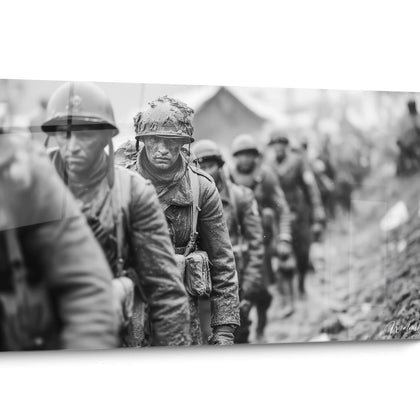
The World War II painting Vintage transports your interior into the history of the 20th century. This unique collection celebrates collective memory through historical vintage artworks with authentic and timeless tones. Each creation elegantly evokes the defining events, symbols, and atmosphere of this crucial era. Perfect for history enthusiasts and collectors, these retro World War II paintings bring character and depth to your decor.
 Steel motorcycle cavaliers painting - World War Two edition228,90 €
 Band of Brothers Soldiers Painting - World War II edition273,90 €
 Soldiers Trembling Grass Painting - Second World War Edition273,90 €
 Soldiers Canvas Not Heavy - World War II Edition273,90 €
 Soldiers Silent Sentinels Painting - Second World War Edition228,90 €
 Pilot Guardian of the Sky Artwork - World War II Edition228,90 €
 Soldier Painting Wind of War - Second World War Edition228,90 €
 Soldiers March Ghost Painting - World War II Edition228,90 €
Explore further
In Vintage World War II Wall Art


All about Vintage World War II Wall Art
- Presentation Painting Second World War Vintage
- Historical Authenticity and Vintage Patina
- Retro Military Iconography
- Atmospheres and Decorative Integration
A painting second world war vintage transforms your interior into a true sanctuary of military history. These large-format reproductions capture the essence of the 1940s through a deliberately aged aesthetic, evoking archival documents, propaganda posters, and sepia photographs of the time. Unlike modern and colorful representations of the second world war, these creations favor muted tones, attenuated contrasts, and patina effects that recall the passage of time on original documents preserved in military museums.
The Aged Aesthetic in Service of Collective Memory
The second world war vintage painting is distinguished by its visual treatment which faithfully reproduces the appearance of authentic historical documents. The dominant sepia, beige and gray hues instantly evoke photographs yellowed by decades, creating an immediate emotional connection with this pivotal period of the 20th century. This artificial patina is not merely a stylistic effect, but an artistic approach aimed at recreating the atmosphere of archive rooms and private collections of veterans.
How to recognize an authentic vintage treatment on a military painting?
The authenticity of a vintage rendering is measured by several specific technical criteria. The deliberately attenuated contrasts reproduce the natural degradation of photographic pigments from the era, while the visible grain simulates the technical limitations of 1940s silver cameras. The micro-scratches and deliberate stains evoke the successive manipulations of the original documents, consulted by generations of researchers and military history enthusiasts.
The symbolism of retro visual codes in military decoration
These large-format representations function as time portals to the era of strategic bombers, amphibious landings, and armored battles. Compositions often favor grainy overall plans, portraits of commanders with determined gazes, or military equipment photographed with the technical simplicity of the time. This visual sobriety contrasts radically with contemporary productions saturated with digital colors.
The aging techniques applied to military reproductions
The creative process integrates specific techniques to simulate the passage of decades. The slightly worn edges, suggested folds, and variations in chromatic density transform each painting into a quasi-documentary artifact. Collectors particularly seek these details that differentiate a simple print from a true decorative work with historical dimension. The imposing dimensions amplify the immersive impact of these artificially aged compositions.
Military Iconography and 1940s Aesthetics
The second world war vintage painting draws on a specific iconographic repertoire that visually defines this conflict period. Prop planes immortalized in full flight, soldiers equipped with the characteristic gear of the various armies, and battle scenes treated as journalistic snapshots constitute the privileged themes. This retro imagery is distinguished by its raw realism, devoid of the digital embellishments that characterize modern productions.
Which vintage motifs best capture the atmosphere of the 1939-1945 war?
The most sought-after compositions reproduce the visual codes of vintage photographic reports. Group portraits of soldiers in front of their tanks, planes lined up on military airfields, and commemorative monuments photographed with the graininess of old films create a powerful visual authenticity. Monochrome or sepia treatment reinforces this impression of an archival document extracted from a private collection or a regimental museum.
The importance of technical details in vintage equipment representations
Military history enthusiasts particularly appreciate reproductions that scrupulously respect the technical characteristics of the equipment depicted. A large-scale vintage World War II painting allows you to distinguish the rivets on aircraft fuselages, unit inscriptions on tanks, and rank insignia on uniforms. This precision transforms the decorative element into an educational support for military history enthusiasts and collectors of commemorative objects.
The visual narrative of major military campaigns
Some ambitious compositions recreate decisive moments with an almost cinematic approach: air fleets during strategic raids, armored columns crossing devastated European landscapes, or amphibious landings captured from dramatic perspectives. The imposing format of these paintings allows multiple narrative elements to be included that visually tell the scale of military operations. Faded tones add a melancholic dimension that underscores the historical gravity of the events depicted.
Decorative Integration of Vintage Historical References
A large-scale vintage World War II painting naturally finds its place in spaces dedicated to historical reflection and personal commemoration. Collectors' private offices, personal libraries enriched with military books, and masculine reception rooms are privileged environments. These imposing representations instantly create a contemplative atmosphere that invites reflection and remembrance of the sacrifices of past generations.
Which spaces best enhance the retro military aesthetic?
Interiors with an industrial character, with their exposed brick walls and metal structures, create a perfect visual synergy with the vintage military aesthetic. Spaces with neutral tones – anthracite gray, sand beige, faded khaki – allow the aged compositions to fully express themselves without chromatic competition. History enthusiasts often arrange dedicated corners where these paintings become the focal point of a staging including replicas of equipment, framed medals, and reference books.
How to create a consistent decorative theme around historical military themes?
Combining with authentic period elements – converted military trunks, 1940s industrial lamps, patinated metal furniture – amplifies the memorial impact of these wall compositions. Knowledgeable collectors create coherent ensembles where the vintage World War II painting dialogues with framed period maps, military navigation instruments, and reproduced official documents. This domestic museography transforms the space into a private place of memory.
The psychological impact of historical representations in professional spaces
In professional offices, these compositions convey values of courage, strategy, and determination. Business leaders and independent professionals appreciate the symbolism of resilience and leadership associated with the military imagery of this period. Generous dimensions allow for optimal visibility even in spacious areas, creating a strong visual anchor that structures the overall atmosphere. The vintage character softens the martial dimension to prioritize the heritage and commemorative aspects.
FAQ - World War II Vintage Wall Art
Why choose a vintage World War II wall art over a modern reproduction?
The vintage aesthetic offers an emotional authenticity that modern versions cannot reproduce. Aging effects create a direct connection with the historical period represented, transforming the decor into a true memorial tribute. Faded tones and artificial patina evoke the archival documents consulted in military institutions, conferring historical legitimacy to your space.
What size of vintage World War II wall art is suitable for collective spaces?
Imposing formats are particularly suitable for meeting rooms, professional reception halls, and spacious reception rooms. A minimum dimension of 120 centimeters allows you to appreciate the technical details of the equipment and the depth of the scenes represented. Panoramic compositions create an optimal immersive effect in spaces with clear walls.
How to maintain the aged appearance of a retro military wall art over the years?
Contrary to popular belief, these compositions simply require gentle dusting with a dry microfiber cloth. Exposure to indirect natural light preserves the sepia tones without alteration. Avoid cleaning products that could diminish the deliberately created patina effects, as this artificial aging is precisely the aesthetic essence of these historical creations.
Further reading
Our articles on this topic
- WWII vintage painting for the living room: how to integrate it with taste
- World war painting in black and white or color: what emotional impact for your décor?
- WWII wall decor for a man's bedroom: the guide
- How to decorate a hallway with a vintage World War painting
- Historical military painting in modern decor: 3 rules to avoid the museum effect
- How to choose a colored World War II painting based on the size of your room
L'art qui suscite l'envie
Maison belge d'art mural grand format
14 jourspour changer d'avis*
Protection Walenskyincluse
Fabriquéen Italie
FormatXXL
Kit de fixationtoujours fourni
* Hors tableaux personnalisés et tailles personnalisées


