


Colorful World War II Wall Art
Our World War II Painting Colorful collection reinvents history with a bold artistic vision. These works transform the key moments of 1939-1945 into vibrant compositions where vintage military pop art meets historical emotion. Perfect for history and contemporary art enthusiasts, each creation enhances colorful historical scenes with elegance. Transform your space into a captivating gallery that honors memory while celebrating modern art.
 Soldiers Battle Echoes Painting - World War II Edition273,90 €
 Soldier Devastated Path Wall Art - World War Two Edition273,90 €
 Soldiers Purple Horizon Canvas - world war ii edition273,90 €
 Soldiers Painting Steps Toward Dawn - Second World War Edition273,90 €
 Soldiers Trembling Grass Painting - Second World War Edition273,90 €
 Soldier Smoke Tragedy Painting - Second World War Edition228,90 €
 Soldier Purple Mists Canvas - World War Two edition273,90 €
 Soldiers Wall Art Hellish March — World War II Edition273,90 €
 Soldiers Fatal Mist Wall Art - Second World War edition228,90 €
Explore further
In Colorful World War II Wall Art

All about Colorful World War II Wall Art
- Painting Presentation World War Colorful
- Symbolism of Historical Colors
- Integration into Collective Spaces
- Visual Power and Emotional Impact
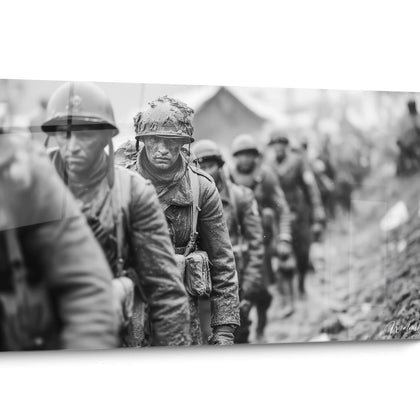
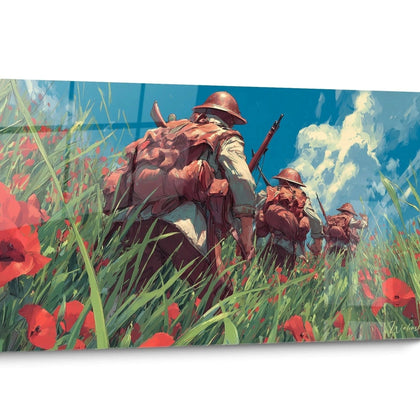
The artistic representations of World War II in color offer an unparalleled emotional and historical dimension. Unlike black and white representations which evoke documentary austerity, a colorful World War painting transforms historical narratives into immersive visual experiences that capture attention and stimulate reflection. These large-scale wall artworks combine historical authenticity and chromatic intensity to create striking focal points in modern spaces.
Color Therapy of Remembrance: When Colors Captivate History
A World War II colorful painting transcends simple historical representation to become a powerful emotional vector. The saturated hues of a sky ablaze above London, the deep blues of Allied uniforms, or the vibrant reds of flags bring the events of 1939-1945 to life with an intensity that monochrome cannot match. This chromatic approach transforms every visual detail into a memorial marker.
Why choose a colored representation for this chapter of history?
The artistic colorization of historical military scenes allows contemporary generations to emotionally connect with events dating back eight decades. The shades of green in camouflage, the ochres of the beaten lands, and the metallic grays of military equipment create a narrative depth impossible to achieve in bichromy. For discerning collectors, a large-format World War II painting in color is a decorative investment that dialogues with contemporary architecture while honoring collective memory.
The psychological impact of restored military palettes
Warm tones applied to portraits of soldiers humanize these historical figures, while contrasts between cool and warm colors in battle compositions accentuate spatial dramatization. A large-scale colorful World War II painting exploits these chromatic dynamics to generate a visual presence capable of structuring an entire reception wall or passageway area. Educational institutions and memorial spaces favor these imposing formats that transform historical teaching into a sensory experience.
The color codes of the different armies as a visual language
Each belligerent nation possessed its distinctive color codes: American olive green, German feldgrau, British khaki. These visual identifications, when magnified on extended wall surfaces, become instant reading elements that enrich narrative understanding. Military history enthusiasts specifically seek these authentic colored representations that respect the historical truth of uniforms and vehicles while offering a modern aesthetic compatible with design interiors.
Strategic Deployment in Institutional and Cultural Environments
The installation of a colorful World War II painting in schools, local museums, or cultural centers responds to specific educational objectives. These monumental formats capture the attention of visitors upon arrival, creating a visual anchor that stimulates historical curiosity. The entrance halls of high schools, university corridors, and conference rooms particularly benefit from these chromatic compositions that transform transitional spaces into places of reflection.
How does a large-format color painting structure museum space?
Conservators favor wall paintings with vibrant colors from the 1939-1945 period for their ability to create visual narrative sequences. Unlike traditional archival photographs, these artistic interpretations allow for a distant reading while revealing complex details upon closer inspection. Chromatic saturation naturally guides the viewer's gaze, establishing a visual hierarchy between the main and secondary elements of the composition. For interior architects specializing in cultural spaces, these works resolve the difficult equation between immediate visual impact and contemplative depth.
Integration into historical libraries and reading rooms
Spaces dedicated to historical research gain an immersive atmosphere thanks to large-format color representations of World War II. The warmed sepia tones and desaturated greens create a studious ambiance while maintaining a stimulating visual presence. A color World War II painting purchase for a library becomes a functional element that defines thematic areas while enriching the experience of researchers and students. Panoramic formats are particularly well-suited to the longitudinal walls of consultation rooms.
What palette to prioritize for modern memorial spaces?
Contemporary architects design memorials that balance solemnity and accessibility. Color historical paintings offer this dual dimension: their chromatic realism avoids cold abstraction while maintaining aesthetic dignity. Earthy tones combined with deep blues create a reverent atmosphere without falling into darkness. Managers of memorial spaces seek color historical wall artworks that visually resist variable lighting conditions while preserving their emotional impact during ceremonies and school visits.
Emotional Amplification through Dimension and Chromatic Saturation
A color World War II painting exploits the psychology of color to intensify the emotional resonance of historical events. The bright reds of explosions, the vibrant yellows of nighttime combat lighting, and the deep greens of the Norman forests create a visual score that simultaneously activates historical memory and contemporary aesthetic response. This duality makes these works particularly sought-after decorative investments by collectors who value the intersection of art, history, and interior design.
Why do large formats amplify the historical impact?
The physical monumentality of a color historical wall painting creates a spatial immersion that transforms the viewer into a virtual witness. When the work occupies several square meters, the human proportions of the represented figures approach real scale, generating psychological identification impossible with reduced formats. Interior architects specializing in corporate spaces exploit this dimension to create memorable meeting areas where history serves as a catalyst for contemporary strategic reflections. A large-format color World War II painting thus becomes a cultural branding tool for companies valuing their heritage or memorial commitment.
Chromatic contrasts as narrative vectors
The contrasts between dark and vibrant areas in a colorful historical composition create visual tensions that mimic the drama of the events depicted. Contemporary artists specializing in military themes use these dynamics to direct attention to crucial narrative points: a soldier in the foreground, an iconic vehicle, a decisive moment. Discerning buyers seek out these sophisticated compositions that offer multiple levels of reading depending on the viewing distance, guaranteeing renewed visual interest over time.
The perceptual evolution of colors in large spaces
A colorful World War II painting of significant dimensions interacts differently with natural and artificial light depending on the time of day. Warm tones intensify under the lateral morning light, while blues and grays gain depth under zenithal light. This chromatic variability transforms the work into a living architectural element, particularly appreciated in high-end residential spaces where decoration evolves with the seasons and uses. Wall art consultants recommend these formats for double-height rooms and stairwell walls where their presence is gradually revealed.
Is a colorful World War II painting suitable for contemporary interiors?
Absolutely. Historical military palettes naturally harmonize with current trends favoring earthy tones, olive greens, and metallic grays. Balanced compositions offer a visual sophistication that transcends simple historical interest to become a design element in its own right, particularly in industrial interiors or urban lofts.
What size should be favored to maximize the impact of a colorful World War II painting?
Formats larger than 120 cm in width create the necessary immersion for the chromatic details to operate fully. In open living spaces or contemporary offices, panoramic dimensions allow for comfortable viewing at a distance while revealing the compositional complexity upon approach, thus optimizing the decorative investment over the long term.
How to maintain the vibrancy of colors on these large-format historical paintings?
Current printing technologies guarantee exceptional color stability without particular maintenance. Simply avoid prolonged direct exposure to sunlight and favor LED lighting to preserve the intensity of reds and blues for several decades, thus ensuring the artistic and memorial value of your acquisition.
L'art qui suscite l'envie
Maison belge d'art mural grand format
14 jourspour changer d'avis*
Protection Walenskyincluse
Fabriquéen Italie
FormatXXL
Kit de fixationtoujours fourni
* Hors tableaux personnalisés et tailles personnalisées


